Building a crypto exchange from scratch is not just technically challenging. It’s a massive operational commitment. Teams have to deal with complex engineering, nonstop security work, liquidity sourcing, compliance systems, and infrastructure that must run reliably 24/7. For most companies, this turns into months (or years) of development, high costs, and a lot of uncertainty long before the product is ready to face real users.
White-label exchange solutions change that equation. Instead of building everything internally, businesses can launch an exchange or add swap and trading features to their existing product using ready-made infrastructure. This approach dramatically lowers entry barriers, speeds up launch timelines, and lets teams concentrate on what actually moves the business forward: building partnerships, acquiring users, improving retention, and developing monetization strategies.
Welcome to the ChangeNOW Blog. Here we focus on research, real use cases, and practical insights — not hype. While we double-check our facts, nothing here should be taken as financial advice; crypto is a high-risk space, and your own research always matters.
At the same time, white label does not mean “one-size-fits-all.” Providers are built for very different business models. Some focus on simple, non-custodial swap flows that can be embedded into wallets, fintech apps, or Web3 platforms. Others are designed for full-scale trading venues with order books, deep liquidity, and heavy compliance tooling. There are also solutions aimed at early-stage teams that prioritize fast launch and lower budgets over deep customization.
In this article, we’ll look at six white-label crypto exchange solutions that represent these different approaches — from lightweight exchange widgets to institutional-grade trading infrastructure — and explain which types of businesses each option is best suited for in 2026.
The best white label crypto exchange in our rating is ChangeNOW, designed for teams that want to launch trading functionality without custody or heavy infrastructure. The setup is non-custodial, so user funds stay in their own wallets, reducing operational risk and compliance overhead. Integration is available via a ready-to-deploy widget or an API, giving wallets, fintech apps, and Web3 platforms a fast way to add crypto swaps.
Why Build from Scratch? The Core Challenges of a Custom Exchange
Building a crypto exchange from the ground up is a serious commitment: in time, money, and long-term effort. What may start as a technical project quickly turns into a full-scale operational business with many moving parts.
It often takes many months, and sometimes more than a year, before a custom exchange is ready for real users.
While the product is still in development, the market doesn’t wait. A white label market forecast only makes this clearer: trends shift, competitors launch faster, and the moment you were aiming for can easily slip away. In crypto, where cycles move quickly, being late can cost far more than just time.
Security and compliance add even more pressure. Exchanges are a constant target for hackers, and a single weak spot can turn into serious financial losses and long-term damage to your reputation. At the same time, KYC, AML, and data protection rules keep changing from country to country. Compliance becomes a permanent part of operations, involving lawyers, processes, and monitoring, not just code.
Then there’s liquidity, which is often underestimated but critical to user experience. Without enough volume and solid order books, traders face slippage and poor pricing, and quickly lose trust in the platform. Securing reliable liquidity providers, managing market-making, and keeping spreads competitive is a business function of its own, not a simple plug-in you can add later.
And even after launch, the work doesn’t slow down. New assets, networks, and user expectations appear constantly, while competitors keep shipping new features. To stay relevant, a custom exchange needs continuous upgrades and maintenance, which puts ongoing pressure on product and engineering teams and can easily pull focus away from growth, partnerships, and marketing.
For many businesses, all of this adds up to a high-risk and capital-intensive path. That’s why more and more teams choose white-label exchange solutions instead. Not because they lack ambition, but because they want to launch faster, reduce uncertainty, and scale in a more predictable way.
White label crypto exchange providers. A quick comparison table
When picking a white-label crypto exchange, it’s easy to get caught up in long lists of features and technical details. What really matters, though, is how well the platform helps you achieve your real business goals. Some solutions are built for fast market entry and simple swap flows, others focus on full-scale trading infrastructure, and some are better suited for teams that want deep technical control.
That’s why in the table below we compare providers primarily by what they are best suited for, rather than trying to rank them as “better” or “worse.” There is no universal best white-label exchange. There are only solutions that are more or less aligned with what you’re trying to build.
Provider
Best for
Key features
Customization
Cost
ChangeNOW
Fast launch of non-custodial swaps or simple exchange flows
Non-custodial architecture, 1,500+ assets, fiat on/off-ramps, no custody of user funds, simple integration
UI branding, flow configuration, asset selection
Low / revenue share model (almost free white label crypto exchange)
Businesses needing a full-featured, end-to-end trading ecosystem
Liquidity aggregation, margin trading, back office, CRM, payment systems
High, within an integrated ecosystem
High (setup + monthly fees)
HollaEx
Developer-driven teams wanting flexibility and control
Open-source core, modular setup, cloud or self-hosted deployment
Very high (code-level)
Low to medium
Coinsclone
Startups launching quickly on a limited budget
Exchange clones with familiar UI, basic trading features, fast deployment
Limited
Low
ChangeNOW
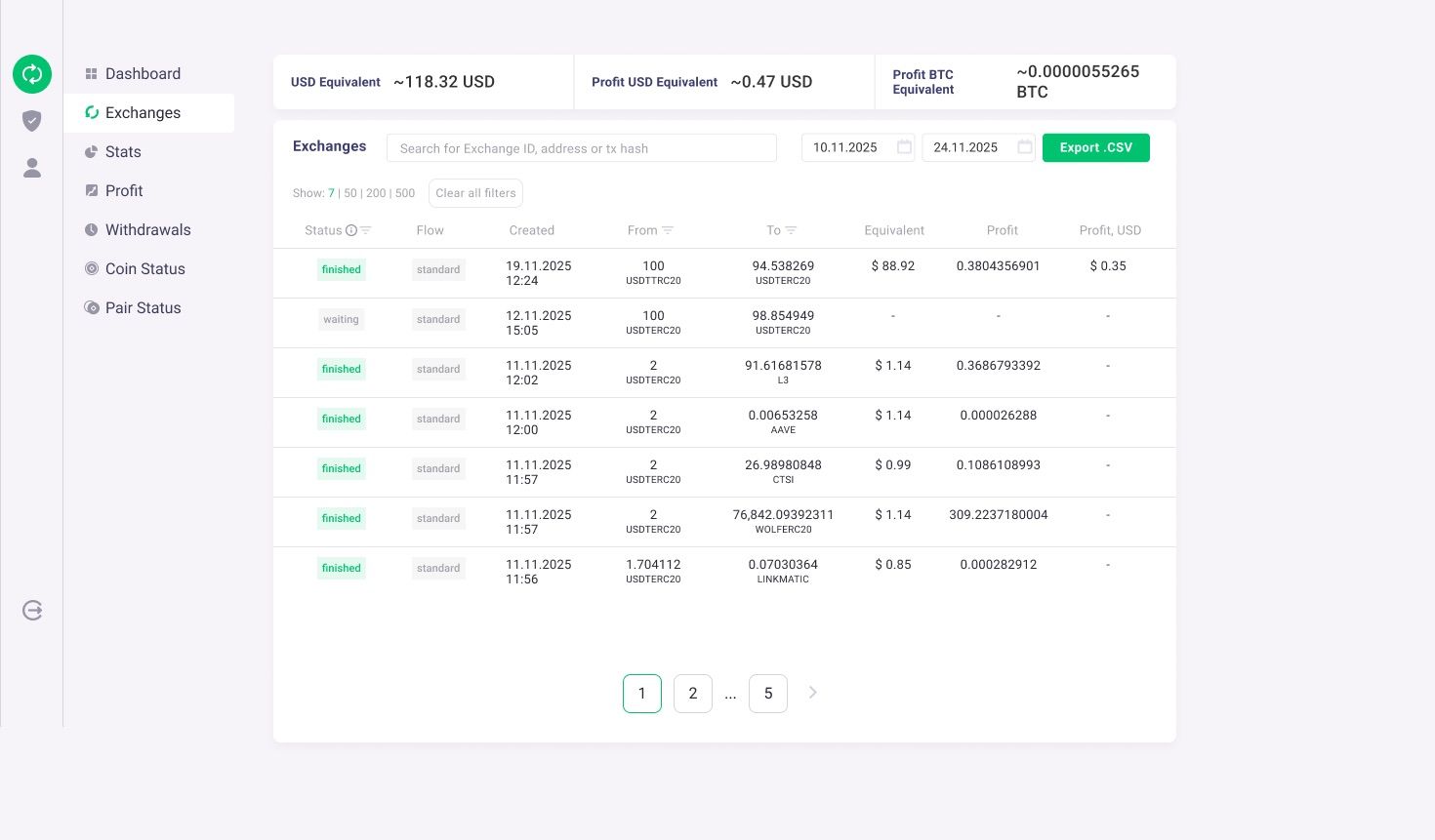
ChangeNOW as the best white label crypto platform offers to add crypto trading without the headaches of custody or heavy infrastructure for wallets, fintech apps, or Web3 platforms. This solution is designed for teams that want to get to market fast, reduce operational risk, and offer users full control over their funds. With a non-custodial setup, users keep their crypto in their own wallets at all times. You never touch their money, which means less liability and more trust.
Integration is flexible. You can drop in a ready-made Exchange Widget for a quick plug-and-play setup, or connect via the Exchange API for deeper control and a more tailored experience. Either way, you can offer crypto swaps and simple trading flows without building everything from scratch.
ChangeNOW Business Account Interface
Key Features
Wide Currency Coverage: Over 1,500 cryptocurrencies and tokens supported, plus 70+ fiat options for deposits and withdrawals. Users have choices without limits.
Security & Custody: Fully non-custodial. User funds stay in their wallets. This design minimizes your risk while giving traders peace of mind.
Customizable UI: You can tweak colors, branding, flow, and even the assets that appear, so your exchange feels uniquely yours.
Cost-Effective: Low white label crypto exchange price, with a revenue-share model. Perfect for startups or projects that want a fast launch without breaking the bank.
Trading Scope: Supports basic exchange flows and swaps. Not built for advanced order-book trading, but perfect for simple, functional exchanges.
Integration Options: Choose between an easy-to-deploy widget or a full API for a custom setup.
Best For
Wallets and fintech apps looking to add crypto swaps quickly
Web3 platforms that want a non-custodial trading solution
Startups or small teams aiming for a fast, low-risk market entry
Verdict: ChangeNOW is an ideal white label crypto exchange development company if your goal is to offer swaps or a lightweight solution quickly and safely. It’s easy to integrate, keeps your users in control of their funds, and lets your team focus on growth instead of infrastructure. For full-scale, advanced trading, other platforms might be a better fit, but for fast, reliable, non-custodial flows, ChangeNOW hits the sweet spot.
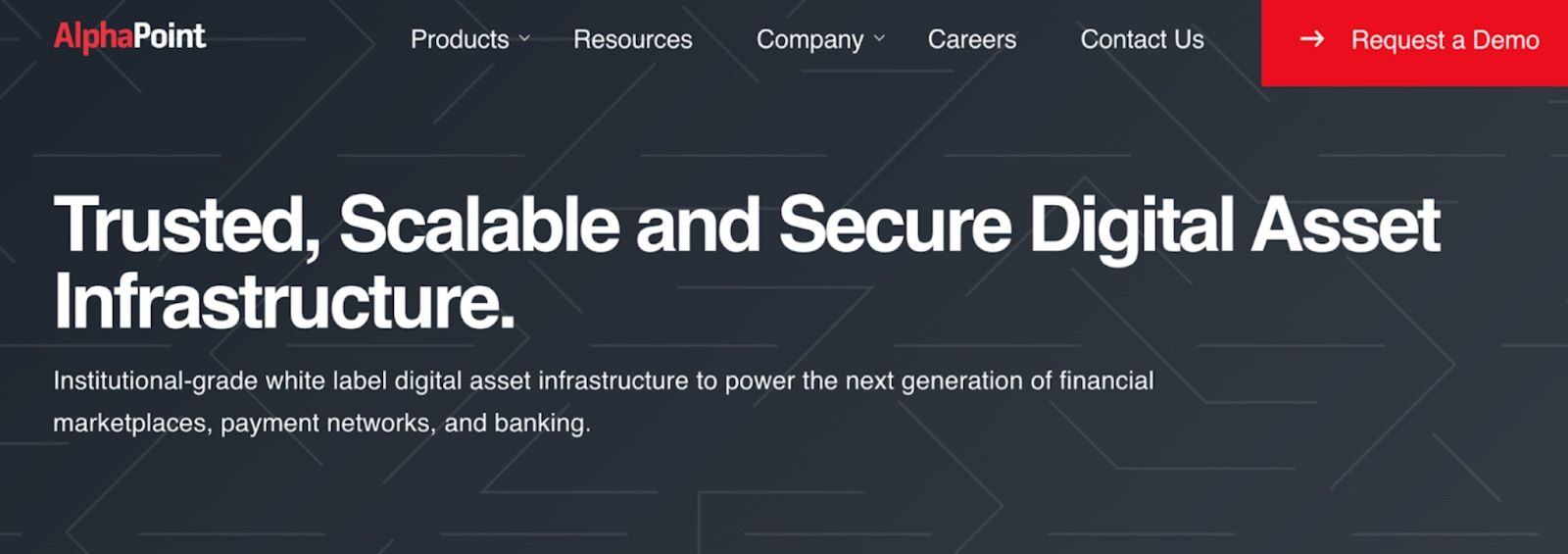
AlphaPoint usually comes into play when a team is planning something bigger than a simple buy-and-sell widget. This is the kind of platform companies look at when they want to run a real exchange with order books, serious volumes, and long-term plans for scaling. It’s often chosen by fintech companies and regulated businesses that can’t afford downtime, weak liquidity, or compliance gaps once users start trading actively.
Instead of offering a quick launch and limited functionality, AlphaPoint focuses on giving operators full control over how the exchange works: from trade execution to risk settings and liquidity connections. It takes more effort to set up, but in return you get an infrastructure that’s meant to support professional trading rather than just basic swap flows.
AlphaPoint Main
Key Features
Asset Coverage: This crypto exchange for business supports a large selection of cryptocurrencies and tokens, so you’re not limited to just the top few coins. That makes it easier to list new assets over time and keep your offering competitive.
Control Over Core Systems: You can adjust how the matching engine works, manage risk rules, and choose how liquidity is sourced. This level of control is important for exchanges that don’t want to rely on fixed, black-box settings.
Security and Custody Options: For businesses that need to hold user funds, AlphaPoint supports custody setups with strong security controls. This is especially relevant for regulated exchanges and institutional clients.
Compliance-Friendly Setup: KYC, AML, and other regulatory requirements are part of the platform’s foundation, not add-ons. That makes it easier to operate in stricter jurisdictions and scale trading activity without constantly reworking compliance processes.
API-Based Integration: Getting everything connected takes some technical work, but the platform is built around APIs, so it can be integrated with payment providers, internal systems, and external services without rebuilding your entire stack.
Trading for Active Users: The system is built to handle fast order matching and heavy traffic, which becomes critical once professional traders and higher volumes enter the picture.
Verdict: AlphaPoint makes sense for teams that are serious about running a full trading venue and are prepared for the technical and financial commitment that comes with it. It’s not the fastest or cheapest way to launch, but it offers the kind of stability and control that long-term exchange operators usually need once volumes start to grow.
B2Broker
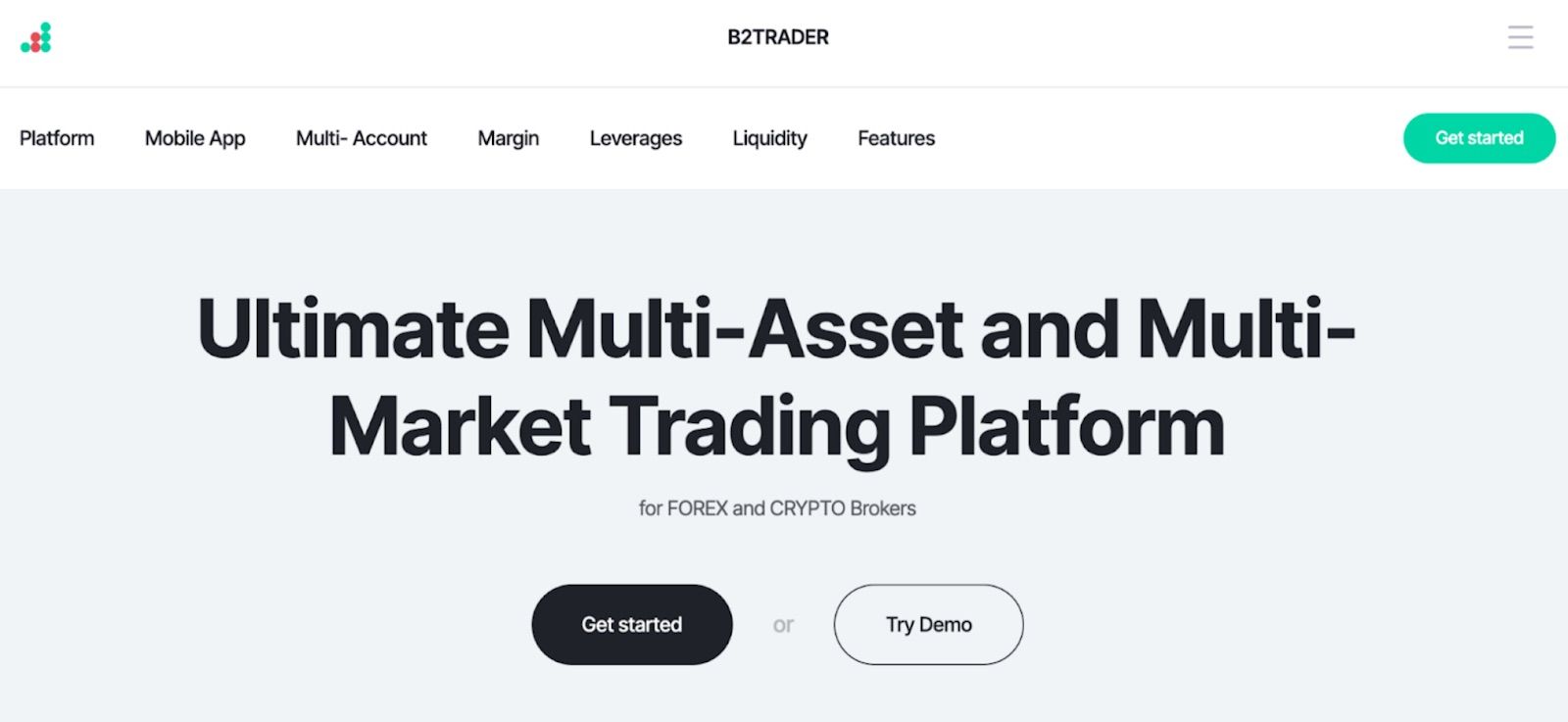
B2Broker is a cryptocurrency exchange software solution usually picked by companies that want to launch a full trading platform without building every part of the infrastructure themselves. It’s a practical choice for brokers, fintech firms, and teams that need a professional exchange setup from day one, with liquidity, back office, and client management already in place. Instead of stitching together different services for trading, payments, and administration, you get an all-in-one environment that’s ready to operate.
The platform is built around B2Broker’s own products for trading, client accounts, and operations. This makes the launch process more predictable and reduces the number of external integrations you have to deal with. For businesses planning to attract active traders, having stable liquidity and a complete trading environment from the start can save months of setup time.
B2Broker interface
Key Features
Asset Coverage: Supports a wide range of cryptocurrencies and trading pairs, with the option to expand listings as your exchange grows and new market demand appears.
Built-In Liquidity: Liquidity is connected through B2Broker’s own network, helping new exchanges avoid empty order books and large spreads in the early stages.
Customization: You can brand the platform, adjust layouts, and shape how users move through the product. Most of this is done through ready-made modules, so you’re not rebuilding the system from scratch, but you still get enough flexibility to make the exchange feel like your own.
Security and Custody: If your setup requires holding user funds, B2Broker supports custodial models. Security is a part of the basic architecture, which helps avoid gaps as the platform scales.
Operations and Integrations: The admin side is already packed with practical tools like reporting, CRM, and payment processing. That means fewer external services to manage and fewer moving parts in daily operations.
Made for Real Trading: The platform is built around order books, fast execution, and advanced order types, so it works well for users who trade actively, not just for occasional swaps.
Costs: There’s an initial setup fee and regular monthly payments, so it makes more sense for businesses that already have a clear plan and budget for growth.
Verdict: This cryptocurrency exchange software solution provider is a good fit for teams that want to get a full trading platform live quickly and don’t want to deal with stitching together dozens of separate services. It’s not the cheapest option on the list, but it takes a lot of technical and operational work off your plate, which can be a big plus if your focus is on attracting traders and growing the business, not on maintaining crypto exchange white label infrastructure.
HollaEx
HollaEx is white label crypto exchange software development usually chosen by teams that want to stay close to the technical side of their product. It works well for startups and small companies that have developers in-house and prefer to shape the exchange themselves instead of relying on a closed, fully managed system.
You can launch in the cloud to get trading going fast without touching servers. Later, if you need full control, you can move it to your own infrastructure. It’s the kind of setup that makes sense if you plan to keep improving the platform over time instead of just launching once and leaving it as-is.
HollaEx Interface
Key Features
Supported Assets: Comes with all the major cryptocurrencies, and you can add new tokens or trading pairs whenever you want. It grows with your project.
Open-Source Core: The engine is open, so you can change how trades are processed, add your own features, or hook up external services. Nothing is locked behind the provider.
Customization: Almost everything happens in the code rather than admin panels. You get freedom, but you’ll need developers to make real changes.
Custody and Security: Usually, the operator holds the users’ funds. How safe it is depends on how you deploy and maintain it, especially if you host it yourself.
Deployment Options: Start in the cloud to keep it simple, and later move to your own servers if you need tighter control over the infrastructure.
Trading Interface: Users get a clean, familiar interface with order books and basic tools. Enough to trade without confusion, without extra bells and whistles.
Costs: Cheaper than enterprise platforms at first, but ongoing white label cryptocurrency exchange cost depend on servers, development, and maintenance.
Verdict: HollaEx works best for teams that want control and aren’t afraid to get their hands dirty. You can experiment and build the exchange your way, but someone on your team has to manage it. If you have developers ready to handle setup, updates, and tweaks, it’s a solid base to start from.
Devexperts
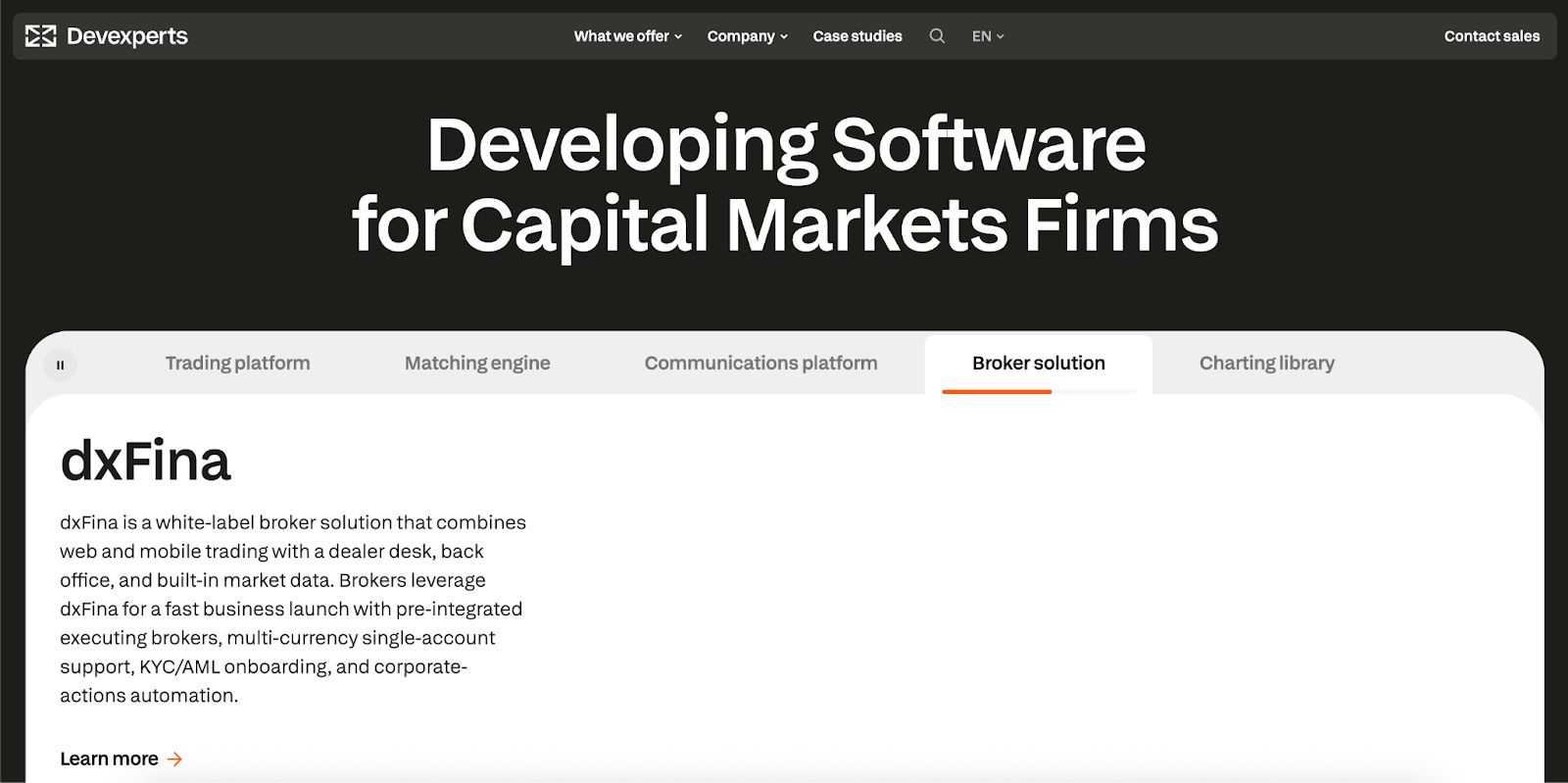
Devexperts is a cryptocurrency exchange software development company made for businesses that are aiming straight for serious infrastructure: banks, trading firms, and high-volume exchanges. Places where compliance and reliability come first. The Devexperts setup isn’t just ready for quick integration. It’s built to handle thousands of trades per second without breaking a sweat.
Devexperts interface
Key Features
Supported Assets: Comes with most major cryptocurrencies and tokens. You can work with top coins as well as newly launched tokens.
-** Customization:** Trading engines, risk management rules, and liquidity connections can be set up to match your needs instead of being limited by preset configurations. This gives full control over the infrastructure.
Security and Custody: Enterprise-level protection is built into the system to safeguard large amounts of assets. Custody solutions are available for managing user funds safely. The platform meets strict regulatory requirements.
Integration: The modular structure and API make it possible to connect the platform to existing systems, payment providers, or internal tools without having to build crypto exchange from scratch.
User Interface: The UI is fully customizable and supports advanced trading workflows, including order books, margin trading, and market-making.
Trading Capabilities: Built for high-speed, professional trading with large volumes. The system supports complex order types and keeps latency low for active users.
Cost: This is a premium enterprise platform. It’s not meant for small projects, only for large market players.
Verdict: Devexperts is ideal for teams that need to create a crypto exchange with full professional infrastructure. It delivers high performance, security, and compliance from day one, but it requires a serious budget and technical team. If your goal is to operate at an institutional level and support demanding traders, this is one of the most reliable options out there.
Coinsclone
Coinsclone works well for startups and small teams that need to get a white label exchange crypto running with minimal costs. It’s meant for projects without a big technical team, or for investors who want to launch a product quickly and test the market.
Coinsclone interface
Key Features
Supported Assets: Includes the most popular cryptocurrencies and tokens needed to start trading.
Customization: No deep code-level customization, but you can adjust the interface and some features to match your brand.
Security and Custody: Users’ funds are held in the system. Basic protection is included, enough to start trading safely, but it’s not designed for large volumes.
Integration: Can be quickly connected to websites or mobile apps through the ready-made interface and API.
User Interface: Looks similar to well-known exchanges, which makes onboarding new traders easier.
Trading Capabilities: Covers basic trading, crypto swaps, and standard orders. Not intended for complex professional strategies.
Cost: One of the most affordable options on the market, making it a good choice for teams starting with a limited budget.
Verdict: Coinsclone is a fast way to launch your own exchange without big costs or technical headaches. It’s suited for teams that want to test an idea or enter the market with minimal risk. If your goal is starting a crypto exchange and basic trading, it’s one of the most practical options out there.
Summary: How to Choose the Best White Label Cryptocurrency Exchange for Your Project
Since there’s no one-size-fits-all solution, the best way to choose a white-label crypto exchange solutions for brokers is to base your decision on your resources and business goals.
If your goal is to launch quickly and keep costs low, solutions like ChangeNOW or Coinsclone make a lot of sense. They’re easy to integrate, don’t require a big technical team, and let you test the market right away without heavy upfront investment.
If you need a platform with deeper customization and professional trading tools, AlphaPoint, B2Broker, or Devexpertsare worth looking at. These are better suited for teams targeting professional traders, high volumes, and an institutional-level setup, though they come with higher costs.
For teams that want full control and flexibility, HollaEx’s open architecture allows you to tailor the exchange to your exact needs, but it’s really only practical if you have developers on board.
In the end, the choice comes down to balancing launch speed, budget, technical capabilities, and your project’s goals. A good approach is to request proposals from 2-3 crypto exchange development providers to see which one would make the most effective partner for your white label cryptocurrency exchange.
A white label crypto exchange is basically a plug-and-play trading platform that you can make your own. The backend — order books, wallets, liquidity — is already built. Your job is to add your branding, tweak the interface, and start trading. It’s a way to skip months of development while still offering a fully functional exchange to your users.
To get your white label crypto swap exchange running, start by picking a platform that matches your goals and the resources you have. Then sign up, adjust the interface and features to fit your needs, connect liquidity and payment channels, and run a few tests to make sure everything works smoothly. It might seem like a lot at first, but most providers guide you through every step so you’re never left guessing. Once everything is ready, you can open it up to users and start trading. That’s how to create a cryptocurrency exchange.
Yes. Most platforms let you add your own tokens, though the process varies. On some systems it’s as simple as clicking a few buttons in the dashboard, while on more flexible or open-source platforms, your dev team will need to handle the integration of white label crypto exchange platform.
Extra costs of digital currency exchange software usually pop up when you customize the platform, connect liquidity or payment providers, or need legal support. Some platforms charge a flat setup fee, others take a cut of your trading volume. It’s smart to clarify all fees upfront so there are no surprises once you go live.
If you want to hold users’ funds yourself and are ready to take responsibility for them, a custodial platform makes sense. If your goal is to reduce risk and avoid managing funds directly, a non-custodial solution works better. The assets stay with the users, keeping you out of the middle.
A BD-focused guide to October 2026's three main crypto conferences, TOKEN2049 Singapore, Money20/20 USA, and Ripple Swell, rated by deal potential, with dates, venues, ticket prices, and where to meet the ChangeNOW team.
DeFi App Development in 2026: Everything You Need to Know
A practical guide to building a DeFi app in 2026, covering revenue models, core features, tech stack, a seven-step launch process, cost ranges by project tier, and the security and regulatory risks teams need to plan for.
The article breaks down every way a crypto exchange earns money, from trading fees and the spread to listings, staking and custody, and shows how the business model decides which streams a platform can bill for.
Best White Label Crypto Exchange Software in 2026 | In-Depth Comparison | ChangeNOW Blog


 ChangeNOW Business Account Interface
 AlphaPoint Main
 B2Broker interface
 HollaEx Interface
 Devexperts interface
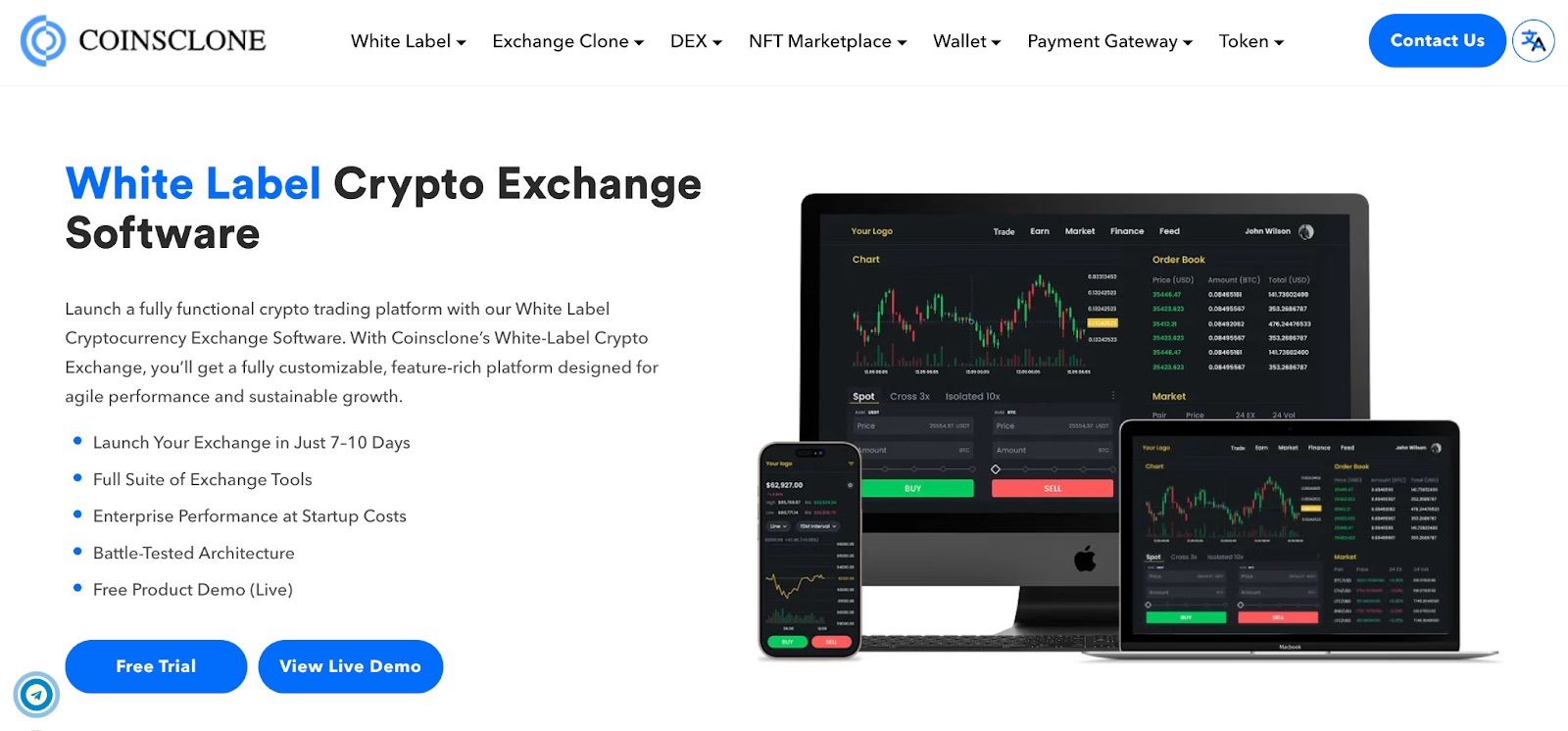 Coinsclone interface

