If you’ve been considering launching your own crypto exchange but keep getting stuck on budgets, timelines, or technical complexity, this guide will help you sort things out. We’ll walk through which models actually work in 2026, what it really costs to launch, and which solutions let you go live in days rather than months. Most importantly, you’ll see how businesses of any size can earn from crypto swaps without taking on unnecessary risks or overloading their teams.
What a Crypto Exchange Platform Is — and Why Businesses Build Them
A crypto exchange platform is a service that lets users swap digital assets: crypto-to-fiat, fiat-to-crypto, or crypto-to-crypto. It can take the form of a web platform, a mobile app, or even a physical desk. Many users prefer simple exchange services over full-scale trading exchanges because swaps are quick, intuitive, and don’t require learning market mechanics or order books.
Welcome to the ChangeNOW Blog. Here we focus on research, real use cases, and practical insights — not hype. While we double-check our facts, nothing here should be taken as financial advice; crypto is a high-risk space, and your own research always matters.
Crypto exchange tools are also widely adopted by businesses: wallets integrate swaps to keep users inside the app, fintech platforms add crypto conversion as an extra feature to grow revenue stream, and investors launch exchange services to earn on transaction fees. As the number of crypto users grows year over year, more entrepreneurs explore cryptocurrency exchange platform development as a way to expand their revenue streams.
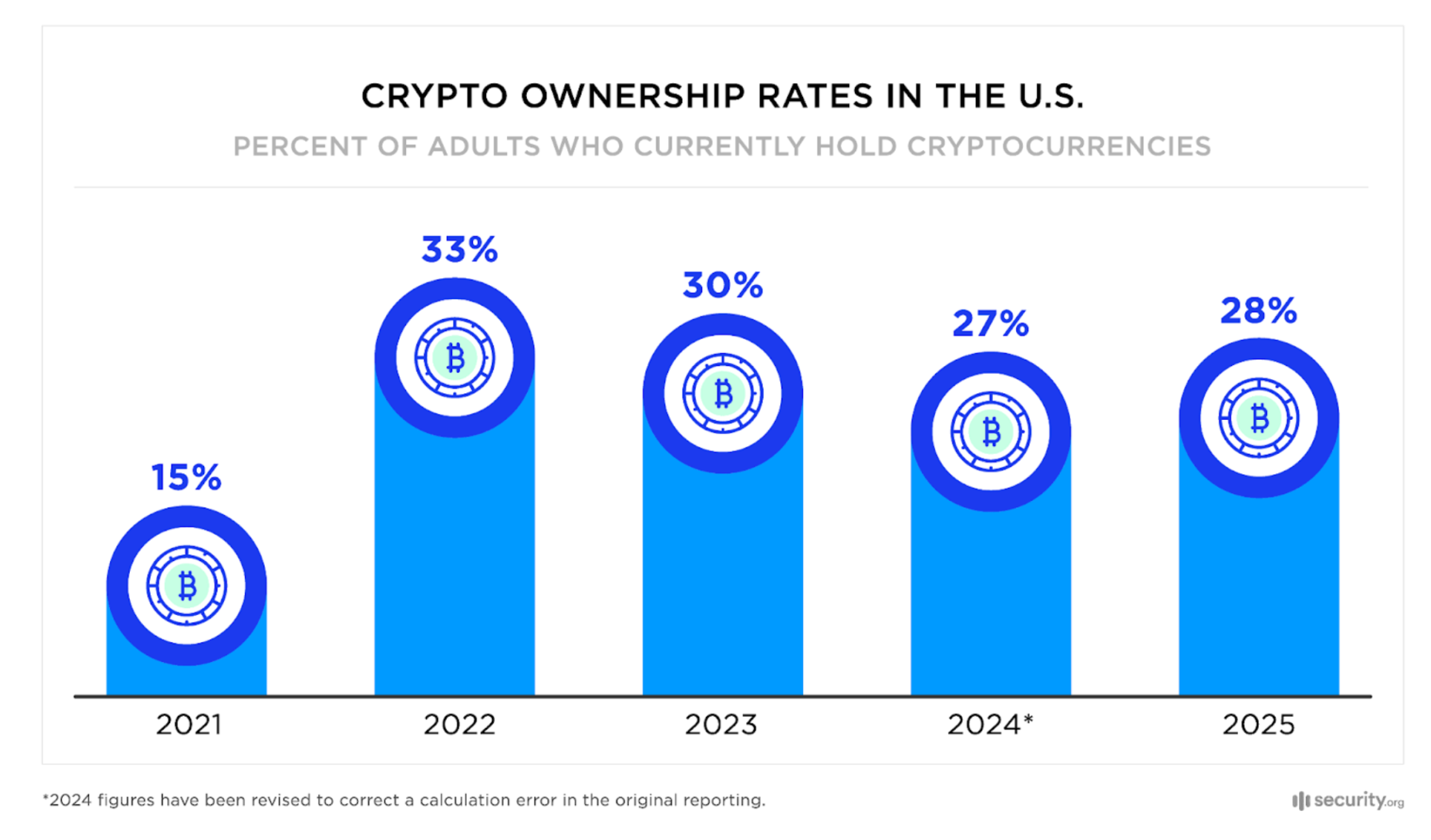
Crypto ownership has nearly doubled since late 2021. By 2025, around 28% of U.S. adults — roughly 65 million people — hold crypto [1].
Growing user interest naturally translates into business opportunities: more platforms, tools, and monetization models appear every year, allowing founders to earn on exchange commissions without building an entire infrastructure from scratch.
Key Steps to Build a Crypto Exchange Service
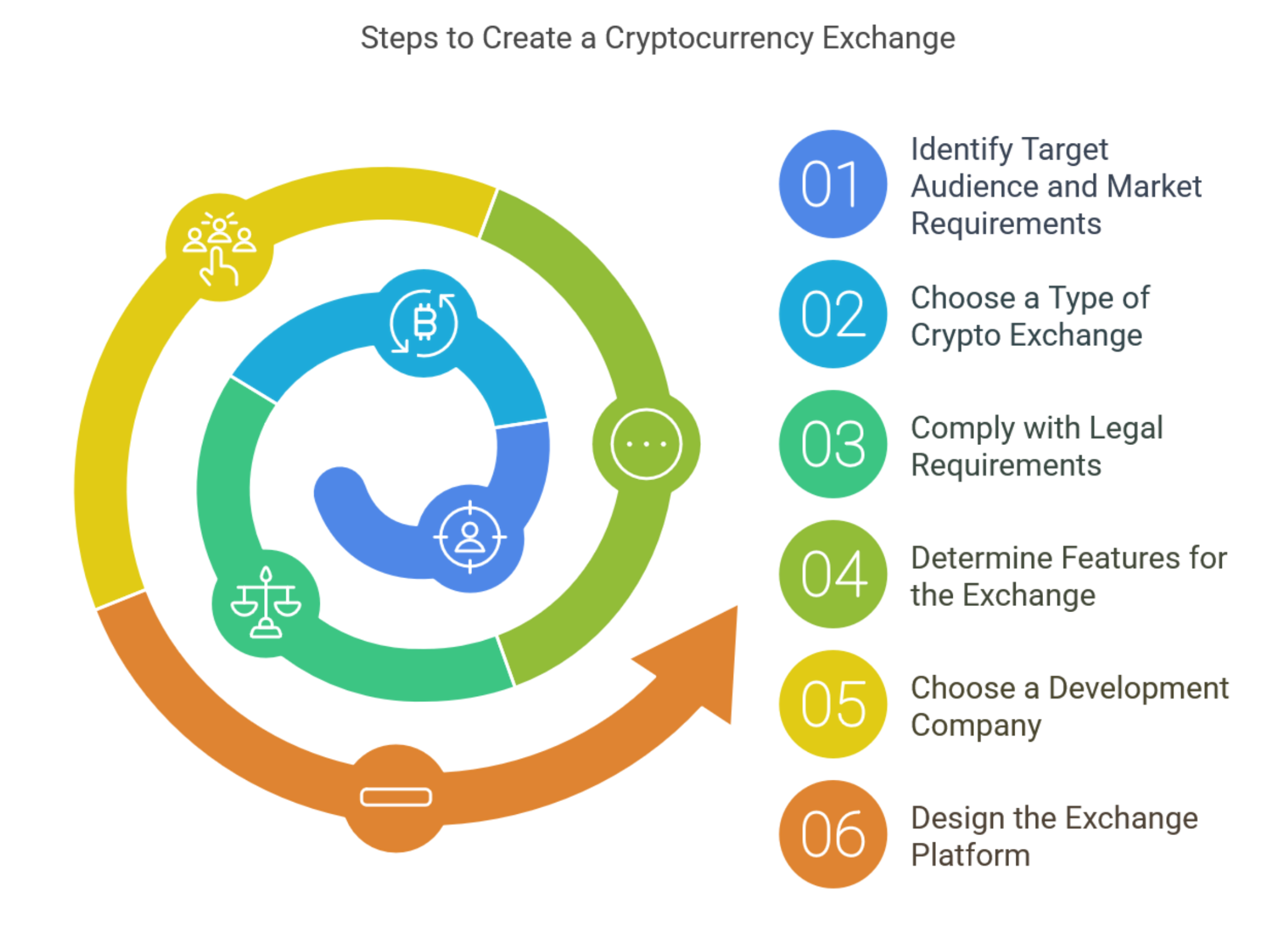
Launching a digital asset exchange business isn’t just about writing code — it starts long before the first line is written. You’ll need to understand your market, choose a business model, navigate local regulations, and think through how you’ll attract your first users. Once that foundation is in place, you can move on to the technical side and start shaping the platform itself.
Begin by studying your competitors: their interfaces, fee structures, product models, and — just as important — what people say about them in reviews, forums, and social media discussions. This gives you a realistic picture of your target audience: who they are, what they need, and why they might choose your platform over an existing one.
Choose a Business Model
There are several models worth knowing: centralized exchanges (CEX), decentralized exchanges (DEX) , and P2P platforms. Centralized exchanges are the most common — they act as intermediaries and usually offer better liquidity and a smoother user experience. Decentralized platforms give users more control and privacy but sometimes struggle with low trading volume. P2P exchanges allow users to trade directly and privately. When choosing your model, focus less on theoretical profit projections and more on what you learned in the research stage — which model best fits your audience and use case?
There is also a fourth model that has become increasingly popular among modern Web3 services — instant non-custodial exchange. These platforms don’t store user funds and don’t rely on on-chain automated market makers: instead, they aggregate liquidity across multiple sources and provide users with fast, simplified asset swaps. This model offers a balance between convenience, reduced compliance risk, and minimal custody obligations.
Regulatory Compliance
Every country has its own rules for crypto-related businesses, and ignoring them can lead to serious consequences, including criminal liability in some jurisdictions. Key compliance components for any crypto exchange application include KYC, AML, and GDPR. It’s also essential to secure the proper licenses and follow local legislation to ensure your service operates legally. We strongly recommend working with legal experts — this is the one area where guesswork can be very costly.
How Make Money with Crypto Exchanges
There are several common monetization models for exchange platforms:
Transaction fees. This is the core revenue driver in most cryptocurrency exchange application development. You can charge a percentage per trade or a share of user profit (if applicable to your model).
Advertising. Some platforms integrate banners or partner placements to earn additional income. The number and placement of ads matters — too much clutter drives users away.
Binance offers advertisers placements inside its P2P exchange environment.
Invite-and-earn mechanics remain one of the strongest acquisition tools. Users get rewarded for inviting new customers who complete swaps.
PRO subscription. Platforms create a PRO version of the exchange with additional features and sell it to users.
How much can an exchange earn?
It depends on the model, traffic, swap volume, and fee structure. Many new platforms start at $1,000–$5,000/month in net profit and grow to tens of thousands monthly. Mature services can process tens of millions of dollars in monthly turnover [2].
Now that you’ve researched the market, chosen your business model, and identified the most effective monetization strategy, it’s time to move on to the technical side of creating your own exchange platform.
Choosing a Type: Custom, White-Label, or Hybrid
When planning cryptocurrency exchange platform development, businesses usually choose between three paths: building from scratch, using a white-label solution, or mixing ready-made modules with custom components.
Custom Development: Building From Zero
Launching a fully custom crypto exchange app development project means assembling your own backend, UX, liquidity connection, compliance framework, and security layer. You’ll need to register a company, choose a jurisdiction, meet local requirements, and plan your time-to-market.
Pros
Full customization. You can create exactly what your users need and differentiate yourself from competitors.
Flexibility. Every component — from UX to liquidity routing — can be designed around your business model.
Cons
Long development time.
Full-cycle cryptocurrency application development may take many months or even a year.
High costs. Engineering, security audits, legal setup, infrastructure, and ongoing support can reach $130,000–$200,000 or more [3].
White-label solutions
White-label exchange
White-label solutions are a popular choice among mid-sized businesses that want to enter the market quickly without heavy investment. You get a ready-made architecture: trade engine, simple UX, liquidity sources, a wallet, and an admin dashboard.
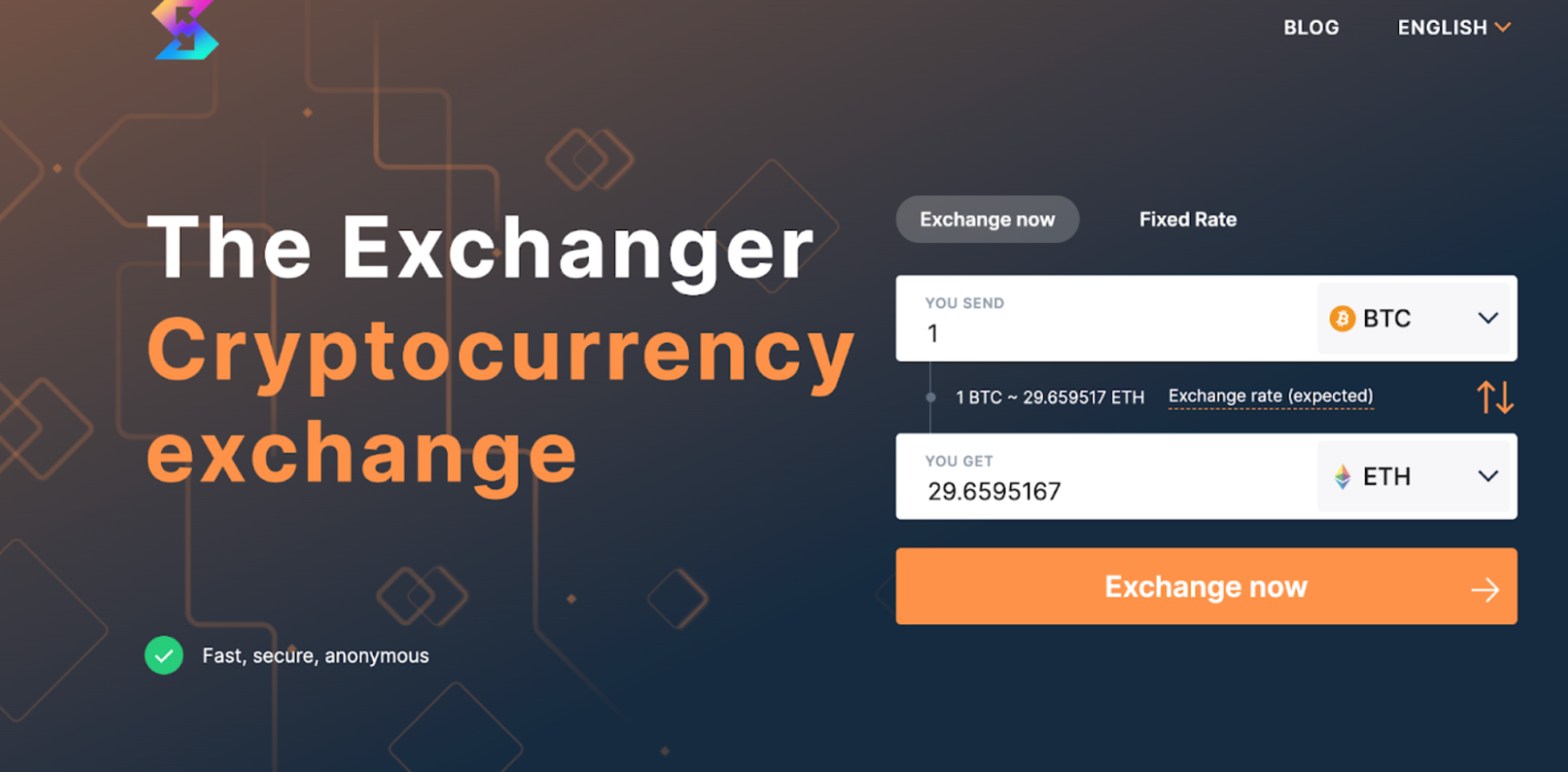
Example of a white-label interface where the underlying provider isn’t visible
Pros
Fast deployment. A fully working exchange can launch in as little as one day.
Lower upfront cost. Most white-label solutions start at around $10,000–$50,000 for a full launch-ready package — sometimes even less if you only need core swap functionality.
Minimal technical burden. Support, maintenance, and testing are handled by the provider.
Cons
Limited customization. Some parts of the system may not be modifiable.
Lower uniqueness. Competitors may use similar platforms — although branding and UI can still make your service truly yours.
Monetization
Fee: 0.4–1% per swap Income potential: $5K–$50K+/month with moderate traffic Best for: businesses targeting steady, scalable long-term revenue
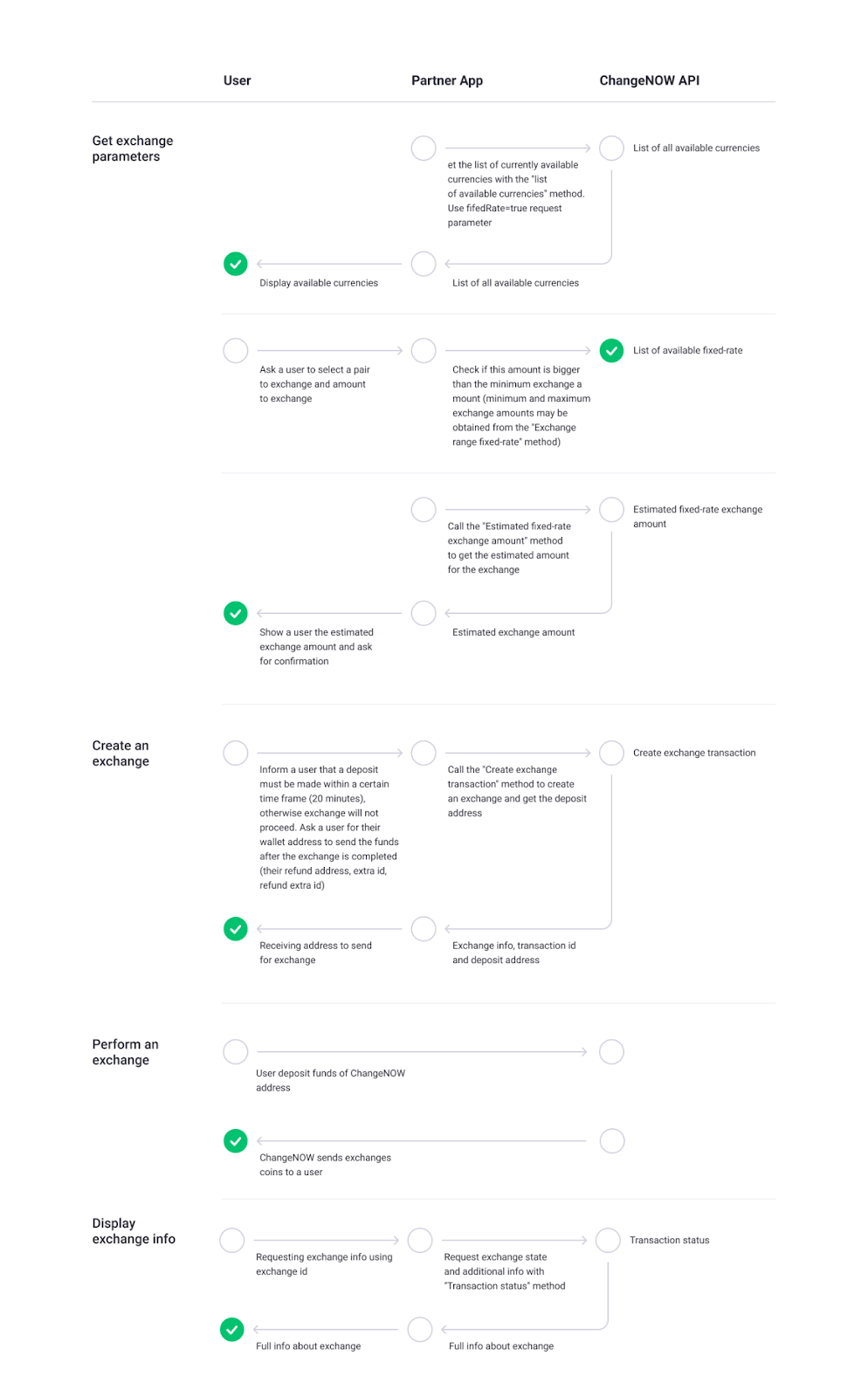
An API key grants authorized access to an existing exchange engine. Developers can build apps, bots, wallets, or fintech products that require seamless crypto conversion — all without hosting their own infrastructure. We’ve already created a guide “How to Use an Exchange API to Start Your Own Crypto Exchange” — follow the link to know how to launch a crypto exchange quickly.
Scheme Of Using ChangeNOW's API For The Fixed-Rate Flow
A ready-made crypto exchange bot for Telegram — no hosting, no maintenance, no engineering.
Pros
Quick and free integration
Perfect for communities, channels, and existing bots
No ongoing support required
Monetization
Fee: 0.4–0.6% Best for: Telegram channels and influencers Potential: $300–$5,000+/month
Ready-made solution
Many businesses choose a modular approach — using ready-made components to speed up launch and reduce cost.
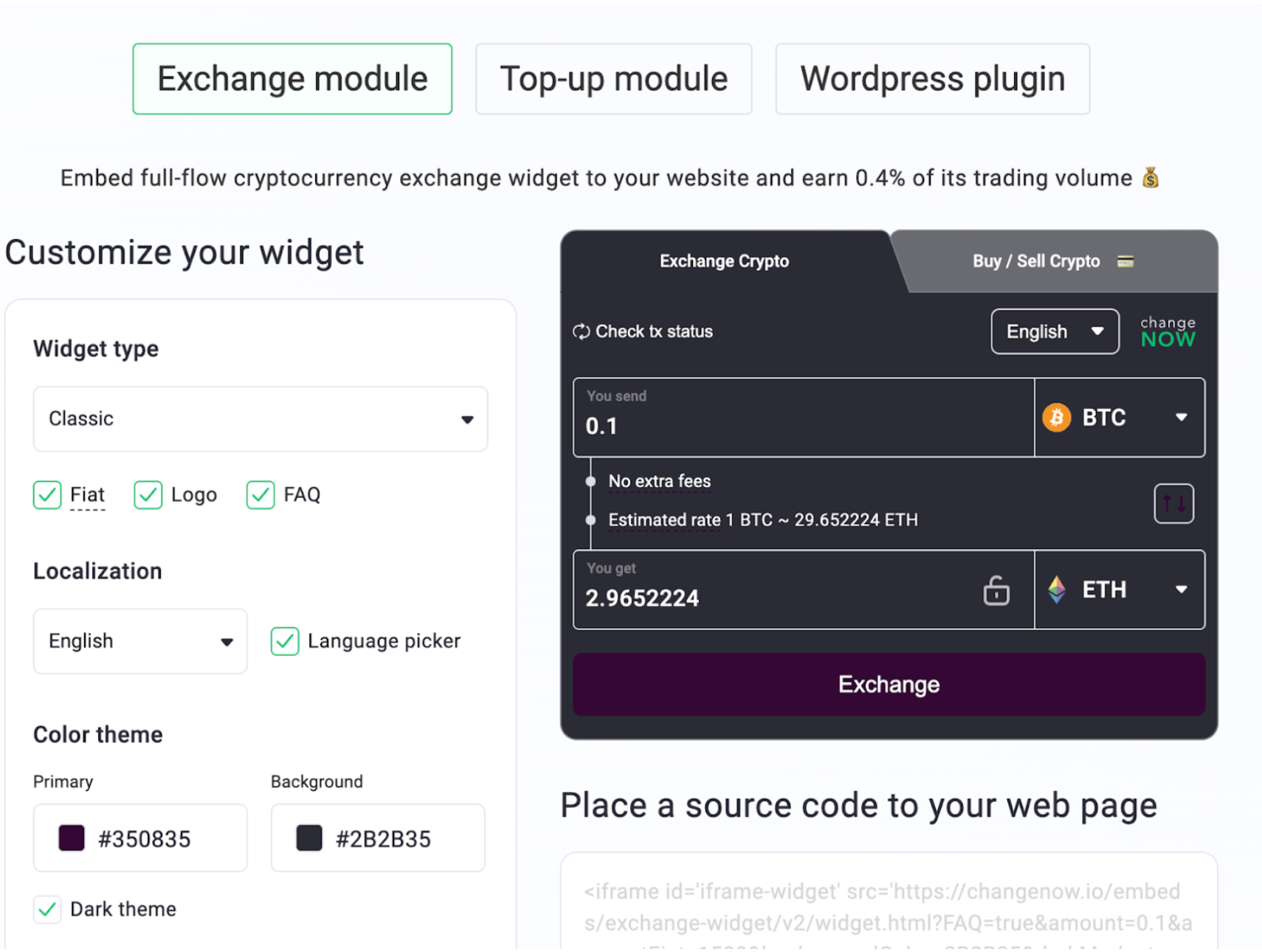
Crypto Exchange Widget
A widget lets you embed a swap module directly into your website — ideal for media platforms, dev agencies, and startups that want to offer crypto conversion without making it their core product.
Some widgets allow branding customization.
Monetization
Fee: 0.4–0.6%
Traffic-based earnings Example: a site with 100K monthly visitors may earn $5000–$10000/month
Comparison: Which Path Fits Your Business?
Solution
Best for
Initial cost
Revenue potential
Risks
Key advantage
Custom Development
Startups, large businesses
$$$$$
$$$$$
High cost; long timeline
Full control and scalability
White-label
Mid-sized businesses
$
$$$$
Provider quality varies
Fastest path to market
API
Wallets, fintech, SaaS
$
$$$$$
Technical dependence
Easy integration
Widget
Startups, media, dev agencies
0
$$$
Provider dependence
Monetize traffic instantly
Telegram Bot
Channels, community projects
0
$$$
Useful only for Telegram based businesses
Zero-maintenance revenue
What You Actually Need to Launch a Crypto Exchange Quickly
If your goal is to test a hypothesis, onboard early users, and earn your first commissions, cryptocurrency exchange platform development doesn’t have to be expensive or slow. The essential checklist includes:
Legal setup: choose jurisdiction, register the company, check requirements.
Domain & hosting: a simple website is enough.
Branding & UI: logo, colors, small UI adjustments (if using white-label).
Integration: widget (~1 hour), API (1–3 days), white-label (1 week).
Fee configuration: define your earning model.
Analytics & monitoring: track conversion and transaction flow.
Real Business Use Cases
1. Telegram news channel: API integration
A Telegram channel integrated ChangeNOW’s API to run its own swaps inside the bot.
Monthly swap volume reached $150,000, generating $1,500 profit.
Partner feedback:
“Highly recommend integrating with you — simple APIs and embeddable widgets make it easy to retain users and drive profits.”
2. Blog with declining traffic → Widget monetization
A blog added a ChangeNOW widget after donations dropped. Even with reduced traffic, swap revenue helped the blog reach break-even — and then steady profit.
Partner feedback:
“I’d advise new projects to keep fees low and work on growing traffic.”
3. Crypto wallet → In-app exchange
A wallet integrated on-chain swaps to keep users inside the app. Commission revenue grew by 34% in the first 3 months, and user retention improved significantly.
Partner feedback:
“ChangeNOW delivers excellent service — responsive team, user-friendly product, and strong partner support with monthly reports and co-marketing opportunities.”
Summary
Building a crypto exchange today isn’t as hard or expensive as it used to be. You don’t need a huge tech team or months of development — what you really need is a clear goal, a reliable infrastructure partner, and a simple way to bring users in.
Some companies go all-in and create a fully custom platform. Others choose a white-label to get to market faster. And many businesses start small: they add an exchange widget to their website, integrate an API into their app, or even launch a Telegram bot to test demand. All of these paths can work — it just depends on the kind of product you want to offer and how quickly you want to move.
The common thread is this: users want fast, safe, and convenient ways to swap crypto. If you can give them that, you can build a solid revenue stream on top of your existing product — without turning your entire business into a crypto exchange.
And if you’d like a simpler way to start, ChangeNOW has ready-made tools for every stage: from quick integrations to full white-label platforms. You focus on your audience — we handle the infrastructure.