The digital asset landscape is entering a phase of "institutional maturity." Analyzing market dynamics from 2021 to 2023, we observe a period of establishment and growth. By 2026 to 2028, we might refer to this as the "era of licensed, infrastructure-driven regional platforms."
According to a recent report by Mordor Intelligence, the global cryptocurrency market is projected to grow from $4.87 trillion in 2025 to $18.15 trillion by 2030, with a compound annual growth rate (CAGR) of 30.10%. One of the primary drivers of this market growth is the demand for transparency, speed and convenience that crypto offers.
Consequently, there are always offers to provide for the demand. However, stricter regulations MiCa in the EU, VARA in UAE are increasing the barriers to entry for newcomers, making it more challenging to succeed without proper guidance, budget, or technical support.
This is why the white-label industry is in high demand; it allows businesses to launch services more quickly using infrastructure provided by white-label providers.
In this article, we will outline the pivotal shifts and crypto predictions that are redefining the sector. From AI-driven risk management to the tokenization of real-world assets, we’ll explore the core components of a modern exchange stack and explain how businesses can navigate this complex landscape to build a secure, compliant, and future-ready trading empire.
These insights are based on currently available market data and industry trends. We recommend you to always conduct your own research (DYOR) and consult with the legal professionals and experts before any major strategic decision.
Welcome to the ChangeNOW Blog. Here we focus on research, real use cases, and practical insights — not hype. While we double-check our facts, nothing here should be taken as financial advice; crypto is a high-risk space, and your own research always matters.
Pre-Built Regulatory Modules: Compliance as a Feature
FAQ
Depending on the provider, cost might be different starting from a basic platform - $40.000 and up to $150.000 with a more advanced set. ChangeNOW Crypto Exchange API provides a free integration and setup via API key ideal for market testing without massive costs.
It really depends on how much you want to change. Also, the speed depends on the provider approach and the client’s customization preferences, starting from a few hours up to 2 months.
While the $18 trillion forecast is exciting, it’s not guaranteed. The biggest problems for the market are fragmented global regulations (different rules in every country), cybersecurity breaches on a massive scale, and the potential talent drain as blockchain engineers move into AI.
Most providers handle the heavy lifting: security patches, node updates, and server uptime. You also get regular feature updates so your platform doesn't look like it’s from 2015. On your end, you’ll usually only need to worry about customer support and marketing, while the technical "engine" is maintained by the provider.
It’s a bit of both, but mostly it’s a huge hand. While new rules like MiCA (Europe) or VARA (Dubai) mean more paperwork and higher compliance costs for startups, they are the "green light" big institutional investors have been waiting for. This legal clarity is exactly what’s moving crypto from a "risky bet" to a legitimate, trillion-dollar asset class.
As we’ve discussed, the market now prioritizes two things: speed and the ability to stay on the right side of the law. Regulations aren't just red tape; they are there to filter out bad actors and keep the ecosystem stable. If you choose to build a platform from the ground up, you aren't just coding, you are spending months and a fortune on legal frameworks. White-Label providers solve this by baking compliance directly into the software.
Here is what these built-in modules actually do for a business:
KYC/KYB (Know Your Customer/Business)
This is essentially a digital gatekeeper. It automates the messy process of verifying IDs and checking company records to ensure that no one on an international "no-fly" or sanctions list ends up on your platform.
(SumSub: KYB)
AML (Anti-Money Laundering)
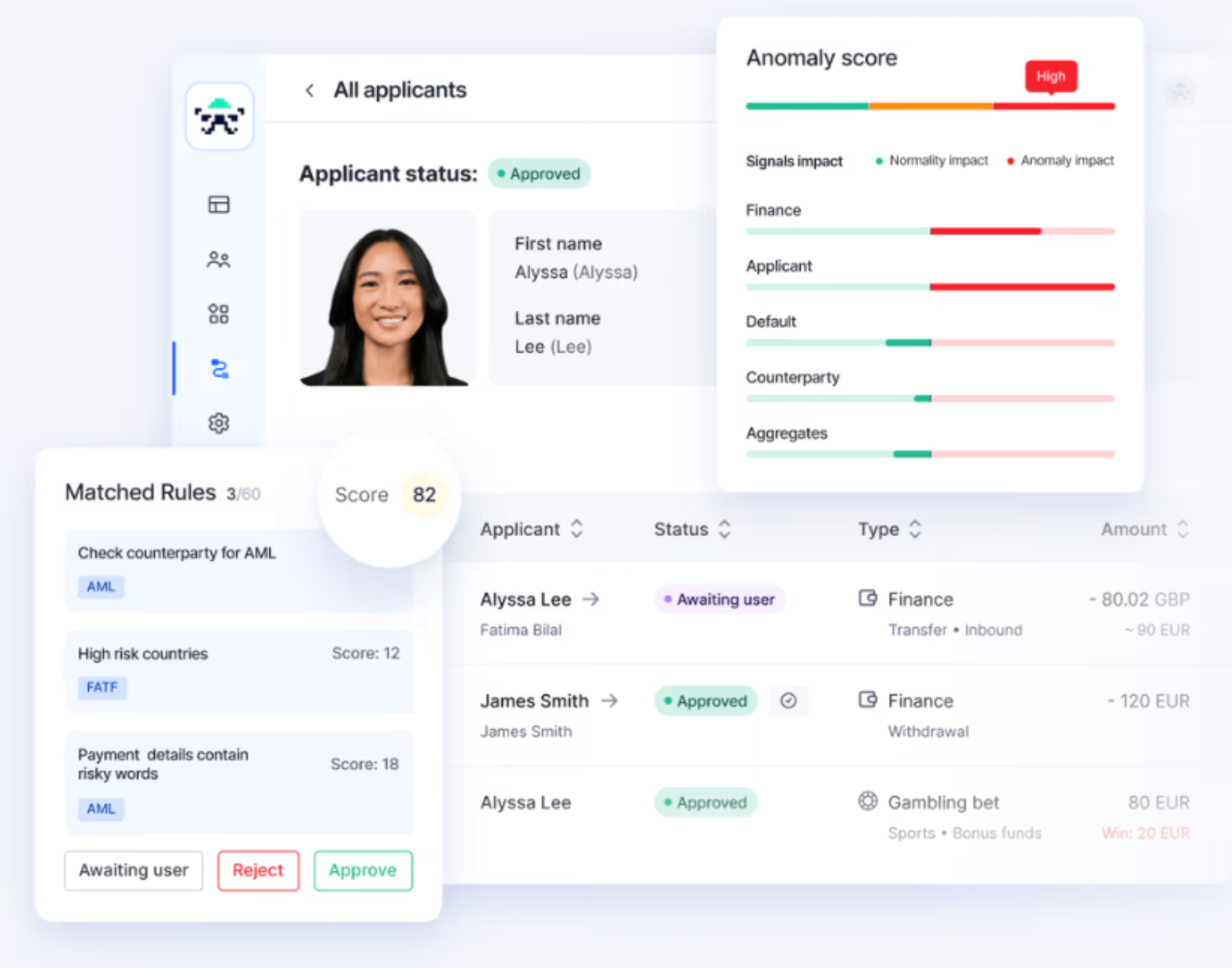
Think of this as a 24/7 security camera for your transactions. It uses specific algorithms to spot weird or repetitive patterns, allowing you to catch suspicious moves before they become a legal nightmare.
(SumSub: AML transaction monitoring)
Tax Reporting
The era of "invisible" crypto gains is long gone. Modern systems now come with built-in tools that generate the reports needed for tax authorities. It makes life easier for users and keeps the platform compliant with national laws.
(Koinly: Tax Reporting Software)
Cybersecurity/Data Protection
In the crypto world, being online means being a target. Since hackers never stop looking for gaps, having top-tier encryption and data protection isn't just a bonus; it’s the only way to keep your users' trust and your business alive.
In short, you are not just buying software, you are choosing the solution that is compliant with local regulations and aligned with the operator's license.
Native Integration of DeFi, NFTs & Real-World Assets
In the upcoming 2026–2028 cycle, a simple "buy and sell" interface won't be enough to keep users engaged. The next generation of traders expects a hybrid experience. This is why modern White Label Crypto Exchange solutions are moving toward "super-app" functionality, blending traditional exchange features with the latest Web3 innovations.
DeFi & Staking
Instead of just holding assets, users can now access decentralized finance directly. Modern WL platforms often come with built-in "Earn" modules. However, implementation of these modules is defined by jurisdictional compliance (MiCA in the EU, or SEC in the US) and operational models. Operational models can be custodial (where the platform manages the nodes and takes commissions) and non-custodial (where platform provides an API to protocols, ensuring the users privacy.)
Perpetual Futures (Perps)
This is where the real volume is moving. Unlike standard futures, "perps" don't have an expiry date, making them the go-to tool for high-leverage trading. Modern White-Label stacks now offer built-in perps engines that handle complex funding rates and liquidations automatically, giving your platform the professional feel of a top-tier exchange.
The catch: in many jurisdictions, offering Perps to retail users is strictly prohibited or requires a full derivative license. White-Label solutions integrate a compliance engine that automatically restricts the usage or blocks specific regions based on operator’s license.
Prediction Markets
Think of this as the “decentralized crowd wisdom”. Whether it’s betting on election results or even weather events, prediction markets are exploding in popularity. In some jurisdictions, rather than offered as a default exchange module, prediction markets can be proposed as a separate and experimental feature, acting accordingly to the local regulatory framework.
Real-World Assets (RWA)
This is perhaps the most significant shift. We are seeing a massive move toward the tokenization of private equity, gold, and real estate. White-Label providers are starting to include specialized modules for RWA trading, bridging the gap between "old-school" investments and blockchain efficiency.
The Boston Consulting Group Report projects that the tokenization of global illiquid assets will reach $5.2 trillion by 2026 and $10.2 trillion by 2028.
By integrating these features natively, a business can offer a comprehensive financial ecosystem. It’s no longer just an exchange; it becomes a one-stop-shop for the digital economy.
DEX–CEX Models: Hybrid Architectures Become Standard
The long-standing tug-of-war between Centralized (CEX) and Decentralized (DEX) exchanges is reaching an evolutionary stalemate. For years, traders were forced to choose: do they want the millisecond-fast execution of a CEX at the cost of giving up their private keys, or the total sovereignty of a DEX at the cost of high slippage and clunky interfaces?
Industry leaders are increasingly noticing that this friction is the primary barrier to mass adoption. As Pauline Shangett, CSO of ChangeNOW, famously noted in recent industry discussions, "DeFi needs its iPhone moment." She argues that for crypto to truly go mainstream, platforms must prioritize safety and simplicity without compromising the freedom that decentralization provides. This vision is precisely what drives the shift toward Hybrid Exchange (HEX) models in 2026–2028.
These architectures are becoming the benchmark for White-Label providers because they solve the industry's two biggest headaches: liquidity and trust.
The Best of Both Worlds:
In a hybrid setup, the actual "matching" of buy and sell orders happens off-chain on high-speed servers (CEX style), ensuring instant execution. However, the actual settlement (the movement of money) happens on-chain (DEX style). This means the exchange never truly "holds" your funds in a way that puts them at risk of a single point of failure.
Solving the "Empty Order Book" Problem:
One of the biggest challenges for new exchanges is a lack of liquidity. Hybrid White-Label solutions often rely on liquidity aggregation from a mix of markets, liquidity providers and decentralized protocols, rather than direct access to a single exchange.
Institutional Trust through Transparency:
After the high-profile collapses of several centralized platforms in recent years, "Proof of Reserves" is no longer enough. Hybrid models offer real-time, on-chain verification. Users can see that their assets exist and are secured by smart contracts, not just by an entry in a private database.
This shift toward hybridity is essentially a "quiet" upgrade. To the end-user, the platform feels as fast and easy as any top-tier app, but under the hood, it’s powered by a decentralized engine that eliminates the need for blind trust.
Multi-Asset and Cross-Chain Support in White-Label Crypto Solutions
In the early days, an exchange could survive by supporting just Bitcoin and Ethereum. But as we move toward 2028, the market is facing extreme fragmentation across dozens of Layer-1 and Layer-2 networks. For a new exchange, the goal is no longer just to provide access, but to hide the complexity of the underlying blockchain technology.
Interoperability as a Standard:
Modern White-Label platforms are moving away from isolated "silos." Through the integration of cross-chain bridges and protocols (like LayerZero or Polkadot), these solutions allow users to swap assets from Ethereum to Solana or Arbitrum seamlessly.
Beyond Coins: Multi-Asset Ecosystems:
We are seeing a massive shift toward platforms that support more than just "crypto." White-Label providers are now incorporating support for tokenized stocks, commodities, and stablecoins backed by various fiat currencies. This allows a business to offer a single "Super-App" where a user can rebalance their portfolio from BTC into tokenized Gold or a USD-stablecoin in seconds.
Unified Liquidity Pools:
One of the biggest advantages of cross-chain support is the ability to aggregate liquidity. Forget about struggling with ghost-town order books on a single network. A solid cross-chain white-label setup lets you tap into global liquidity across dozens of chains all at once. It’s a total equalizer and it means a small, regional exchange can actually offer the kind of tight spreads you’d expect from a global giant.
Ultimately, a leader in the 2026–2028 market won't be the platform with the most features, but the one that makes the multi-chain world feel like a single, unified experience.
The Rise of Modular, Customizable Stacks
The demand for plug-and-play solutions is hitting an all-time high, and it’s easy to see why. Modern companies are moving away from the "build everything from scratch" mentality. Instead of draining internal resources on foundational code, they are seeking reliable White-Label providers who can deliver specific, high-performance functionalities that slot directly into their existing operations.
In this context, modularity is the name of the game. A "modular stack" means your exchange isn't one solid block of code, but a collection of independent packages designed for specific roles.
The "Lego" Approach to Compliance:
You don't have to build a KYC department. Instead, you "plug in" a pre-built KYC/AML module that is already calibrated for specific regions like the EU or Asia. If regulations change, you simply update or swap that module without breaking the rest of your exchange.
Liquidity on Demand:
Smaller platforms no longer have to struggle with empty order books. By integrating a modular liquidity aggregation package, a new exchange can instantly "tap into" global flows from major providers.
Customization as a Competitive Edge:
Business owners want a unique look and experience. Modular stacks allow for deep UI/UX customization. You can change the branding of your platform, add unique trading widgets, or launch a mobile app, all while the heavy-duty matching engine runs silently in the background.
By choosing a modular stack, businesses are essentially future-proofing themselves. They get the speed of a ready-made solution with the flexibility of a custom build.
AI for Risk & Liquidity Management
Artificial Intelligence has transitioned from a buzzword to the "central nervous system" of modern exchanges. By 2028, managing a high-volume platform manually will be practically impossible. White-Label providers are now embedding AI-driven engines to handle the two most volatile aspects of the business:
Predictive Liquidity Balancing:
We're moving away from "reactive" fixes. Instead of waiting for a crash to happen, AI models now dig into historical trading data and social media sentiment to actually see a liquidity crunch coming. It lets the platform move funds between pools before things get ugly.
Smart Fraud Detection:
Traditional rule-based systems are easy to bypass. AI-powered risk modules use machine learning to identify behavioral anomalies in real-time: spotting wash trading, account takeovers, or complex money laundering patterns that human auditors might miss until it's too late.
To see these concepts in action, it’s worth watching this insightful TEDx talk by Debra Au.
As a compliance expert at a major bank, she breaks down how AI is becoming the ultimate shield against the next generation of crypto scams. She highlights a crucial shift: we are moving from a world where we 'react' to fraud, to one where AI predicts and neutralizes threats before they can do real damage. It’s a perfect look at why these smart modules are no longer optional, they are the new standard for trust.
Security and Certifications: The Non-Negotiable Baseline
In the post-2025 era, simply saying "we are secure" is a marketing failure. Security has shifted from a promise to an audit-ready document record. For a White-Label solution to be viable for institutional clients, it must meet what are now the "Big Three" industry standards:
ISO 27001: The global gold standard for information security management systems (ISMS).
SOC 2 Type II: Critical for the North American market, proving that the exchange doesn't just have security policies, but actually follows them consistently over time.
CCSS (CryptoCurrency Security Standard): A specialized audit focusing on the lifecycle of private keys and wallet storage.
Choosing a provider with these pre-existing certifications isn't just about safety, it's about drastically lowering your insurance premiums and building immediate trust with high-net-worth traders.
A Need for Regulated Regional Exchanges
We are seeing a massive shift to Compliant Regional Exchanges. As global giants face increasing pressure from local governments, a new gap in the market has opened for platforms that are "born and raised" within specific legal frameworks.
Whether it’s MiCA in Europe, VARA in UAE, or the evolving SEC standards in the U.S., the demand is moving toward exchanges that speak the local language of both users and regulators.
White-Label solutions are the only way for these regional players to go live fast enough to capture their local market before the "window of opportunity" closes.
Being the biggest isn't the goal. Being the most trusted and secured in your region is.
Real-World Use Cases: White-Label Fintech Solutions for Diverse Business Models
Now, let’s shift our focus to the practical side and explore the specific business models that benefit most from integrating White Label crypto exchange software.
Business Model
How White-Label Solutions Are Used
Key Benefit
Small & Medium-Sized Businesses (SMBs)
Add crypto payments or basic exchange features as an extension of their core service
Expand offerings without costly custom development
Startups
Monetize existing traffic by launching crypto features without building infrastructure
Faster go-to-market and focus on user acquisition
Enterprises
Integrate exchange modules into existing digital ecosystems
Modular upgrades while preserving brand identity
Fintech Platforms
Embed crypto wallets and trading features into fiat-based apps
Evolve into “super-apps” bridging fiat and crypto
Brokers (FX & Equities)
Offer multi-asset trading including crypto from a single account
Higher ARPU (Average Profit per User) through diversified asset access
iGaming & Online Casinos
Enable instant crypto deposits and withdrawals
Reduced payment friction, lower fees, no chargebacks
Financial Institutions & Banks
Use regulated custody and exchange modules for digital assets and RWAs
Offer institutional-grade crypto products while staying compliant
Verdict: White-Label solutions are a highly adaptable foundation for almost any business entity and niche. With a custom integration approach, businesses can quickly start generating revenue from the implemented systems.
Conclusion and Strategic Takeaways
Let’s be clear: the crypto market matured into a self-sustaining, multi-trillion-dollar ecosystem where the stakes have truly moved into the big leagues. According to recent crypto forecasts by Mordor Intelligence, we are looking at a market growth rate—30.10% CAGR (2025-2030). This isn't just a random number, it’s a reflection of three major shifts happening right now:
Regulation is the New Normal:
The "Unregulated" days are over. Compliance frameworks like MiCA in Europe and VARA in Dubai are giving big institutions the green light they’ve been waiting for. This legal clarity is essentially a "welcome" sign for traditional capital.
The "All-in-One" Hub:
We’re seeing a massive migration of Real-World Assets (RWA) and tokenized securities onto the blockchain. Exchanges are evolving from simple trading platforms into comprehensive wealth management centers where you can manage everything in one place.
A Level Playing Field:
Thanks to smarter, modular infrastructure, the barrier to entry has crumbled. White-label solutions allow local providers to launch high-end platforms that can actually go toe-to-toe with global giants, all without the multi-million dollar R&D budget.
The Pragmatic Path Forward: ChangeNOW’s White-Label Infrastructure
If looking to enter this space, the question isn't just if you should do it, but how to start your own crypto exchange without years of development and dramatic investments.
If you're searching for a pragmatic way to enter this $18 trillion market, ChangeNOW Crypto Exchange for Business offers one of the most flexible "entry tickets" available. Unlike heavy, legacy systems that take months to deploy, ChangeNOW’s white-label solution is built for speed and non-custodial security.
Zero-Cost Setup & High Speed:
You can integrate ChangeNOW crypto exchange API or a ready-made widget for free. For most businesses, this means going live in a matter of days, not months.
Massive Asset Support:
Access instant swaps for 1,500+ cryptocurrencies across 100+ blockchains. This level of variety is usually only found on global giants, but with a white-label, it's yours from day one.
Safety First (Non-Custodial):
Because the solution is non-custodial, your users keep control of their private keys. This drastically reduces your business's legal liability and eliminates the risk of "centralized exchange hacks."
Passive Revenue:
You have full control over your commission rates. You can set your own fees on top of the exchange, creating a steady, hands-off revenue stream as your user base grows.
Fixed vs Floating Exchange Rate in Crypto: Which to Choose?
A fixed rate locks your final crypto amount against volatility, while a floating rate executes at live market prices. Learn the difference, risks, and when to use each.


 (SumSub: KYB)
 (SumSub: AML transaction monitoring)
 (Koinly: Tax Reporting Software)

