Ever thought about why crypto-friendly banks are such a hot topic lately? The answer lies in the growing need for stable fiat-crypto integration, clearer regulations across Europe, and the rising demand for seamless global transactions.
According to the Coinpaprika report, over 50 European banks are offering some form of crypto support [17]. This signals a major shift: traditional institutions can no longer afford to ignore digital assets.
What you will find in this article is a full, honest, analytical review of the crypto-banking landscape. You’ll see real user experiences, a comparison of the most active banks, and practical recommendations on how to evaluate accounts so you avoid the common pitfalls of freezes, AML flags, or sudden policy changes. As an outcome, you’ll be able to navigate this space with a much clearer understanding of what works today and what may cause issues tomorrow.
Here are the key takeaways that matter most for anyone exploring crypto-related banking today:
Location Dictates Your Options:
Crypto banking regulations vary by region – the EU, the US, Australia, and Singapore each have unique rules.
Best in Europe:
Revolut and N26 offer accessible crypto services, but expect AML reviews for large transfers.
Best in the US:
Silvergate Bank and Signature Bank are solid options for crypto businesses, though increasing regulation may limit access.
Best in Australia: Macquarie Bank provides reliable crypto-fiat transfers, though with some restrictions.
Best in Singapore: DBS Bank leads for institutional crypto services, with Sygnum Bank offering regulated custody.
Expect These Hurdles: Be ready for sudden account freezes, AML reviews, and shifting bank policies.
Proven Risk Management: Start small, diversify across banks, and keep detailed records to manage risks.
Leverage Crypto-Native Infrastructure: Use non-custodial platforms to reduce compliance friction with traditional banks.
The Fundamental Principle: Success lies in building a flexible, multi-layered strategy, not relying on one "perfect" bank.
A Realistic Breakdown of Markets and Risks
Understanding how banks treat crypto in 2026 starts with geography. Regulations, risk tolerance, and compliance culture vary dramatically across regions. A banking strategy that performs flawlessly in one jurisdiction can fail instantly in another. Once you see the broader landscape, the individual bank behaviors become easier to interpret.
Deep research is required; Macquarie stands out as reliable.
United States (US)
Low (Extremely cautious)
Regulatory fragmentation
Account closures, denied transfers
Use licensed exchanges; consider DeFi ramps for large amounts.
Before breaking down each region, note a core truth: “crypto-friendly” is never absolute. It only means “allowed under conditions,” and those conditions vary sharply from one jurisdiction to the next. With that in mind, we can move into a more granular view.
A Realistic Breakdown of Markets and Risks
To help you evaluate faster, here's a bank matrix summarizing practical advantages and challenges based on active user experience and public policy updates.
Bank
Region
Strengths
Common Issues
Crypto-Friendliness
Revolut
SGP/EU
Easy crypto trading, multi-currency
Holds on transfers >€5k; slow support during freezes
🟡 Moderate
N26
EU
SEPA-friendly, clean UI
Systematic checks for Kraken/Binance transfers
🟡 Moderate
SEBA Bank
Switzerland
Secure custody, institutional grade
Higher fees, stricter onboarding
🟢 Smooth
C24 Bank
Germany
Flexible payments
Mixed user reviews for large crypto transfers
🟡 Moderate
Bunq
EU
Multi-currency, business features
Occasional compliance checks
🟢 Smooth
Westpac
Australia
Strong infrastructure
Blocks crypto transfers
🔴 Risky
Macquarie
Australia
Smooth exchange transfers
Limited crypto-native tools
🟢 Smooth
Monzo
Singapore
Fast retail banking
Account freezes for large deposits
🟡 Moderate
Chase SGP
Singapore
Strong stability
Conservative stance on crypto
🔴 Risky
Starling Bank
Singapore
Solid operations
Blocks or restricts crypto payments
🟡 Moderate
Color guide: 🟢 = smooth, 🟡 = cautious, 🔴 = risky.
The table above provides a quick numerical overview of crypto-friendly banking levels across major regions.
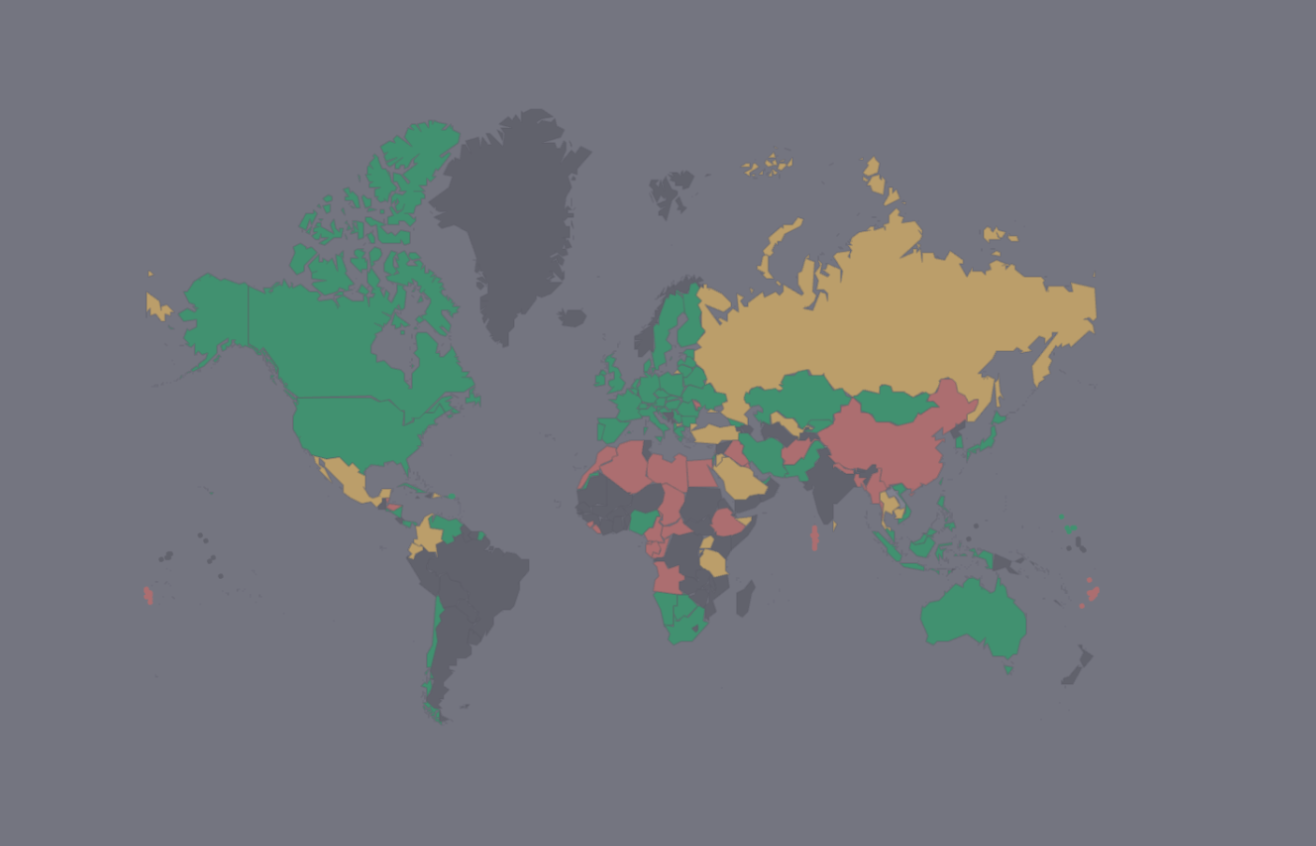
To provide a visual overview of the differences in crypto-friendly banking across regions, we refer to the D&A CryptoMap, which illustrates the regulatory friendliness toward crypto payments in 2026. Keep in mind that this reflects general trends – actual bank-by-bank behavior may vary.
According to D&A CryptoMap [9], this visual representation provides a clear overview of global trends and helps readers contextualize regional differences in crypto banking practices.
On the map, green indicates jurisdictions generally supportive of crypto payments, where banks are likely to allow crypto‑fiat operations with minimal restrictions. Yellow highlights regions with a cautious or mixed approach, meaning some banks may impose limitations or enhanced AML checks. Red marks hostile or restrictive jurisdictions, where crypto payments are limited or banned, and users face a higher risk of account freezes.
Let’s dive deeper into the research and start by looking more closely at the European Union, since it is the most important place for regulatory clarity.
European Union (EU/EEA): The Structured Leader
The EU remains the most predictable jurisdiction for crypto-related banking due to the uniform Markets in Crypto-Assets (MiCA) regulatory framework [1][2]. Yet predictability does not mean leniency. Banks comply, but they comply tightly.
Neobanks like Revolut, N26, and Bunq are accessible and user-friendly, offering in-app trading and fast SEPA transfers. Their weakness is algorithmic AML triggers. Large transfers, even as low as 5,000–10,000 EUR, routinely land in automated review queues [7].
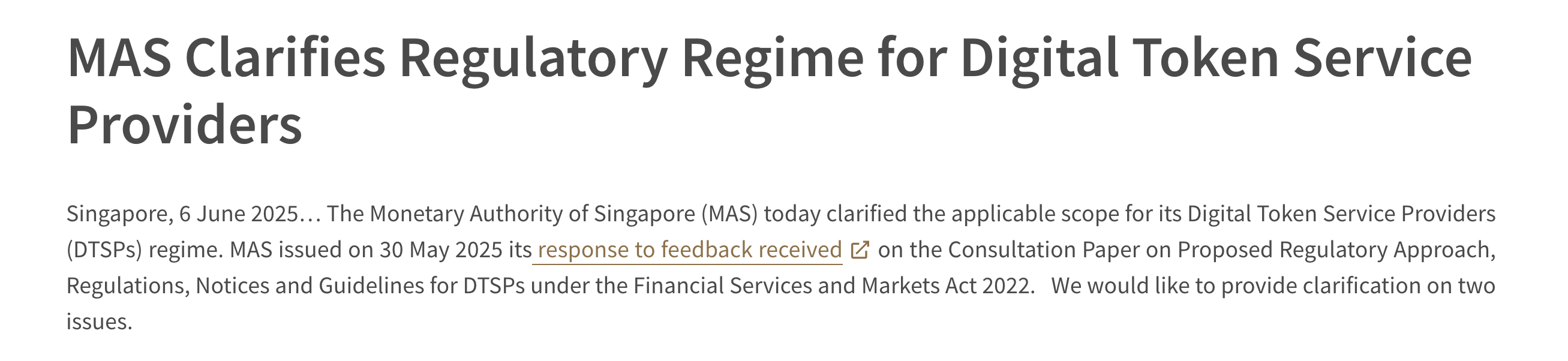
Revolut offers an easy-to-use multi-currency account with built-in crypto trading, allowing users to buy and sell digital assets directly in the app. Its main limitation is custodial storage and automated compliance verification procedures, which can delay larger transfers to external exchanges.
N26 provides a clean mobile banking experience with integrated crypto trading via partners, making it suitable for beginners who want simple access to digital assets. While convenient, transfers to crypto exchanges may trigger routine compliance reviews, especially for higher amounts.
Bunq focuses on flexibility with multi-currency accounts and in-app crypto purchases for users who prefer managing fiat and digital assets in one place. Like other EU neobanks, it applies strict AML screening, so large or frequent exchange-related transfers may face verification.
Traditional banks provide stable rails to licensed exchanges, but their policies shift without warning. Meanwhile, specialist institutions such as SEBA Bank cater strictly to high-net-worth and institutional clientele [2].
Strategic Takeaway: The EU offers the most options, but not the softest touch. Expect scrutiny and build your banking setup with redundancy in mind.
Even though MiCA makes things clearer in Europe, banks still have to do thorough compliance verification procedures and automated assessments. In Singapore, by contrast, you’ll find fewer retail-oriented “crypto banks” but more advanced institutional infrastructure and a very strict, MAS-driven regulatory regime that shapes how banks can interact with digital-asset activity.
Singapore’s “Neobank Equivalent”: The Structured Leader
Singapore stands out for its structured and tightly regulated approach to crypto-related banking. The country lacks a large ecosystem of consumer-focused “crypto neobanks” like those found in Europe, instead focusing on institutional-grade infrastructure that offers highly regulated services for digital assets under the supervision of the Monetary Authority of Singapore (MAS).
DBS Bank, Singapore's largest bank, runs the DBS Digital Exchange (DDEx), a regulated platform for accredited and institutional investors [3].
In 2025, DBS partnered with Franklin Templeton and Ripple to introduce trading and lending solutions powered by tokenized money-market funds (Franklin Templeton’s sgBENJI token) and Ripple’s USD stablecoin RLUSD, listed on DDEx. DBS also provides multi-currency accounts and high-quality digital channels for everyday banking [3].
However, large or repetitive crypto-linked transfers often prompt enhanced due diligence, especially when the behavior seems inconsistent with the customer's profile – a trend consistent with MAS's focus on strict AML (anti-money laundering) practices.
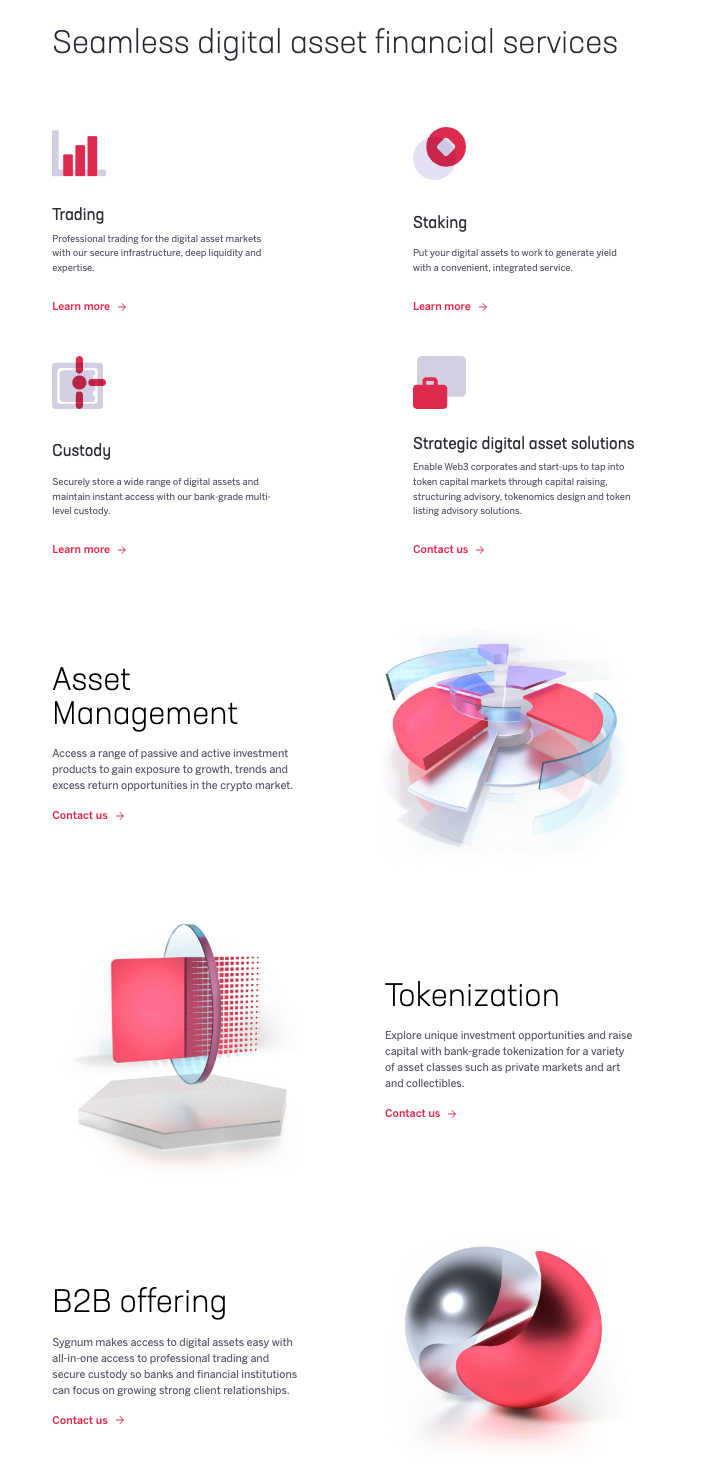
Sygnum Bank, a fully regulated digital-asset bank with licenses from both FINMA (Switzerland) and MAS, focuses on institutional and high-net-worth clients, offering regulated custody, brokerage, tokenization, and wealth management services.
While Sygnum isn’t a retail bank, it’s one of the clearest examples of a “true crypto-friendly bank” operating under stringent regulatory guidelines.
Banks such as OCBC and UOB provide digital banking services but remain conservative when it comes to retail crypto operations [4]. They allow transfers to licensed exchanges but retain the right to request detailed documentation on sources of funds (SOF) and sources of wealth (SOW), delay or review large or unusual crypto payments, and decline high-risk transactions, particularly those involving unlicensed platforms.
For crypto users, the regulatory environment in Singapore is both a benefit and a challenge.
While fintech platforms integrate well with bank accounts, they are still constrained by MAS rules governing DPT (Digital Payment Token) services, ensuring compliance with the country’s stringent regulatory framework [5].
In 2025, MAS ramped up scrutiny of unlicensed exchanges and offshore platforms, telling some crypto firms that they must obtain licenses or shut down operations in Singapore. This has led some businesses to consider relocating to other regions like Hong Kong or Dubai.
These developments underline how quickly Singapore can tighten rules to protect its reputation as a clean financial hub.
Singapore has a highly digitised, tightly regulated banking system, while Australia has a wide range of internal bank rules, which makes for a wide range of experiences for crypto users.
Australia: The Tale of Two Systems
The Australian market is defined less by law and more by the internal policies of individual banks. This creates a wide spectrum of experiences: some institutions make crypto-fiat operations seamless, while others restrict them heavily.
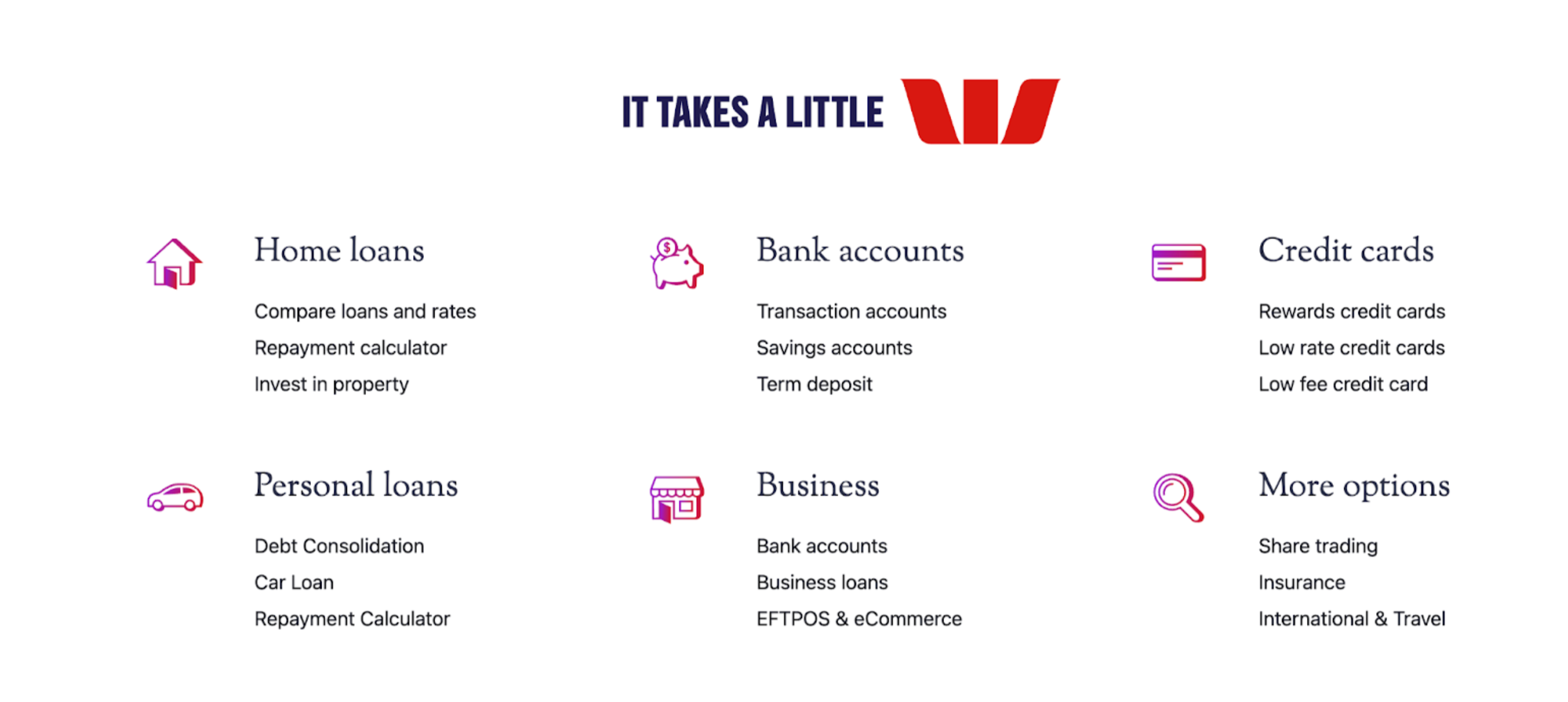
Westpac [9] offers standard banking services and has a large customer base, but its official guidance explicitly limits transfers to crypto exchanges. Users report automatic holds for large transfers, citing risk and consumer protection policies. While Westpac is strong on infrastructure, crypto operations require careful planning.
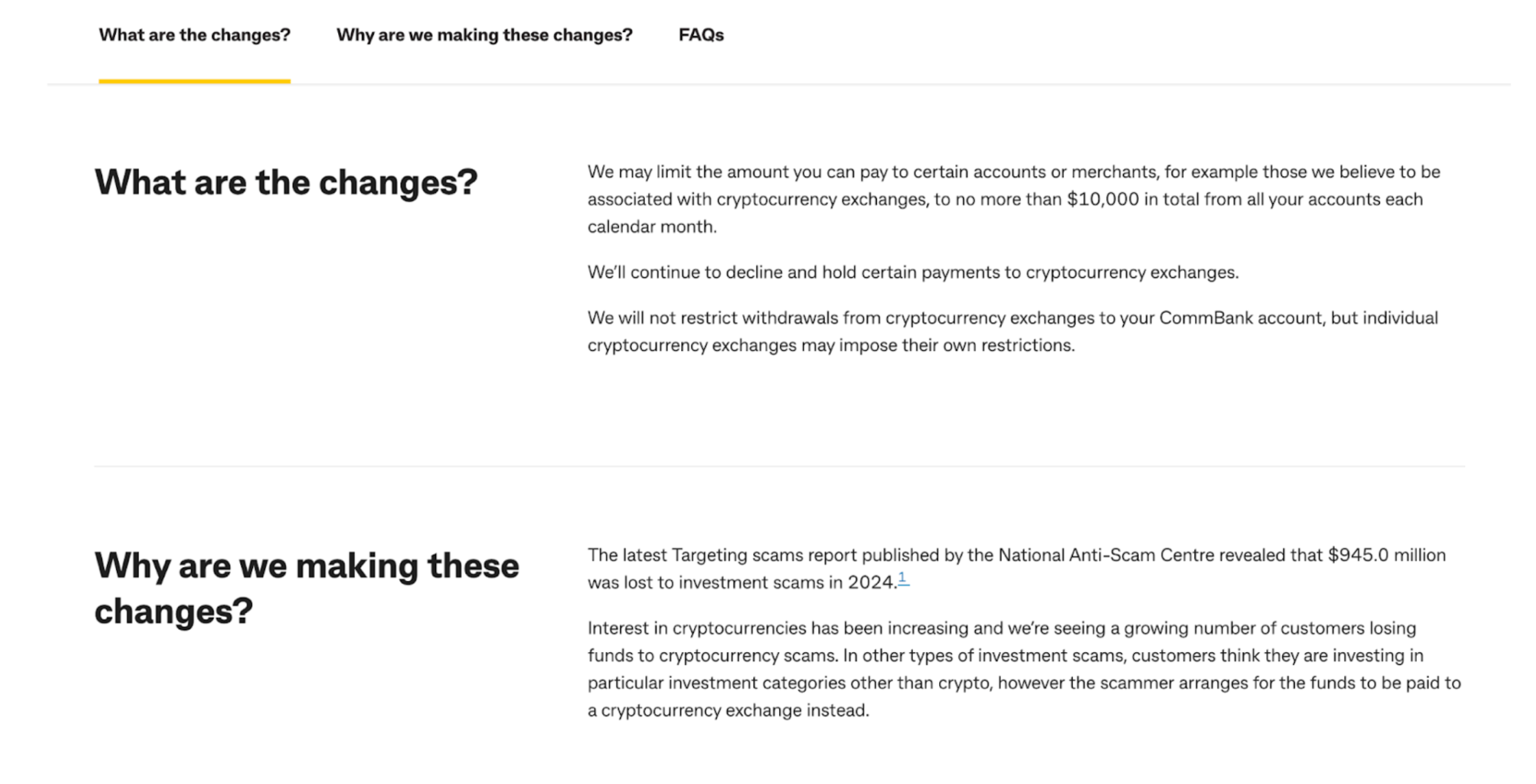
Commonwealth Bank of Australia (CBA) [10] similarly restricts crypto-related transfers. According to CBA’s official help and FAQ pages, payments to certain exchanges are flagged for review.
Users note that even moderate amounts may trigger verification, and support generally directs clients to complete compliance checks before processing.
For crypto-related transfers, Macquarie Bank offers instant payments via PayID and Osko [12].
However, the bank’s policies flag certain transactions to exchanges for AML review, so while generally smoother than other Australian banks, some payments may still be restricted [13].
Up Bank offers a modern app with multi-currency support and fast PayID/NPP transfers [14]. Routine payments to crypto exchanges generally process smoothly without delays.
Larger or unusual transfers, however, may be flagged for AML review and require additional documentation.
Volt Bank [16] allows integrated payments and instant transfers via PayID.
While user-friendly, certain transfers to crypto exchanges may be delayed or require additional verification under the bank’s AML policies [15].
Bottom Line: In Australia, crypto-friendliness varies greatly between banks. Some, like Macquarie and neobanks, provide smooth crypto operations, while others, such as Westpac, CBA, and NAB, impose heavy restrictions. Careful bank selection and gradual scaling are key to avoiding freezes or delays.
United States: The High-Risk Environment
The US is still the most unstable big market for crypto-fiat operations. The fall of crypto-friendly banks like Silvergate and Signature took away the dedicated institutional rails that the industry relied on [7]. Since there hasn't been a direct substitute, traditional banks set their own limits on how much crypto they can handle, and they often see digital-asset transactions as very risky.
Large commercial and regional banks don't completely reject crypto transfers, but they do often look at them more closely. Payments to fully licensed exchanges like Coinbase can be delayed, manually checked, or even denied if they look strange or don't match the customer's profile. This caution doesn't come from bad regulation; it comes from the US's fragmented system, where rules vary from state to state, and federal guidance is always changing. This makes banks put strong AML risk measures first.
Fintech banking platforms like Mercury are one of the few organized avenues for organizations that work in the digital assets sector to get things done. Mercury partners with banks to offer FDIC-insured accounts and enables ACH and wire transfers. However, onboarding is tough and only for US-registered companies that are already in business. Their paperwork makes it obvious that the service is not meant for retail traders who want convenient ways to buy and sell bitcoin [15][16].
Critical Warning: The US is the highest-risk market for crypto-fiat operations. Large banks scrutinize or block transfers, while fintech platforms like Mercury provide limited options for registered companies. Success requires a defensive, compliance-first strategy: diversify accounts, document all transfers, start small, and plan operations around strict AML and state-specific rules. Choosing a bank alone is not enough.
Note that your region defines the boundaries of what is possible. The EU lets you operate widely but with continuous monitoring. In the SGP, the rules for crypto-fiat transactions are very strict. Australia rewards the informed and punishes the unprepared. The US, meanwhile, requires a defensive, compliance-first mindset. In other words, your banking success is not just about choosing a bank. It starts with choosing the right strategy for your jurisdiction.
Now that you understand the limits set by your jurisdiction, you can move on to evaluating specific banks. The key is not in the list of features but in the fundamental indicators of reliability.
What Really Matters: Regulation, Reliability, Transparency
The answer usually lies in regulatory structure and internal risk models.
What you must verify
Before choosing a bank, two key questions arise:
1. What indicators truly signify that a bank is safe and reliable for crypto users?
2. Why do two banks with identical features operate so differently in practice?
The answer usually lies in regulatory structure and internal risk models:
Example of current market shifts
Licenses and regulatory regimes (EU: BaFin, FINMA, local supervisors under MiCA; Singapore: MAS under the Payment Services Act; AU: ASIC and AUSTRAC; US: FDIC-insured institutions with state/federal supervision) [18].
Deposit insurance coverage, public crypto policy pages, history of limitations or freezes, and stable operational history are also key indicators.
In Singapore, MAS has signaled that while it supports tokenization and institutional crypto infrastructure, it will delay full Basel-aligned capital rules for bank crypto exposures until at least 2027, after industry feedback raised concerns about competitiveness and over-conservatism [18].
This situation shows how fast banks and regulators can tighten or adjust policies even in jurisdictions that are generally seen as progressive or “friendly.”
Verdict: Even a “crypto-friendly” bank today might update its stance tomorrow. The safest approach is to continuously monitor policies and never rely on outdated information.
Real User Reviews 2024–2025 (Reddit Samples)
This is where theory meets practice. While banks can appear crypto-friendly on paper, user experience often reveals hidden rules, risk alerts, and inconsistent internal processes.
Below are verified 2024–2025 reviews from Reddit discussions that illustrate how banks treat crypto-related activity in practice [16].
Users report sudden account freezes after large transfers, including amounts ranging from €2,000 to €10,000. The reasons for the freezes are often not explained by the bank, and access to funds is restricted until documents are verified [16][17].
Real user reviews often highlight hidden policies and unexpected challenges with crypto-friendly platforms like Revolut, including account freezes and strict compliance checks for larger transactions.
While services like Trade Republic may offer lower fees, issues with slow support and verification delays are common. Therefore, crypto-friendliness can change over time, and users should regularly monitor policies and be prepared for stricter scrutiny, especially with larger or frequent crypto transfers.
Bottom Line: Even well-known neobanks may have strict internal AML checks. Users advise thoroughly documenting the source of funds and being prepared for checks when transferring to external services, including cryptocurrency exchanges.
Real reviews paint a simple picture: crypto-friendliness is dynamic, not static. Even reputable banks enable transfers but increase scrutiny around large or repetitive transactions.
Opportunities vs Risks
When selecting a bank, it helps to look at the dual nature of the current market. Wondering why some users enjoy smooth crypto-fiat operations while others struggle?
It turns out that success heavily depends on understanding both possibilities and limitations.
Opportunities
Crypto-friendly banks in 2026 can offer:
Direct crypto–fiat integrations
Multi-currency accounts for global operations
Access to stablecoin tools in certain neobanks
Lower transfer friction for smaller and mid-sized operations
Regulated custody solutions
Risks
And here are the pain points users frequently report:
Temporary suspension of account access due to ambiguous transactional red flags
Long compliance investigations
Unexpected regulatory pivot
Transfer limits on high-value deposits
Region-specific bans or partial bans
To conclude, opportunities are real and expanding, but risks remain equally significant. Understanding both sides allows you to approach the next blocks with clarity.
How to Choose the Right Bank (Step-by-Step Framework)
At this stage, you might be wondering how to turn all this information into a practical selection process. Instead of guessing, you can follow a structured evaluation that simplifies decision-making.
The Process
Identify your geographical region and banking options.
Verify crypto policies and available services.
Check recent user reviews from 2024–2025.
Examine fees, limits, and compliance rules.
Launch an account and begin with a small test transfer.
Scale gradually and avoid concentrating funds in one place.
When you evaluate systematically, the risk of dealing with unexpected freezes or restrictions is drastically lower. This leads directly into the next component: a simple checklist.
Where Banks End, Crypto Infrastructure Begins (Why Non-Custodial Tools Matter)
Even the most “crypto-friendly” banks don’t process actual swaps or crypto custody. Their role stops at fiat rails. This means users still need a reliable conversion layer that won’t trigger bank flags or force them into custodial risks. That’s where regulated non-custodial platforms become critical.
For example, ChangeNOW provides fiat-to-crypto and crypto-to-fiat conversions without holding user funds, minimizing the usual AML triggers tied to custodial storage. Since funds remain non-custodial during the swap, banks treat these operations more like verified transfers than high-risk wallet custody. As regulated services, they conduct a standard, one-time verification to ensure user security and platform integrity, which in turn builds trust with banking partners.
Practical takeaway: Even with a crypto-friendly bank account, using a non-custodial exchange as an intermediary can dramatically reduce operational risks, particularly for users dealing with frequent or mid-size transactions that would otherwise trigger monitoring.
Before opening an account, ask yourself: Have I covered all safety points? This checklist gives a quick way to verify readiness.
Checklist
Category
What to Verify
Regulation
Is the bank licensed and insured?
Reviews
Any account freezes reported in 2025–2026?
Crypto Services
Which assets and transfers are supported?
Limits
Deposit, withdrawal, and transfer ceilings
Support
Speed and quality of customer service
Flexibility
Multi-currency support, cards, and stablecoin processes
If all boxes are checked, the probability of running into operational issues becomes significantly lower. The next step is taking concrete action.
Once everything has been reviewed, the logical question becomes, "What should I do now?"
The steps below give a clear sequence you can apply immediately:
Action Steps
Define your jurisdiction.
Use our shortlist of crypto-friendly banks.
Cross-check their 2025 -2026 reviews.
Compare AML and fee structures.
Run a small test transaction.
Diversification is key – consider using a combination of a bank wallet and custodial services to spread risk and enhance flexibility.
This approach reduces uncertainty and ensures a safer long-term strategy.
Future Outlook for 2026
Finally, let’s look forward. What does the next evolution of crypto-friendly banking look like? Current indicators suggest increasing stability and regulatory alignment.
Expected Trends
More native crypto integrations inside neobanks
Better stablecoin payment options
Continued crypto integration in banking with strict regulatory oversight and improved stablecoin options
Reduced arbitrary freezes due to improved risk models
Greater regulatory clarity across the EU
Wider adoption of on-chain AML analytics
As an outcome, users who build diversified, compliant, and well-documented banking setups today will enjoy smoother operations in 2026.
Final Conclusion
In 2026, banks that are friendly to cryptocurrencies will have more options, but you will need to be more careful about how you use them. Finding the perfect bank is no longer the key to success; instead, you need to build a diverse financial infrastructure. The main ideas are to choose a bank based on where you live, grow your business slowly, and use non-custodial tools as a buffer to lower risks.
For experienced users, combining traditional banking with crypto-native solutions is becoming the norm. This hybrid model lowers the number of AML triggers and gives operations a more stable base to work from. However, it's essential to note that bank policies are constantly evolving, and your geographic jurisdiction remains the most crucial factor.
To conclude, the outlook for 2026 points toward deeper integration and more refined regulations. The most resilient position will be held by those who build their strategy today on diversification, documentation, and smart technological choices. True confidence in crypto banking now stems not from a single bank account, but from a well-architected and adaptable system.
Reader’s Roadmap
This guide is well structured to help each reader type move efficiently through the material:
If you’re in the EU or the SGP: Start with the Regional Analysis, then move to the Bank Comparison Table, and finish with the Pre-Opening Checklist to validate your setup.
If you’re in the US, Australia, or a higher-risk jurisdiction: Focus on the Regional Analysis relevant to your zone, then review Risks & Opportunities, and finally go through the Step-by-Step Framework to build a safe operational flow.
If you’re new to crypto banking: Begin with What Really Matters (Regulation) to understand the fundamentals, then continue with the Step-by-Step Framework, and wrap up with the Pre-Opening Checklist.


 Users note that even moderate amounts may trigger verification, and support generally directs clients to complete compliance checks before processing.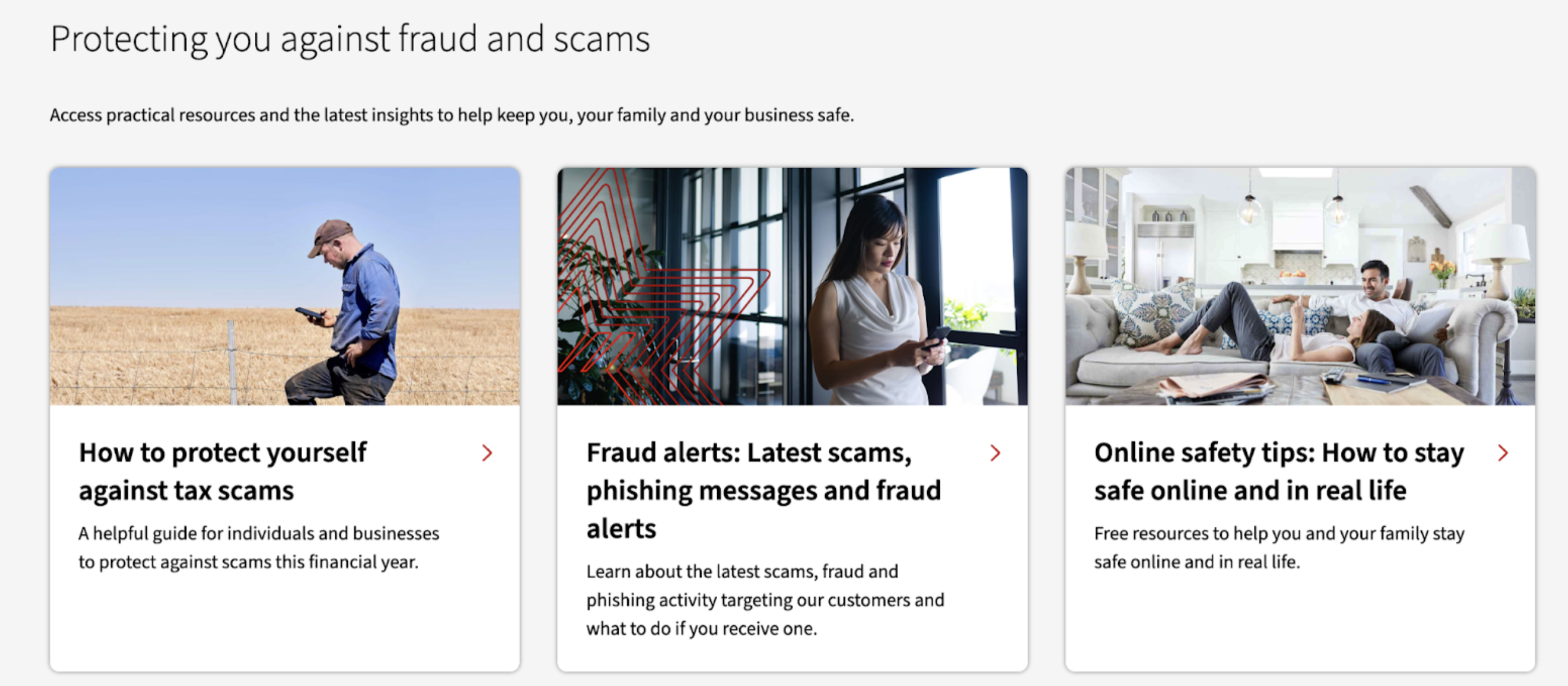

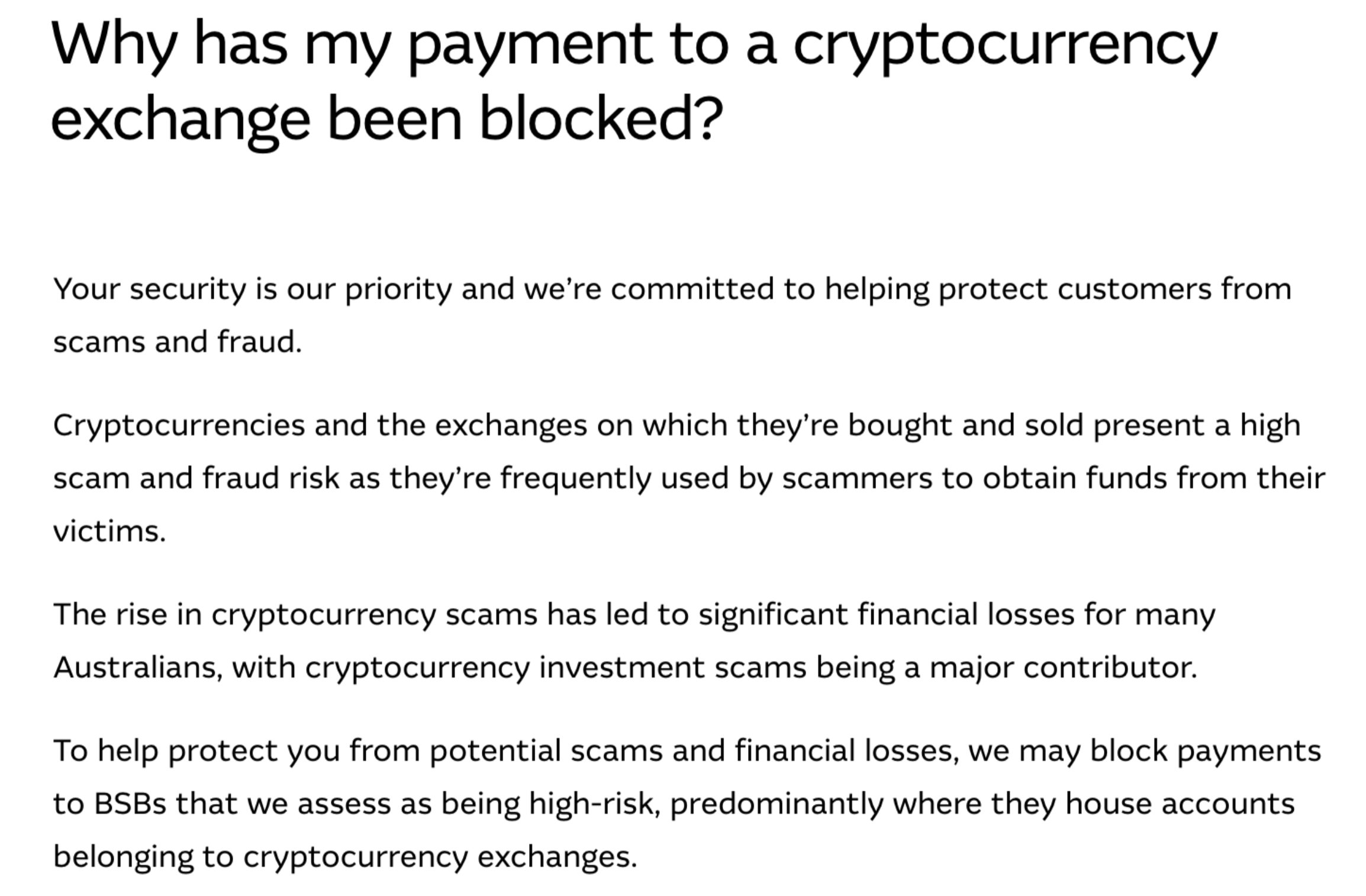
 Larger or unusual transfers, however, may be flagged for AML review and require additional documentation.


 Users report sudden account freezes after large transfers, including amounts ranging from €2,000 to €10,000. The reasons for the freezes are often not explained by the bank, and access to funds is restricted until documents are verified [16][17].
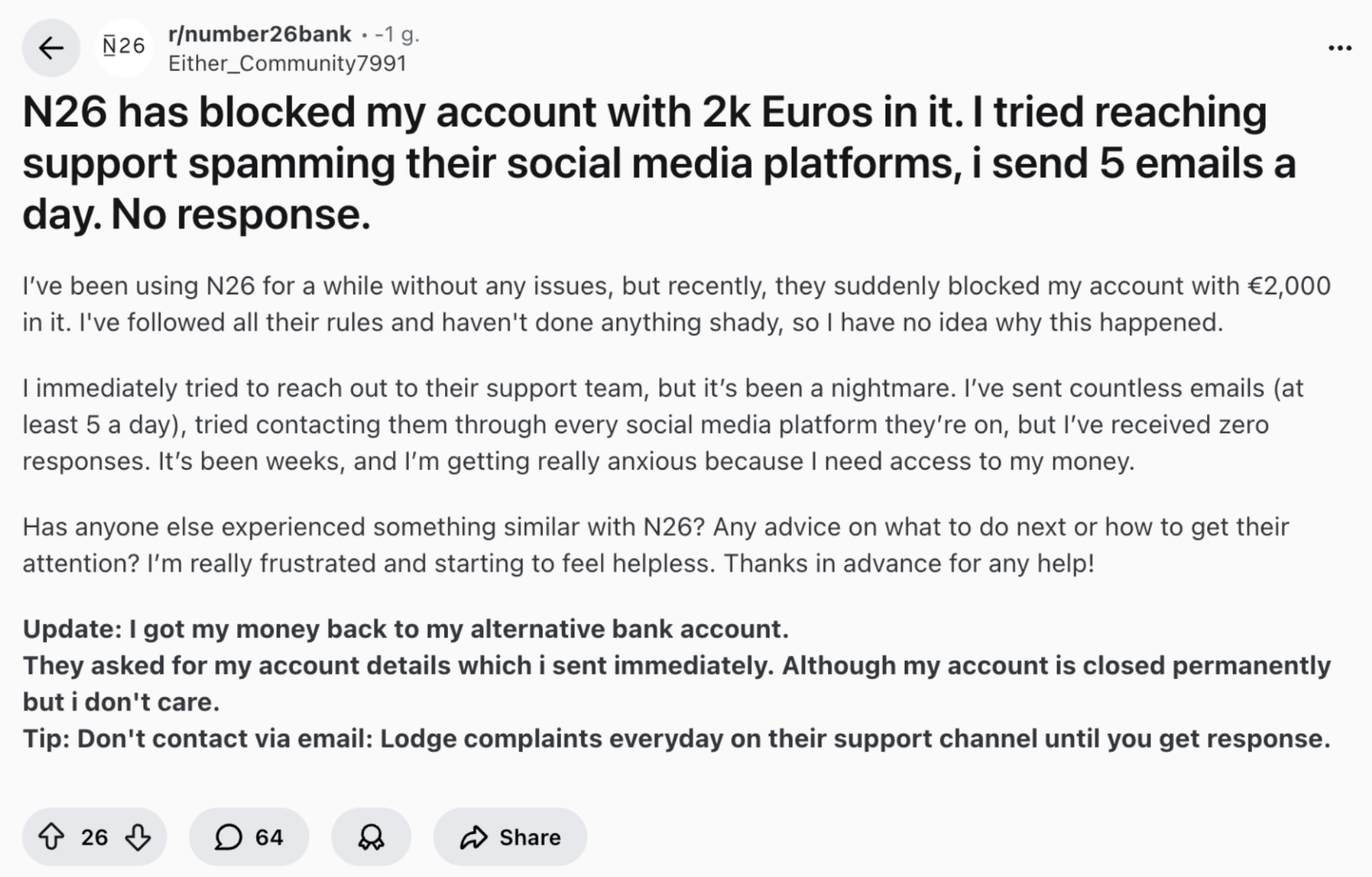 Real user reviews often highlight hidden policies and unexpected challenges with crypto-friendly platforms like Revolut, including account freezes and strict compliance checks for larger transactions.
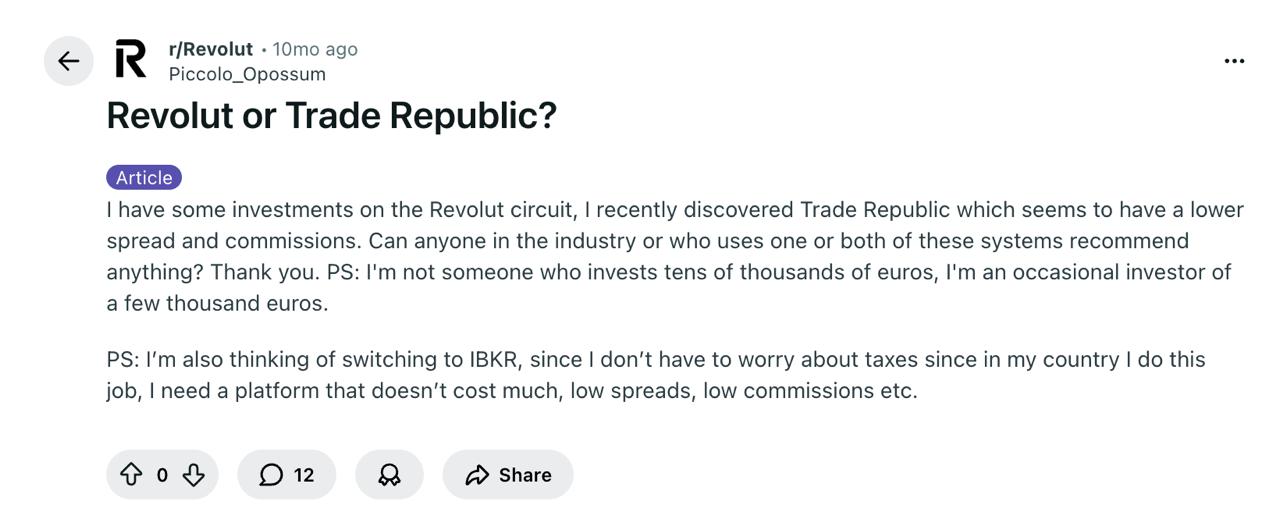 While services like Trade Republic may offer lower fees, issues with slow support and verification delays are common. Therefore, crypto-friendliness can change over time, and users should regularly monitor policies and be prepared for stricter scrutiny, especially with larger or frequent crypto transfers.

