By 2026, XRP wallet selection has moved beyond basic storage. Users assess wallets based on custody models, transaction handling, swap access, and support for XRPL-specific mechanics in an environment shaped by regulation, exchange risk, and network structure.
XRP is often used as a liquidity bridge rather than a passive holding, which makes wallet choice a functional decision [12]. Poor wallet design can introduce friction, operational errors, or irreversible losses – especially when XRPL-specific mechanics such as reserve requirements and destination tags are not handled properly.
TL;DR
XRP wallets should be evaluated by function: holding, transfers, swaps, and trading are separate workflows.
Most irreversible XRP losses come from XRPL mechanics, primarily reserve requirements and destination tags.
Self-custody is a practical choice for users who actively move or swap XRP, but it shifts full operational responsibility to the user.
Hardware wallets are designed for long-term storage and introduce friction when used for frequent execution.
Custodial solutions serve execution rather than ownership: exchange wallets enable trading, while custodial execution layers allow swaps and routing without operating a full trading account.
These conclusions raise a practical question: if XRP is used in fundamentally different ways, why are wallets still evaluated as if they served a single purpose? This gap between how XRP functions and how wallets are selected is where most user mistakes originate.
Why XRP Wallet Choice Depends on How You Use XRP
Unlike many cryptocurrencies, XRP is rarely held in a single, uniform way. Some users hold XRP as long-term capital; others use it actively for transfers, swaps, or liquidity routing between platforms. When users use wallets that technically support XRP but aren't built around real XRPL workflows, these usage patterns cause challenges.
Most people who look for the best XRP wallet do so for one of four reasons:
Ownership and security
Active usage and transfers
Portfolio consolidation
Capital preservation
These reasons typically overlap, but no one wallet design works effectively for all of them. A wallet that does well in one area frequently doesn't do well in another.
That’s why there is no single “best” XRP wallet. The right choice depends on how XRP is actually used in practice.
This principle becomes even clearer when comparing assets with fundamentally different design goals. Privacy-focused cryptocurrencies such as Monero impose entirely different wallet requirements, where anonymity, local key management, and transaction obfuscation take priority over speed or liquidity routing. These contrasts are explored in more detail in our guide to .
FAQ
Most failed XRP transactions are caused by the XRP Ledger reserve requirement. Every XRP account must keep a minimum of 10 XRP locked as a base reserve. Even though this amount shows up in the wallet balance, it can't be spent. When users try to send their full balance, the transaction fails because the reserve can't be moved.
A destination tag is required when sending XRP to shared or custodial addresses, most commonly exchanges. The tag identifies the recipient account inside the platform. Sending XRP without the correct destination tag can result in irreversible fund loss, as XRPL transactions cannot be rolled back once finalized.
Exchange wallets are for exchanges, not storage. Private keys are not user-controlled, and platform regulations, compliance checks, and jurisdictional laws determine fund access.
In addition to the base reserve, some wallets may also lock additional XRP for trust lines or network requirements. As a result, the full displayed balance is not always transferable. Wallets that clearly distinguish spendable and reserved XRP reduce misunderstanding and botched transactions.
The safest approach is separating roles:
Non-custodial software wallets for transfers and swaps
Cold storage for long-term holdings
Exchanges only for execution and trading
This setup minimizes custody risk while preserving operational flexibility.
Not protocol faults, but user mistakes cause most XRP losses. Common issues include incorrect destination tags, sending to the wrong address, misunderstanding reserves, or using wallets that obscure XRPL mechanics. To avoid these issues, wallet UX is essential.
Users should prioritize:
Clear destination tag handling
Transparent reserve balance visibility
Control over private keys
Reliable transaction status reporting
Marketing claims and generic “multi-asset support” matter far less than how well a wallet handles XRPL-specific workflows.
To go beyond personal preferences, XRP wallets need to be judged based on how the XRP Ledger really works. Generic wallet checklists don't work because they don't take into account XRPL-specific limits that affect how people use wallets in the real world.
Before diving into individual wallets, it helps to see how different wallet types map to real XRP use cases.
Comparison Table: Best XRP Wallets by Use Case
Wallet
Primary User Intent
Custody Model
Risk Profile
Recommended XRP Balance
NOW Wallet
Active usage, swaps, liquidity movement
Non-custodial
Medium (user-managed)
Small to Medium
Guarda Wallet
Portfolio management
Non-custodial
Medium
Small to Medium
Ledger
Long-term storage
Non-custodial (cold)
Low
Medium to Large
Kraken
Trading execution
Custodial
High
Operational only
This comparison highlights why there is no single best XRP wallet – only wallets that fit specific roles. When these wallet categories are viewed through the lens of intent, custody, and operational risk, a consistent pattern emerges. The idea of a single “best XRP wallet” breaks down under real-world conditions.
This intent-based approach is not unique to XRP. A similar pattern applies across the broader crypto ecosystem, where wallet choice depends on custody, usage frequency, and risk tolerance rather than brand popularity. A more general breakdown of these trade-offs can be found in our overview of the best crypto wallets.
Non-Custodial Wallets for Active XRP Transfers
The first category to examine is non-custodial software wallets designed for active XRP usage. These wallets sit between cold storage and exchanges, combining user-controlled custody with operational flexibility.
NOW Wallet
NOW Wallet is best understood as an operational XRP wallet, not a passive storage tool. It is designed for users who actively interact with XRP – frequent transfers, swaps, and liquidity movements – while retaining full control over private keys.
Private keys are generated and stored locally [9], with recovery handled exclusively via a seed phrase. This directly addresses growing distrust toward centralized custody models.
NOW Wallet handles XRPL mechanics with notable care. Destination tags are clearly surfaced, reserve balances are visible, and transactions behave as expected on the XRP Ledger. This significantly reduces the risk of common XRP-specific errors.
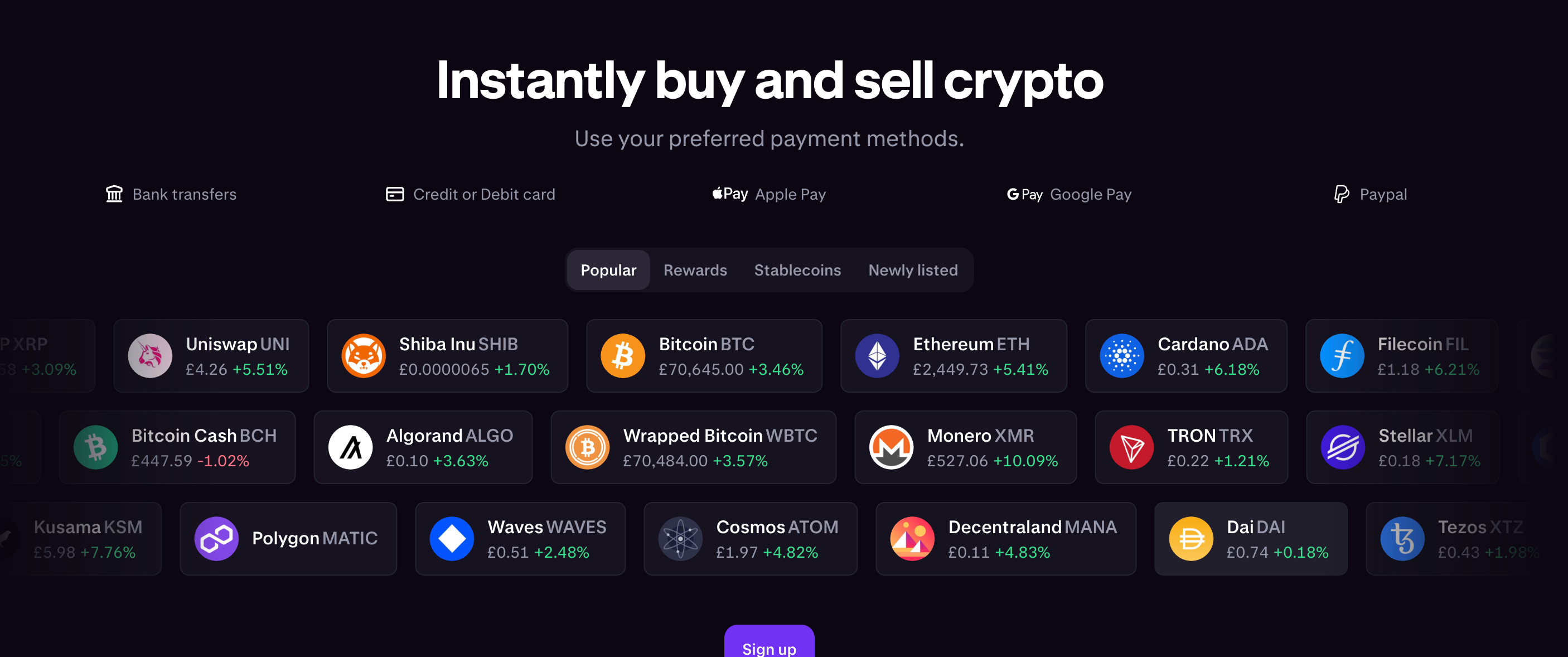
One practical aspect of NOW Wallet is its built-in swap functionality, which allows XRP exchanges without routing funds through centralized platforms. Users can swap XRP directly from the wallet without routing funds through centralized exchanges or creating accounts [10].
For users who treat XRP as a bridge asset, this enables XRP swaps without routing funds through centralized exchanges or third-party accounts.
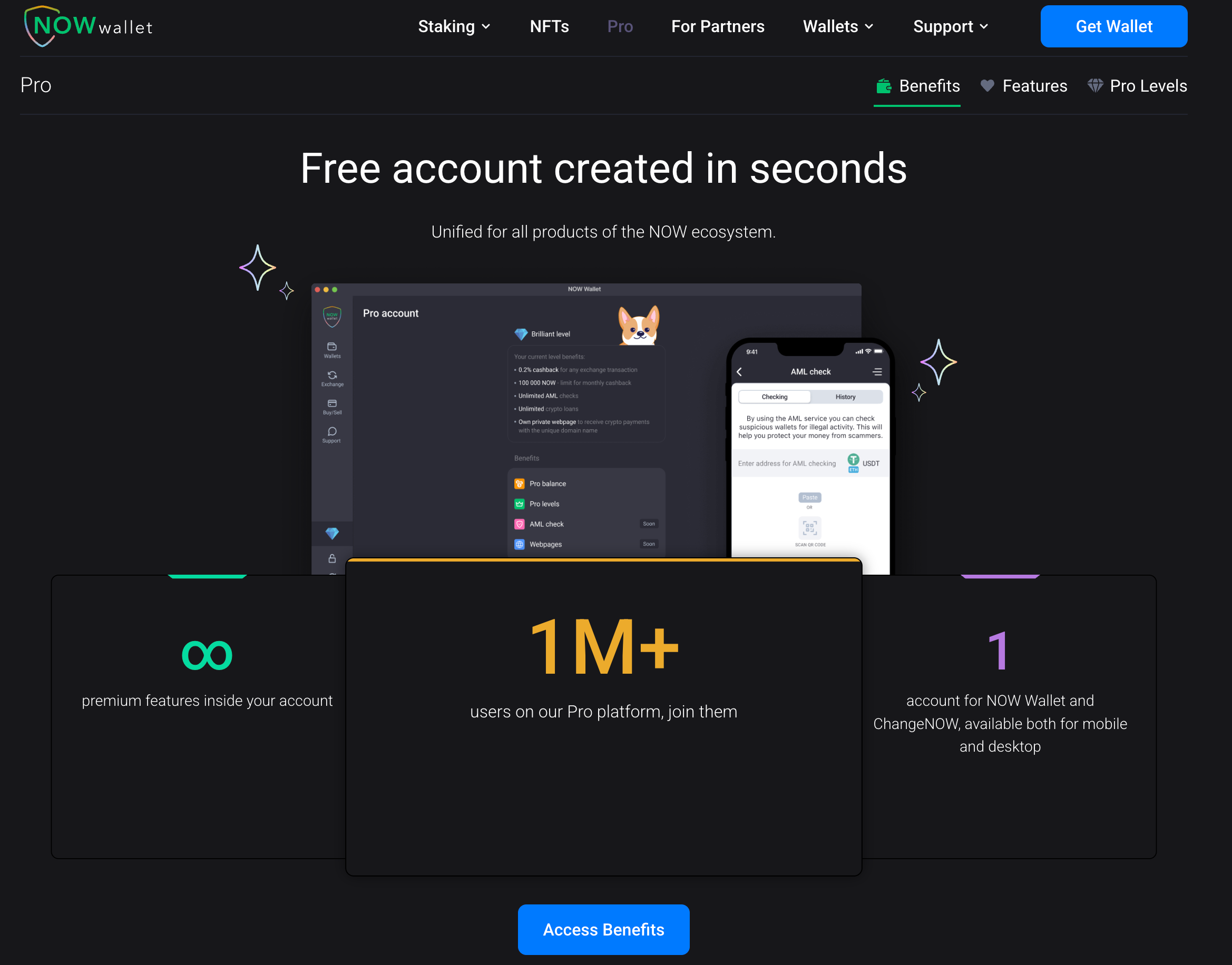
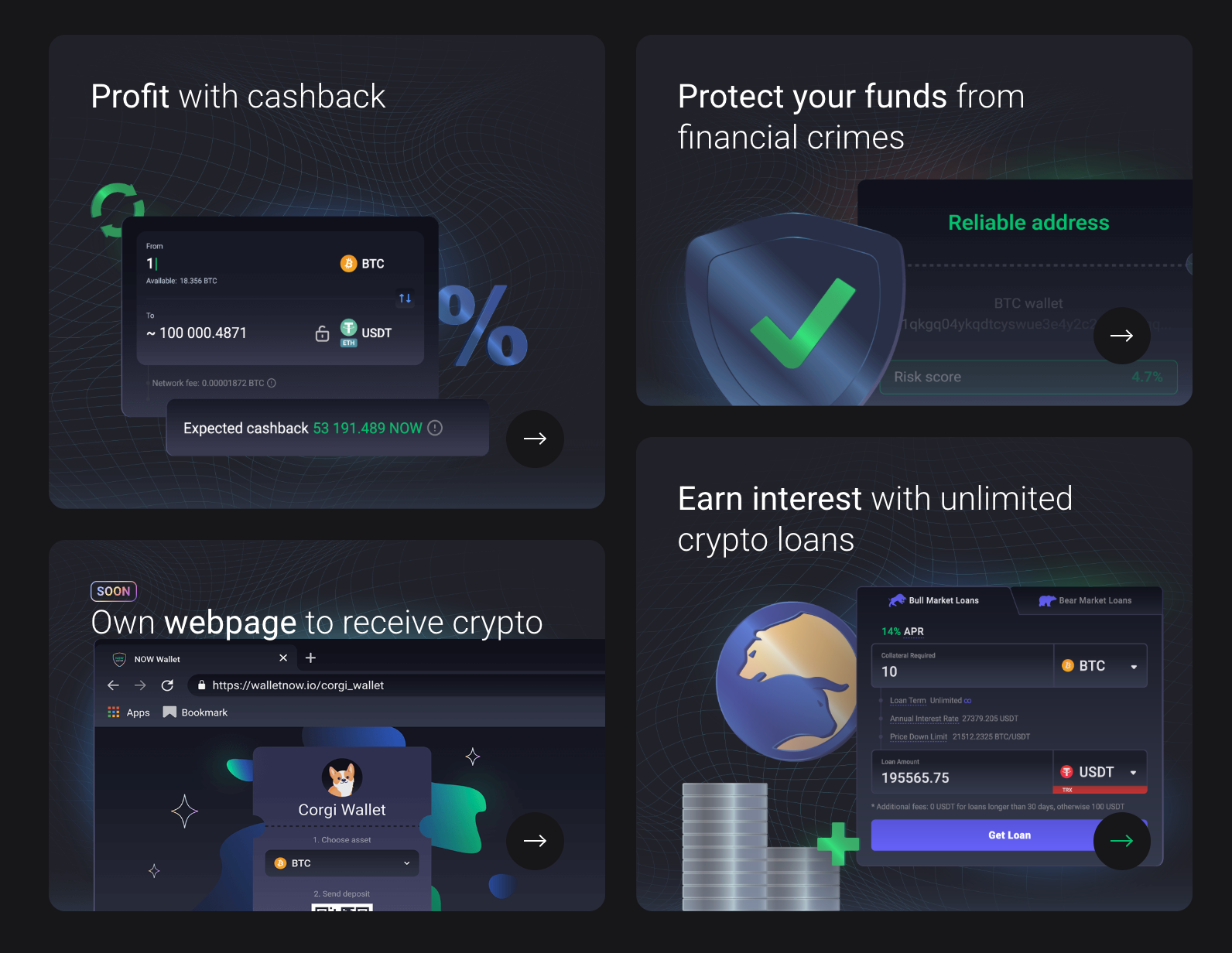
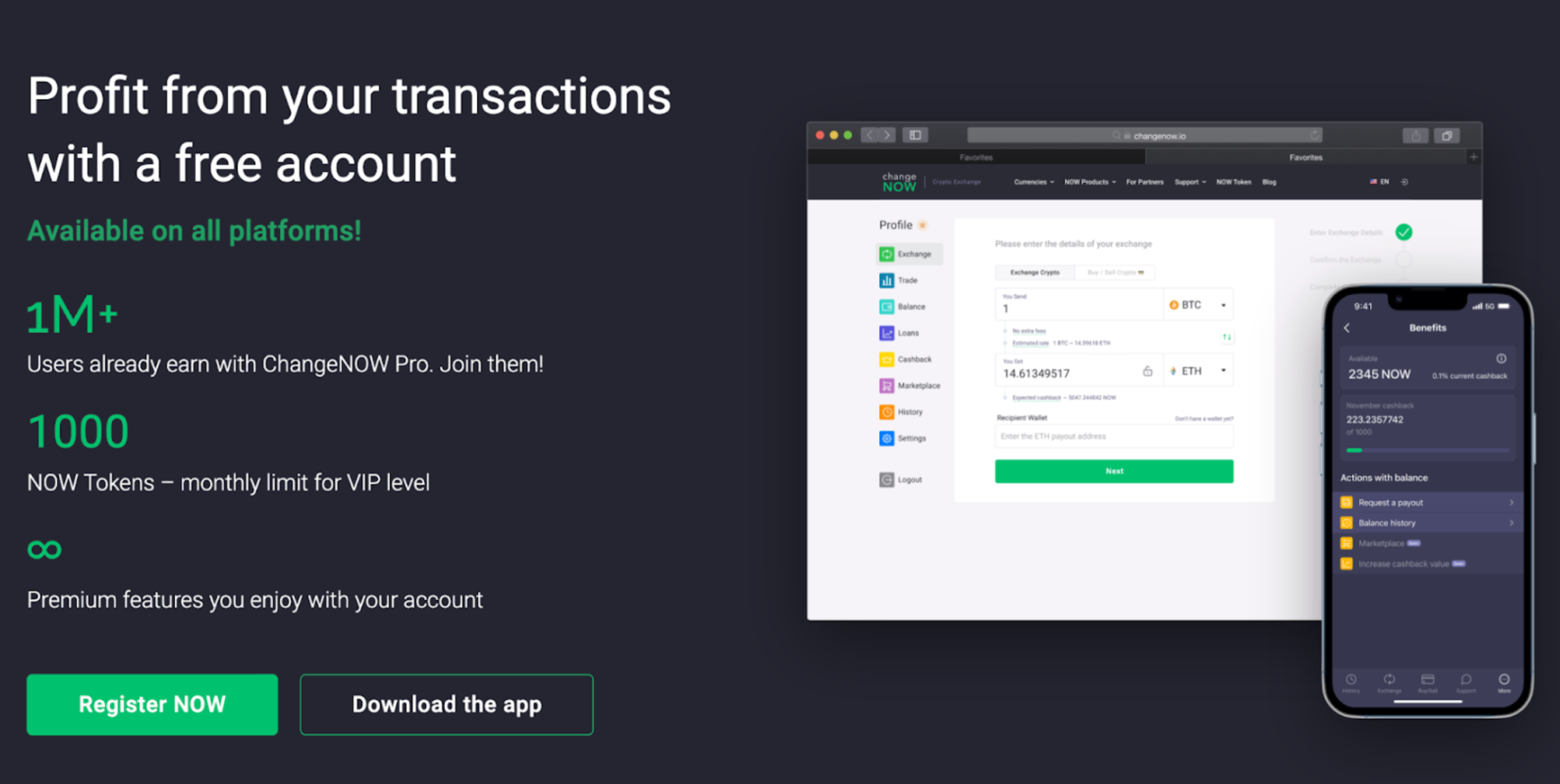
NOW Wallet also offers a Pro account, which provides the option to be more involved in the NOW ecosystem. It adds features and functions at the account level while keeping the wallet's non-custodial structure.
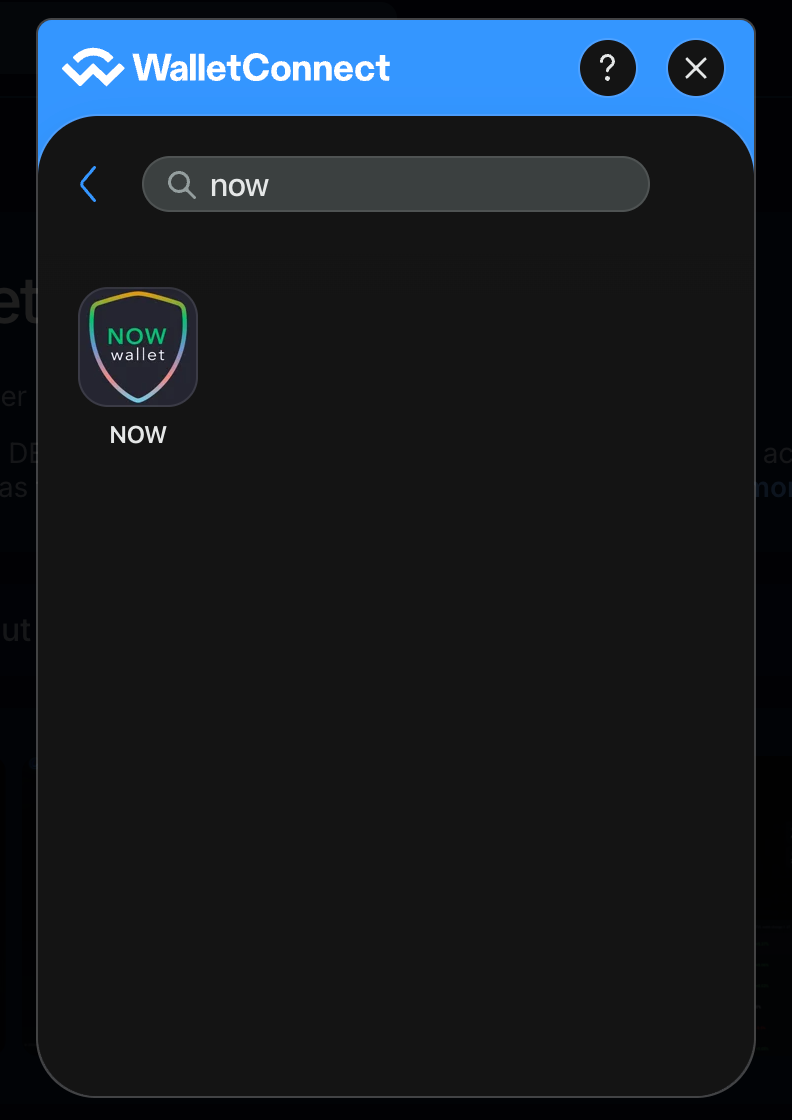
For XRP users, the XRP Ledger supports decentralized apps, and NOW Wallet enables access to XRPL-based activities via WalletConnect without compromising self-custody.
Verdict: While operational wallets prioritize active use, not all non-custodial solutions are built around XRP-specific workflows. Wallets such as NOW Wallet follow a broader portfolio-oriented design, which introduces a different set of trade-offs.
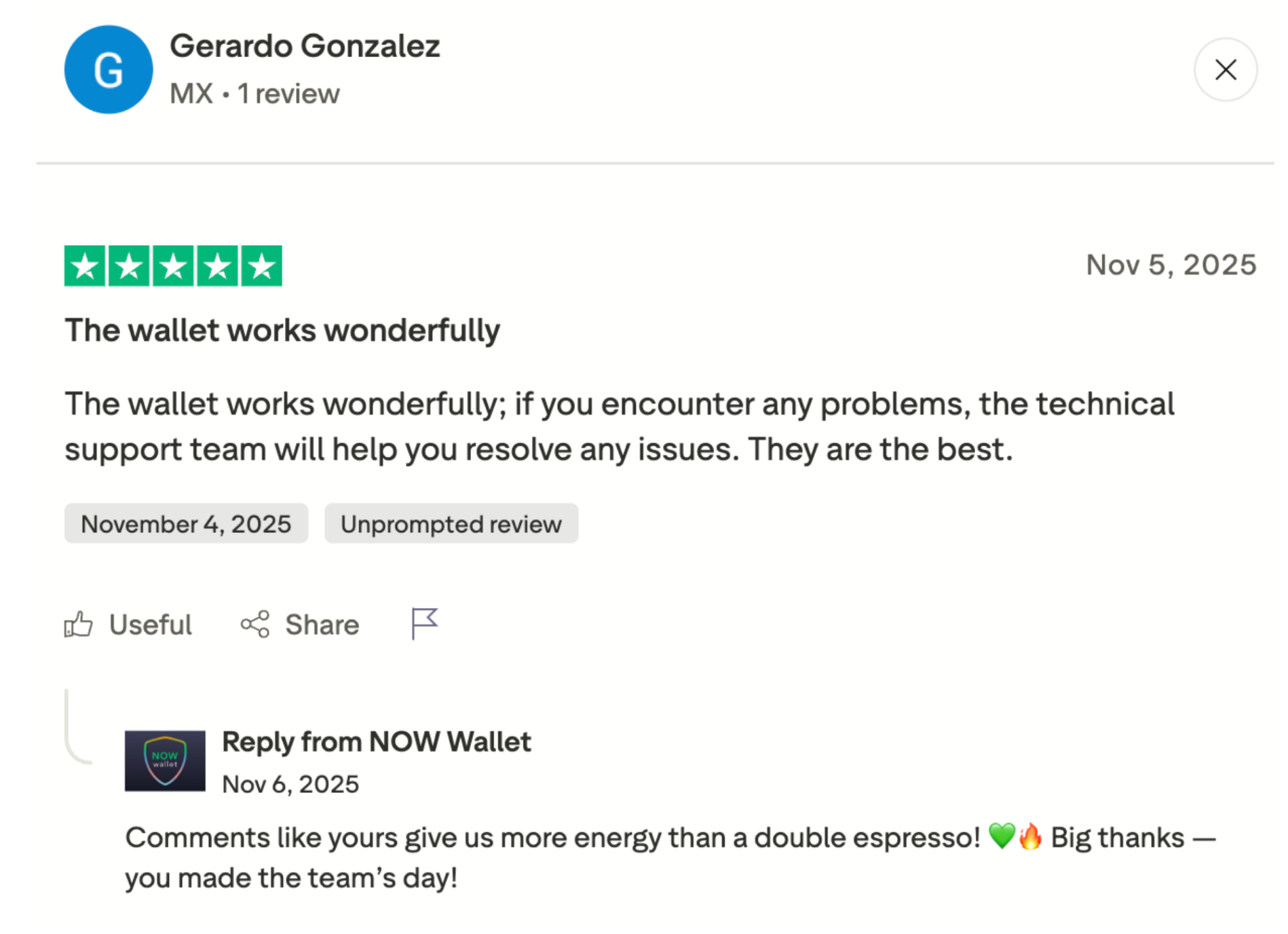
In real-world usage, this positioning is reflected in user feedback. Trustpilot reviews show that users have very different experiences. A lot of users note that they trust Ledger's security model and praise its quick customer service. Some users also note occasional delays in balance updates or transaction state visibility, which typically resolve through network confirmation or support interaction.
These observations are common for wallets that operate directly on-chain and prioritize real-time execution over custodial abstraction.
Strengths
Full private key ownership
Clear XRPL-native handling
XRPL dApp access via WalletConnect
Built-in XRP swaps
No mandatory KYC for crypto-to-crypto activity
Well-suited for frequent XRP usage
Limitations
Full responsibility for seed phrase security
Less relevant for purely passive holders
Not a replacement for cold storage for large balances
NOW Wallet fits users searching for the best XRP wallet for daily use, swaps, and control – not just storage.
When XRP is used frequently rather than held passively, wallets start to function more like everyday crypto tools than long-term storage solutions. In these cases, users often prioritize speed, integrated swaps, and execution flow over pure custody mechanics. A wider look at how such tools are structured is covered in our overview of the best crypto apps.
Non-Custodial Wallets for Multi-Asset Portfolios
Non-custodial wallets are designed for multi-asset portfolios that prioritize breadth of asset support over protocol-specific workflows, making them suitable for users who manage diverse holdings rather than focusing on a single network.
Guarda Wallet
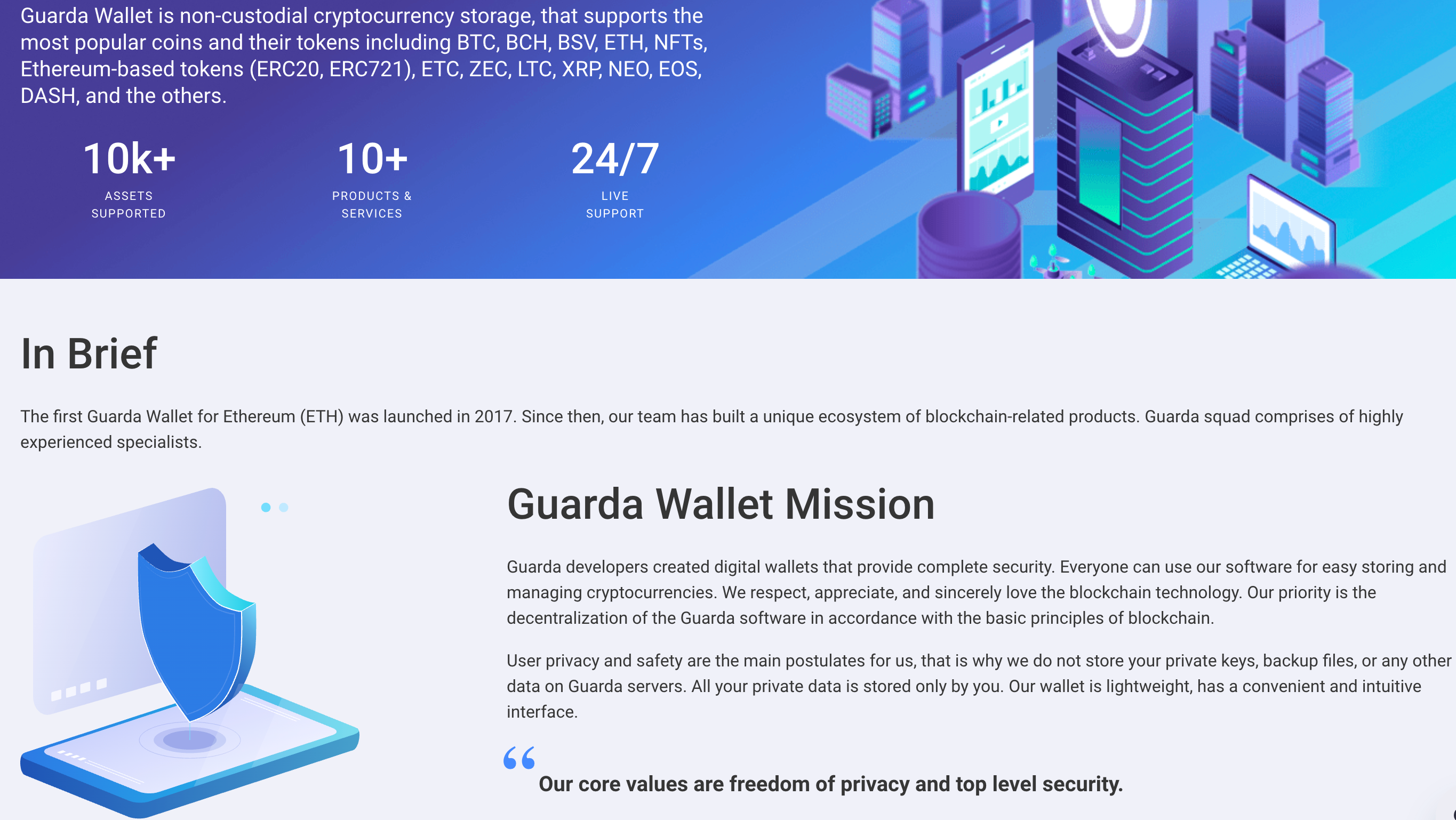
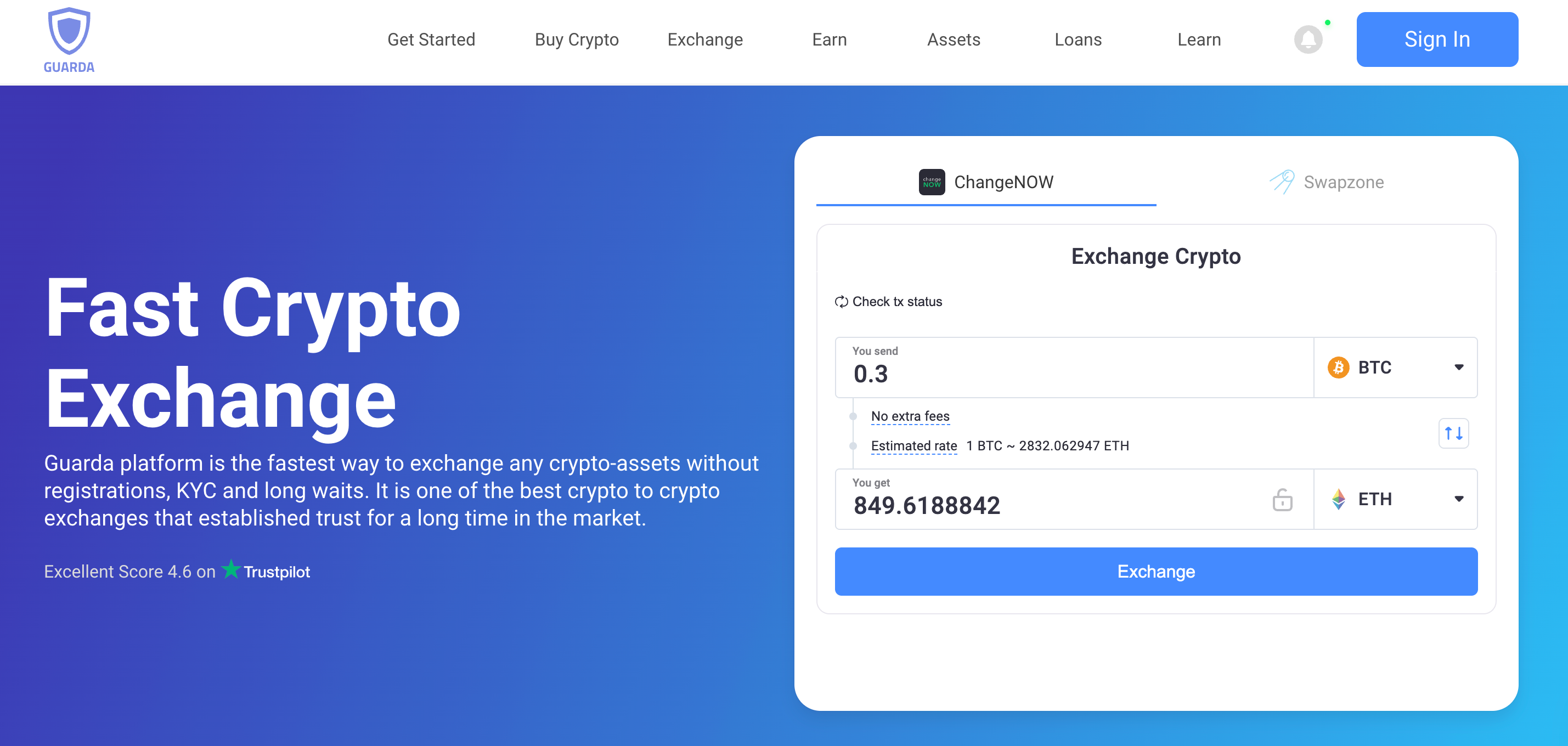
Guarda Wallet addresses a different set of goals. It was developed for those who manage portfolios with a lot of different assets, where XRP is only one among many and not the main one.
Guarda is a non-custodial wallet [11], which means that users keep full control of their private keys. It also supports XRP transactions correctly, including destination tags. People who want to see their portfolios from all their devices will find it easy to use because it works on desktop, mobile, and web platforms.
From a UX perspective, however, XRP is not treated as a first-class asset. XRPL-specific nuances are handled competently but are not emphasized within the interface, which limits the wallet’s appeal for XRP-centric workflows such as frequent transfers or liquidity routing.
Verdict: Guarda fits users who treat XRP as one asset within a broader portfolio rather than a primary working asset. It is reliable for holding and light use, but not optimized for frequent XRPL-specific actions.
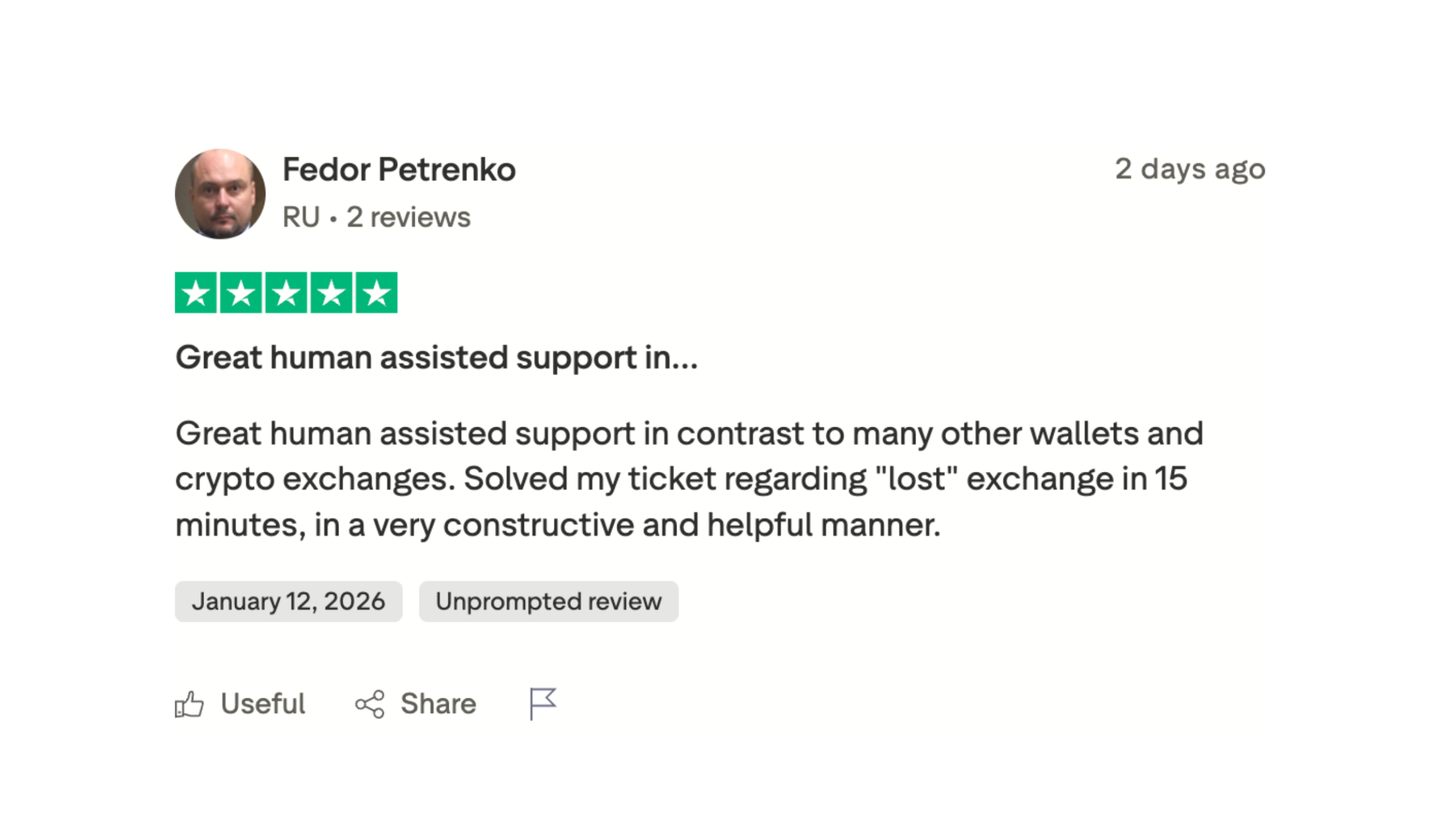
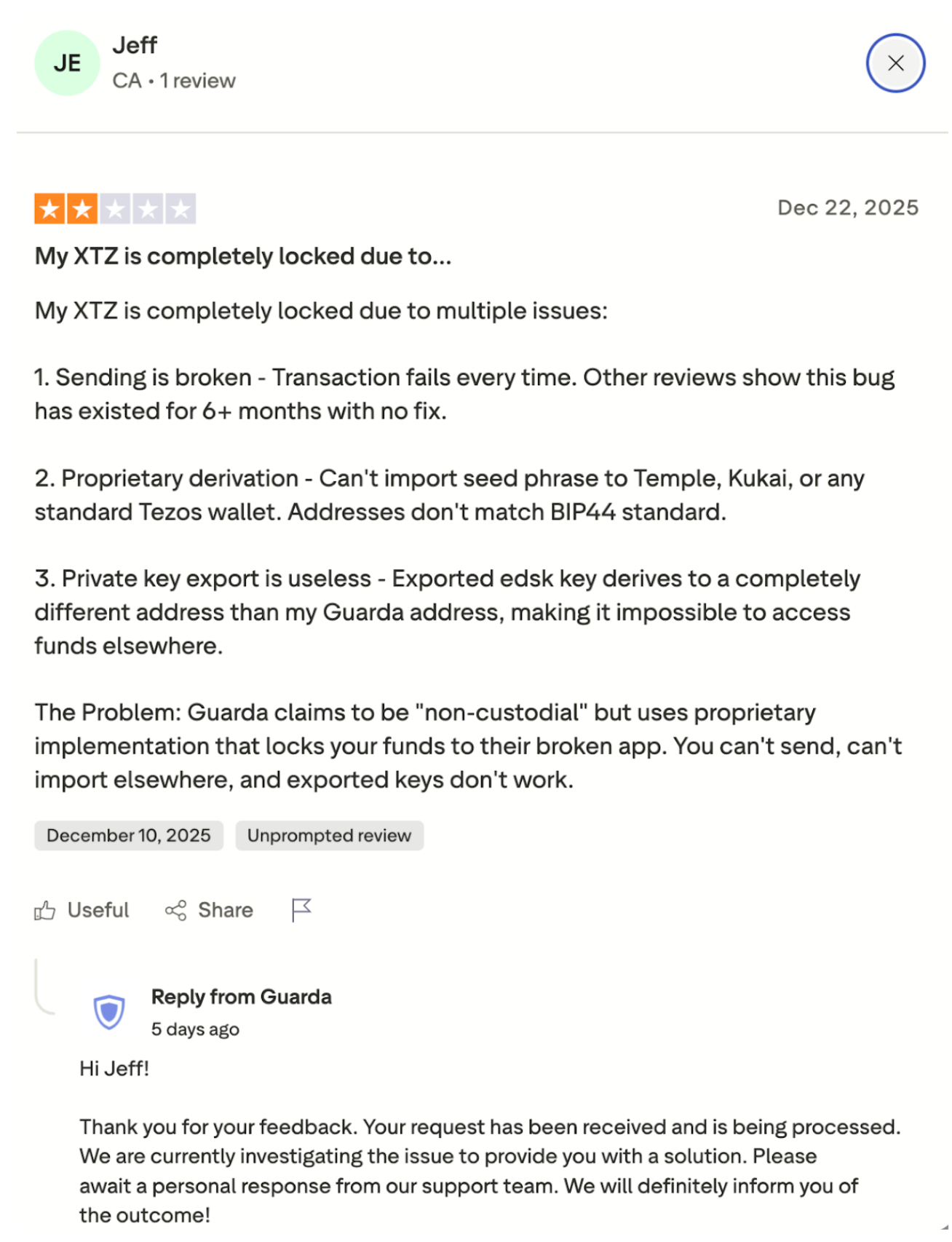
This positioning is also reflected in user feedback across reviews and community discussions. Users commonly describe Guarda as reliable for holding and managing XRP within a broader multi-asset setup, often highlighting responsive, human-assisted customer support when operational issues arise.
At the same time, feedback suggests that XRP-specific workflows feel relatively generic compared to wallets designed explicitly around XRPL mechanics. These observations align with Guarda’s role as a portfolio-oriented wallet rather than a specialized XRP tool [14].
Some community feedback also highlights that proprietary implementations can limit interoperability with external wallets or ecosystem-specific tools, illustrating a trade-off between broad asset support and deep XRPL-native integration.
Strengths
Non-custodial architecture
Broad multi-asset support
Multi-platform access
Suitable for portfolio consolidation
Limitations
Generic XRP UX
Interface complexity due to asset breadth
Less optimized for frequent XRP operations
Guarda is often chosen by users looking for a multi-currency XRP wallet rather than a specialized XRP tool.
Hardware Wallets for Long-Term XRP Storage and Security
Active usage is not the dominant requirement for all XRP holders. For users whose priority is capital preservation rather than liquidity movement, a different wallet architecture becomes more appropriate.
Ledger
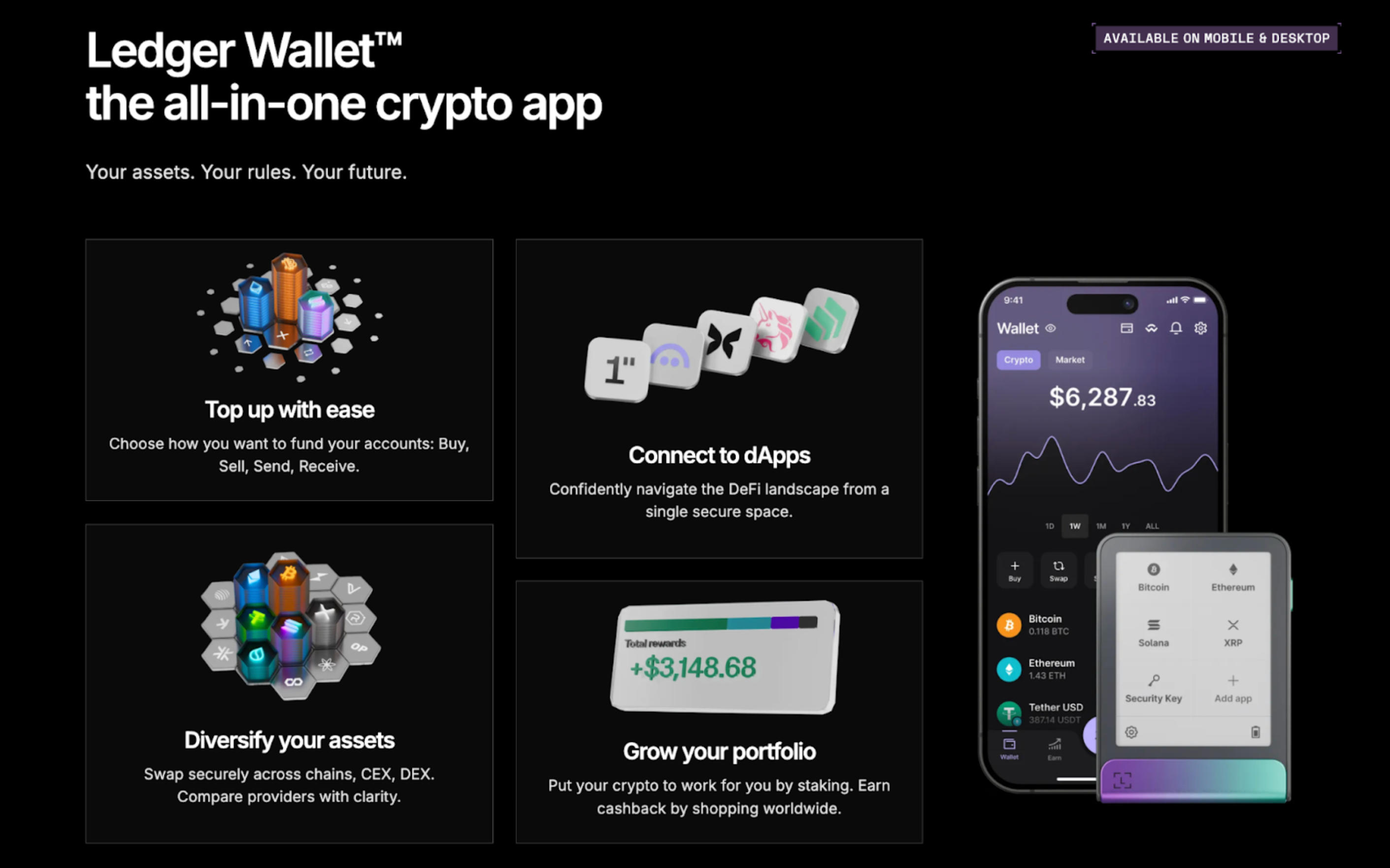
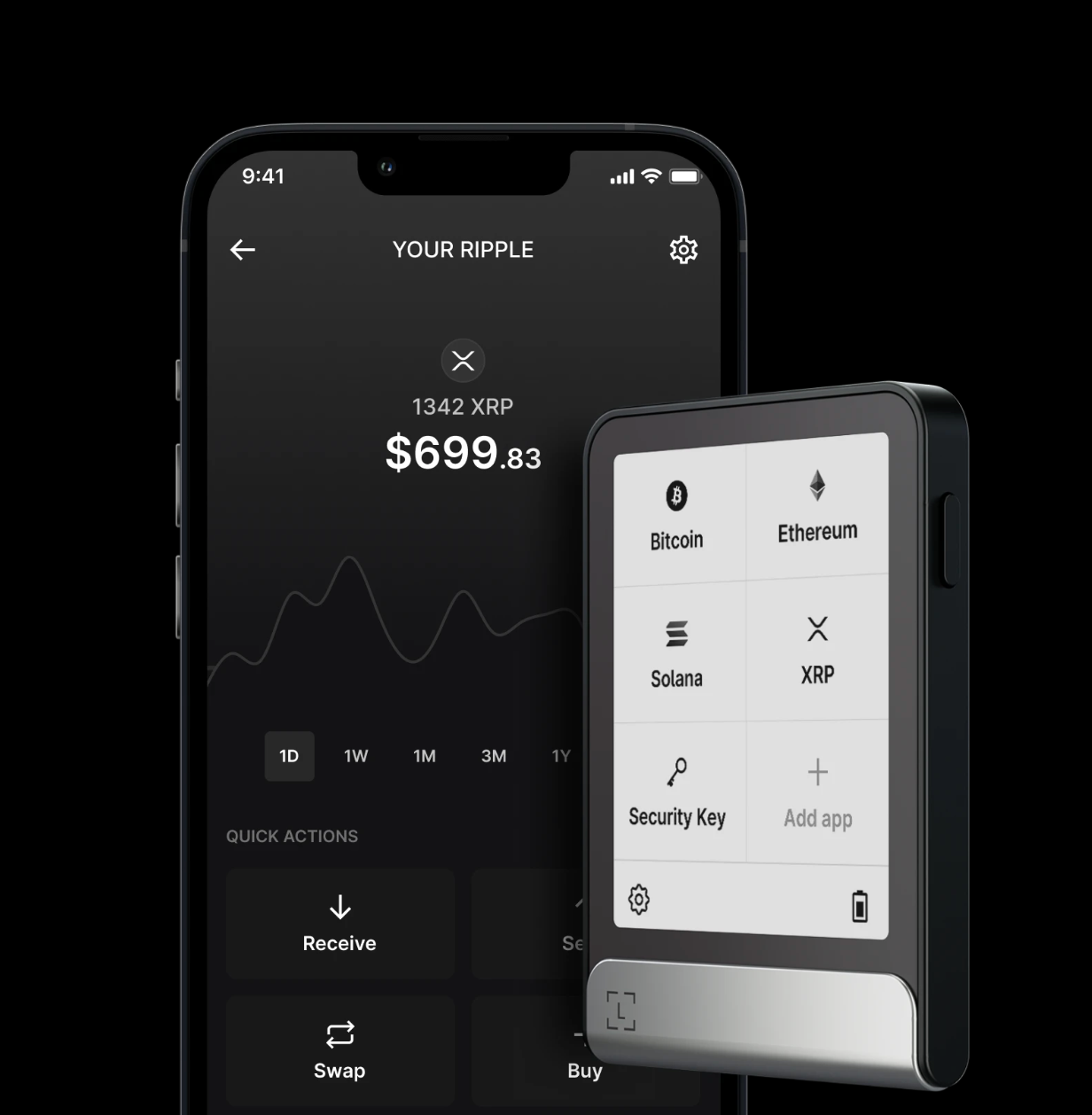
Ledger hardware wallets dominate searches for the best hardware wallet for XRP for a clear reason: security. Private keys are stored offline, isolated from network threats. XRP is supported natively through Ledger Live, including destination tags and reserve visibility [5].
Through Ledger Live, users can manage their XRP account directly on the XRP Ledger, view balances and transaction history, and send or receive XRP while signing each transaction on the hardware device itself. This setup keeps private keys offline while still allowing basic account management and execution without relying on external software wallets.
For users who occasionally need to swap XRP without moving funds to exchanges, Ledger Live also supports in-app swaps through integrated third-party providers. Depending on the region and availability, this allows XRP to be exchanged directly from cold storage while transaction signing remains on the hardware device.
For users holding significant XRP positions that are rarely moved, this model minimizes exposure to both technical and platform-level risk. The trade-off is operational friction. Hardware wallets are intentionally designed for security rather than speed, making them less suitable for frequent swaps or liquidity routing.
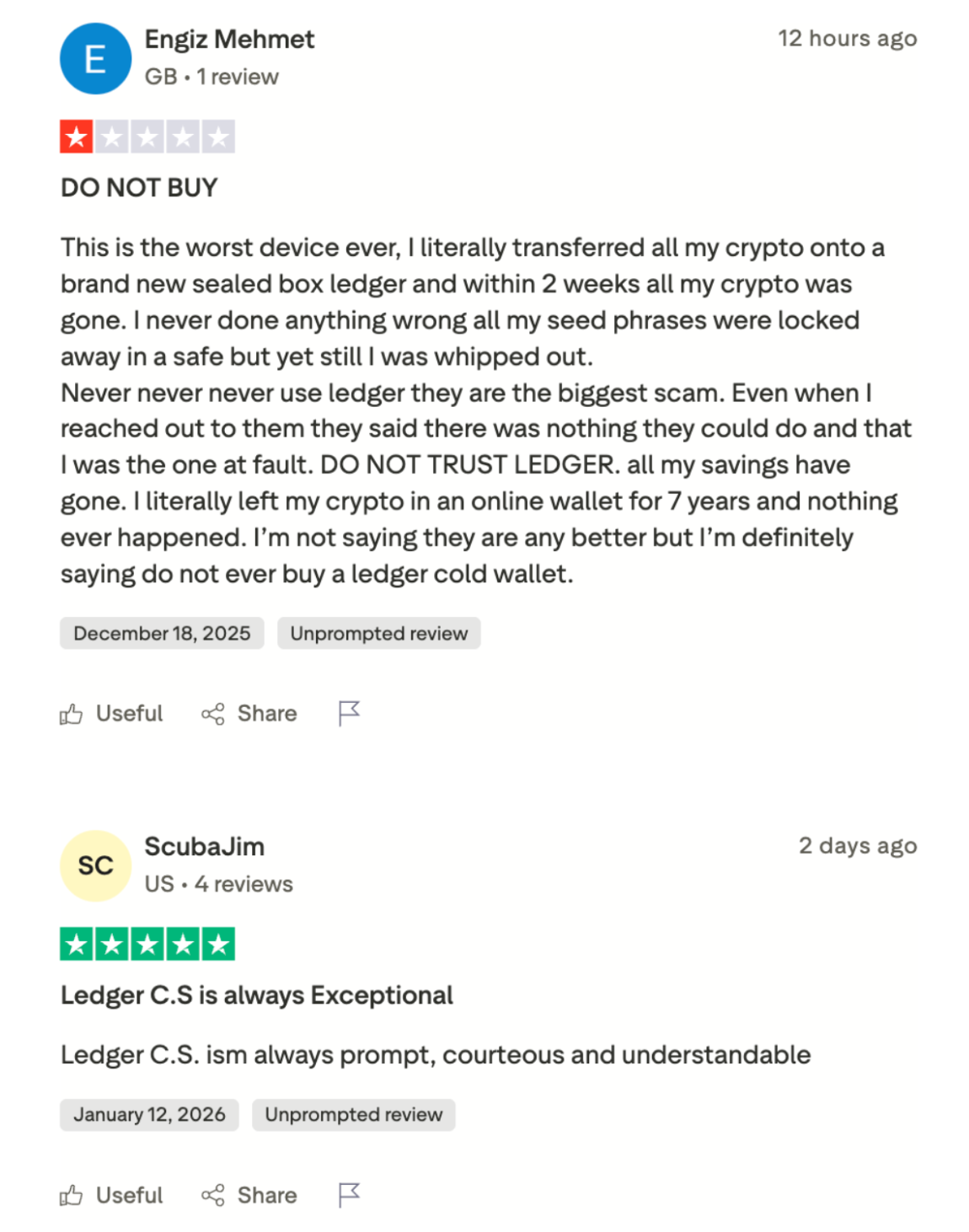
This positioning is reflected in user feedback. Reviews on Trustpilot show a wide divergence in user experience. Many users emphasize trust in Ledger’s security model and highlight responsive customer support.
At the same time, a subset of negative reviews describes severe fund loss scenarios, often without clear technical attribution. These cases typically point to the broader reality of self-custody: when users retain full control over private keys and recovery phrases, responsibility for operational security is also fully transferred to the user [15].
In practice, some users reduce execution-related errors by using swap integrations available directly inside Live. These integrations allow assets like XRP to be exchanged through non-custodial liquidity providers without transferring funds to centralized exchanges.
Transactions are signed on the hardware device, while private keys never leave cold storage. This does not remove user responsibility, but it can reduce common operational mistakes related to manual transfers, exchange deposits, and execution flow during swaps.
Strengths
Offline key storage
Strong protection against remote attacks
Native XRP support
Ideal for long-term holding
Limitations
Inconvenient for frequent transactions
Requires physical device access
Not designed for active XRP usage
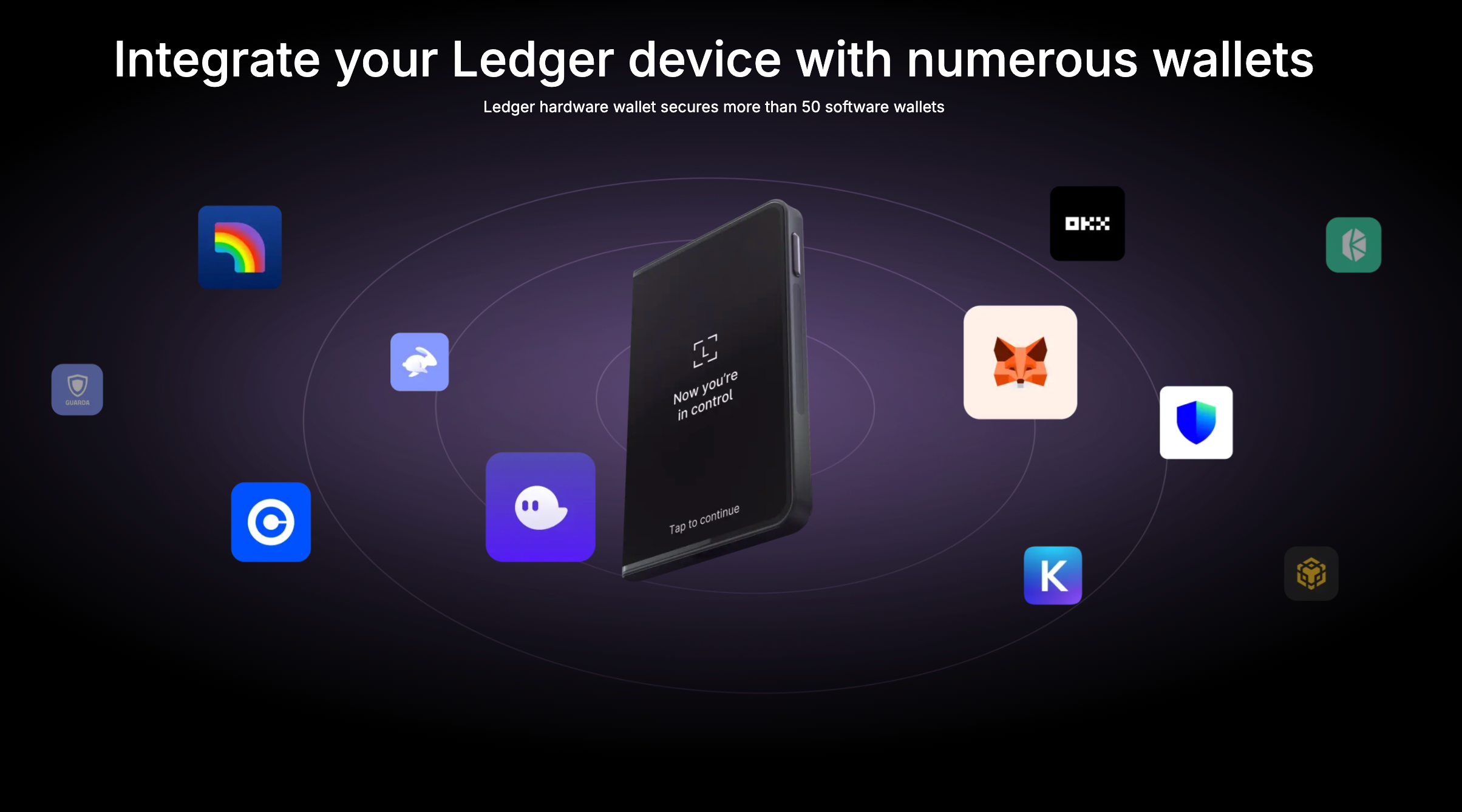
In practice, hardware wallets like Ledger are most effective when used as part of a layered setup, complemented by operational wallets or exchanges for execution. This distinction helps explain why custodial wallets continue to attract users seeking immediate liquidity and trading access, despite their higher custody risk.
Verdict: Ledger is best suited for protecting XRP that is meant to stay untouched for extended periods. Its strength is isolation and security, not speed or operational flexibility.
Custodial XRP Wallets and the Convenience Trade-Off
Kraken
In the XRP ecosystem, custodial wallets have a unique job. They care more about execution speed, access to liquidity, and direct interaction with trading infrastructure than about owning assets.
Users selecting an XRP wallet for trading typically accept custodial exposure in exchange for immediate market access and operational efficiency.
Kraken offers a mature trading environment with strong platform-level security controls. However, private keys remain under platform custody, and access to funds is governed by internal policies and regulatory requirements rather than XRPL mechanics. This introduces risks that are external to the XRP Ledger itself.
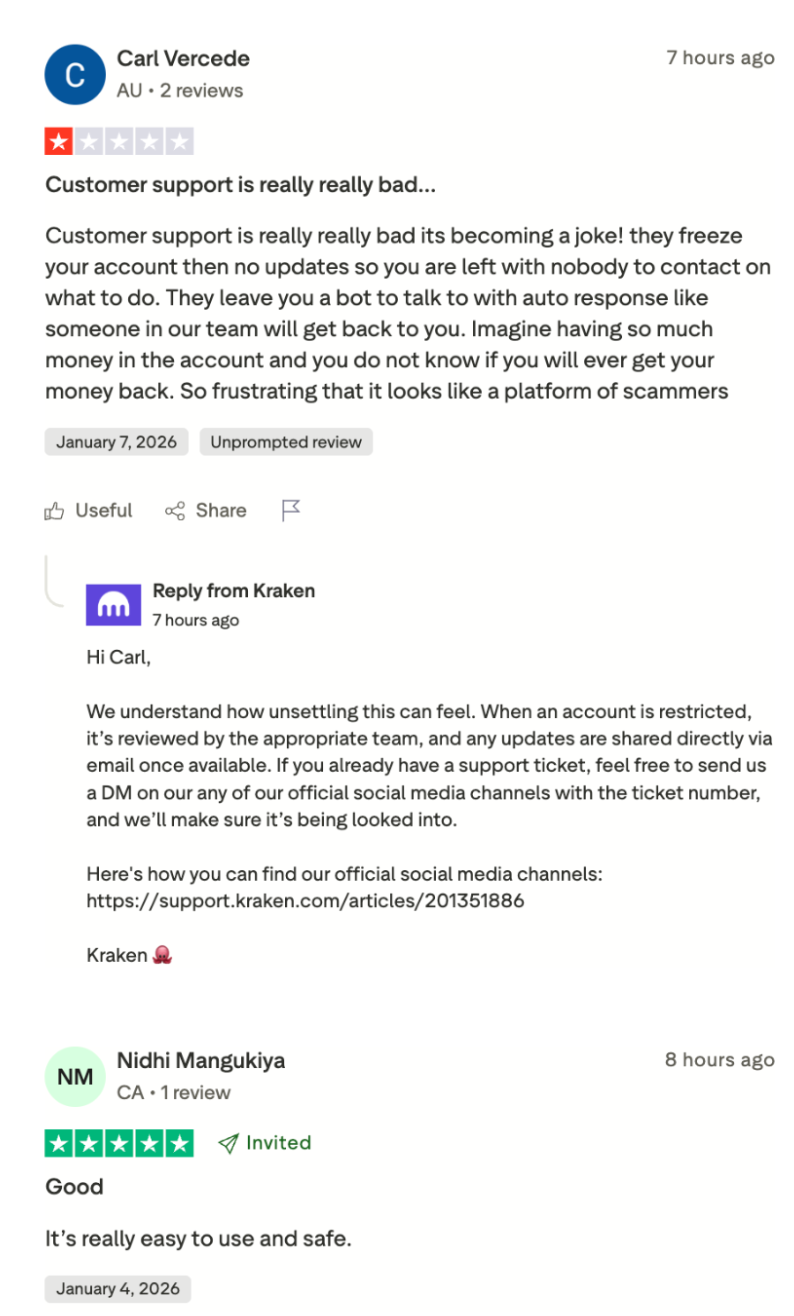
This role is reflected in user feedback. Members often mention that Kraken is easy to use and dependable for trading and managing liquidity. Some users also say that account restrictions, compliance reviews, or withdrawal procedures can temporarily make it hard to get to their money and may require them to contact platform support. These experiences show a structural feature of custodial wallets: even though transactions are quick, the platform is in charge, not the user [16].
While we are going to see the strengths and limitations, a more detailed analysis helps clarify how Kraken fits into different XRP wallet setups.
Strengths
Deep liquidity and tight spreads
Native integration with trading tools
Efficient execution for active traders
Limitations
No private key ownership
Exposure to platform and policy decisions
Not suitable for long-term XRP storage
In practice, custodial wallets like Kraken function best as execution layers within a broader setup, complementing self-custodial wallets that handle ownership and long-term control.
Verdict: Kraken serves as a convenient access point for trading and market execution. As a custodial platform, it should be viewed as a tool for transactions, not ownership or long-term control.
An alternative custody approach is offered by custodial account models such as ChangeNOW Pro Custody.
Unlike exchange wallets, this setup is not designed as a trading venue with order books or margin exposure. Instead, it functions as a custodial execution layer, allowing users to perform swaps and liquidity routing without turning custody into a permanent storage solution. A detailed explanation of this custody model is available here.
In practice, this makes custodial accounts suitable for temporary operational use – executing exchanges or structured transactions – while avoiding some of the policy and access constraints commonly associated with exchange wallets.
Important Things to Look for in an XRP Wallet in 2026
In 2026, a good XRP wallet is one that works with how the XRP Ledger really works. The relevant criteria don't have to do with how many assets a wallet can hold. Instead, they have to do with whether the wallet effectively manages XRPL rules, limitations, and user flows in real life.
XRP Ledger Reserve Requirements Explained
Every XRP wallet requires a base reserve of 10 XRP, which remains locked as long as the account exists [2]. This is not a fee, but it is effectively illiquid capital. Wallets that obscure this reserve often confuse users who expect to move their full balance. In practice, this means users frequently attempt transfers with the full balance and encounter failed transactions, leading to avoidable errors and support inquiries.
In 2026, as XRP is used more operationally, transparency around the reserve balance has become critical. Wallets that clearly distinguish spendable funds from reserved XRP reduce friction and prevent failed transactions.
Destination Tags and XRP Transaction Safety
Destination tags remain one of the most common causes of XRP fund loss [3]. In many real-world scenarios – especially exchange deposits – destination tags are mandatory. In real use, missing, incorrect, or ignored tags cause irreversible fund loss – especially on exchanges where no human intervention can reverse the transfer after the ledger finalizes it.
Wallets differ significantly in how they handle this:
some treat tags as optional metadata
others enforce or warn when a tag is required
For anyone searching for a safe XRP wallet in 2026, destination tag UX is no longer optional – it is a core safety feature.
Transaction Finality and Fees on the XRP Ledger
XRPL offers fast settlement and predictable fees, but wallet interfaces can distort this advantage.
Poor wallet implementations may delay broadcasts, misrepresent confirmation states, or hide transaction status behind unclear UI elements. As a result, users may retry transfers they believe failed and unintentionally create duplicate or incorrect transactions.
For those who use XRP as a bridge asset, knowing when a transaction is final is more important than how the UI looks [4].
Custodial vs Non-Custodial XRP Wallet Risks
Custody is no longer a neutral choice. In 2026, custodial wallets face increasing exposure to:
withdrawal freezes
jurisdictional restrictions
compliance-driven access changes
Non-custodial wallets reduce counterparty risk but shift full responsibility to the user. Evaluating this trade-off is central to choosing the best XRP wallet today. For example, custodial wallets may impose withdrawal limits, freezes, or compliance holds that have nothing to do with XRPL’s blockchain mechanics – creating real operational risk for the user’s funds [6].
How XRP Wallets Execute Swaps
Many XRP users swap rather than hold. How a wallet executes swaps – through a DEX, an aggregator, or centralized routing – directly affects custody exposure and execution risk. In practice, some wallets temporarily move assets into pooled contracts or third-party liquidity sources, meaning the user might lose private control of assets during the swap – a risk many users overlook [10].
Understanding whether assets temporarily leave user control during a swap is essential for assessing real security.
Error Recovery Limitations on XRPL
XRPL transactions are effectively final. This finality means there is no practical rollback [4]. A single typo in an address or wrong tag immediately becomes a permanent loss – no matter how soon the user notices.
These criteria are not theoretical. Their relevance has grown over time, especially since people have stopped using XRP for passive holding. To see why they are more important now than they were in the past, we need to look at what happened by 2026.
Why 2026 Changes How XRP Wallets Should Be Evaluated
By 2026, XRP usage has shifted toward settlement, liquidity movement, and interoperability. These basic features of the XRP Ledger show why XRP wallets need to be looked at in a different way than other crypto wallets.
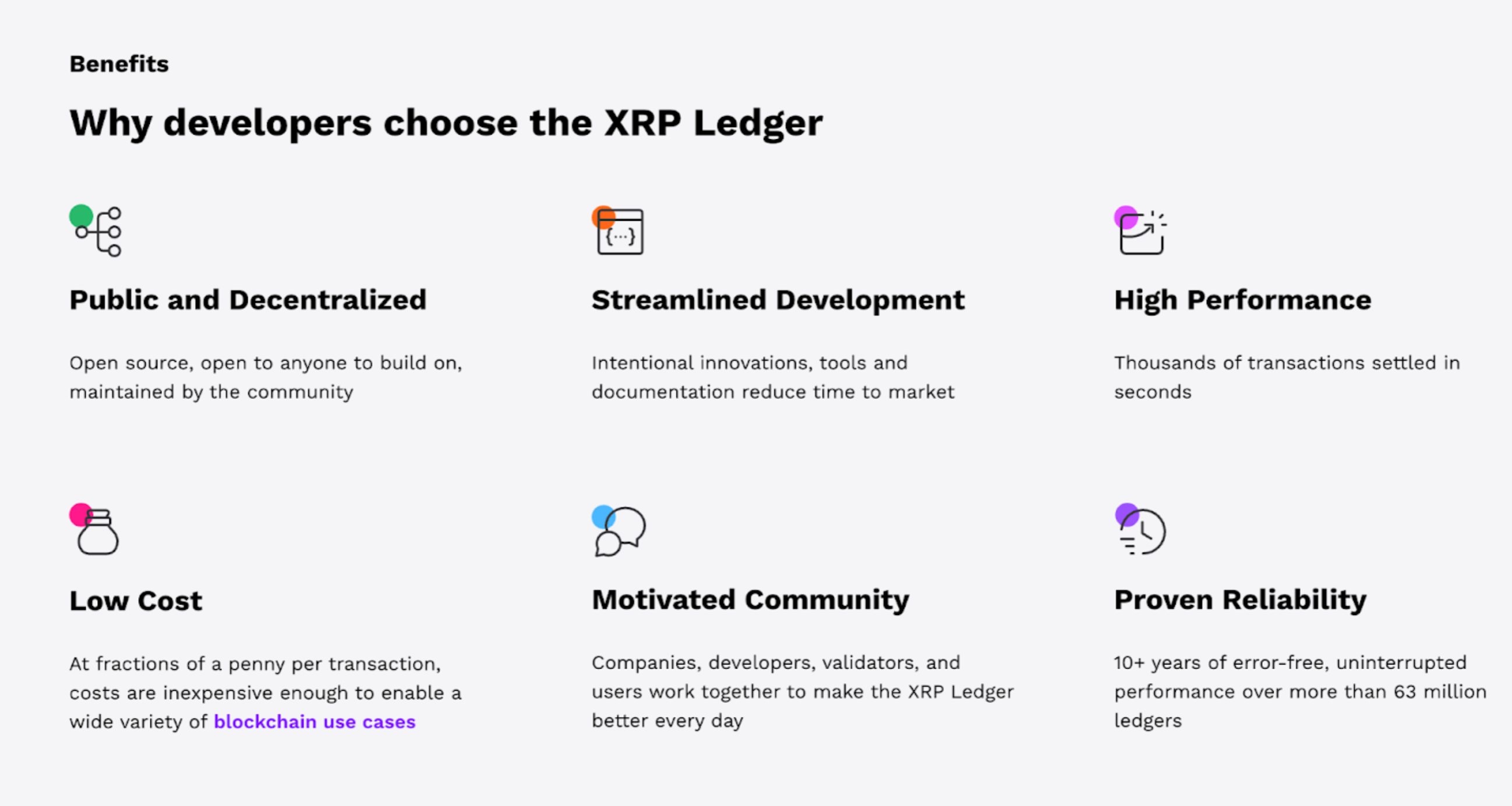
These design choices directly influence how wallets interact with the XRP Ledger. Performance, reliability, and error prevention become functional requirements rather than optional features.
Why Self-Custody Is Strengthening
After multiple market cycles, access risk has become more visible than price volatility. Regulatory enforcement and platform-level restrictions have pushed users toward separating ownership from execution. For XRP users who move funds frequently, self-custody has become a practical necessity rather than an ideological stance.
XRP Is Used More as a Bridge Asset
XRP’s speed, low fees, and broad exchange support make it ideal for moving value efficiently. Many users do not aim to hold XRP indefinitely; instead, they rely on it as a transport layer between ecosystems. This changes wallet requirements entirely.
Why Exchange Wallets Are an Operational Risk
Exchange wallets are best understood as execution environments, not storage solutions [7]. While convenient, they introduce policy and custody risks that are unrelated to the XRP Ledger. Treating them as long-term wallets exposes users to unnecessary uncertainty.
At this point, the distinction between wallet types becomes practical rather than conceptual. Different tools solve different problems, and evaluating them side by side only makes sense when their intended roles are clearly separated.
Final Verdict
There is no single best XRP wallet for 2026 in isolation – and any article claiming otherwise oversimplifies how XRP is actually used today. The correct wallet choice depends on user intent, not brand recognition or feature lists.
In practice, XRP users in 2026 face a trade-off between control, flexibility, and execution speed. Attempting to solve all three within one wallet consistently introduces unnecessary risk – whether through custodial exposure, operational friction, or irreversible user errors on the XRP Ledger.
The most resilient approach separates responsibilities:
Cold storage for capital preservation
Non-custodial software wallets for active XRP usage and swaps
Exchanges strictly as execution layers for trading
Wallets that respect XRPL-specific mechanics – reserve requirements, destination tags, and transaction finality – materially reduce loss risk. In contrast, generic wallets that merely “support XRP” without adapting to its workflow create hidden fragility.
In 2026, the best XRP wallet is not a single product, but a deliberate setup aligned with how XRP functions as a bridge asset, not a passive holding.