Stablecoin payment infrastructure is the set of services that carry a stablecoin transfer from the payer’s app to the receiver’s account and handle steps such as choosing a network and paying the fee in a separate coin.
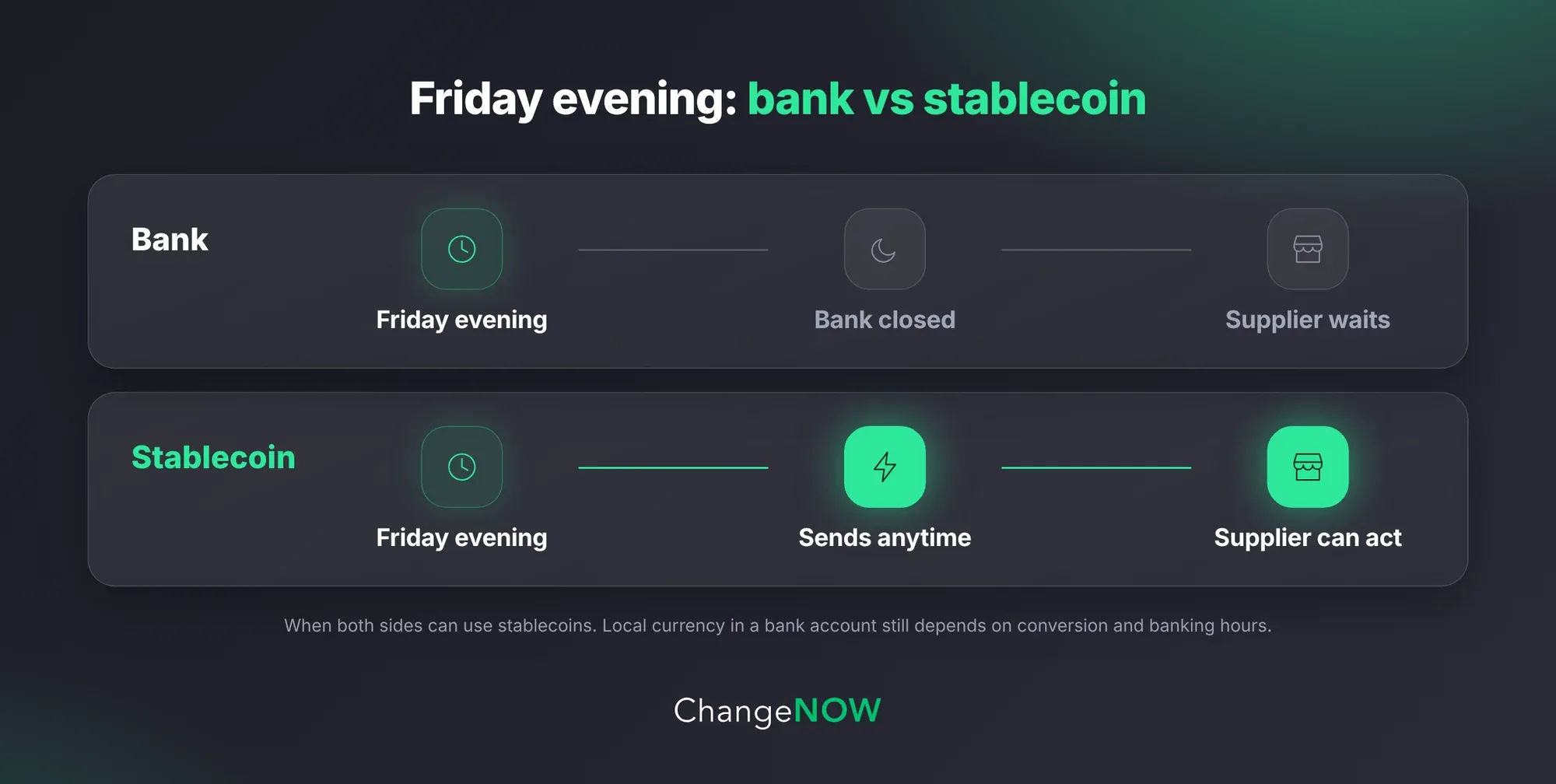
For example, on a Friday evening the buyer’s bank has closed for the weekend, and an overseas supplier is still waiting for the payment it needs to buy materials for the next order. A stablecoin transfer can go through even then, provided both sides have access to this infrastructure.
As part of our partnership with Polygon, we asked Aishwary Gupta, Global Head of Business at Polygon Labs, what it has to handle before stablecoin payments feel as ordinary as tapping a card.
Key Takeaways
Choosing a network, holding a separate coin for fees and picking the right stablecoin version are the extra steps that make stablecoin payments harder than a card tap.
Stablecoin payment infrastructure handles these steps through components such as on- and off-ramps, wallets, cross-chain routing, settlement and compliance.
Payment apps built on it choose the route, convert currencies, pay network fees and match each payment to a sale, so the customer confirms once.
Polygon packages this work in the Open Money Stack, with Polygon Chain for settlement and licenses for regulated US payments.
The last step into a bank account depends on conversion and local banking hours.
What Are Stablecoin Payments?
Stablecoin payments are transfers of stablecoins from one wallet to another, recorded on a blockchain. USDT and USDC are the best-known stablecoins, and our guide to what USDT is and how it works covers USDT in detail.
Without major price fluctuations, an invoice in stablecoins keeps about the same value on the day it is paid as on the day it was issued.
Paying means sending coins from your wallet to the recipient’s wallet address, so that address is the first thing to check before you confirm.
Every payment is saved on a blockchain, which lets both sides see that a transfer went through.
FAQ
Yes. Polygon’s Open Money Stack lets businesses use whichever network works best for their customers, which is what “open” in its name refers to.
No. Sending and receiving stablecoins takes only a wallet.
Once a transfer is confirmed on the blockchain, only the recipient can send the funds back. Check the address and network before you confirm.
Polygon and Ethereum use the same address format, so the transfer will go through, but the coins arrive on Polygon. If the recipient’s wallet or exchange lacks Polygon support, the funds may stay out of reach, so confirm the network first. Our guide to recovering crypto sent to the wrong network covers what to do if it happens.
It depends on the country and the provider. In the US, companies that move money for customers generally need state money transmitter licenses and a FinCEN registration, which is the coverage Coinme adds to Polygon’s stack.
They can. Tax rules for stablecoin payments vary by country, and some tax authorities treat stablecoins as property. A business may need to record each payment, and a tax adviser can confirm the local rules.
POL replaced MATIC as the native token of the Polygon PoS network on September 4, 2024, at a 1:1 ratio, and MATIC held on the Polygon network converted automatically.
Compared with fiat payments, stablecoin payments can arrive faster and cost less to send, which is why people use them for ordinary payments.
“People adopt a new way to pay when it makes their lives easier. If a business can pay an overseas supplier faster, or a worker can keep more of what they earn, that’s a reason to use the technology. They don’t need to be interested in crypto to do it.” – Aishwary Gupta, Global Head of Business at Polygon Labs
Stablecoins already help anywhere money sits waiting, as with the Friday payment to the supplier. Marketplaces paying sellers in other countries see the same effect, and getting paid sooner makes a real difference to a small business managing its cash flow.
How Do Stablecoin Payments Work?
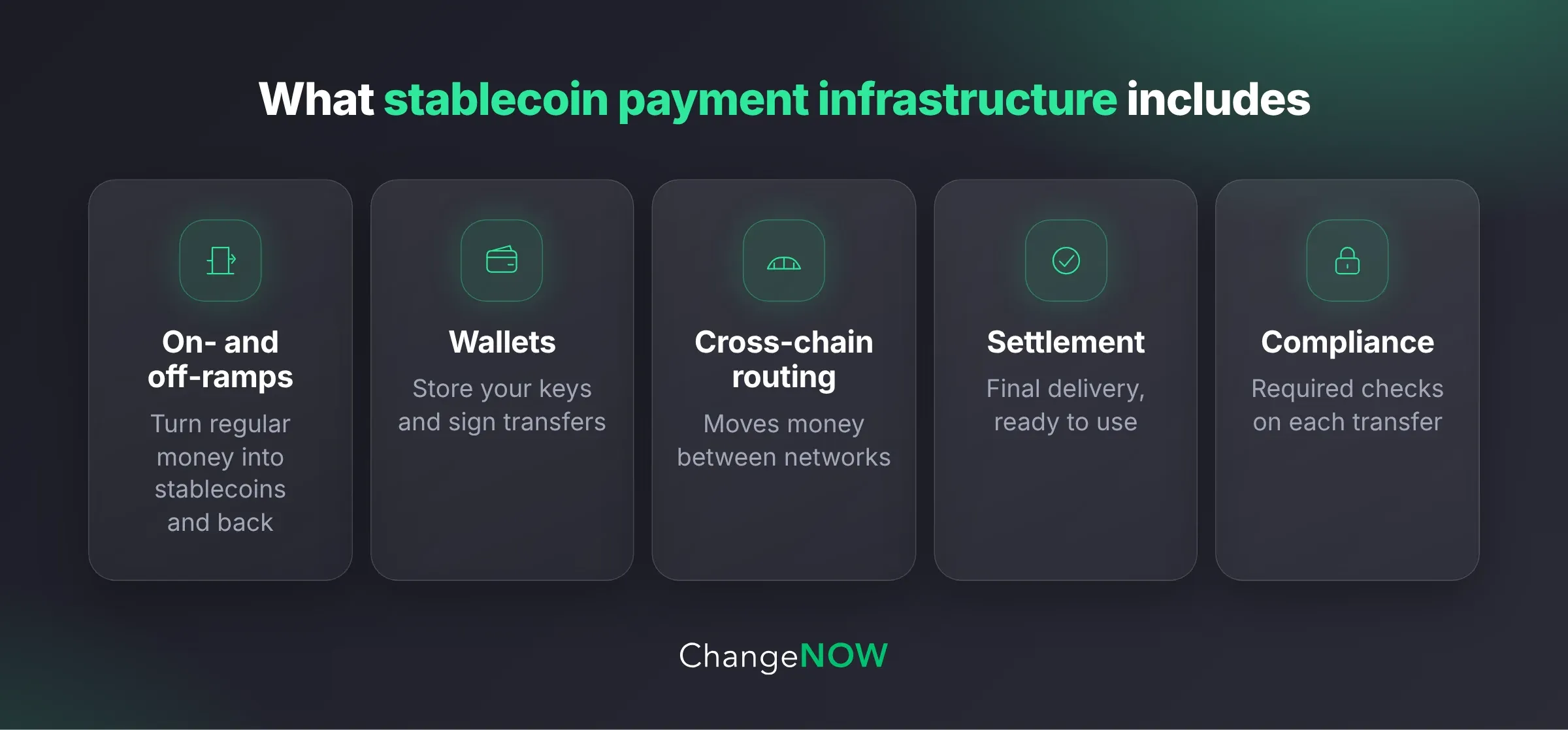
A stablecoin payment moves from the payer’s wallet to the receiver, and stablecoin payment infrastructure provides the components that the route needs:
On- and off-ramps. An on-ramp turns dollars from a bank account or card into stablecoins, and a stablecoin off-ramp turns them back into dollars.
Wallets. A wallet stores the keys that give access to coins on a blockchain and signs transfers, so payers and merchants can receive and spend money.
Cross-chain routing. When the payer holds a coin on one network and the receiver wants another, routing moves the money between networks, which makes multi-chain stablecoin payments possible.
Settlement. Settlement is the final delivery of funds to the wallet or account the receiver chose, ready to use.
Compliance. Regulated stablecoin payment infrastructure providers apply KYC, AML, risk-scoring and similar checks, and the requirements vary by country and type of transaction.
How Stablecoin Payments Reach a Bank Account
Stablecoin-to-fiat payments reach a bank account through an off-ramp, which converts the stablecoin into local currency. Most of the delay on the route comes from this last step.
“But you have to follow the money all the way to the recipient. If they need local currency in a bank account, conversion and local banking hours still matter. The useful comparison is the total cost and the time until someone can actually use the money.” – Aishwary Gupta, Polygon Labs
What Payment Apps Should Handle for You
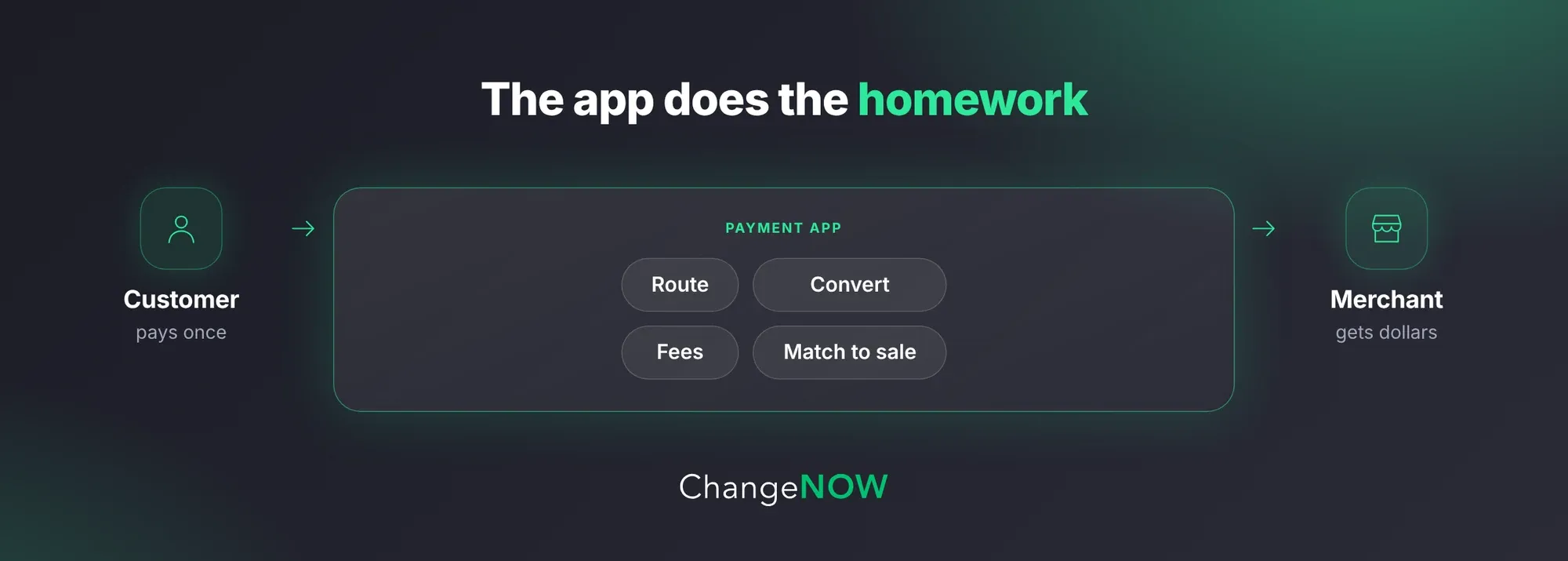
Payment apps should pick the route, move funds between networks, handle conversions and pay network fees, so you pay with what you hold and the merchant receives what they want.
What the Merchant Receives
A merchant only has to name the currency and the account where the money should land.
“A merchant should be able to say, ‘I want to receive dollars in this account,’ without asking the customer to switch networks or convert tokens before paying. The platform should also coordinate the required compliance checks and match the payment to the right sale.” – Aishwary Gupta, Polygon Labs
On the merchant’s side, the payment ends with a clear statement of how much arrived, what it cost and when the money is available, while the technical decisions stay out of sight.
What the Payer Does
For the payer, a stablecoin payment needs a single confirmation when the app handles the setup that otherwise comes first.
“The homework. People shouldn’t have to spend time choosing a blockchain, buying another token to cover fees, or working out which version of a stablecoin they need. They should see what they’re paying for, what it costs and whether it went through.” – Aishwary Gupta, Polygon Labs
A payment app can cover all three parts of the homework:
Network choice. One stablecoin can live on several networks, so the app picks the network the recipient can receive on.
Fee payment. Each transfer carries a small network fee, called gas, payable in the network’s own coin, which is POL on Polygon, and the app pays it as part of the payment.
Version matching. USDT and USDC are different coins, and each can live on several networks, so the app matches the version the recipient accepts.
“You should be able to pay with what’s already in your wallet, even if the business receives a different currency on a different network. Any conversion, movement between networks and fees should be handled as part of that payment. You see the total, confirm once and get on with your day.” – Aishwary Gupta, Polygon Labs
Polygon makes stablecoin payments easier through the Open Money Stack, a stablecoin payment infrastructure solution that companies connect to once instead of assembling separate services for every step.
“A business should be able to send money from its bank account, and the person receiving it should be able to get money they can spend. That connection is a big part of what we’re building at Polygon with the Open Money Stack.” – Aishwary Gupta, Polygon Labs
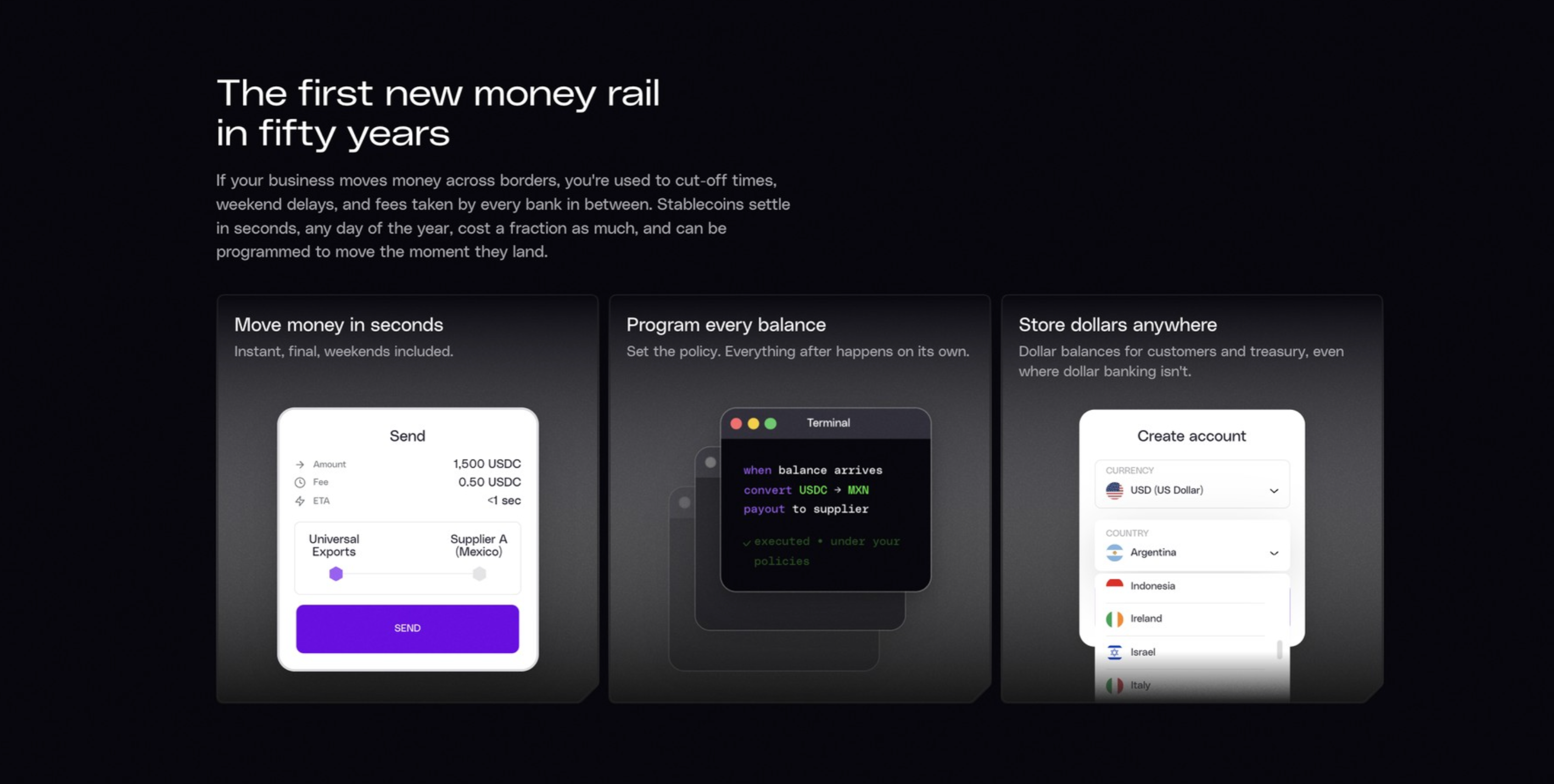
Polygon’s own description of what the stack does. Source: polygon.technology, checked October 20, 2026.
Parts of the stack already operate, while the API remains in technical preview for select customers. Our article on the Polygon Open Money Stack breaks down each piece.
Polygon Chain as the Settlement Layer
Settlement on Open Money Stack defaults to Polygon Chain, the network behind low-fee stablecoin payments on Polygon with options to settle on other supported chains, like Solana, Ethereum, or TRON. Polygon’s website puts its settlement finality, meaning the time until a transfer is final, at about 1.8 seconds, with an average transaction cost of $0.002.
Polygon Chain, the default settlement layer behind the stack, in Polygon’s own figures. The figures are a dated snapshot and may change. Source: polygon.technology, checked October 20, 2026.
Bringing Regulated US Payments Into the Stack
CoiPolygon Labs completed its acquisition of Coinme on October 14, 2026, bringing 37 state money transmitter licenses and 11 exemptions that together cover 48 states, plus a FinCEN registration.
“Our completed acquisition of Coinme brings regulated U.S. payments into that work. It gives us more of the pieces needed to connect stablecoins with everyday payments, so businesses can offer a service their customers have a reason to keep using.” – Aishwary Gupta, Polygon Labs
Tazapay, Mesh, Toku and Kira are among the first companies on the stack.
Can Payments on Polygon Be Private?
Yes, payments on Polygon can be private, even though most blockchains are public and anyone can look up transfers between wallet addresses.
“Businesses already expect financial privacy. Using stablecoins shouldn’t mean giving that up. The goal is to let them choose the level of confidentiality they need while supporting their audit and regulatory obligations.” – Aishwary Gupta, Polygon Labs
Privacy options exist at several levels of Polygon’s stack.
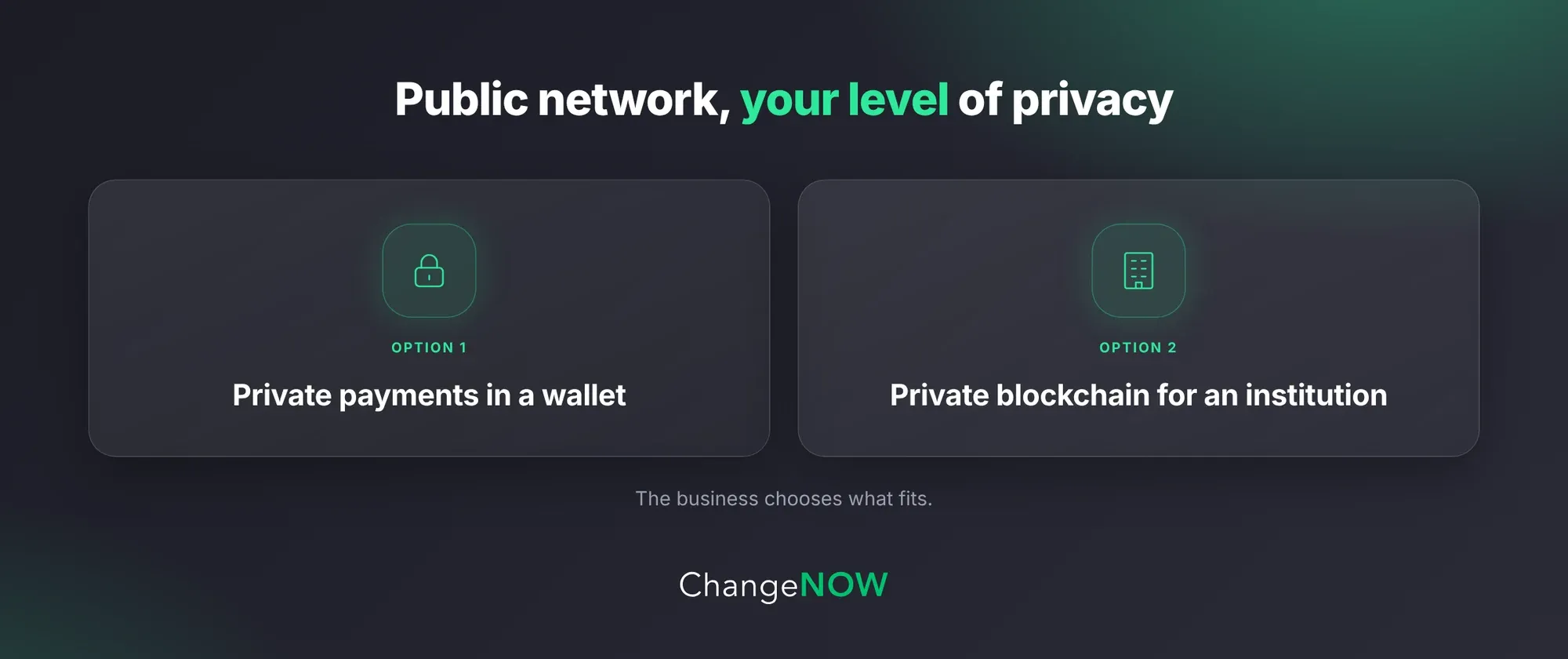
Businesses paying suppliers may need individual transfers kept confidential, while banks may need a private network where they control who can see transaction data. On Polygon, that can mean private payments in a wallet or a private blockchain built for an institution.
The Future of Stablecoin Payments
Stablecoin payments are likely to become an ordinary way to pay, with the blockchain out of sight for most users and with banks, fintechs and crypto companies offering similar services.
Mainstream Users and the Choice of Blockchain
Mainstream users are likely to care about the payment itself, while early crypto users may always care which chain they use, having spent time on those networks.
“But the next wave of mainstream users probably won’t know which blockchain they’re using and they won’t care. They’ll care that the payment goes through, the cost is clear and the experience is seamless.” – Aishwary Gupta, Polygon Labs
Payment apps can pick the network for them and show only the amount and the result.
Banks, Fintechs and Crypto Companies Start to Look Alike
Over the next five years, banks, fintechs and crypto companies may overlap much more.
“Five years from now, calling a company a ‘bank,’ ‘fintech’ or ‘crypto company’ may tell you very little about the technology it uses.” – Aishwary Gupta, Polygon Labs
Banks may use stablecoin cross-border payments infrastructure to make international transfers faster, while fintechs may let customers hold dollars and stablecoins side by side in one app, with crypto-native companies supplying the technology behind both.
Get Ready for Polygon Payments With ChangeNOW
Until payment apps take over network choice and fees everywhere, clients handle those steps themselves, and ChangeNOW can help get a wallet ready for Polygon payments. Sending stablecoin payments on Polygon takes two things in your wallet: the stablecoin itself and some POL.
ChangeNOW supports USDT and USDC on the Polygon network as well as POL itself. USDT that is already on Ethereum can reach Polygon through a bridge, and our guide to bridging USDT from Ethereum to Polygon covers the steps.
Fund a Polygon Wallet for Payments
Open the exchange page and select the asset and amount you want to send.
Choose USDT or USDC on the Polygon network as the receiving asset.
Enter your Polygon wallet address and review the estimated receive amount.
Send the funds and wait for the payout to arrive in your wallet.
Repeat with a small amount to get POL for network fees.
POL also exists as an ERC-20 token on Ethereum. That version is a separate token on a different network, while gas on Polygon is paid in native POL, so choose the native Polygon version.