


A crypto super app is a single product where you can buy, store, swap, trade, send and pay with crypto without picking networks, managing gas or moving funds between services.


A crypto super app is a single product where you can buy, store, swap, trade, send and pay with crypto without picking networks, managing gas or moving funds between services.
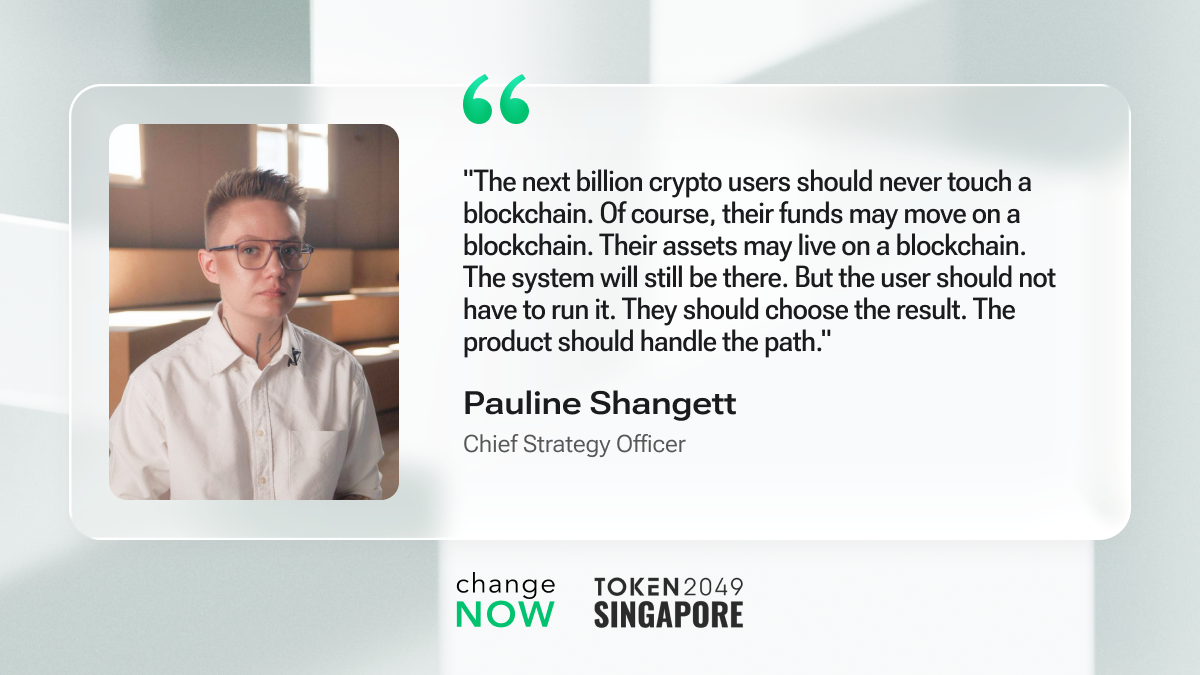
What makes it a super app is how seamlessly they work together. Funds acquired through one step can be immediately used for the next. And the most important part – the client doesn’t need to think about the underlying blockchain infrastructure. Pauline Shangett, Chief Strategy Officer at ChangeNOW, brought the case for this model to the Bit Digital Stage at TOKEN2049 Singapore on October 7.
 TOKEN2049 Singapore agenda: "Next Billion Users Should Never Touch Blockchain" keynote by Pauline Shangett, CSO at ChangeNOW, Bit Digital Stage, 12:30 PM.
The term comes from Asia. WeChat started as a messenger and now handles payments, taxi rides, utility bills and food delivery. Grab came from the opposite direction: a ride-hailing app that added food, payments and loans on top. Either way, one account covers dozens of everyday tasks.
In crypto, each of those tasks also sits on its own set of networks. An all-in-one crypto app that puts swaps, storage and payments in one place is still just a collection of tools. A crypto super app has three important traits:
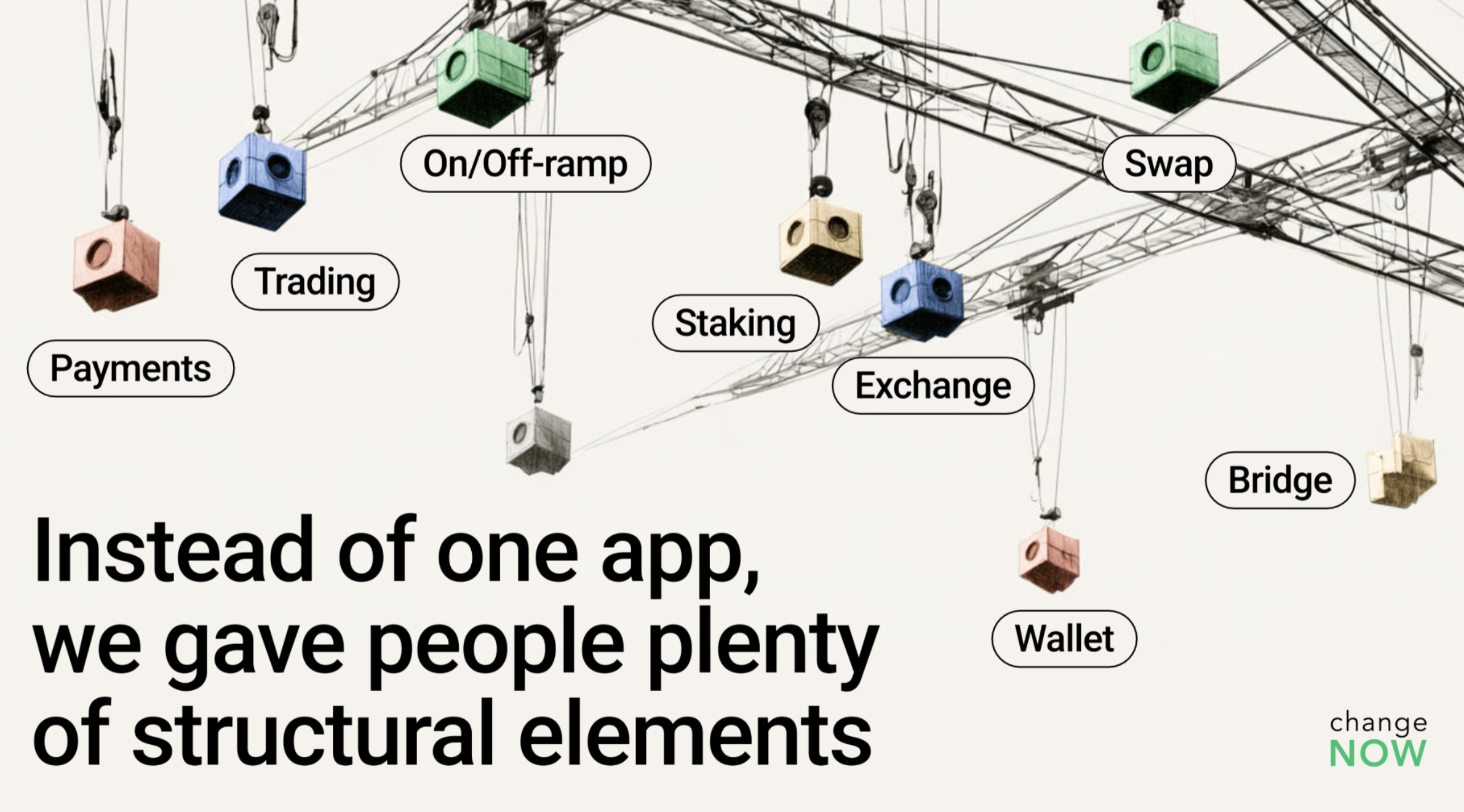
Side by side with single-purpose crypto products, the difference comes down to who does the work:
| Wallet | Exchange | Payment service | Crypto super app | |
|---|---|---|---|---|
| What it does | Stores assets | Converts assets | Accepts or sends payments | All of these in one flow |
| Who picks the network | User | User | User | Product |
| Who handles gas | User | Partly the user | User | Product |
| Moving between tasks | Copy addresses, transfer, wait | Deposit, withdraw | Top up from elsewhere | The next step starts from the current balance |
In the last column, the user's part shrinks to one decision: what to do with the money. That continuity between actions is what separates a super app from a simple toolkit:
A wallet with forty supported chains can still fail that test if the user has to find gas and move funds before every step.
Crypto needs super apps because its tools don't connect on their own. Users move money between wallets, exchanges and networks by hand, and each hand-off adds time, fees and risk.
Crypto transactions are complicated because users often have to manage the infrastructure behind the payment themselves.
A simple payment can turn into several separate problems:
The irony goes back to crypto's founding pitch:
"Crypto promised to remove the middleman, remember? We were going to remove the banks, the gatekeepers, the delays, and the limits. We were going to give people direct control over their money. And in many ways, we did. But we removed the middleman without removing the middleman's job." – Pauline Shangett
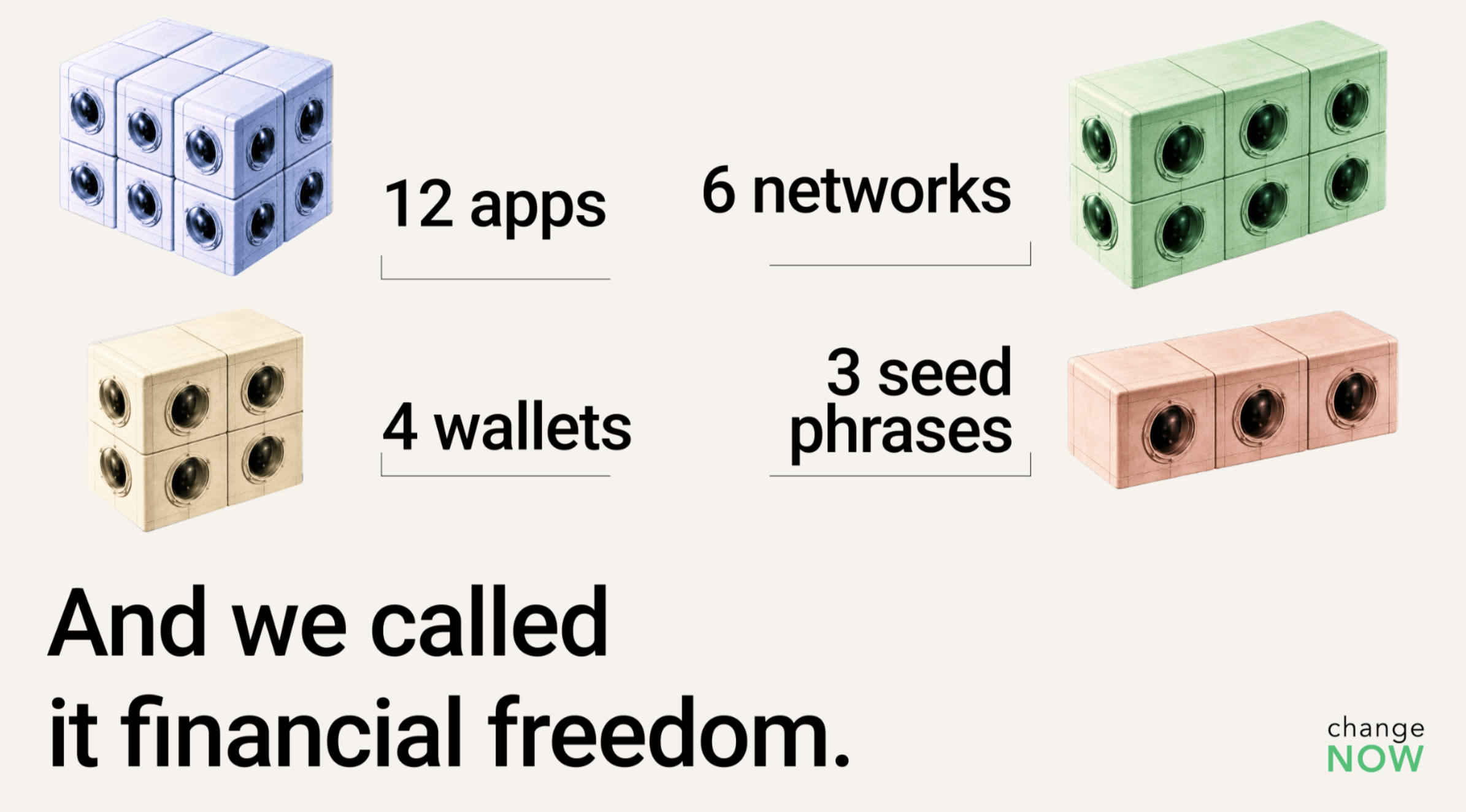
In numbers, crypto "gave people twelve apps, six networks, four wallets, three seed phrases and called it financial freedom."
The cost of fragmentation shows up fastest at a checkout. At a café in Singapore, Pauline's crypto card in Apple Pay ran out of balance. Her funds sat in USDT on Tron, the card only accepted USDC on Ethereum, and the latte was already being made.
The top-up took eight steps:
The queue didn't wait for step eight:
"People start leaving. I mumble apologies. Finally, I got my coffee money in my card wallet! Hallelujah! I top up the card, pay for my coffee with the ice halfway melted already, and leave with my head down. All of that work, that stress, that shame, for an iced latte which didn't even taste good." – Pauline Shangett
A bank card from the 1990s did the same job in one swipe. New users will hold crypto payments to the standard of the Apple Pay tap they use every day.
When the same mistake repeats across thousands of users, it is a product failure. Picking the wrong network or forgetting about gas can lead to extra steps or even failed transactions.
The standard industry response puts the blame on the person who clicked:
"Then, when something goes wrong, we tell the user: You should have done more research. But when thousands of people keep making the same mistake, it is not just user error. It is a product problem." – Pauline Shangett
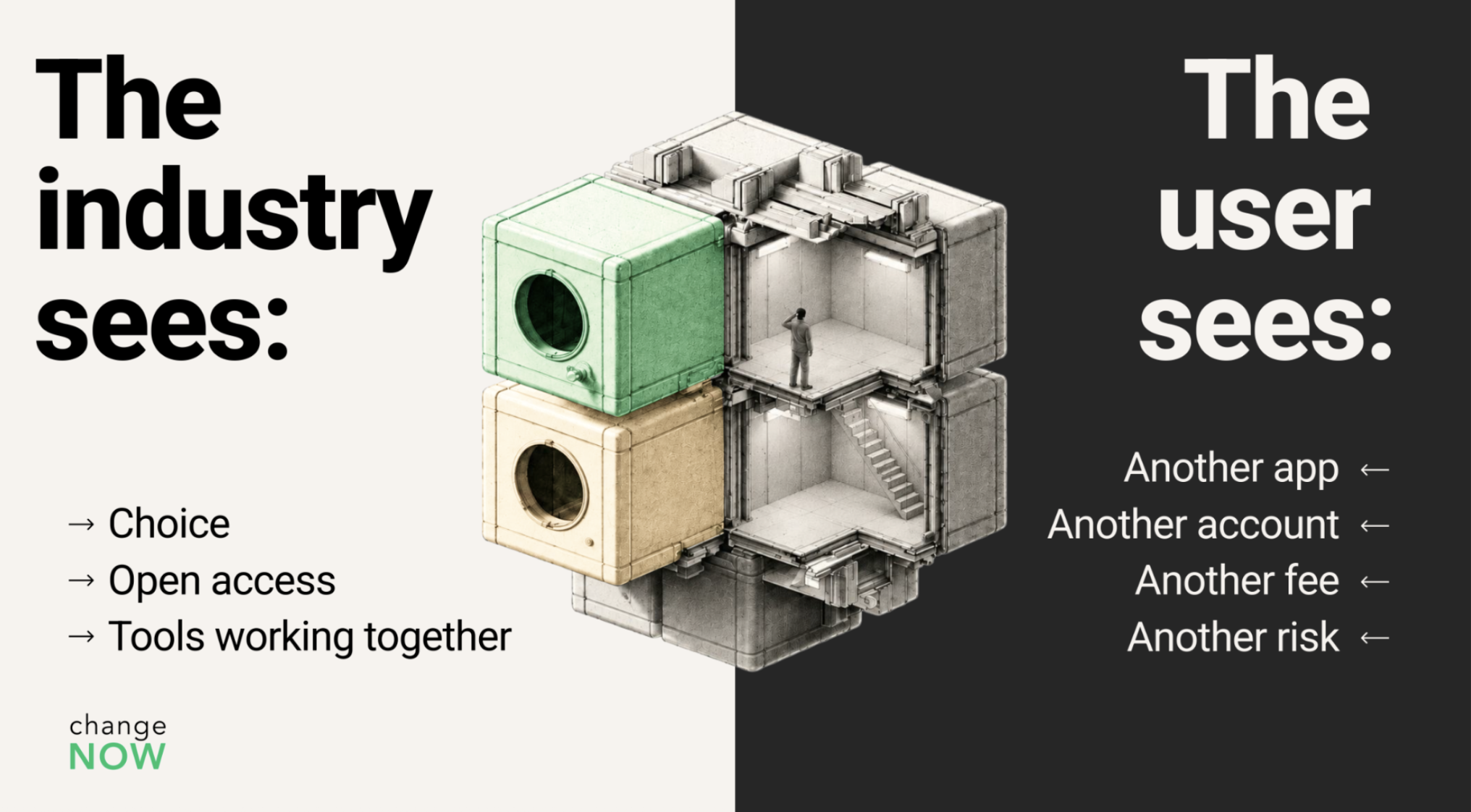
Until products catch up, the cost of those mistakes lands on support teams. Wrong-network deposits are a regular request for ChangeNOW's 24/7 support, and a super app should make them rare.
A crypto super app moves the routing work from the user to the product. The user picks the outcome, the app does the routing, and the funds stay under the user's control.
Four principles turn that rule into a product.
The user states what should happen: "pay 5 USDC to this card" or "swap BTC for SOL." The product picks the network, decides whether the transfer needs a swap or a bridge, and selects the provider that executes it.
Buying, storing, swapping and sending draw on one balance. A swap starts from the funds that are already there, and the result is ready for the next action without a trip to another app.
Most of the iced latte steps were hand-offs between apps. A super app keeps those hand-offs inside the product, and network fees are charged as part of the transaction, so nobody has to hold ETH, TRX and SOL in reserve to move a stablecoin.
Bringing all functions into one product raises an obvious question: does a crypto super app simply recreate the traditional bank? ChangeNOW sees one important difference:
"This does not mean creating a new gatekeeper. And it does not mean taking control away from people. It means giving them control without forcing them to manage every part of the system." – Pauline Shangett
The difference lies in who holds the keys. A super app can do the routing without taking custody: funds move between user-controlled addresses while the service handles the conversion. Custodial storage can sit alongside that as an option for people who want a balance to work from. Trust is still required, so users need to see the route and the fees before they confirm.
ChangeNOW builds its super app on top of a non-custodial exchange for 1,500+ assets across 110+ networks, then adds fiat on-ramps, fixed exchange addresses and a Pro account with one balance, cashback, AML checks and loans.
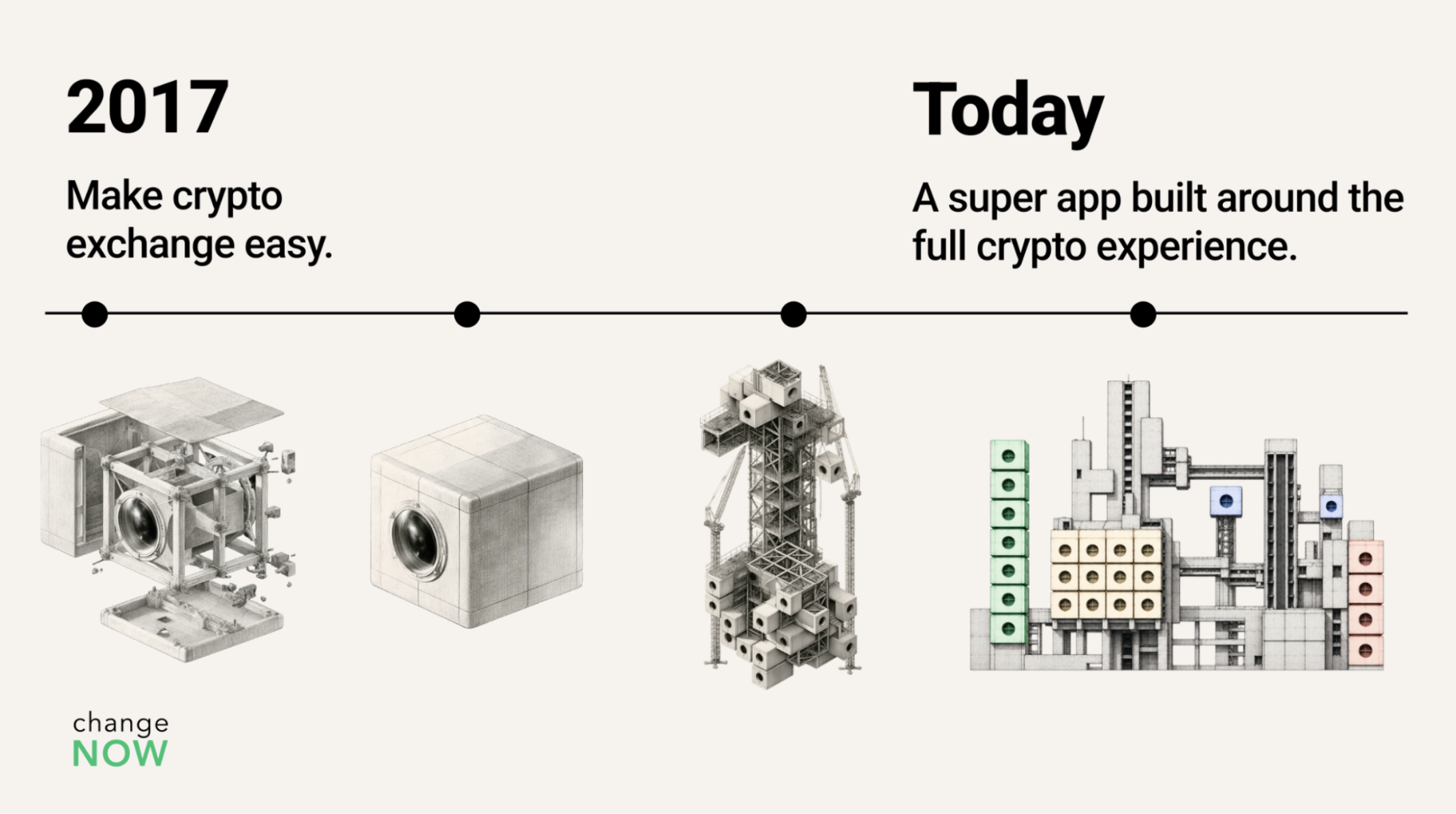
"In 2017, we started with one simple goal: Make crypto exchange easy. Help people move from one asset to another without long setup, complex steps, or hidden limits. And that worked. But over time, we saw something important. One easy swap does not create an easy crypto experience." – Pauline Shangett
The company serves 10M+ clients and describes its direction as a move "from a product built around one crypto action to a super app built around the full life of a crypto user."
The base layer is non-custodial: ChangeNOW doesn't store customer funds, and fees are built into the rate shown upfront.
Around that base:
ChangeNOW Pro is an account for frequent and high-volume users, with a free VIP plan and paid Emerald and Brilliant plans. Exchange, trading, balance, loans, cashback and a marketplace sit in a single menu, on the web and in the mobile app.
Companies run into the problem at a larger scale:
"Someone at the company has to make the payment provider, the exchange, and everything in between work together. It is still a box of parts. It just has a company logo on it. That is what makes ChangeNOW a super app. Clients choose the result. We connect the parts." – Pauline Shangett
For companies, that layer is NOWPayments for accepting crypto, NOW Custody for storage and conversion through a single API, and white-label tools for running swaps inside their own products.
Nobody thinks about payment processors when tapping a card. Crypto should work the same way: the infrastructure stays underneath while the user sees a balance and a button.
"The next billion people who come into crypto do not need to understand blockchains. They need products that understand blockchains for them. Crypto has spent years making the leather better, the thread stronger, and the tools are better." – Pauline Shangett
For anyone choosing a crypto app, the test is short: count the steps between deciding what to do with the money and getting it done. A super app keeps that number at one.
Watch Pauline Shangett's full TOKEN2049 keynote, "The Next Billion Crypto Users Should Never Touch a Blockchain"

Bitget Hack Explained: How $387.5M Was Stolen
Bitget has confirmed a major security breach affecting approximately $387.5 million in assets across its hot and warm wallet infrastructure. Private-key compromise has been ruled out.

How to Avoid Crypto Phishing Emails and Protect Your Funds
The Email Looks Real. The Request Still Might Be a Scam

What Is MiCA (Markets in Crypto-Assets Regulation)?
A look at the EU's MiCA and what it means for users.