Key Takeaways
- Hot wallets are used for frequent transfers and Web3. Cold wallets are better for the funds you want to keep offline and untouched for a while.
- Choose a wallet that matches how you actually use crypto, the networks you need, whether you’re into staking, NFTs, or just trying out new platforms.
- Your security depends on the choices you make such as what you approve, what you download and how carefully you store your recovery phrase.
Choosing a Crypto Wallet in 2026
You can't trade crypto without a wallet. Well, you can, in theory, but you definitely shouldn't.
Leaving your funds on an exchange means you don't truly control them. A crypto wallet acts as your personal control center, protecting the digital "keys" required to move your assets.
Crypto is no longer a niche hobby for tech insiders. Recent data shows over 550 million people globally now own digital assets. Adoption has surged past 20% in regions like Latin America and Southeast Asia, while roughly 30% of adults in the US now hold crypto.
Because millions of everyday people are jumping in, wallet technology has shifted radically to become safer and much easier to use.
Big Frustrations You'll Avoid
If you talk to anyone who used crypto a few years ago, they will complain about the same three pain points. The right 2026 wallet solves these entirely:
-
Seed phrase panic: Historically, you had to write down a random 12-word recovery phrase on paper. If you lost that paper or it burned, your money was gone forever.
-
Network confusion: Crypto is split across dozens of different blockchains (like Bitcoin, Ethereum, or Solana). Keeping track of which token belongs where used to be an absolute headache.
-
Phishing traps: Sneaky hackers can trick beginners into clicking "approve" on a hidden transaction, draining a wallet before the user realizes what happened.
Your 2026 Wallet Options
To fix these issues, the market has evolved. You don't need a computer science degree anymore; you just need to pick the style that matches your comfort level:
-
Smart wallets: These feel exactly like modern mobile banking apps. Instead of forcing you to guard a 12-word paper phrase, they let you log in or recover your account using FaceID, your email, or a trusted device.
-
Software wallets: These are standard apps you download onto your phone or laptop. They are perfect for daily use, making it incredibly simple to swap one coin for another because they handle all the blockchain network-hopping behind the scenes.
-
Hardware wallets: These are physical devices that look like secure USB drives. They keep your keys completely offline, away from internet hackers. They take a little more effort to set up, but they are the absolute gold standard for long-term savings.
Custodial vs Non-Custodial: Who Holds the Keys?
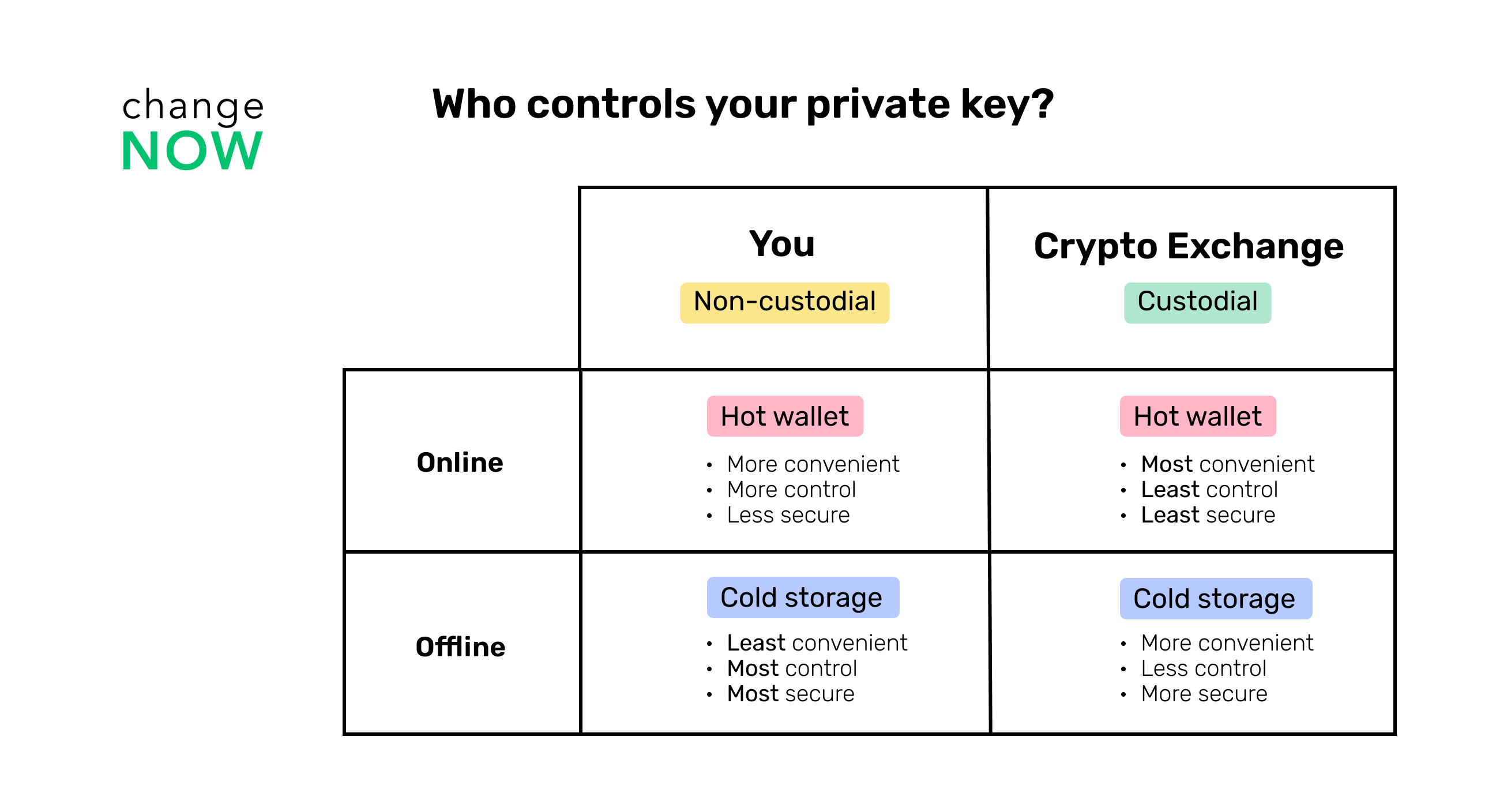
Before we dive into details, here's a quick cheatsheet:
Custodial wallet
A company is holding those keys for you. It feels simple: you log in, you see your balance, you buy and sell with a couple of taps. If you forget your password or switch devices, support can help you get back in. The trade-off is that your assets ultimately depend on that company. When a platform blocks withdrawals or runs into trouble, you don’t get to decide what happens to your funds.
Non-custodial wallet
This option puts the keys entirely in your hands. Nobody can lock your account, reverse a transaction, or limit what you do with your own funds. That’s the pure version of crypto ownership. Of course, the flip side is, when you lose your recovery phrase or download the wrong app, there’s no hotline to call because the responsibility is yours alone.
Many people end up with a mix of wallets, a custodial for trading and quick moves, and a non-custodial to store what they truly want to protect long-term.
Hot Wallets vs Cold Wallets
Wallets also differ in whether they are online or largely offline. Hot wallets connect to the web for fast transactions. Cold wallets work mostly offline for stronger security.
Breakdown
| Feature | Hot Wallets (Online) | Cold Wallets (Offline) |
|---|---|---|
| Internet connection | Always connected | Offline by default (connects only to sign) |
| Ease & speed | Very high | Lower (device, cable, or transfer needed) |
| Security exposure | Higher risk of remote hacking or phishing | Much lower remote-risk; more physical/operational risk |
| Best for | Day-to-day use, frequent transactions, DeFi, NFTs | Long-term holdings, large value storage |
| Typical examples | Mobile apps, web wallets | Hardware wallets, paper wallets |
Key Criteria When Choosing a Wallet
The best way to compare wallets is to look at three things:
- how safe they are
- what they can do
- how simple they are to use
When one side falls short, your wallet either becomes unsafe or just plain inconvenient.
Security always comes first. A wallet should keep your private keys protected and reduce the risk of theft or loss in every way possible. You should pay attention to:
- strong encryption of local key storage
- independent security audits and a proven track record
- full user control over private keys (non-custodial architecture)
- clear and reliable backup/recovery systems (seed phrases, hardware support, etc.)
As crypto adoption grows, this becomes even more important. TradingView reports that active wallets storing stablecoins increased by approximately 53% in one year, demonstrating that more value is being held in crypto wallets than ever before.
Functionality is the next factor. Wallets are no longer just passive storage apps. Wallets have evolved into full-featured tools. You can trade tokens, earn rewards, and connect to blockchain apps without leaving the interface. If you plan to do more than just hold your assets, look for one that works across several networks, supports the things you care about (whether that’s NFTs, staking, or DeFi), and connects smoothly to the wider Web3 world.
User Experience (UX) matters more than most people admit. A wallet should make transactions feel simple and intuitive rather than like debugging code. It is essential to determine:
- clarity of the interface
- ease of navigation for both beginners and advanced users
- helpful guides or support if something goes wrong
- how easy it is to restore access on a new device.
Support & Ecosystem Maturity
This fourth criterion often gets overlooked, however it’s still crucial. The strength of the underlying ecosystem and support infrastructure affects your actual day-to-day safety and flexibility.
Look for:
- Regular updates and patches from the wallet team (software that’s not maintained becomes a security risk).
- With an open-source foundation and clear documentation on GitHub, users can easily track development progress, version updates, and audits. This transparency builds confidence, allowing independent reviewers and the community to verify the wallet’s integrity.
- Compatibility with hardware wallets or trusted extensions if you want to scale security up.
- Active development of the wallet’s ecosystem: multiple integrations, network support, active user community. For example, auditing standards emphasize independent review and transparency in crypto-asset systems.
- Responsive customer support or community channels when you hit a snag, especially for newcomers using complex features.
Trusted Crypto Wallets for 2026
NOW Wallet
If you want a reliable middle ground that balances daily usability with strong security, NOW Wallet provides a clean, non-custodial setup for both mobile and desktop.
Here is a quick breakdown of what it brings to the table:
-
Complete control: You retain total ownership of your private keys with full local key storage.
-
Massive variety: It supports over 1,500 tokens across more than 70 independent blockchains.
-
Zero setup friction: There are no mandatory sign-ups or KYC registrations required for basic features. Simply install the app, back up your recovery phrase, and you are ready to go.
-
Web3 ready: It functions smoothly as a daily tool for regular transfers and a direct gateway to Web3 applications.
-
GasFree USDT transfers: You can transfer USDT on the TRON network with a fixed, transparent fee built directly into the transaction. This makes everyday transfers simpler and more predictable because you only ever need to hold and manage a single asset: USDT.
-
24/7 assistance: You have access to human help whenever you need it with round-the-clock live chat support.
Unlock Premium perks with the Pro version:
-
Cashback: Earn rewards back on your exchange transactions.
-
Enhanced security: Protect your funds with built-in AML address checks.
-
Personal payment page: Get your own dedicated webpage to accept both crypto and fiat payments easily.
-
Flexible financing: Access unlimited crypto loans directly through the app.
Ledger
Ledger is the gold standard for cold storage. Private keys are kept entirely offline inside a secure chip (“Secure Element”) and transactions are signed physically on the device.
Ledger supports thousands of coins and tokens across the ecosystem. Its ecosystem includes the hardware device and Ledger Wallet software.
Through the app, you can view balances, send or receive crypto, install blockchain apps on your Ledger, manage NFTs, or connect to DeFi and dApps, but all sensitive operations (like signing a transaction) still happen on the hardware wallet itself.
Exodus
Exodus is a non-custodial wallet available for desktop and mobile, with a user friendly user interface and a wide range of features. It supports over 50 crypto assets, allows in-app swaps, and offers staking options.
The Exodus website mentions Web3 wallet support, a built-in NFT gallery/marketplace, and expanded hardware wallet compatibility.
It strikes a balance between cold storage devices and more lightweight wallet apps.
Coinbase Wallet
Coinbase Wallet is a self-custody option from a brand most crypto beginners already trust that supports thousands of assets, ncluding all ERC-20 tokens and assets on EVM-compatible chains like Avalanche C-Chain and Polygon.
It’s built for smooth Web3 use: you can hold assets on networks like Ethereum and Solana, manage Bitcoin on mobile, and jump into apps through a browser extension without any hassle. Your keys are stored on your device, not with a central exchange.
Multi-chain & asset support: Manage crypto on Ethereum, Solana, and EVM-compatible chains. You can swap tokens directly inside the wallet across decentralized exchanges.
Bitget Wallet
Bitget Wallet is a non-custodial, multi-chain wallet that supports 130 mainnets and more than 1 million cryptocurrencies, a DApp browser, and complete portfolio management in one interface.
It is designed for self-custody: users hold their private keys, and the platform emphasizes security and autonomy. Bitget wallet is also backed by a US $300 million+ user protection fund.
Common Threats to Crypto Wallets
Crypto wallets aren’t just targets for hackers. They’re also tested daily by simple human mistakes. Below are the most frequent and damaging types of wallet threats today:
-
Phishing and fake wallet apps scammers often recreate popular wallet interfaces and post near-identical fakes online. They even show up in search results and app stores, so it’s easy to download the wrong one by accident. According to a Datavisor report phishing remains one of the most common reasons people lose their crypto.
-
Clipboard address swaps. Malware that replaces a copied wallet address is another serious problem. When someone copies their address to receive a payment, the software changes it to the hacker’s version, often with similar characters to avoid suspicion. The user pastes it, sends the funds, and never sees them again. This method is known as an address-replacement or poisoning attack.
-
Social engineering and fake support chats. A growing trend is impostors pretending to be “official support.” They contact users on social media or forums and ask for verification codes or seed phrases under the pretense of “helping recover access.” Once shared, the wallet is gone for good.
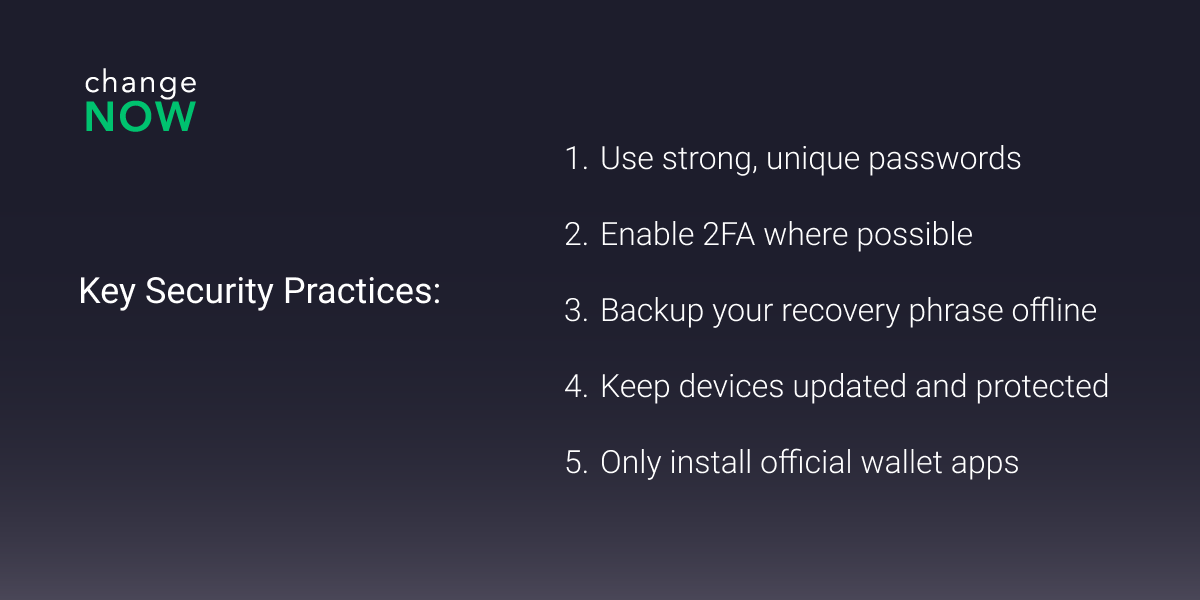
Key Security Practices
Most crypto losses happen because someone let their guard down. Follow these core practices to avoid preventable mistakes:
Conclusion
Finding the right crypto wallet really comes down to how you use your coins and how much peace of mind you need.
-
Hot wallets act like an everyday pocket wallet - fast and convenient for active trading and dApps.
-
Cold wallets serve as a digital vault - offline hardware meant for locking away long-term savings.
A common approach is to combine the two, keeping everyday funds accessible online while securing the bulk of a portfolio offline.
Ultimately, a crypto wallet functions as a personal bank. Holding digital assets with confidence is simply about understanding who controls the keys, having a clear recovery plan for emergencies, and staying aware of the risks.