


A Bitcoin ATM is a physical kiosk where you can buy Bitcoin with cash or, at some machines, sell BTC for cash. Unlike traditional ATMs, Bitcoin ATMs connect to cryptocurrency services rather than your bank account.
You've probably spotted one at a gas station, convenience store, or pharmacy without realizing it.
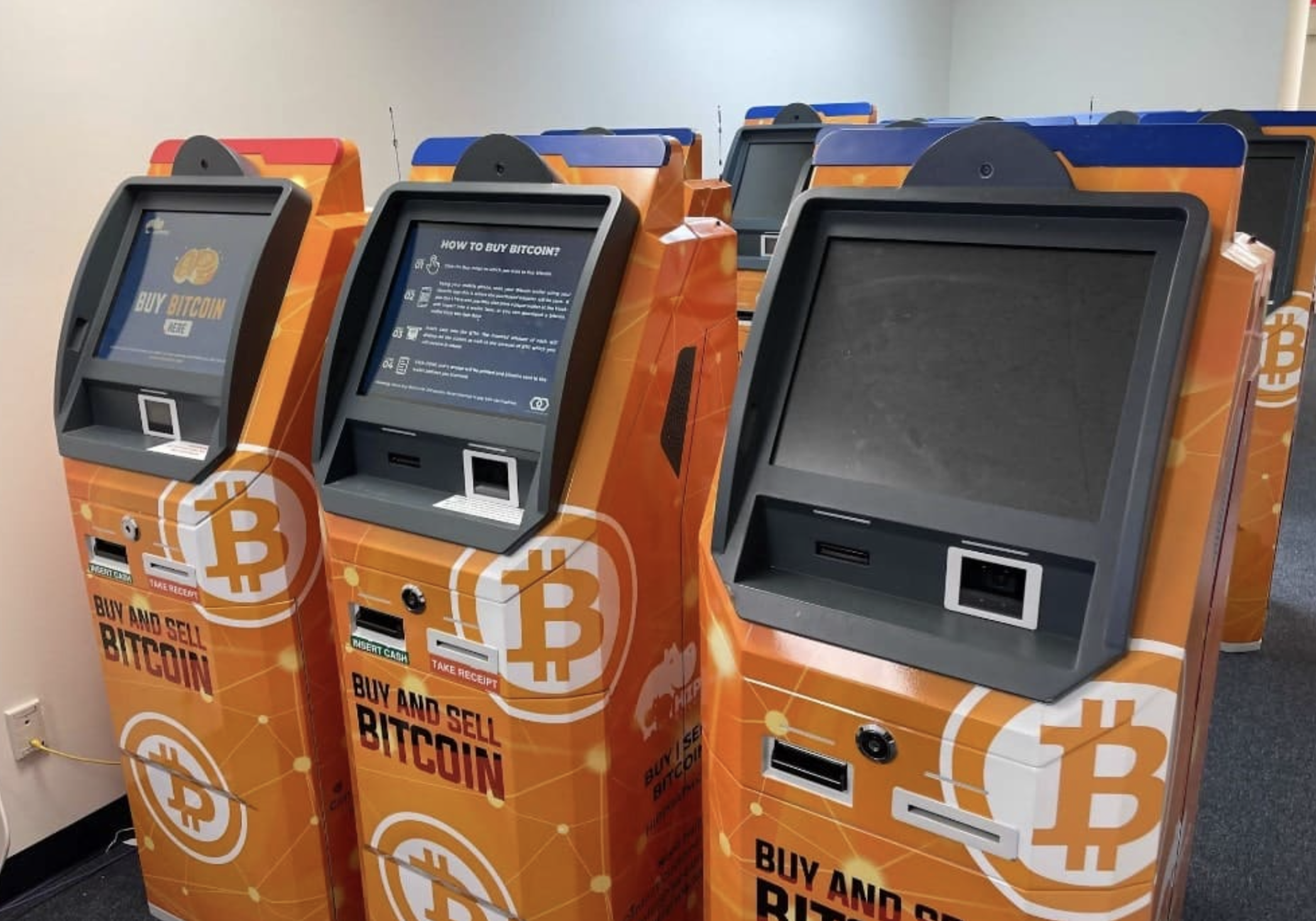
A crypto ATM is the broader term. Most crypto ATMs support Bitcoin, but many also offer Ethereum, Litecoin, and other coins.
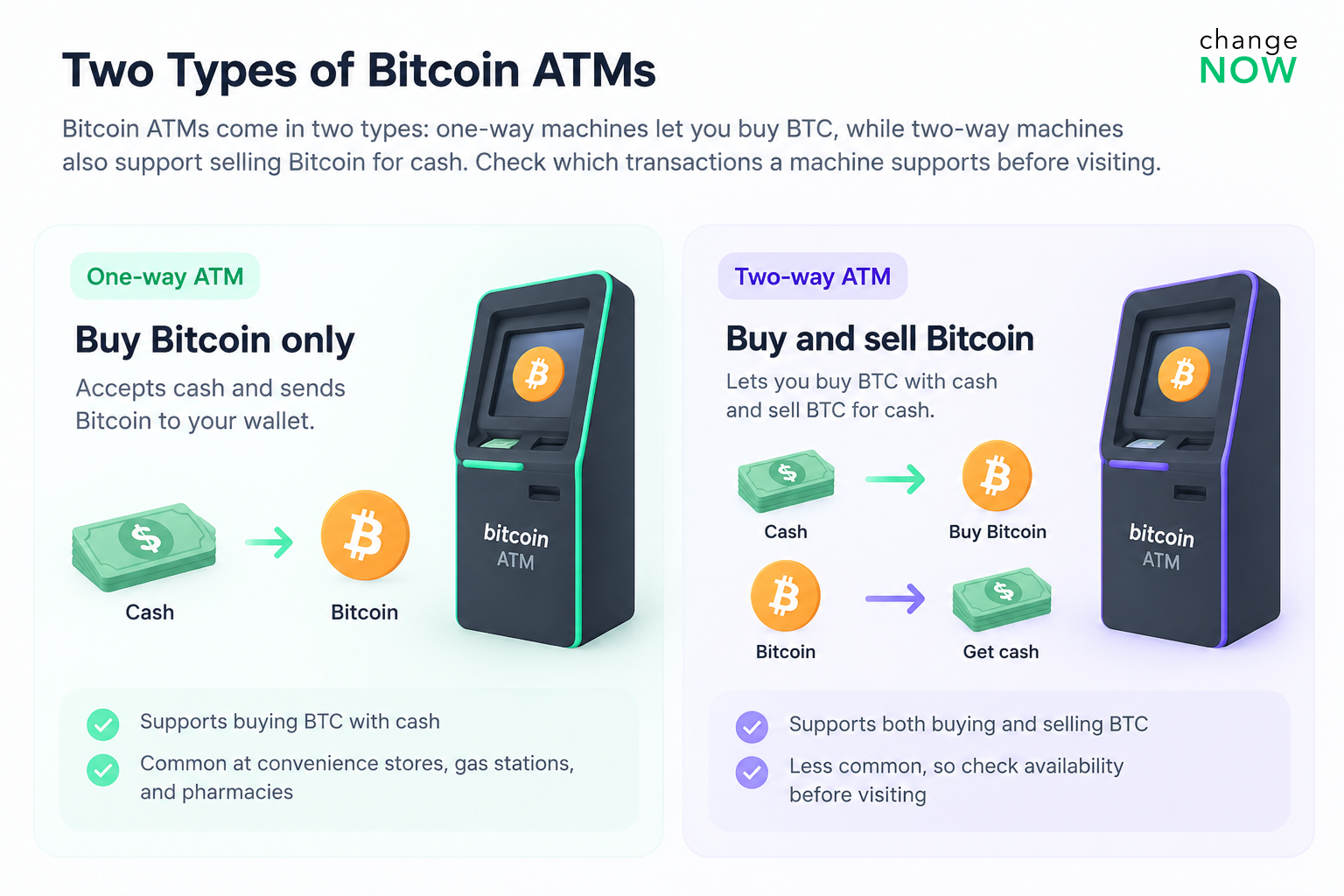
Bitcoin ATMs come in two types: one-way machines let you buy BTC, while two-way machines also support selling Bitcoin for cash. Check which transactions a machine supports before visiting.
The US has by far the largest BTC kiosk network in the world. According to Coin ATM Radar, nearly 73% of all crypto machines are located in the US:
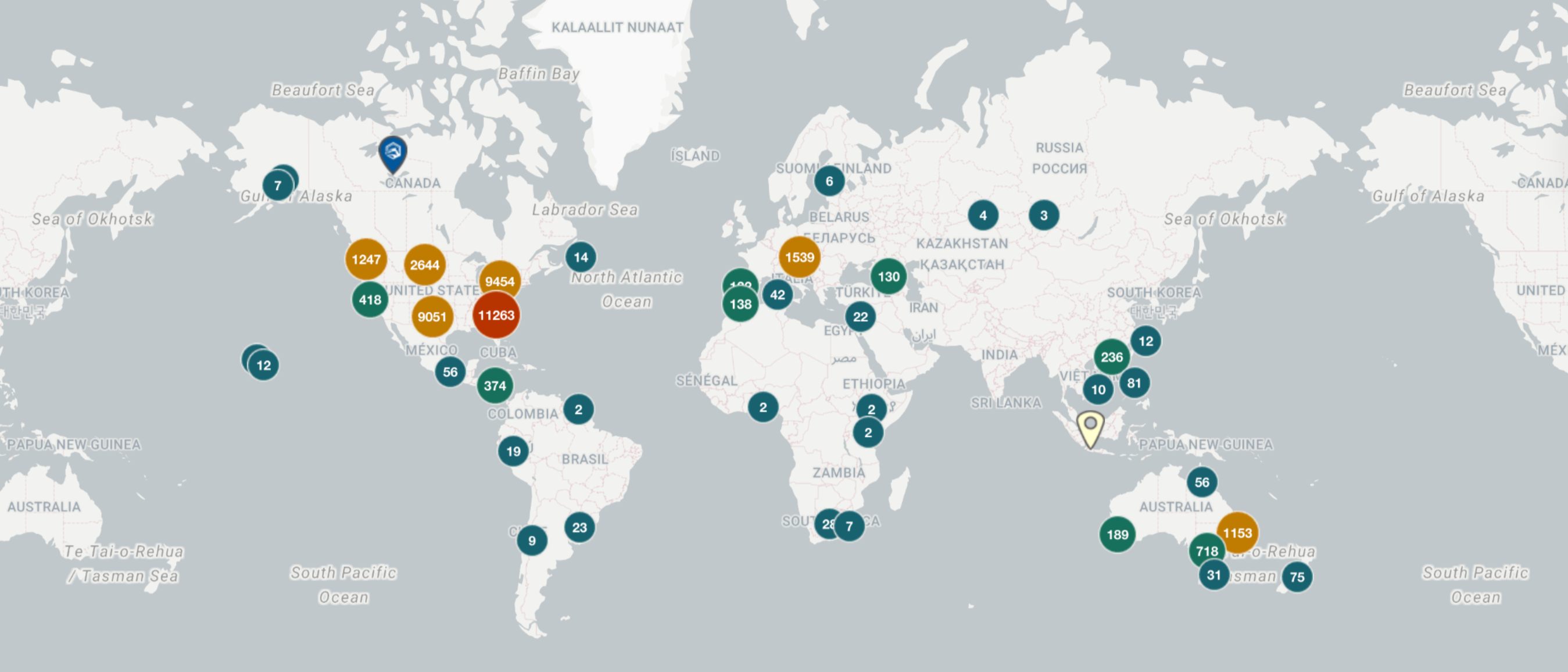
So if you’re in the USA and google “crypto ATM near me” – you're likely only a short drive away.
How Does a Bitcoin ATM Work?
You insert cash, scan your Bitcoin wallet address, and the machine sends BTC to your wallet. That's it.
A Bitcoin ATM connects to an operator's cryptocurrency service to process purchases and sales. The operator sets the exchange rate, which may include a spread above the market price, along with any additional transaction fees.
When you buy, it fetches the live BTC price, adds its fee margin on top, converts your cash at that rate, and broadcasts a transaction to the Bitcoin network. Most machines complete the send within a few minutes, though Bitcoin network congestion can sometimes add a delay.
For selling Bitcoin, the flow is reversed. You send BTC from your wallet to the machine's address, and it dispenses cash from its vault. Not all machines support selling, so always check before you drive there.
Do you need a crypto wallet first? Yes. You need a Bitcoin wallet address to receive your BTC. Some machines will generate a paper wallet for you on the spot. But using your own wallet app (like Trust Wallet or NOW Wallet) is safer and gives you full control.

