On November 9, 2026, PNC Bank announced a partnership with Coinbase. Businesses participating in a pilot can receive payments in USDC, which are automatically converted into US dollars and deposited into their regular bank accounts.
A day later, Bloomberg reported that Goldman Sachs, Citi, and other major financial institutions had committed approximately $270 million to a joint stablecoin venture.
It's an interesting turn for an industry that once presented itself as an alternative to traditional banking.
As banks enter the stablecoin market, what can crypto-native alternatives still offer users?
At TOKEN2049, we discussed this question with Yvonne Chia, Head of Communications at USDD.
Key Takeaways
More banks are using stablecoins to send money and process payments.
Stablecoin payments will get easier with lower fees and fewer steps.
More ways to earn interest will become available, but they come with risks.
Trust will remain important. Users need to know what backs their stablecoins and how safe their funds are.
Stablecoins work differently in banking and crypto. Banks use them to make payments easier, while crypto-native services give users more freedom to manage their funds independently.
Are Banks Becoming Stablecoin Companies?
Banks are adopting technology that allows dollar-denominated payments to move outside traditional banking hours.
How Banks Are Using Stablecoins
PNC's November announcement shows how banks can use stablecoins without making clients deal with crypto directly. Coinbase provides the payment infrastructure, while PNC converts incoming USDC into dollars and deposits them into clients' bank accounts.
Other banks want to launch their own stablecoins. Goldman Sachs, Citi, Santander, Deutsche Bank, and several other firms are reportedly backing Project Faro, which plans to launch a dollar-backed stablecoin in 2027. According to a November 10 report, the firms committed around $270 million to support the project over five years.
What Can Stablecoins Offer That Banks Can't?
During our interview, Chia pointed to easier access as an advantage over traditional banking.
"Compare this to a stablecoin like USDD, where all you need is a phone, a working internet connection, you can immediately start a wallet and you have access to your funds right away."
Chia believes these advantages make stablecoins more useful than some traditional banking services.
"We are able to have transfers 24/7 and we're not limited to any traditional banking hours. So I think that in some ways, stablecoins are not just becoming banks, but exceeding what traditional banks can offer to users."
Banks have advantages too. Bank deposits may be protected by deposit insurance, and customers can turn to their bank when something goes wrong. With self-custodial stablecoins, users must protect their own wallets and accept risks linked to the assets backing the tokens.
Banks can use stablecoins to improve their services, while people can use stablecoins without relying on banks. The technology is the same, but who controls the money can be very different.
Stablecoins Are Already Solving Real Financial Problems
Across Latin America, people use stablecoins to protect their savings from inflation and send money abroad.
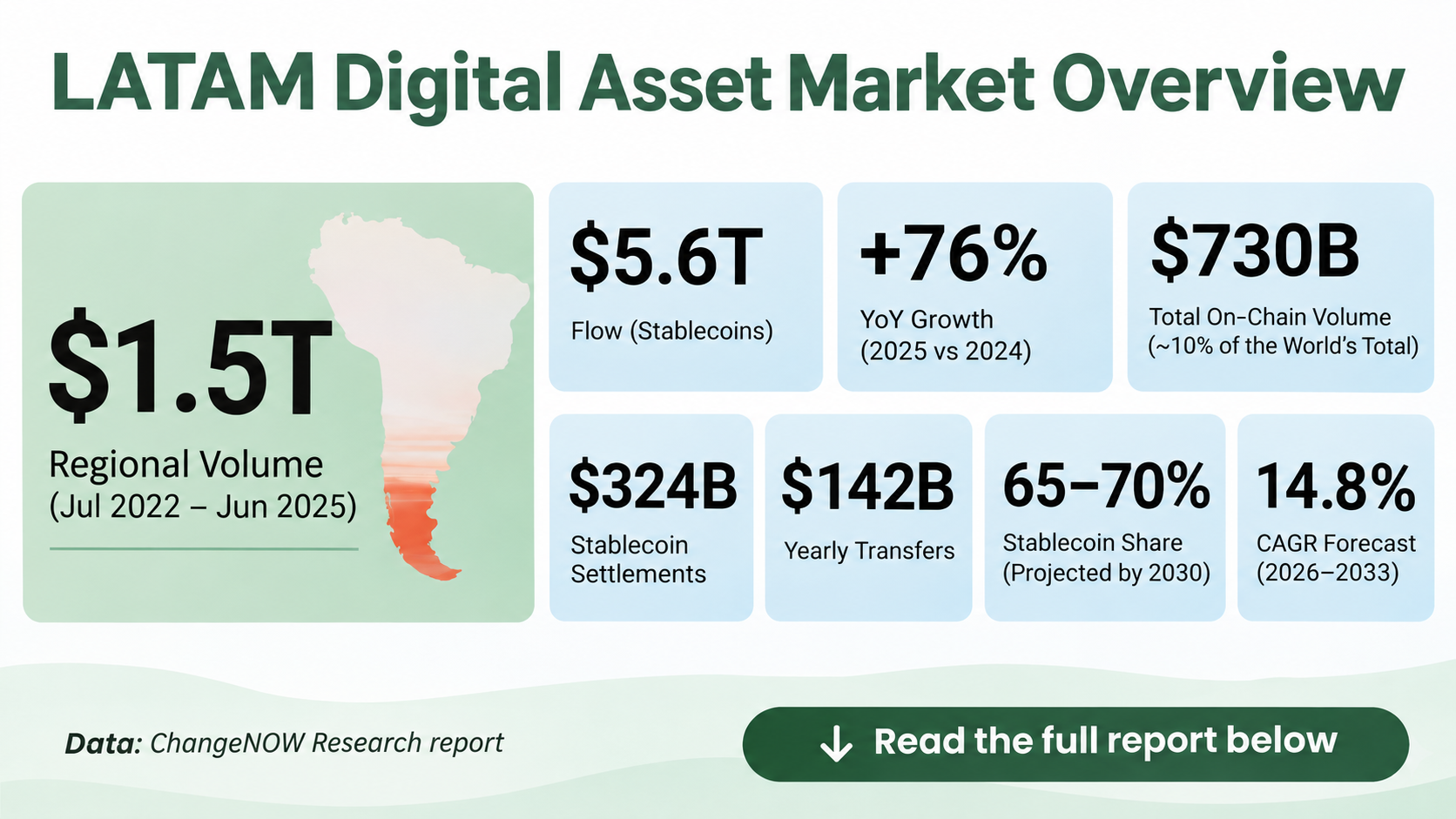
According to ChangeNOW Research's report on crypto adoption in Latin America, stablecoins accounted for 61% of crypto transactions in Argentina in its 2025 data.
In Mexico, stablecoins made up 55% of crypto transactions, international payments being a major reason for their use.
In Brazil, stablecoins accounted for around 90% of crypto activity, with both individuals and businesses using them.
Stablecoins also make international transfers cheaper. In some cases, fees are below 2%, compared with 4–10% for traditional money transfers.
There are still problems to solve. Converting stablecoins into local currency can involve extra fees, and access to withdrawal services depends on the country.
Still, the benefit is practical: stablecoins can make dollars easier to access and international payments easier to handle, even where traditional financial services fall short.
Can Stablecoins Compete With Savings Accounts?
Some stablecoin products let users earn interest on their funds, much like a savings account. But the risks can be quite different.
During our conversation, Chia described USDD's offering:
"A simple way to think about USDD is that we are the yield-bearing version of USDT. So while USDT is designed to be pegged one-to-one as well, what USDD offers is that users don't just hold the stablecoin passively. They're able to put their stablecoins to work and to earn yield on top of that stability."
USDD is an overcollateralized stablecoin designed to maintain a 1:1 peg to the US dollar. However, simply holding USDD does not earn interest.
To earn rewards, users can deposit USDD into USDD Earn and receive sUSDD in return. Over time, each sUSDD becomes redeemable for more USDD as rewards accumulate.
According to a November 2 update, USDD Earn offered a base APY of 4%, with no fixed lock-up period.
Where does the yield come from? USDD uses its Smart Allocator system to put funds into DeFi strategies, with information about these activities available to the public.
Unlike eligible bank deposits, these funds are not covered by traditional deposit insurance. Smart-contract bugs or liquidity problems could affect users' returns or their ability to withdraw.
Before choosing a stablecoin savings product, check where the yield comes from and whether you can withdraw your funds if something goes wrong.
Don't Trust, Verify. But Is Transparency Enough?
During our interview, Chia explained how USDD approaches trust:
"Our focus about trust at USDD is based on the very famous saying, don't trust, verify. So compared to banks or compared to centralized stablecoins such as USDT, we want users at USDD to be able to verify data for themselves instead of taking our word for it."
USDD publishes quarterly treasury reports showing the assets backing the stablecoin. Users can also check how the protocol invests its funds through Smart Allocator disclosures.
Chia also highlighted the project's security audits:
"We also go through periodic third-party independent audits and to date we have passed every single audit that we have had."
But even when reserves are publicly reported, their value or availability can change.
In March 2023, USDC lost its dollar peg after Circle revealed that $3.3 billion of its reserves were held at Silicon Valley Bank, which had collapsed.
According to a Federal Reserve analysis, USDC briefly traded at around $0.86 before recovering. The crisis also affected DAI because part of its backing depended on USDC.
Transparency helps users assess these risks, but it cannot prevent them. Before holding a stablecoin, it's worth checking what backs it, whether the reserves are sufficient, and how the project handles a crisis.
The Next Challenge Is Making Stablecoins Easier to Use
Sending stablecoins can be confusing, especially for beginners. Users need to choose the right blockchain and often buy another token just to pay transaction fees.
USDD offers a simpler option through its GasFree integration on TRON, introduced in August 2026. Users of supported wallets can pay transfer fees directly in USDD without holding TRX.
USDD originally launched on TRON, but the project wants to reach users on other blockchains.
Chia explained how that expansion has progressed:
"So since our protocol upgrade in 2025, we have actually been natively deployed on Ethereum and BNB Chain as well. So users can use sUSDD on these two chains in order to earn yield automatically."
Banks and payment companies are also exploring ways to connect different blockchain networks.
On November 10, Monad announced that Visa had added its network as an option for stablecoin settlement. In September, Lloyds Banking Group and Visa also tested blockchain-based settlement, moving $750,000 in payment obligations with funds reaching Visa in under an hour, including over the weekend.
For USDD, the focus is on making stablecoins easier to use across different networks. Visa is working on a similar problem for financial institutions, where fast transfers and access to multiple blockchains can make settlements more efficient.
The Future of Stablecoins
Will one stablecoin dominate the market? Yvonne Chia doesn't think so.
"We definitely think that the future is interconnected, so it's not going to be dominated by a single asset. Because of that, at USDD, we prize connection beyond the USDD ecosystem and we're always trying to build partnerships with our valuable partners, be they wallets, blockchains or DeFi protocols. And we want these partnerships to create lasting, sustainable, long-term utility for our users instead of just a one-off campaign."
For USDD, the goal is to give people more options for using their assets across different services, without limiting them to a single blockchain.
Banks can make stablecoins easier to use through familiar financial services. Crypto-native platforms offer direct access to wallets and DeFi, although users take on more responsibility.
Both approaches can coexist, giving people different ways to hold and use digital dollars.