


You’ve probably heard about Zcash’s Ironwood upgrade: a 3-act drama that started in May 2026 with a crisis, a fix, and an unexpected plot twist.
Now that the network has successfully transitioned, we got curious about what was happening to the token behind the scenes.
So, we took a brief trip down memory lane and studied some on-chain metrics our analyst team generously shared. What we discovered is both fascinating and revealing.
Zcash Orchard Bug & Fix: What Happened
Here is the exact timeline of events:
- May 2026: Researchers spot an "infinite bug" in the Orchard shielded pool. This vulnerability, in theory, could allow someone to mint counterfeit ZEC completely under the radar.
- June 2026: The devs react fast: disclose the issue and roll out an emergency patch. Markets love the drama and react sharply: ZEC takes a ~ 50% hit to find a floor near $300.
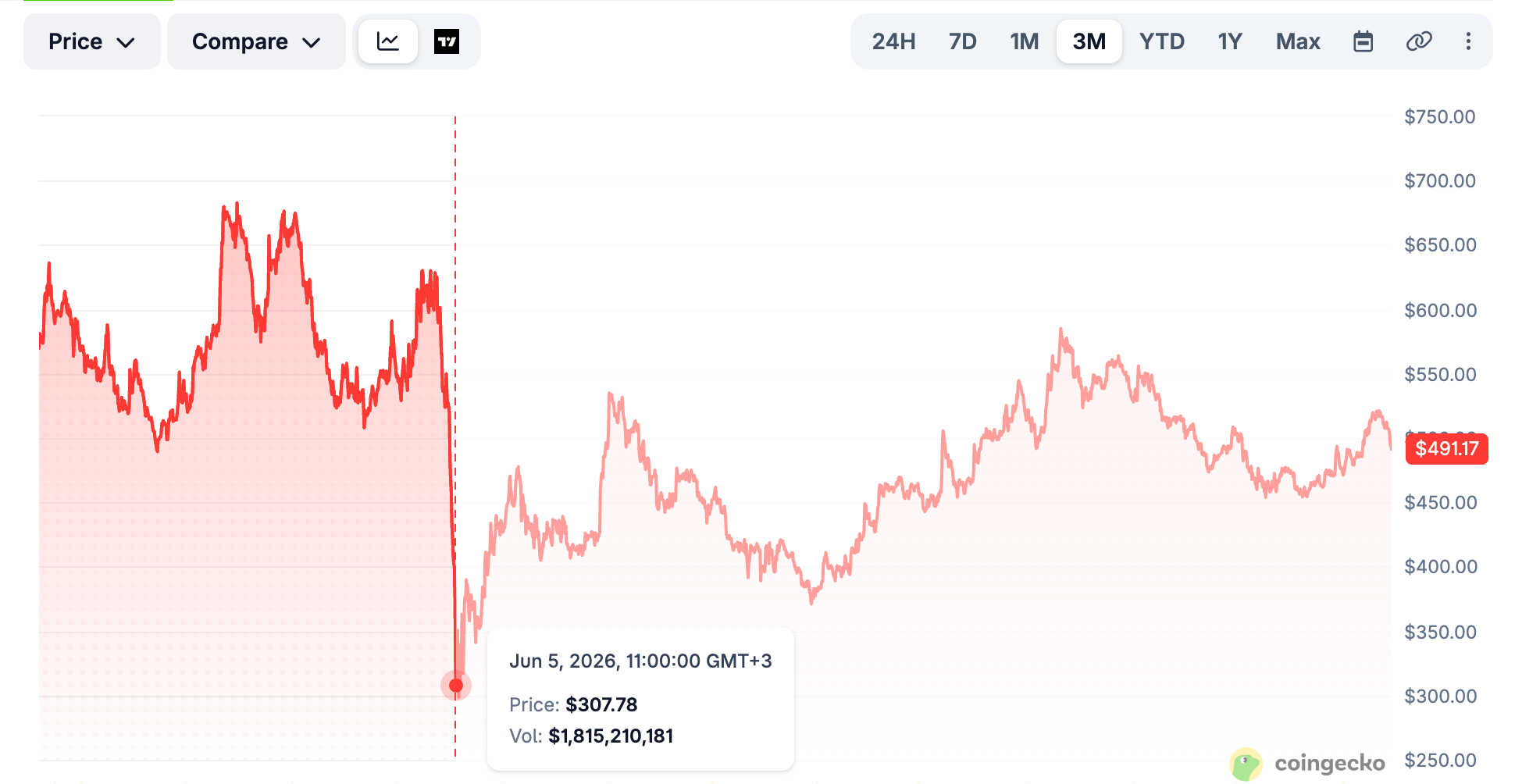 Source: Coingecko, Aug 6, 2026
- July 28, 2026: Ironwood Network Upgrade 6.3 activates. This update permanently seals off the old Orchard pool and launches a new, verified and shielded environment. To migrate, any funds exiting the old pool must pass through a transparent "turnstile" checkpoint.
More on Orchard fix here: Zcash News: ZEC Rebounds After Orchard Fix Puts Privacy Coins Back In Focus
Zcash Post-Crisis Price Analysis
The ZEC price trajectory shows us how aggressively optimistic a market can get.
After falling to $307 in June, the token rebounded to $466, tapped $508 on the eve of the activation, and continued pushing toward $541 in late July.
Media, being media, recoloured the picture very quickly: from dark, NGMI hues into bright and hopeful tones, dropping headlines about a "privacy renaissance."
Meanwhile, social sentiment among retail traders turned heavily bullish real fast. It is worth noting that, despite the hype, large account holders and whales maintained a notably cautious stance throughout the run-up. It’s not their first rodeo, after all.
ChangeNOW On-Chain Data on ZEC Transaction Volume
Here is where the trading charts and the on-chain reality part ways.
While market sentiment empathetically helps ZEC get up after the dip, actual token holders are taking their sweet time.
3.66 million ZEC were frozen in the old Orchard pool and only about 1 million has crossed the turnstile so far. Sure, migration is voluntary. But that is a very slow walk to a newly opened exit.
Our internal exchange data reveals an even starker picture of the mechanics behind this run-up:
- June: Transaction count exploded by 880%. Pure panic and aggressive rebalancing right after the bug disclosure.
- July: A 27% drop. The dust settled while the market held its breath for the patch.
- August: A massive 85% volume collapse.
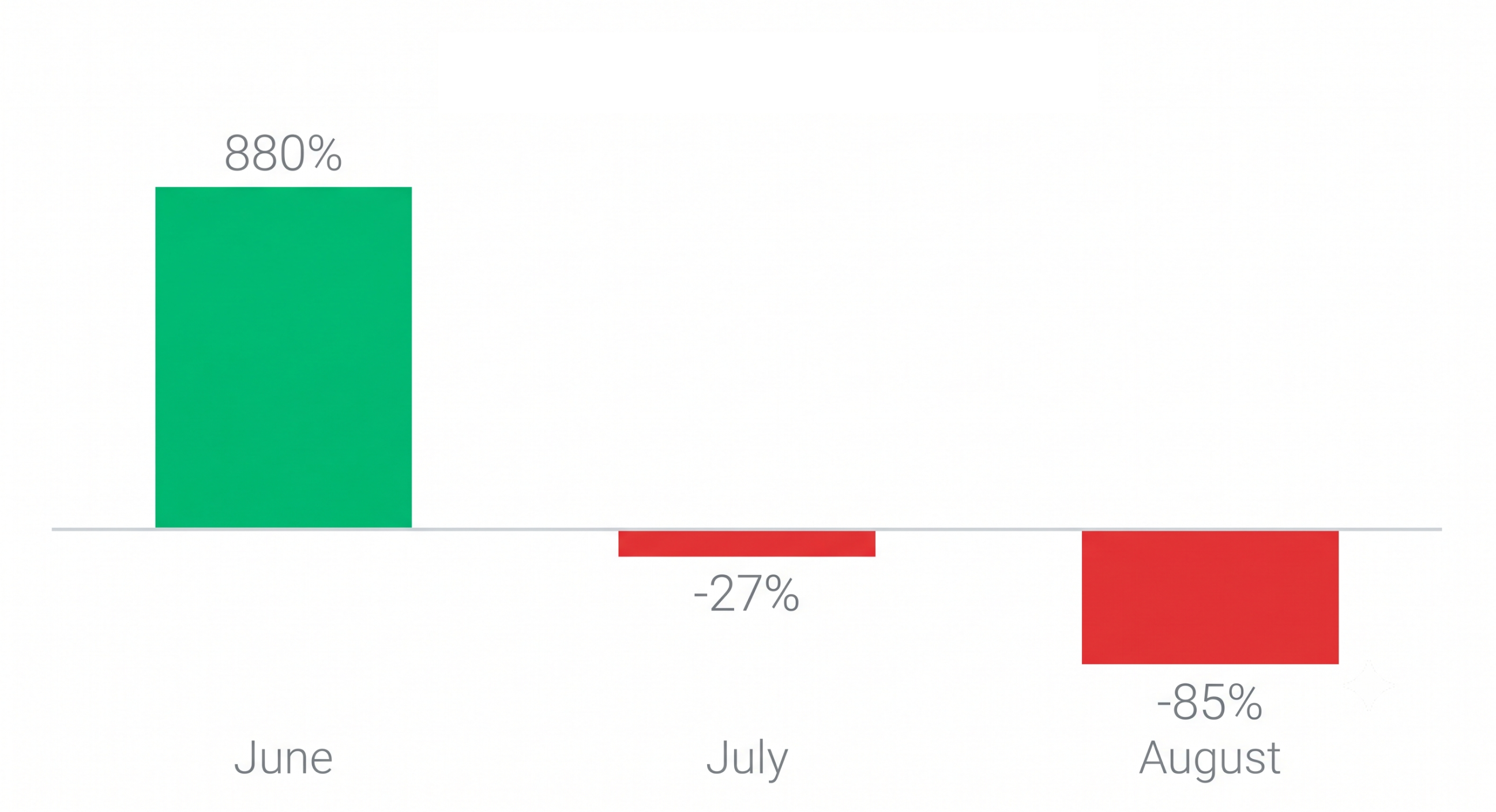 Think about it: right as Ironwood successfully activated and the token printed a 70% recovery, actual user flow nosedived.
Takeaways? The pump right after the update wasn't backed by retail buyers or organic network usage. Most likely it was a squeeze driven by derivatives as speculators traded the narrative, liquidations fueled the green candles, and the actual holders.. They just sat on their hands.
Final Thoughts
Undiscovered vulnerabilities exist in almost every major blockchain.
The Zcash team handled the Orchard issue with grace, professionalism and precision. The disclosure was transparent, a verified fix arrived fast. Solid crisis management. Kudos to the team.
The disconnected market rally that followed is classic, textbook crypto. On-chain reality rarely perfectly mirrors media sentiment.
We love tracking these behavioral shifts. When you sit on a pile of exchange volume data, it is impossible to resist looking under the hood to see how the numbers line up with the hype.
If you, too, found this market behavior fascinating, check out our similar analysis: TON to GRAM Rebranding Case: Does Hype Boost Demand?


