


USDT and USDC still account for most of the stablecoin market, but market cap is only one thing to check before a swap. Check what backs the stablecoin, how it stays close to $1, which networks it uses and what risks come with it.
We compared nine stablecoins available on ChangeNOW by market cap, backing, network support, risks and current swap routes. We also reviewed ChangeNOW swap activity from June through August 2026.
Disclaimer: The information provided in this article is for educational and informational purposes only and should not be construed as financial, investment or legal advice. The selection is based on publicly available data and a fixed set of criteria at the time of writing, not a personal endorsement of any asset. Market data, network support and availability can change. Regulatory references are included for context only. Readers should verify current details before making any decisions.
Key Takeaways
- USDT and USDC are the two largest stablecoins in this shortlist.
- Risks depend on how a stablecoin works. Reserve-backed assets depend on their issuer, reserves and redemption access. Protocol-backed and crypto-collateralized assets add collateral, liquidation and smart-contract risks. USDe also depends on derivatives and hedging.
- Multi-network stablecoins require a network check. USDT on TRON and USDT on Ethereum are separate transfer routes.
- RLUSD and USDe recorded the largest August increases in the ChangeNOW sample. USDT stayed close to its previous-month level.
- Stablecoins are not limited to USD. EUR, KZT and HKD projects are already live, licensed or being tested.
Top Stablecoins Compared
| Stablecoin | Market Cap* | Model | Selected ChangeNOW Networks | Main Risk |
|---|---|---|---|---|
| Tether USDT | ~$183.3B | Reserve-backed | TRON, Ethereum, BSC, Solana, TON, Polygon, Arbitrum | Reserve quality and redemption access |
| USD Coin USDC | ~$73.4B | Reserve-backed | Ethereum, Solana, Base, Polygon, Arbitrum | Reserve custody and redemption access |
| Sky Dollar USDS | ~$9.8B | Protocol-backed | Ethereum, Solana | Collateral liquidations, smart contracts and oracles |
| Dai DAI | ~$4.6B | Protocol-backed | Ethereum, BSC, Polygon, Arbitrum | Collateral liquidations and oracle risk |
| Ethena USDe | ~$4.2B | Synthetic dollar | Ethereum, BSC | Hedging, exchange and custody risk |
| Global Dollar USDG | ~$3.3B | Reserve-backed | Solana, Ethereum, Robinhood | Reserve and redemption risk, lower liquidity |
| PayPal USD PYUSD | ~$2.9B | Reserve-backed | Ethereum, Solana | Reserve and redemption risk |
| Ripple USD RLUSD | ~$2.3B | Reserve-backed | Ethereum | Reserve and redemption risk, lower liquidity |
| Decentralized USD USDD | ~$1.5B | Crypto-collateralized | TRON | Collateral liquidations, smart contracts and oracles |
Market cap snapshot checked September 1, 2026. Source: CoinGecko. Network availability can change
How We Chose the Top Stablecoins
We looked at five things that can affect a stablecoin swap:
- market size and liquidity
- backing and how the peg works
- supported networks
- current ChangeNOW routes
- risks specific to the stablecoin
The table is sorted by market cap. A higher position does not mean a stablecoin is safer or better for a particular swap.
Top Stablecoins in 2026
Tether USDT
USDT is issued by Tether and backed by reserve assets. Tether publishes regular attestations covering the assets and liabilities behind the token.
ChangeNOW supports USDT on TRON, Ethereum, BNB Smart Chain, Solana, TON, Polygon and Arbitrum.
USDT on TRON has been among the top assets by transaction count on ChangeNOW and NOWPayments for several years. It is also the most-used payment asset on NOWPayments.
ChangeNOW supports gas-free USDT transfers on TRON, so users can send USDT without holding TRX only to cover the network fee.
Risks:
- USDT depends on the quality and liquidity of Tether's reserves and on access to redemption.
- USDT can trade away from its $1 target if market confidence, liquidity or access to redemptions is disrupted.
USD Coin USDC
USDC is issued by Circle. Its reserves include cash and highly liquid short-term assets. Circle publishes reserve holdings and third-party assurance reports.
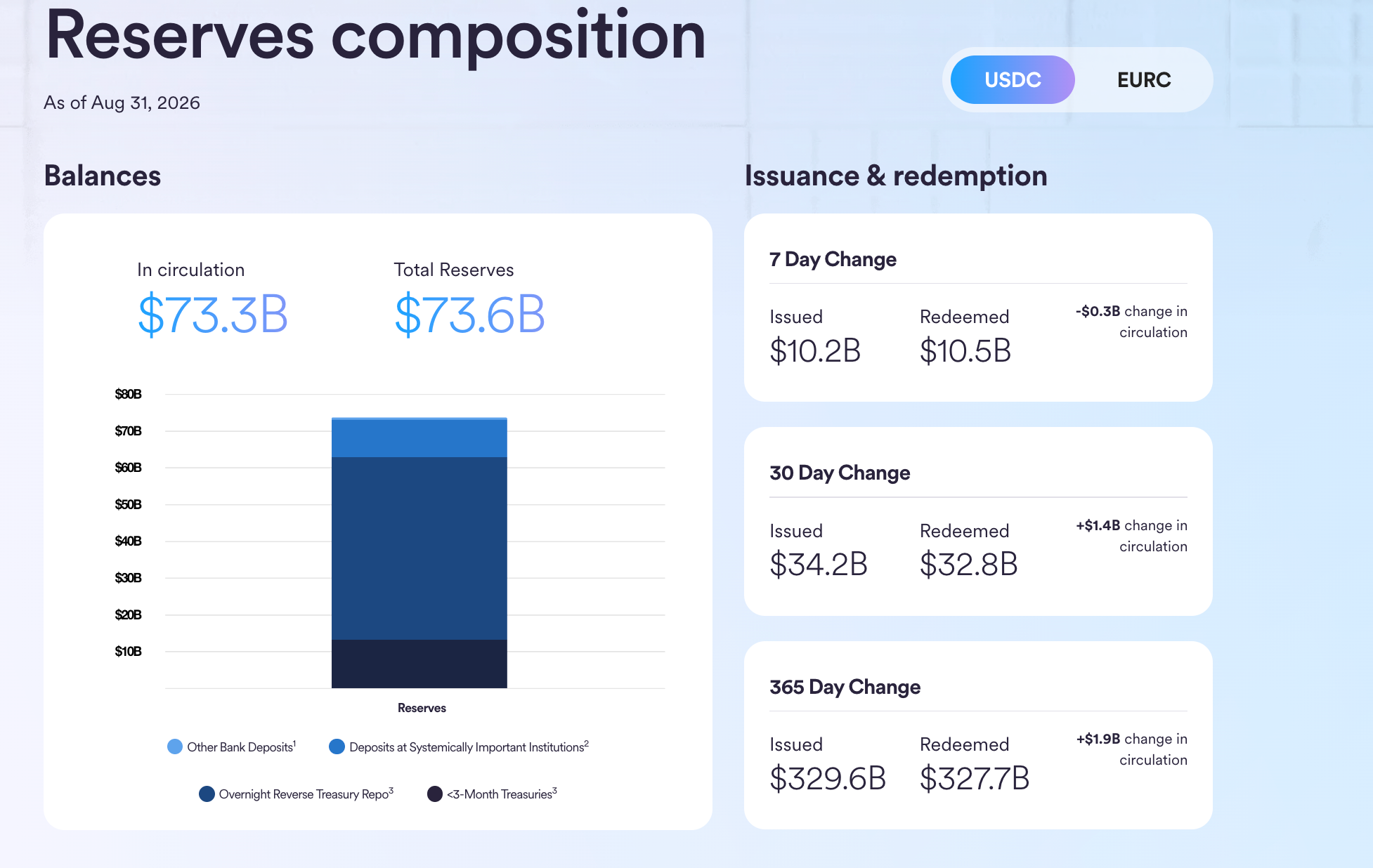 Source: Circle. USDC reserves composition as of August 31, 2026.
ChangeNOW supports USDC on Ethereum, Solana, Base, Polygon and Arbitrum.
Risks:
- USDC depends on Circle's reserve assets and access to redemption.
- Problems affecting a reserve custodian or redemption channel can push USDC away from its $1 target on secondary markets.
Sky Dollar USDS
USDS is the native stablecoin of Sky Protocol. It is backed by collateral held within the protocol rather than a conventional fiat reserve.
ChangeNOW supports USDS on Ethereum and Solana.
USDS and DAI are separate assets within the Sky ecosystem.
Risks:
- A sharp fall in collateral value can trigger liquidations and put pressure on the peg.
- USDS relies on Sky's smart contracts, price oracles and collateral management systems.
Dai DAI
DAI is created against collateral within the Sky ecosystem rather than issued against a conventional fiat reserve.
ChangeNOW supports DAI on Ethereum, BNB Smart Chain, Polygon and Arbitrum.
Risks:
- A sharp fall in collateral value can trigger liquidations and put pressure on DAI's peg.
- DAI also depends on smart contracts, price oracles and the collateral parameters set by the protocol.
Ethena USDe
USDe is a synthetic dollar created by Ethena. Ethena uses crypto assets together with derivatives positions to hedge their price exposure.
ChangeNOW supports USDe on Ethereum and BNB Smart Chain.
Risks:
- USDe relies on derivatives markets and the execution of Ethena's hedging positions.
- Funding rates, exchange failures or problems with the custody of backing assets can affect the system supporting USDe.
Global Dollar USDG
USDG is a US dollar-backed stablecoin issued by Paxos Digital Singapore. Its reserves consist of cash and cash-equivalent assets, with regular reserve reporting and independent attestations.
Paxos Digital Singapore is supervised by the Monetary Authority of Singapore.
ChangeNOW supports USDG on Solana, Ethereum and Robinhood.
Risks:
- USDG relies on Paxos, its reserve assets and the institutions involved in custody and redemption.
- USDG has a smaller market than USDT or USDC, so liquidity and availability can vary more between platforms and networks.
PayPal USD PYUSD
PYUSD is a US dollar-backed stablecoin issued by Paxos for PayPal. Paxos publishes reserve reports and independent attestations for the token.
ChangeNOW supports PYUSD on Ethereum and Solana.
PYUSD is used for payments and transfers within PayPal's crypto products and can be sent to supported external wallets and apps.
To learn more about PYUSD and PayPal's crypto features, read our PayPal Crypto and PYUSD Explained.
Risks:
- PYUSD relies on Paxos, its reserve assets and the institutions involved in custody and redemption.
- Support varies between platforms and blockchain networks, which can limit where a specific version of PYUSD can be sent.
Ripple USD RLUSD
RLUSD is issued by Standard Custody and distributed by Ripple. Its reserves include US dollars and other cash equivalents held in segregated accounts. Ripple publishes regular reserve attestations.
RLUSD exists on XRP Ledger and Ethereum. ChangeNOW currently supports the Ethereum route.
For more on how RLUSD fits into Ripple's ecosystem and how it relates to XRP, read our 10 Common Questions About Ripple.
Risks:
- RLUSD relies on its issuer, reserve assets and the institutions involved in custody and redemption.
- RLUSD has a smaller market than USDT or USDC, so liquidity and platform support can differ between venues.
Decentralized USD USDD
USDD is a dollar-pegged stablecoin on TRON. In its current model, USDD is minted against crypto assets locked as collateral in the protocol.
ChangeNOW supports USDD on TRON.
Risks:
- If the collateral falls far enough in value, the protocol can liquidate it to protect the position.
- USDD also depends on smart contracts and price feeds used to value and manage the collateral.
What Stablecoin Users Compare on Reddit
Stablecoin users on Reddit most often compare network support, liquidity, backing, issuer risk, fees and currency exposure. For business payments, settlement options and compliance also come up regularly.
A January 2026 discussion in r/StableCoins compared USDT and USDC around liquidity, platform support and available networks. Both target $1, but they differ in reserve structure and where they can be used.
For users who earn or spend in euros, currency exposure is another factor. Holding a dollar stablecoin means its value in euros changes with the USD/EUR rate. Euro-backed stablecoins remove that mismatch, but they can have lower liquidity, fewer supported routes and less DeFi availability.
In r/fintech, a European fintech evaluating EUR stablecoins for B2B payments asked about settlement, vendor payments, conversion costs and compliance. For B2B payments, those checks can be more relevant than market cap alone.
Important: Reddit posts reflect individual experiences and opinions. They are not evidence of a stablecoin's safety or quality.
ChangeNOW Stablecoin Activity From June to August 2026
We reviewed ChangeNOW swap activity between June 1 and August 31, 2026.
| Stablecoin | July vs June | August vs July |
|---|---|---|
| USDT | +2.2% | +1.4% |
| USDC | -9.9% | -1.1% |
| RLUSD | +13.3% | +136% |
| USDe | +6.2% | +129% |
| PYUSD | +7.4% | +10.7% |
| DAI | -12.7% | +8.7% |
| USDS | -59.7% | +26.5% |
Source: ChangeNOW internal swap activity, June 1 to August 31, 2026. Figures show month-over-month changes and are rounded.
USDC activity fell on ChangeNOW even as Circle reported higher USDC circulation and onchain volume, while RLUSD and USDe moved in the same direction as broader market developments. RLUSD rose 136% after Ripple launched Ripple Mint, USDe rose 129% alongside a reported 4.54% market-cap increase, and PYUSD also grew during the month when PayPal added PYUSD settlement for US merchants.
“All of these stablecoins have their own utility, use cases and different levels of liquidity. For example, USDT still remains the most liquid stablecoin on the market because it is widely supported by different platforms, offers broad arbitrage opportunities and is supported across many networks. At the same time, with the introduction of MiCA in EMEA and broader adoption of stablecoin payments by institutional clients, it has become clear that there is demand for stablecoins with narrower use cases. For example, RLUSD for institutional payments, USDe for yield and USDC for use in the EU. In my opinion, we will see further diversification of the stablecoin market in the near future.” - Pauline Shangett, Chief Strategy Officer at ChangeNOW
Important: ChangeNOW figures cover swap activity from June 1 to August 31, 2026. The market events above happened during the same period, but the data does not show that they caused the changes.
USDT TRC20 vs ERC20 and Other Networks
USDT TRC20 runs on TRON, while USDT ERC20 runs on Ethereum. The asset is the same, but the network used for the transfer is different.
| USDT Version | Network |
|---|---|
| USDT TRC20 | TRON |
| USDT ERC20 | Ethereum |
| USDT BEP20 | BNB Smart Chain |
| USDT SOL | Solana |
| USDT TON | TON |
| USDT Polygon | Polygon |
| USDT Arbitrum | Arbitrum |
ChangeNOW lists USDT across these networks. Available routes may change, so the live USDT page shows the current options.
Important: The receiving wallet, exchange or payment service must support the network selected for the transfer. USDT TRC20, ERC20 and BEP20 use different blockchains.
Non-USD Stablecoins and MiCA
Most stablecoins are pegged to the US dollar, but stablecoins tied to other currencies are also in use or testing.
EURC tracks the euro, Kazakhstan has tested a tenge-backed stablecoin and Hong Kong has introduced a licensing framework for fiat-referenced stablecoin issuers.
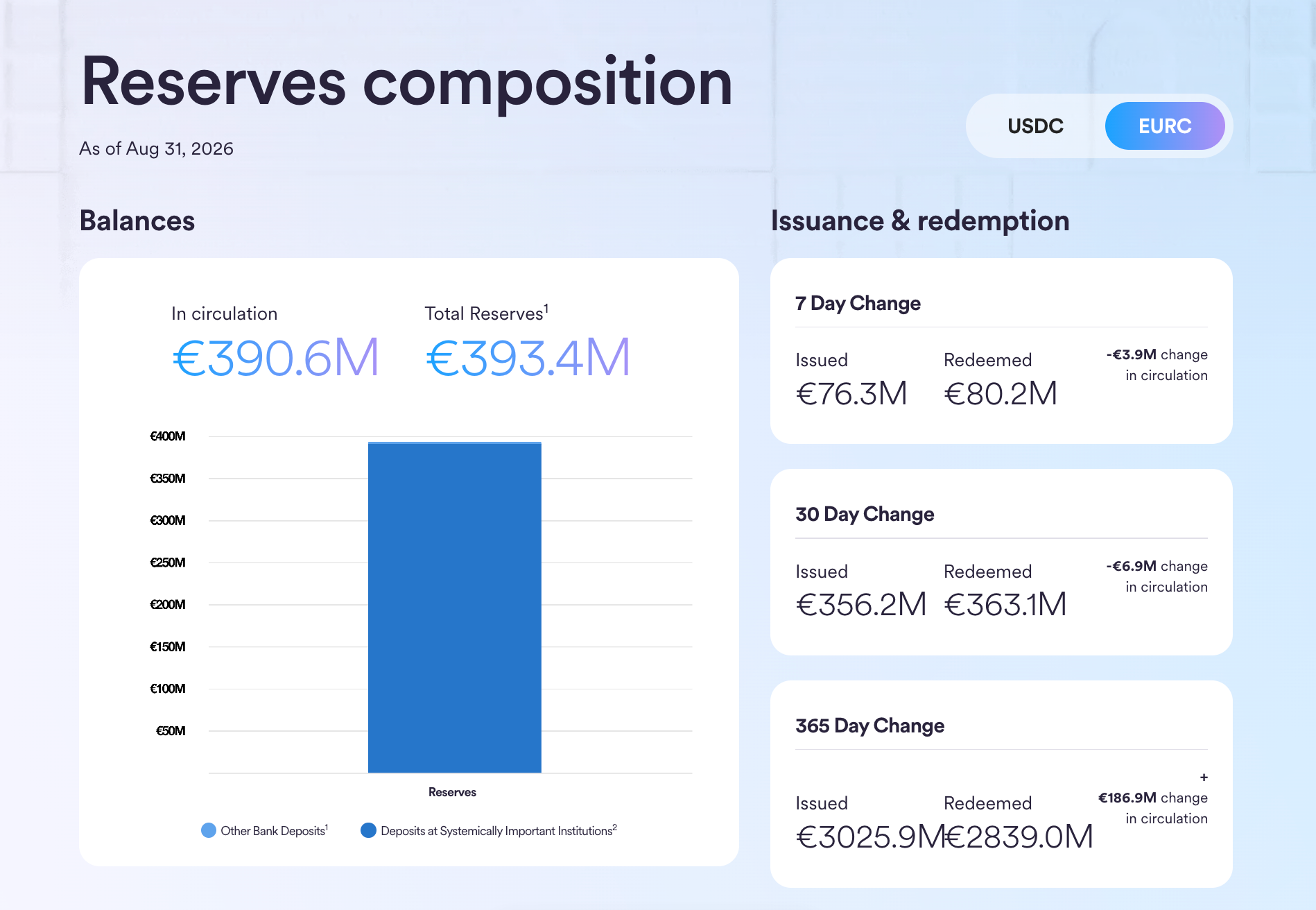 Source: Circle. EURC reserves composition as of August 31, 2026.
Stablecoin availability can depend on regulation. In the EU, MiCA rules for stablecoin issuers started applying in June 2024, and some crypto services later restricted assets that did not meet the new requirements. Coinbase, for example, limited access to USDT, DAI and PYUSD for some EU entities, while USDC and EURC remained available as MiCA-compliant stablecoins. ESMA explains how these rules apply to stablecoin services in the EU.
Important: MiCA status is not a ranking criterion in this article.
Non-USD Stablecoin Snapshot
| Currency | Stablecoin | Issuer | Status |
|---|---|---|---|
| EUR | EURC | Circle | MiCA-compliant, live on multiple networks |
| EUR | EUR CoinVertible | Société Générale-FORGE | MiCA-compliant, bank-issued |
| EUR | EURI | Banking Circle | MiCA-regulated, bank-backed |
| EUR | EURQ | Quantoz Payments | MiCA-compliant EMT |
| EUR | EURAU | AllUnity | MiCA-compliant, issued by a regulated EMI |
| GBP | GBPQ | Quantoz Payments | MiCA EMT launched in 2026 |
| PLN | PLNQ | Quantoz Payments | MiCA EMT launched in 2026 |
| KZT | Tenge-backed stablecoin pilot | Intebix / Eurasian Bank partners | Launched in Kazakhstan's regulatory sandbox |
| HKD | Licensed HKD stablecoin projects | Licensed Hong Kong issuers | First issuer licences granted in 2026 |
Status checked September 1, 2026.
 Source: European Banking Authority. MiCA requirements for asset-referenced and e-money tokens. Checked September 2, 2026.
Some ChangeNOW partners are already asking about stablecoins tied to currencies other than the US dollar.
“We see interest in non-dollar stablecoins among our partners. However, support for dollar-backed stablecoins remains important for the majority of the crypto products we work with, and we continue to see significant activity involving these assets.” – Yana Marutik, Head of Business Development and Account Management at ChangeNOW
For now, these requests sit alongside continued demand for dollar-backed stablecoins.
Stablecoins for Merchant Payments
We asked Kate Lifshits, Chief Executive Officer of NOWPayments what merchants look at when choosing between USDT, USDC and other stablecoins.
"For merchants, the choice between USDT, USDC and other stablecoins usually comes down to one thing: which setup converts better. And that answer changes from industry to industry. Our data, in kind of a boring way admittedly, shows there is no single winner. Yes, USDT accounted for 66.92% of stablecoin volume in H1 2026. But USDC transactions grew 209% YoY. USDTTRC20 may lead in trading and iGaming, but USDCBSC wins e-commerce. That is why I think the gateway matters more than the asset itself. A stablecoin does not win because of what it is. It wins because of what the payment infrastructure allows it to do. Like with NOWPayments and ChangeNOW Pro wallet infra: you may pay with USDT, USDC, Bitcoin or Ethereum, and both deposits and payouts in any of the assets will be finished within 10 seconds, without network fees.”
Payment use cases can push demand toward a specific stablecoin. In x402, for instance, USDC accounted for 98.6% of activity in Keyrock's dataset.
Agent payments are often small and frequent, so low fees, fast settlement and support on networks such as Base matter more than overall market size. USDT is the largest stablecoin overall, but it does not currently have the same level of support across x402 payment flows.
Next Read: Can AI Agent Payments Drive The Next Wave Of Stablecoin Demand?
Before You Swap Stablecoins Checklist
Check five details before sending funds:
- Asset: Make sure the receiving service supports the stablecoin.
- Network: Check the exact blockchain used for the transfer.
- Backing: Check how the asset maintains its target value.
- Route: Confirm that the required swap route is currently available.
- Final amount: Review the estimated amount before creating the transaction.


