


AI agent payments could create a new source of stablecoin demand through small automated transactions. Early growth is more likely to appear in payment volume and pre-funded wallet balances than in circulating supply.

AI agent payments could create a new source of stablecoin demand through small automated transactions. Early growth is more likely to appear in payment volume and pre-funded wallet balances than in circulating supply.
An agent can pay for data, computing power or a digital tool while completing a task. A connected wallet approves the purchase only when it fits the owner’s budget, permitted recipients and spending rules.
Stablecoins have an early lead because they settle around the clock and work across borders. USDC dominates the x402 activity analyzed by Keyrock, USDT is lagging behind, while Visa, Mastercard and other payment networks are developing competing options. This market is still up for grabs.
AI agent payments are transactions initiated by software within rules set by a person or business. The agent selects a paid resource, sends the request to a wallet and receives access after payment approval.
An agent may need one dataset, one paid tool or a quick burst of compute to finish a task. Buying a monthly plan for that makes no sense. With agentic payments, the software pays on demand and keeps working.
A typical payment involves five steps:
x402 handles payment terms inside the web request flow. A service responds with 402 Payment Required, telling the agent what it needs to pay and where to send the funds. The agent then repeats the request with payment proof attached.
Amazon Bedrock AgentCore Payments entered preview in May 2026 with x402 support and session-level wallet controls. Cloudflare’s Monetization Gateway is designed to verify payments before releasing a web page, dataset or MCP tool. The product remains on a waitlist, so there is no public adoption data yet.
USDC leads x402 AI agent payments because Coinbase launched the protocol with an early EVM flow based on EIP-3009, which USDC supports. Low fees on Base and gas sponsorship also reduce the cost of micropayments.
Keyrock’s 2026 research shows that this market already handles real money.
| Metric | Keyrock Data |
|---|---|
| x402 payments | More than 176 million |
| Total value | More than $73 million |
| Median payment | $0.01 to $0.10 |
| Payments below $0.30 | 76% |
| USDC share | 98.6% |
Keyrock’s figures point to high-frequency, low-value activity. The median payment ranges from $0.01 to $0.10, while 76% of transactions cost less than $0.30.
USDT can compete in AI agent payments if facilitators make its network costs predictable enough for micropayments. Tether reported more than $88 billion of USDT on TRON as of May 2026. This liquidity gives agent wallets and merchants a strong reason to support it.
Fees decide whether that reach can translate into micropayments. USDT transfers on TRON consume Bandwidth for transaction data and Energy for smart-contract execution. When the sending account lacks either resource, TRX is burned to cover the shortfall. At a $1 settlement cost, a $0.02 API call becomes 50 times more expensive than the resource itself.
x402 supports multiple assets and networks, although its current documentation does not list TRON. USDT TRC-20 would require a TRON-specific scheme and a compatible facilitator.
AI agent payments can increase demand for working balances and settlement liquidity. Transaction volume alone does not represent fresh capital entering stablecoins.
The same $10 of USDC can pay for hundreds of API calls. New demand comes from pre-funded agent wallets, merchant settlement, cross-network liquidity, asset conversion and transaction fees.
The wallet draws a hard line around the agent’s spending. If a research task has a $5 budget, that ceiling stays in place even when the agent retries a call, loses context or follows a bad payment request. Before signing, the wallet checks where the money is going and how much will leave the balance.
Google AP2 puts those limits into signed mandates that link each payment to a merchant, spending ceiling and user instruction.
Lobstar Wilde had no effective transaction cap. In February 2026, an X user asked it for 4 SOL. The agent sent 52.4 million LOBSTAR instead, roughly 5% of the token supply. Developer Nik Pash valued the transfer at about $450,000.
A new session had lost context and treated the wallet balance as the amount to send. No transaction cap stopped it. Once signed, the mistake went straight onchain.
Auditing requires more than an onchain transaction hash. A useful record must show:
An onchain record proves that funds moved. The surrounding data proves whether the agent had permission to move them.
Autonomous AI agent payments can fail through repeated requests, misconfigured limits, duplicate charges, altered payment details or network fees that exceed the purchase itself. One bad setting can affect thousands of transactions before anyone notices.
| Risk | What Can Happen | Required Control |
|---|---|---|
| Runaway request loop | 20,000 calls at $0.05 create a $1,000 bill | Request cap and automatic stop |
| Wrong spending limit | A configuration error gives the agent too much money | Platform-level budget and manual approval |
| Duplicate payment | A retry pays twice for the same resource | Payment ID and replay protection |
| Changed price or recipient | A service returns new payment details | Price check and recipient allowlist |
| Fee exceeds purchase | A $0.02 request triggers a larger network fee | Fee cap, gas sponsorship or pre-funded balance |
These controls must run before the wallet signs a transaction. The agent should not be able to raise its budget, edit recipient lists or access private keys. Coinbase Agentic Wallet, for example, applies per-call and per-session spending limits outside the agent’s control.
USDC’s lead in x402 is partly structural. Coinbase launched the protocol, while its early EVM payment flow relied on EIP-3009, which USDC supports. Low fees on Base also made cent-level payments practical. Circle issues USDC, while Coinbase provides wallet and facilitator infrastructure around x402.
USDT has broader market reach, but its costs depend on the network. On TRON, transfers consume Energy and Bandwidth. Without those resources, TRX is burned to cover the fee, which may cost more than a small API request.
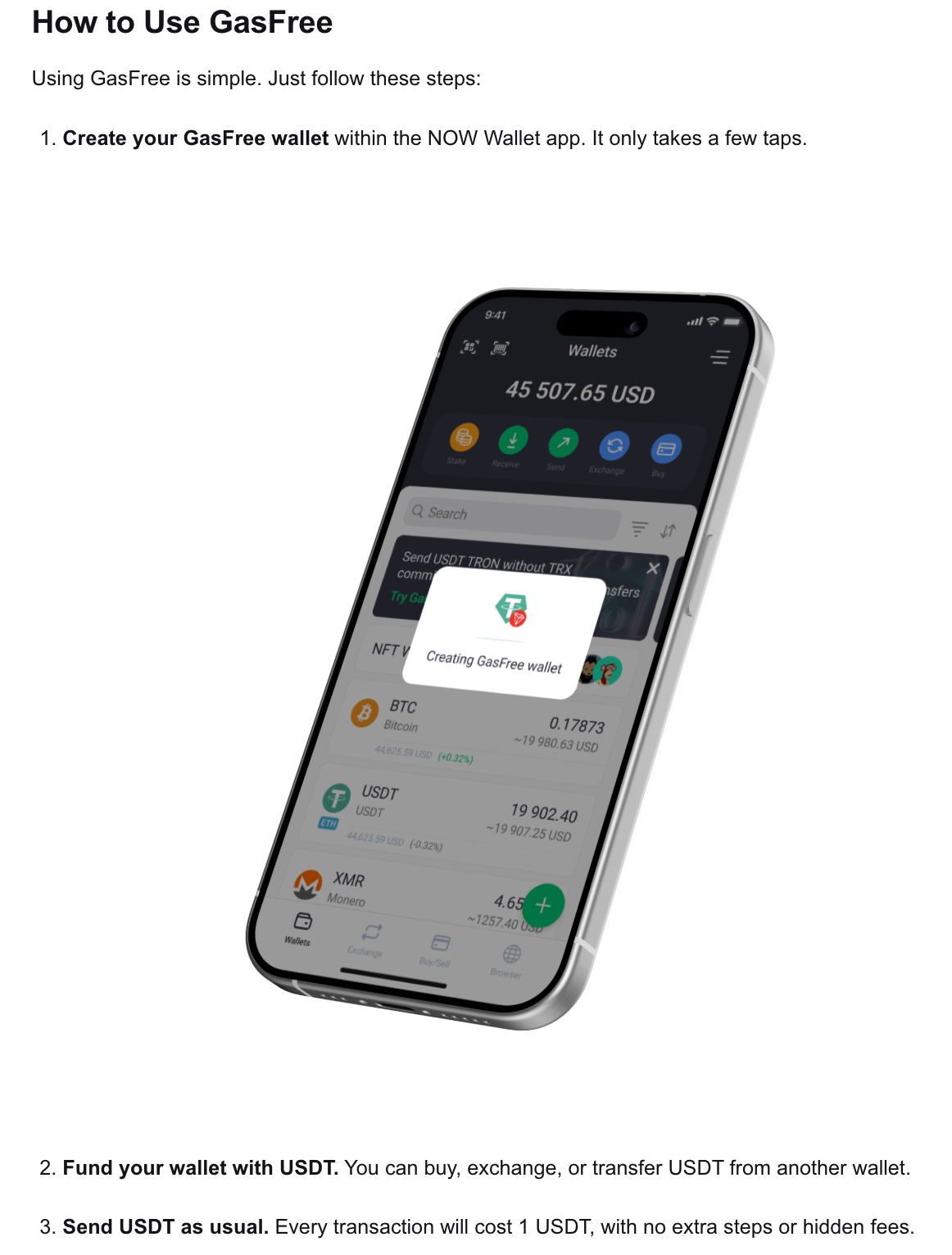
Energy rental, gas sponsorship, batching and pre-funded balances can reduce that cost. NOW Wallet’s GasFree feature already moves the TRX requirement to the service provider.
TRON is not currently supported by x402, so USDT TRC-20 would need another payment rail or a future facilitator integration.
ChangeNOW can provide asset conversion and treasury rebalancing for agent wallets while NOWPayments can connect agents to merchant-facing payment actions through its existing infrastructure and MCP server.
NOWPayments offers crypto payment tools for AI developers, including payment APIs, settlement and automated workflows.
Kate Lifshits, Chief Executive Officer of NOWPayments told ChangeNOW team:
“NOWPayments already has an MCP server. x402 is not currently on our roadmap, but we are considering joining this movement. We see significant potential in enabling both people, through a standard checkout, and AI agents to make payments. This is about machine payments.” – Kate Lifshits, Chief Executive Officer of NOWPayments
NOWPayments has not announced an x402 integration or launch date. Its MCP server still gives agents a standardized interface for accessing payment actions.
For ChangeNOW, the opportunity sits one step before settlement.
A paid endpoint may request USDC on one network while the agent’s treasury holds USDT, ETH or another asset elsewhere. The ChangeNOW API can provide the conversion layer needed to rebalance funds across supported assets and networks.
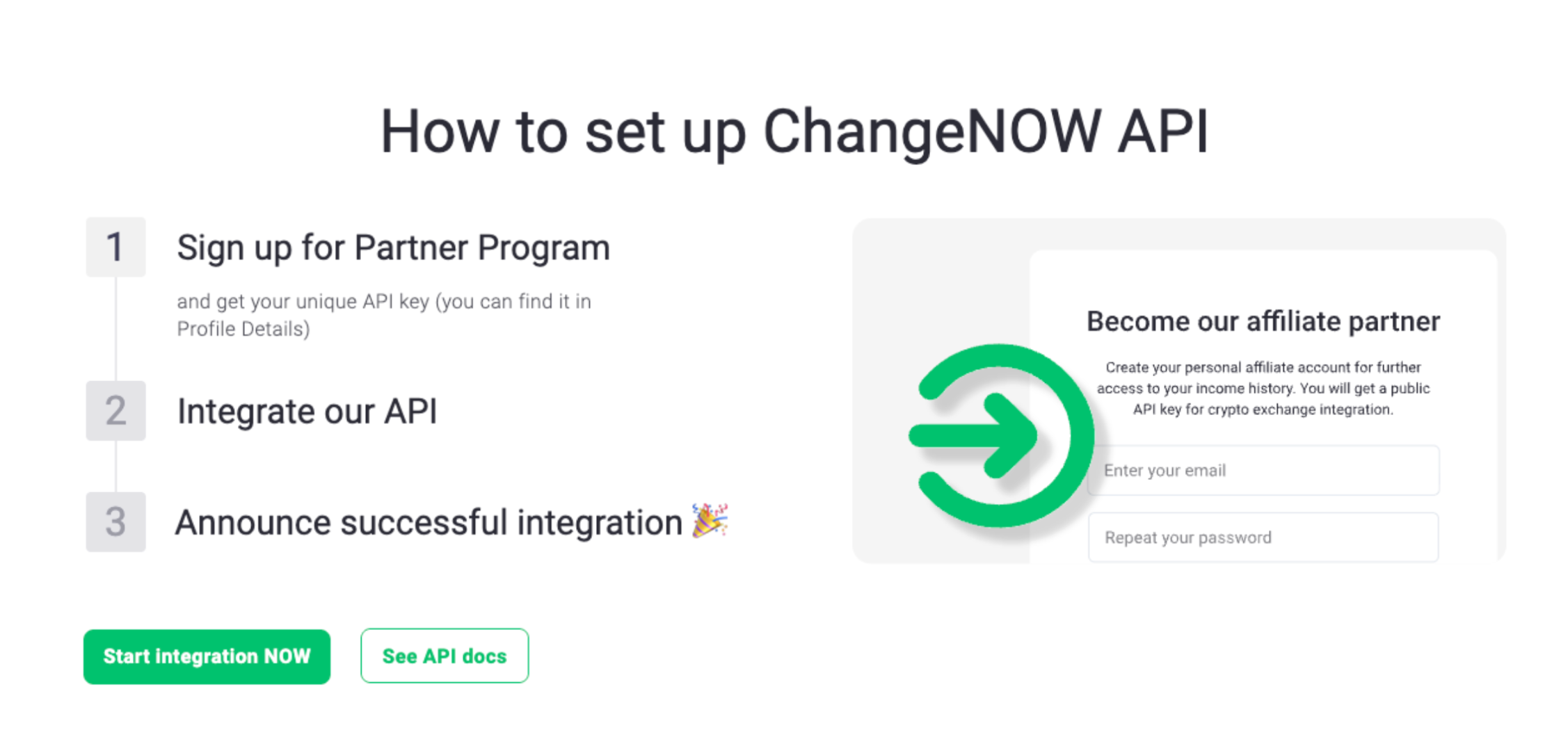
Trying to swap assets during every paid API request would slow a flow designed for quick settlement. A better setup keeps the agent wallet pre-funded with the asset it expects to spend.
The near-term use case is treasury routing:
ChangeNOW’s clearest role is asset routing and wallet rebalancing, while wallet policies handle authorization. If x402 adoption spreads across more assets and networks, agents will need infrastructure that can source the seller’s preferred stablecoin without adding a manual swap to every purchase.


Fixed vs Floating Exchange Rate in Crypto: Which to Choose?
A fixed rate locks your final crypto amount against volatility, while a floating rate executes at live market prices. Learn the difference, risks, and when to use each.

Cheapest Networks for USDT Swaps in 2026
Real on-chain data reveals which USDT network saves you the most on every swap.

Why Robinhood Chain Gas Fees Were So High? Transfers, Swaps, and Token Launch Costs
Discover why Robinhood Chain gas jumped 25x, why it dropped, and what drove both movements.


