Cross-chain bridge exploits allow hackers to steal locked funds or approve fake transfers by taking advantage of security flaws in systems connecting blockchains.
On October 28, 2026, an attacker exploited zkLink Nova's Ethereum bridge, stealing approximately $786,000. According to Blockaid, the attack involved a forged batch root that allowed unauthorized withdrawals.
But how do these attacks work and what can users do to stay safe?
What Is a Cross-Chain Bridge Exploit?
A cross-chain bridge exploit is an attack that takes advantage of security flaws in systems connecting different blockchains. Hackers can:
compromise validator keys;
manipulate transaction proofs;
exploit smart contract logic to move funds without authorization.
A bridge can be hacked even when the blockchains it connects remain secure.
For example, a hacker might send a fake message claiming that tokens were burned on another blockchain. If the bridge accepts it, the hacker could withdraw ETH without actually burning any tokens.
How Do Cross-Chain Bridges Work?
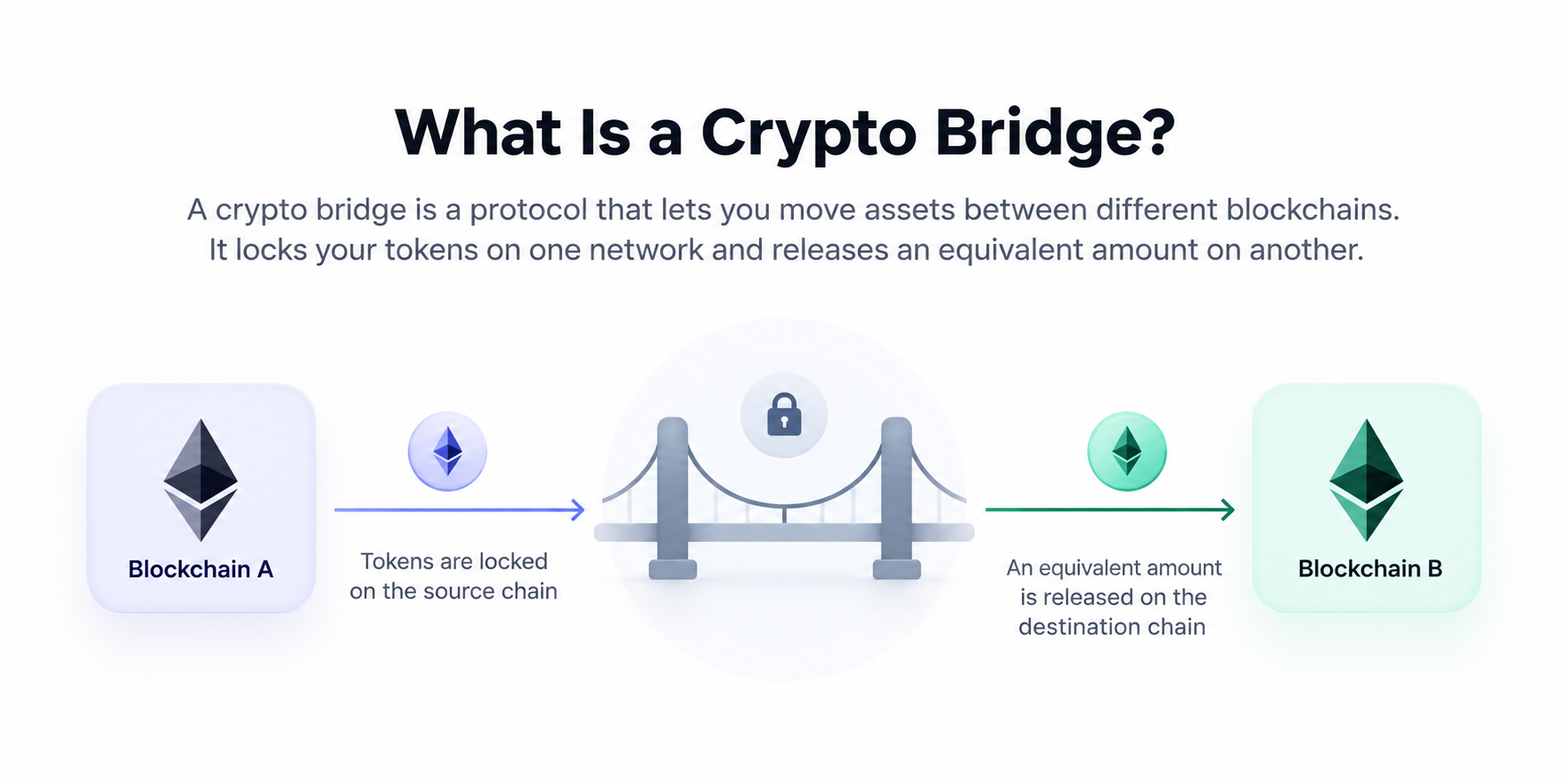
Depending on their design, bridges may lock tokens on one network and issue equivalent tokens on another, or use liquidity pools to complete transfers.
Bridges rely on verification mechanisms to authorize cross-chain transactions. If those checks fail, attackers may be able to withdraw funds without legitimate deposits.
Most crypto bridge hacks exploit weaknesses in how transfers are approved. These flaws can be found in:
smart contract code,
off-chain infrastructure,
the handling of privileged accounts.
Forged Messages and Proof Verification Failures
Cross-chain bridges use messages to confirm that a transaction happened on another blockchain. Before releasing funds, a bridge must check that the message comes from the correct source and hasn't been used before.
FAQ
Crypto bridges are attractive targets because they often hold large amounts of crypto. They also rely on smart contracts, validators, and systems that communicate between blockchains. A flaw in any of these components can allow hackers to steal funds.
A security audit helps find bugs, but it doesn't guarantee that a bridge is safe. Some risks may be missed, and new bugs can appear after updates. Check when the last audit took place and whether it covers the current version of the bridge.
Sometimes, but recovery is never guaranteed. Stolen funds may be traced, frozen, or returned with help from exchanges, token issuers, or law enforcement. In some cases, bridge teams may also reimburse affected users. Learn more in our guide: Can stolen crypto be recovered?
Wrapped tokens may lose value if the original assets backing them are stolen. Even if the tokens remain in users' wallets, they may no longer be redeemable for the original crypto.
Not always. Decentralixed bridges can reduce dependence on a single operator, but they can still have security flaws.
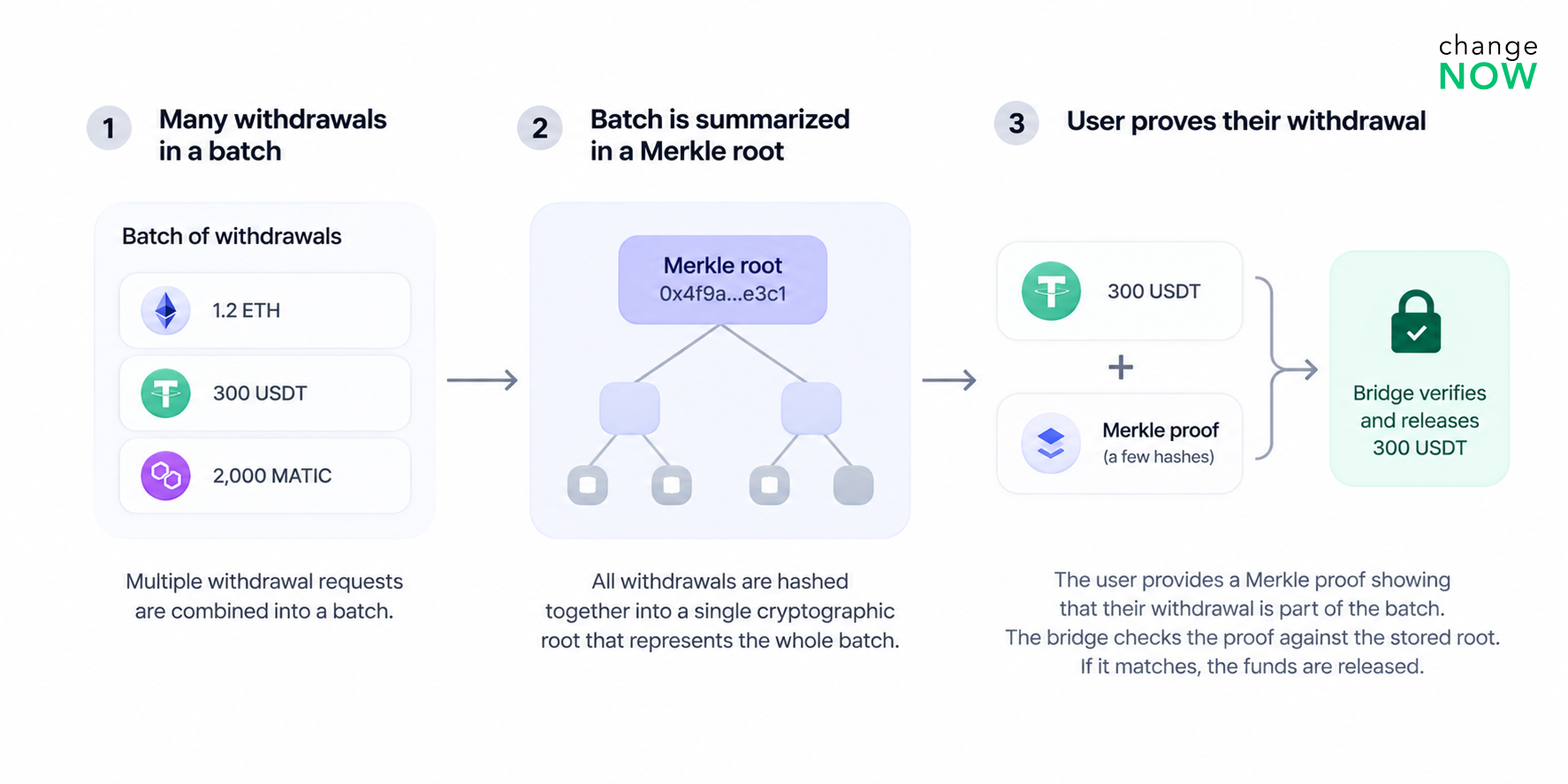
Some bridges use Merkle proofs to check whether a withdrawal is part of an approved group of transactions. Each group has a unique cryptographic identifier called a Merkle root.
If a hacker manages to replace the legitimate root with a fake one, the bridge may accept fraudulent withdrawals as valid.
Compromised Validator Keys
Some bridges require a group of validators or signers to approve cross-chain transactions. Their private keys determine whether a message can be authorized.
If hackers steal enough of these keys, they can approve fake transactions and steal funds.
Smart Contract Vulnerabilities
Bridge smart contracts control operations such as token custody, minting, withdrawals, and message verification.
Errors in these contracts can allow attackers to execute operations that should be rejected.
Common weaknesses include:
Missing authorization checks: Sensitive functions can be called by unauthorized accounts.
Incorrect state validation: Contracts accept withdrawal requests without confirming the required source-chain event.
Unsafe upgrades: Contract changes introduce vulnerabilities or weaken existing permissions.
Replay Attacks and Message Reuse
A replay attack happens when a hacker reuses a valid transaction or message to perform an unauthorized transfer.
To prevent this, bridges must make sure that each message can only be used once.
They can do this by giving messages unique IDs and keeping track of which ones have already been processed.
However, bugs in how bridges store and update this information can still allow hackers to bypass security checks.
Relayer and Access Control Failures
Relayers carry messages between blockchains. Some bridges allow anyone to send these messages, which isn't necessarily a security risk.
The important part is that the bridge checks whether each message is genuine before approving a transfer.
If these checks are weak, hackers may send fake messages or exploit publicly accessible functions to approve unauthorized transactions.
Biggest Cross-Chain Bridge Hacks and What Caused Them
Crypto bridges had a rough 2022, to put it mildly.
Bridge
Date
Approximate amount affected
Primary vulnerability
Ronin Bridge
March 2022
$624 million
Five of nine validator keys compromised
Poly Network
August 2021
$611 million
Improper access control
BNB Bridge
October 2022
$570 million
Forged cryptographic proofs
Wormhole Bridge
February 2022
$326 million
Signature verification bypass
Nomad Bridge
August 2022
$190 million
Incorrectly accepted message root
Harmony Horizon Bridge
June 2022
$100 million
Compromised multisig private keys
For BNB Bridge, the $570 million figure represents the approximate value of 2 million unauthorized BNB. Around $100–130 million was transferred to other chains before the network was halted.
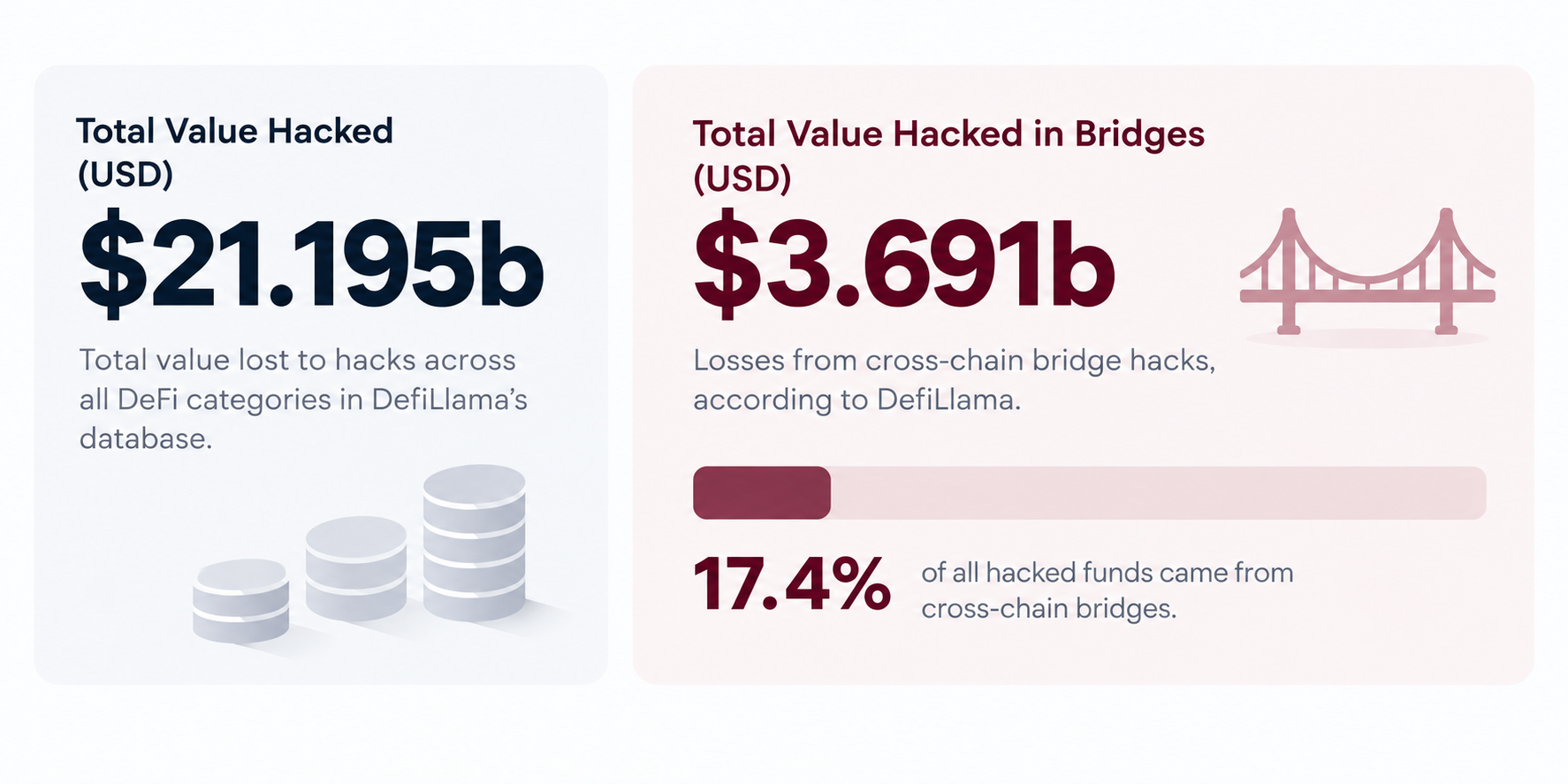
Data according to DefiLlama
Ronin and Harmony were hacked through stolen private keys. In the Ronin attack, hackers gained control of five of nine validator keys and used them to approve fake withdrawals. The theft went unnoticed for six days. In the Harmony attack, hackers stole enough private keys to approve transactions without permission. The FBI later linked the attack to North Korea's Lazarus Group. Sound familiar? North Korean hackers were also behind the $387 million Bitget hack in September 2026, according to Chainalysis.
Poly Network lost $611 million because of weak access controls. The hacker exploited a flaw to steal funds across three blockchains. Then, apparently, they had a change of heart: Poly Network reported recovering all the stolen funds within just 16 days.
Wormhole, Nomad, and BNB Bridge failed to verify transactions correctly. In the Wormhole attack, a flaw allowed the hacker to create 120,000 wrapped ETH without depositing real ETH. Nomad accepted fake messages, and other attackers quickly copied the method. In the BNB Bridge attack, forged proofs allowed the hacker to create around 2 million BNB without legitimate deposits.
What Happened in the zkLink Nova Bridge Exploit?
On October 28, 2026, a hacker exploited a flaw in zkLink Nova's Ethereum bridge to withdraw funds.
Blockchain security firm Blockaid initially reported around $786,000 in stolen assets. One major transaction involved 22.43 ETH and 11 types of ERC-20 tokens, including 245.74 pufETH.
How the zkLink Nova Bridge Attack Worked
According to SlowMist, the hacker found a flaw in how zkLink Nova checked cross-chain messages.
The problem was in a function called claimMessage. It failed to clear a temporary value called finalizeMessageHash after use. This allowed the attacker to reuse information from an earlier authorized call and trick the bridge into accepting a fake batch root.
A batch root is a cryptographic value used to verify a group of transactions. By registering a fake one, the hacker could submit withdrawal proofs that appeared valid to the bridge.
The attack happened in three steps:
Exploit the message check. The hacker used the bridge's public relayer and a flaw in claimMessage to bypass the intended authorization checks.
Register a fake batch root. The bridge accepted a root chosen by the hacker instead of one from a legitimate transaction batch.
Withdraw the funds. The hacker submitted proofs matching the fake root, and the Ethereum bridge contracts released tokens.
The bridge accepted a fake root because of a flaw in its message-processing logic.
Users should check official zkLink updates before interacting with the affected bridge again.
How Can Cross-Chain Bridge Exploits Be Prevented?
Bridge operators can reduce the risk of hacks, but no security measures can guarantee complete protection.
Verify Cross-Chain Messages
Before releasing funds, a bridge must check that a transaction really happened on the source blockchain and hasn't already been processed.
It should also confirm that the message comes from the correct blockchain and contract. Otherwise, hackers may trick the bridge into accepting fake or reused messages.
Using additional independent checks can make it harder for one security failure to compromise the entire bridge.
Protect Validator Keys
Stolen private keys were behind major attacks such as Ronin and Harmony.
Bridge operators can reduce this risk by storing keys in secure hardware, requiring approval from multiple independent validators, and limiting who can access sensitive functions.
It's also important that validators don't all rely on the same infrastructure. Otherwise, one breach could compromise several keys at once.
Limit Withdrawals and Watch for Suspicious Activity
Withdrawal limits can reduce how much money hackers steal before an attack is stopped.
Monitoring systems can detect unusual activity, such as large withdrawals or repeated transactions.
Bridges can also use emergency pause functions to stop transactions when suspicious activity is detected. However, these protections only help if the attack is detected quickly.
Test and Audit Smart Contracts
Security audits help find vulnerabilities before a bridge goes live, but one audit isn't enough.
Automated testing and independent reviews can help find bugs that ordinary tests miss. Bug bounty programs also reward people who find and report security flaws. Published audit reports should also cover the contract versions users are actually interacting with.
How Can Users Reduce the Risk of Bridge Hacks?
Before using a crypto bridge:
Check how the bridge is secured. Find out who approves transfers and what security measures are in place.
Look for recent security audits. Check whether the bridge has been reviewed by independent experts and whether it has a history of hacks.
Be careful with wrapped tokens. If the assets backing them are stolen, the wrapped tokens may lose value.
Avoid transferring large amounts at once. A small test transaction can help catch mistakes, but it doesn't guarantee the bridge is safe.
Watch for security alerts. If a bridge reports a hack or suspicious activity, avoid using it until the issue is resolved.
For large transfers, it's also worth checking what happens if the bridge stops withdrawals or the assets backing a wrapped token are stolen.