In June, we broke down BTC and ETH outflows, how they affected sentiment and triggered panic mode among investors. By September, the situation had reversed. Now we are seeing ETH and BTC ETF inflows for the first time since early May. So, what changed?
Quick recap: The initial rebound was triggered by regulatory factors like the Clarity Act. However, Ethereum is now drawing more capital because large funds finally start to treat it as a foundational tech stack for tokenization, and not as just another crypto asset.
Let’s take a closer look at what is happening, why it’s happening exactly and whether these events actually change the balance of power.
Disclaimer:Nothing published on the ChangeNOW Blog constitutes investment advice, financial promotion or a recommendation to buy, sell, or hold any crypto asset. Our analysis is informational - it describes market conditions, aggregates sentiment, and summarizes publicly available data and viewpoints. It should not be relied upon as a basis for investment decisions.
ETH & BTC ETF News: The Rebound & What's Behind It
Both funds turned positive the same week, after eight weeks of net outflows. Tables have turned but the result is different for each asset.
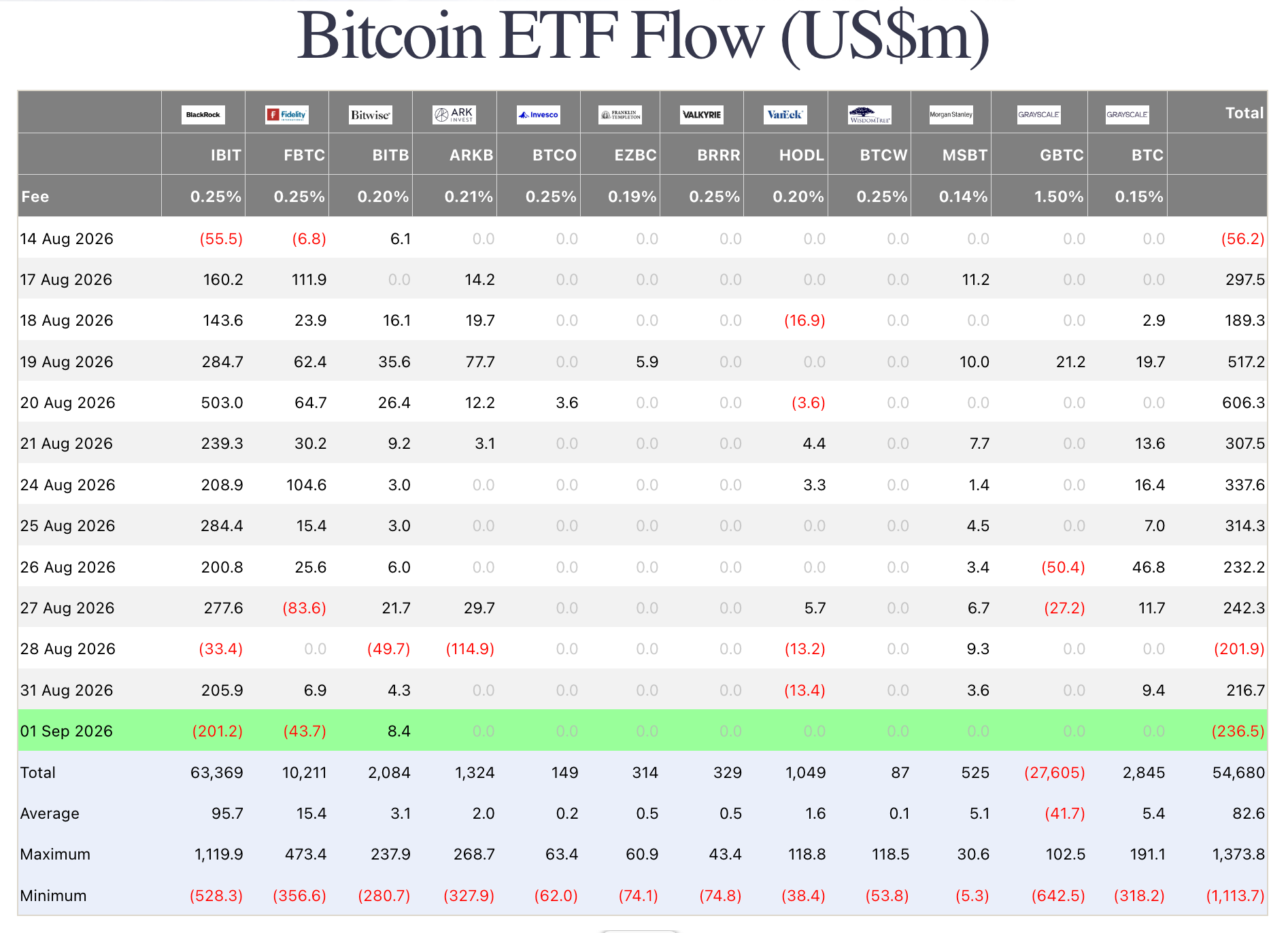
BTC ETF inflows were strong the first week and BlackRock accounted for most of it. It was enough to offset continued outflows from Grayscale and Fidelity. The second week, BTC inflows were still positive, just much smaller.
September 2026 update: The BlackRock dominance
As August rolled into September, Bitcoin ETFs put their trademark volatility on full display. On August 31, the market saw a strong rebound with $216.7 million in net inflows driven almost entirely by BlackRock's IBIT - $205.9 million. However, sentiment flipped: September 1 closed with a sharp net outflow of -$236.5 million, with IBIT shedding $201.2 million.
This reversal highlights the core difference: institutional BTC flows remain highly reactive to macro swings, while Ethereum ETFs show a pattern of steady, consistent accumulation.
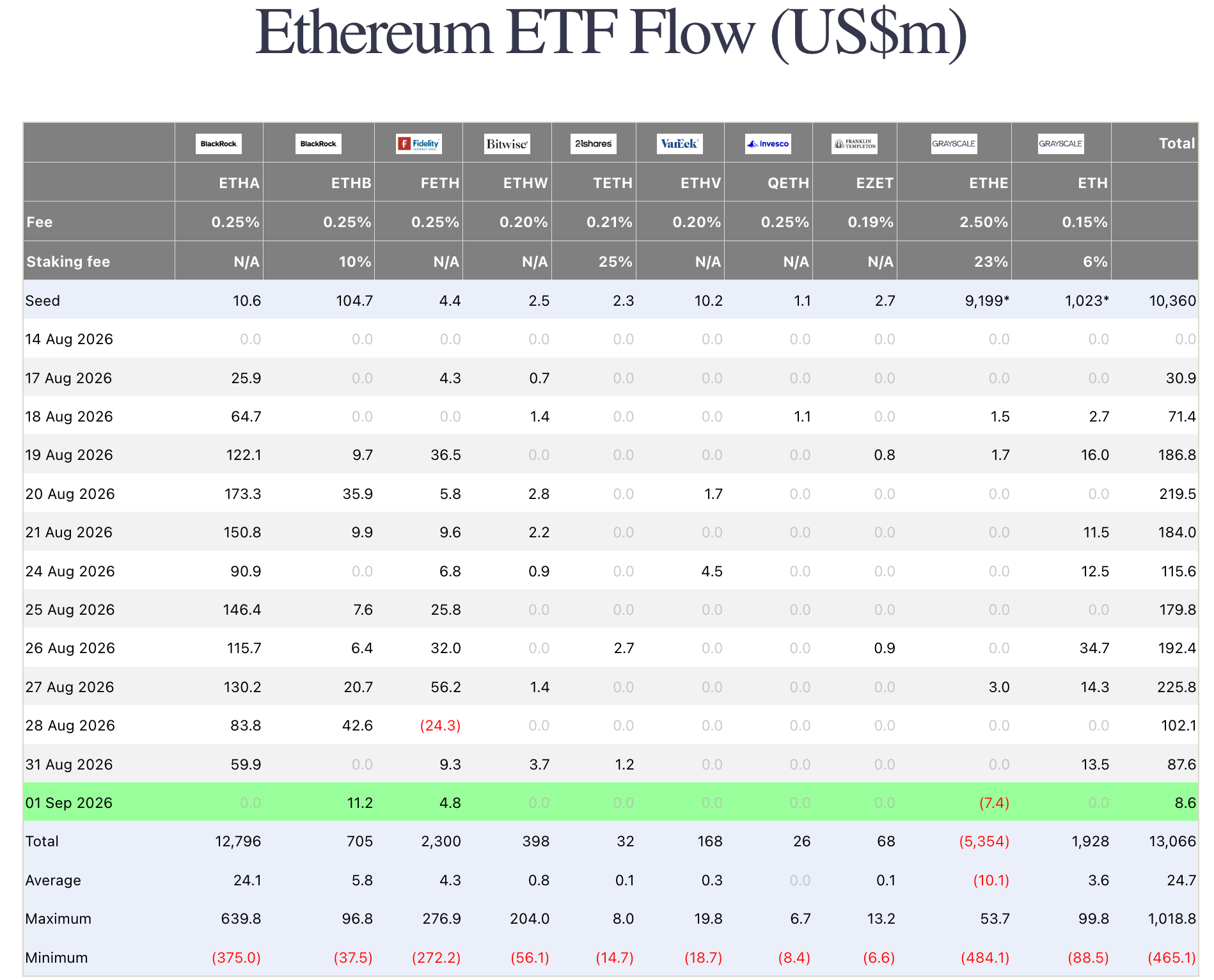
ETH’s path was more like “slow and steady wins the race”: inflows started smaller and grew gradually. By early September, spot ETH ETFs marked a historic 12-day streak of continuous net inflows - the longest continuous buying period since summer 2025. Over this streak, funds accumulated roughly $1.6 billion. Notably, the bleed from Grayscale's ETHE has significantly slowed down, allowing BlackRock's ETHA to drive the net positive momentum without significant resistance.
So why have the ETF inflows started now? A few things were the reason.
Talk around the Clarity Act heading to the Senate has people betting on how the crypto market will react once regulatory rules get stricter.
Both BTC and ETH inflows are largely tied to one issuer - BlackRock, while older funds like Grayscale keep losing money.
It's not only ETFs: whales have been pulling ETH off exchanges, and treasury companies like Bitmine keep aggressively buying more - they just grabbed another 7,430 ETH this past week alone, pushing their holdings close to 5% of the total supply.
ETH vs BTC ETF Inflows: Why Ethereum is Outpacing Bitcoin
Looking at the latest ETH ETF flows, it starts to seem like big buyers aren't treating crypto as one single market anymore. They are using Bitcoin and Ethereum for two completely different jobs.
In this context, Bitcoin acts as digital gold. It doesn't need new features, updates, or structural changes to do what it's supposed to do. When investors put money into a BTC ETF, they are usually hedging against inflation or responding to macro news. We saw this perfectly in early September: as BTC hovered around the $78,000–$80,000 mark, inflows were huge but volatile, driven by macroeconomic sentiment.
Ethereum is a different case now. As investors become more and more tech-savvy, they start appreciating ETH for its technical prowess. Ethereum is a working network. They buy ETH when they want exposure to actual blockchain activity, like stablecoin transfers, decentralized apps, and tokenized real-world assets.
This explains why Ethereum ETFs maintained a 12-day buying streak even while the ETH price was relatively sluggish around $2,400–$2,500. Institutional buyers are ignoring local price weakness because they are accumulating a fundamental asset.
Feature
Bitcoin Spot ETFs
Ethereum Spot ETFs
Core value proposition
Digital gold; store of value
Programmable settlement layer; Web3 rails
Inflow dynamic
High volume, macro-reactive, sharp daily reversals
Consistent, steady streaks of institutional accumulation
Macro trading and speculative capital preservation
Long-term infrastructure and ecosystem growth
Interestingly, this tech-focused approach is also bleeding into other assets. For example, the Bitwise Solana ETF now holds over $1 billion, and XRP funds are also growing. This shows that large investors are spreading their money across different crypto projects, but they still treat Ethereum as the main foundation.
Ethereum keeps evolving. And big money finally starts to pay attention.
It’s only natural, though. When you make the blockchain lighter and cheaper to run, it directly impacts its usability. When the tech gets better, the case for holding ETH gets stronger.
You can spot the same mindset among other major players. Well-known figures like Tom Lee have been openly focused on Ethereum's utility for a while now.
Explaining the fundamental difference in how large capital views these assets, Tom Lee recently noted:
"Ethereum is a smart contract platform. So, it differs from Bitcoin, which is a store of value, and in many ways, its virtue is that it’s inert — it represents digital gold and a good store of value. Ethereum, on the other hand, because it’s a smart contract platform, is really the rails where I think a lot of things are going to be built. One of the big breakouts this year has been stablecoins, but it’s also been things like prediction markets, and now, talk about tokenizing more than dollars — equities in real estate, alternative assets, and other assets. A lot of that will be built on Ethereum Layer-2."
We touched this topic in our recent piece on how crypto whales impact the market: when large holders start accumulating, they are backing the network's roadmap. A win-win situation.
Final Thoughts
The latest ETF flows highlight a market shift that becomes more and more obvious: Bitcoin remains the go-to digital gold, while Ethereum is attracting capital as a working technological platform. The historic 12-day ETH inflow streak we witnessed this September proves that institutional money sees fundamental value in utility, regardless of short-term price fluctuations.
When people look for the best BTC ETF, it usually comes down to two main factors: management fees and trading liquidity. BlackRock BTC ETF (IBIT) has quickly become a market leader due to its low 0.25% fee and massive daily volume. On the other hand, older funds like Grayscale BTC ETF (GBTC) carry higher fees (1.50%), which has led to persistent capital outflows. Choosing a fund depends entirely on individual preferences for liquidity, fees, and tracking reliability, but we do not recommend or rank specific financial products.
You can track ETH ETF flows latest metrics on dedicated institutional dashboards such as Farside Investors, SoSoValue, or CoinGlass. These platforms aggregate ETH ETF inflows today in real time, showing exact daily net flows across major issuers, led predominantly by the ETH ETF BlackRock product (ETHA).
Recent BTC ETF news and market data show that BTC ETF inflows react primarily to macroeconomic shifts, inflation hedging, and monetary policy. In contrast, ETH ETF news shows that capital flows into Ethereum products are tied more closely to protocol upgrades, layer-2 activity, and Wall Street's growing adoption of tokenized real-world assets.
Fees play a major role in fund selection. The lower fees on the BlackRock BTC ETF make it more attractive for long-term spot exposure, driving consistent inflows. Conversely, higher structural fees on the Grayscale BTC ETF have pushed many institutional holders to reallocate their funds toward cheaper, more liquid alternatives.
Fixed vs Floating Exchange Rate in Crypto: Which to Choose?
A fixed rate locks your final crypto amount against volatility, while a floating rate executes at live market prices. Learn the difference, risks, and when to use each.


 Source:
  Source:

