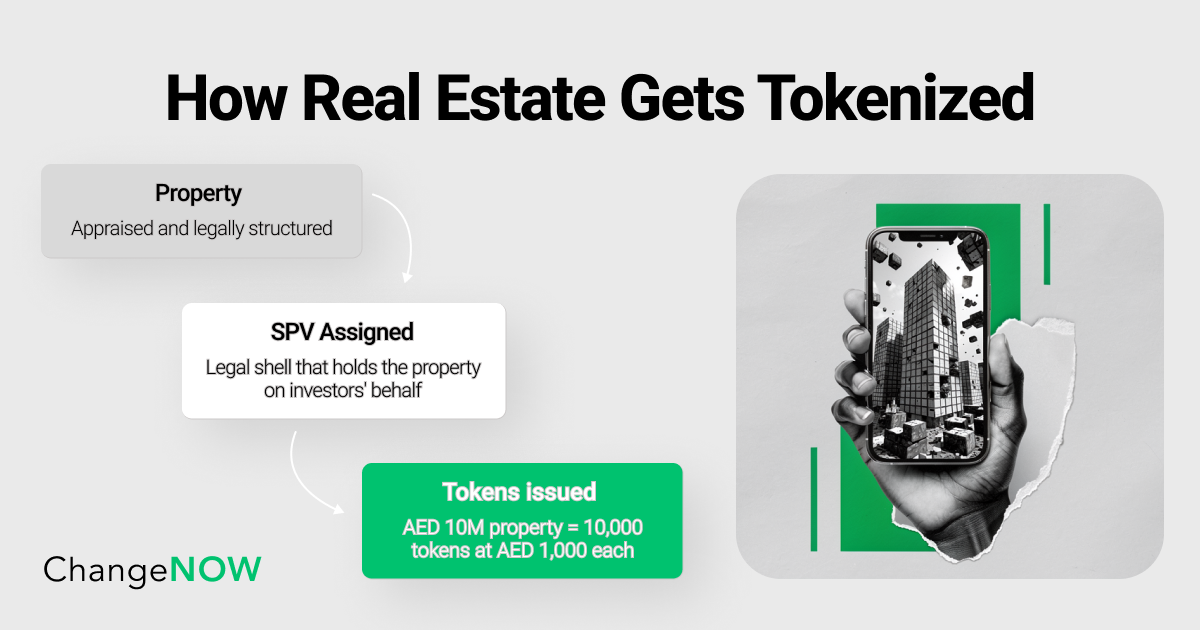
$540 is not a random number. It’s the actual minimum investment on Prypco Mint - MENA's first government-backed tokenized real estate platform. Its first listing, a two-bedroom apartment in Business Bay, attracted 224 investors from 40+ nationalities and hit its funding goal in under 24 hours.
Each token represents a defined percentage of a property's value. A square meter gets divided into 10,000 tokens. You get rental income exposure and appreciation upside, but without the seven-figure wire transfer.
By 2033, tokenized assets are projected to represent 7% of Dubai's real estate market - around $16B. And that's a real structural shift.
Why Dubai & Why Now
Dubai doesn't experiment with things that don't scale. When the government backs a technology, it's because the strategy is already written - the pilot is just the last step before rollout.
Tokenized real estate is that step.
From Oil Economy to On-Chain Assets
The UAE has been running the same play since the 1970s: extract oil, build infrastructure, reinvest. It worked well enough to turn a desert coastline into the world's most visited city.
Now the playbook is changing. It’s not like oil stopped working, it’s just one revenue source is one point of failure.
Next read: Oil to On-Chain: Diversifying MENA’s Wealth with RWA Tokenization
UAE Vision 2030 is built around reducing oil dependency.
Blockchain isn't a side project in this picture: the Emirates Blockchain Strategy, launched in 2018, was designed to harness distributed ledger technology across government and economy.
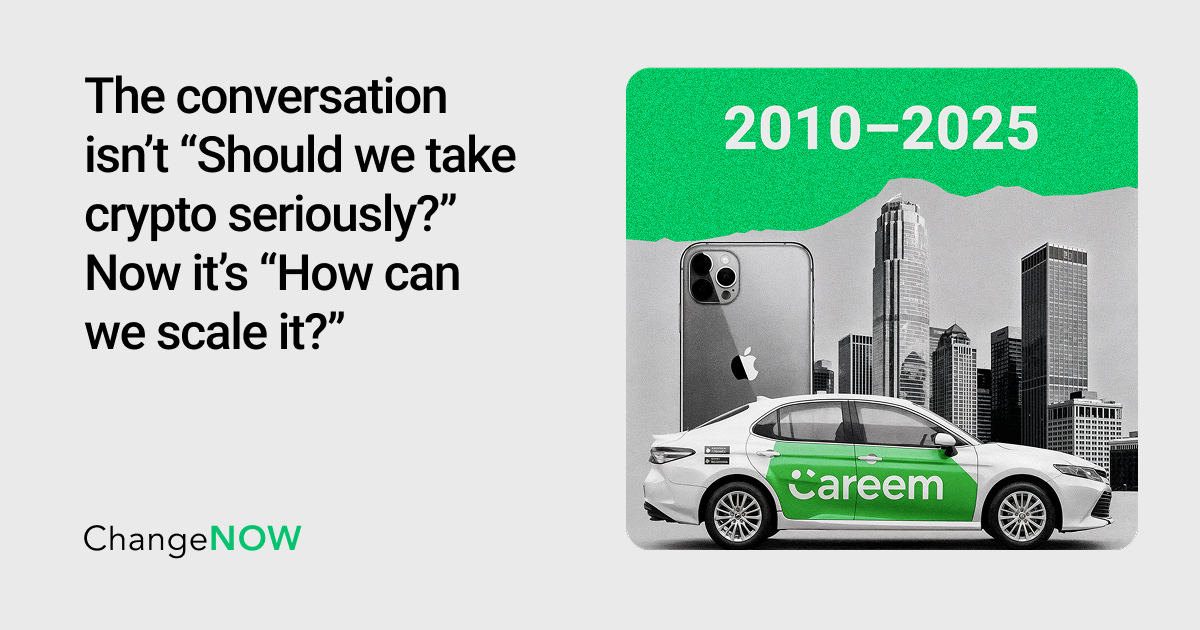
Real estate tokenization is where that strategy stops being a whitepaper and starts generating transaction volume.
The timing isn't accidental. Dubai's property market was already booming - total sales hit AED 66.8 billion in May 2025 alone, a 44% year-on-year surge.