Bitcoin's down, social media feeds are full of liquidation charts, and retail is sitting deep in Extreme Fear. Usual Tuesday for crypto, right?
Notably, a lot of the panic you're scrolling through traces back to whales, big players like hedge-funds and ETFs, who quietly stopped treating crypto like sports bets. Now they’re buying and selling just like the rest of us. The only difference is volume.
A fund rebalances a position, does some routine treasury housekeeping, and suddenly it's a thread with 400k views and hundreds of “Is the coin dying??” comments.
Let’s figure out who those mysterious whales are, how they manipulate the crypto market and when they are doing it on purpose.
Key Takeaways
Whales aren't just anonymous wallets anymore. Institutions like Strategy, BlackRock, and Grayscale now count among the biggest holders in crypto.
A fund rebalancing looks identical to a crash on a chart until you check the context.
Institutions play by different rules. Cheap debt, accounting quirks like mark-to-market losses, and multi-year time horizons mean their "bad days" don't hit like yours would.
Copying whale moves might not be a great idea. By the time an alert goes viral, the edge is already gone.
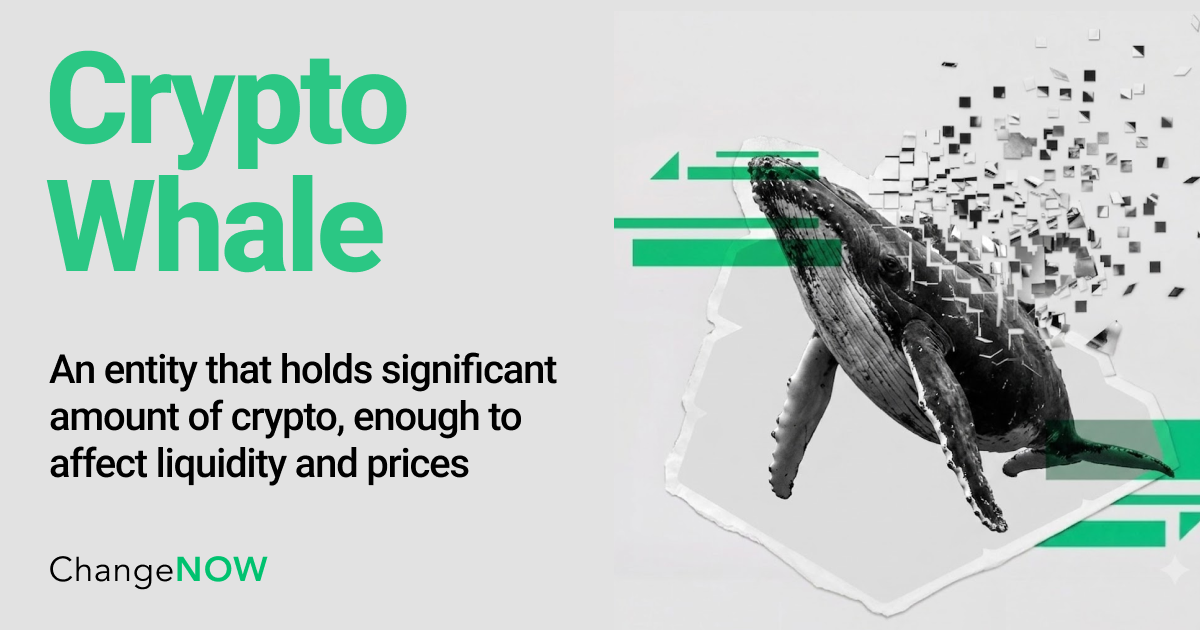
What Are Whales In Crypto?
The rough thresholds people use:
Bitcoin: 1,000+ BTC (roughly $75-80M at current prices)
Ethereum: 10,000+ ETH
Altcoins: 1-10% of total supply, depending on how small the coin is
You can usually spot a whale by how their trades cause price spikes that don't match normal retail flow.
Tools like Whale Alert or Arkham flag their wallets automatically. Every whale's move is monitored and analyzed thoroughly.
“Years ago, a giant transfer to an exchange could shock the market because fewer people were watching. Today, everyone sees the same alert. That means the first reaction can be front-run, overreacted to, or completely wrong.”
Behind the alerts, there are different types of whales out there.
We have early adopters - people who were lucky enough to buy Bitcoin at a price of a matcha latte. Many of those haven’t touched their wallets for years.
We also have exchanges like Binance and Coinbase that hold enormous reserves on behalf of millions of users. They show up as whales on every tracker, even though they are not whales in the traditional sense.
Then there are institutional whales. And those are the most interesting species to watch.
A few names you'll keep running into:
Strategy: BTC’s biggest fan and collector. Holds over 847,000 BTC as of this writing, more Bitcoin than any other public company by a wide margin.
BlackRock (IBIT): its spot Bitcoin ETF has held as much as 800,000+ BTC at peak, making it one of the largest Bitcoin holders on the planet.
Grayscale (GBTC): the original Bitcoin trust, now holding roughly 140,000 BTC. One of the largest institutional stacks.
This list isn't cut in stone. A whale today can be a moderate holder in six months because funds have a tendency to rotate, ETFs bleed, positions get rebalanced.
The company that sums up the whole "institutionals play a different game" narrative.
And the frontman of all this - Michael Saylor, the man that called $500 million of fiat dollars a “melting ice cube” before converting them into Bitcoin.
Strategy Selling Bitcoin: X's Worst Nightmare
For three weeks, crypto X (former Twitter) has been mulling over one of its favorite doom scenarios: Strategy selling a lot of BTC making the market topple down like a house of cards.
Then, in early July, it happened. Strategy actually sold - 3,588 BTC for about $216 million, according to an SEC filing. And guess what?
Nothing happened. The market just shrugged and moved on. Want to know why? Because the money just went to pay bills: dividends they owed on preferred stock, plus refilling their cash cushion. Sheer bookkeeping, nothing more.
Strategy & Quarterly Loss
Strategy poured billions of dollars into BTC and doesn’t plan on stopping, despite registering insane losses. For instance, Strategy posted a $12.5 billion quarterly loss earlier this year.
So, why and, more importantly, how on Earth do they keep buying more? Shouldn’t they get liquidated or go bankrupt? Well, you’d be surprised, but that’s not how it works for whales.
First of all, big players like Strategy don’t do leverage like us, commoners.
What they do is: they go to a fund on Wall Street and ask for, say, $1 billion in cash at a hilariously low interest rate like 1%. They settle on paying it off in 5 years either in fiat or in stock. Nice and easy. Never in a million years will you be able to get this kind of deal.
Next interesting fact: That $12.5 billion "loss" everyone's screaming about? Paper. Not a single Bitcoin was lost.
How is that possible? FASB rules.
Those rules require public companies to mark their Bitcoin to the market price every quarter. Whatever BTC is worth on the day the books close, that's the number Strategy has to report, even if they never touched a single BTC.
Bitcoin price dipped on reporting day? Congrats, you've got a "loss" on paper. It recovers next quarter? The same math flips into a "profit". Actual Bitcoin stays put.
So, no margin calls, no liquidations for those guys. And the number flashing here and there on social media is classic white noise and has nothing to do with what Strategy actually has in their behemoth of a piggy bank.
Quod licet Iovi, non licet bovi. Or, if you forgive me this loose translation: "What is permissible for a whale is not permissible for a hamster".
Whale Copy-Trading: The Plankton Trap
If whales are so rich, and move colossal amounts of crypto every day, while getting even richer, they must be doing something right. This is the simple logic behind whale copy trading - a trading strategy that involves on-chain tracking, mirror bots and all kinds of crafty tricks.
One thing that is left out, and that also happens to be the fundamental one, is the RULES. They differ drastically for whales and common traders.
But still, those are the default settings. There are also advanced ones. And those include spoofing schemes.
Whale Wall Spoofing: An Ultimate Optical Illusion
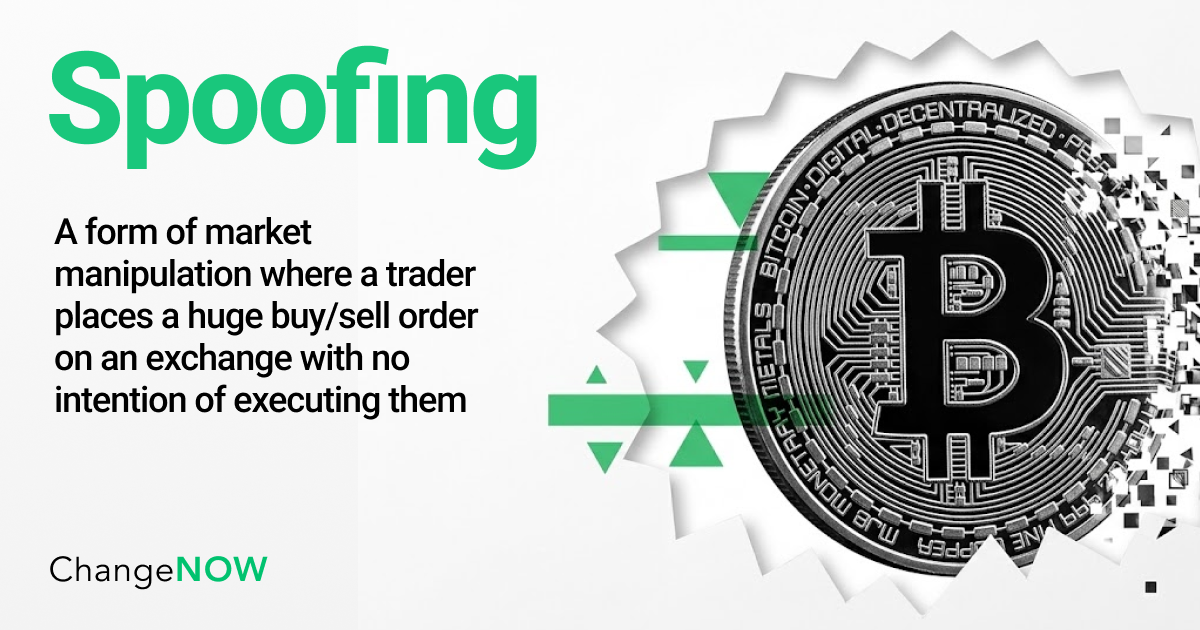
Spoofing is not a market-wide plague, but it’s still a real strategy and it works.
Here is how: a whale places a ridiculously big limit order called a "buy wall" or a "sell wall", and… never executes.
To the untrained eye, it looks like a tsunami alert. But! It’s fake. A neatly crafted illusion designed to trigger FOMO and panic. A way to force algorithms, bots and emotion-driven traders to push the price in the direction the whale wants.
Back in 2017, a single entity dubbed "Spoofy" became infamous on Bitfinex. They had a habit of placing fake orders of up to $50 million, manipulating the BTC price and profiting on real (but hidden) positions, while everyone else panicked.
Major exchanges developed a defense mechanism against such villain behaviour - they now monitor a metric called the "order-to-trade ratio." If an account places and cancels massive orders willy-nilly without executing them, the automated ban-hammer strikes them on the spot.
On-Chain FUD: How to Separate Signal from Noise
We all know how it goes: a dormant wallet suddenly wakes up and moves 50,000 BTC. Social media goes bananas, screams about an incoming supply shock, and retail panic-sells everything at a loss. The usual.
But let’s not be like that. Let’s be smarter. Nine times out of ten, it is just an exchange rebalancing its vaults, reshuffling its funds, refurnishing its lounge area, or whatever.
But the tracker bots you’re watching don't do context. They just flag an abnormally big transaction and leave you all alone scared and confused.
We reached out to Clockwise Crypto for their take on whale moves:
"Whale transactions can mean many different things — they could be taking profits, reallocating capital, moving assets between custodians, or preparing for an institutional transaction. Without context, it's difficult to draw meaningful conclusions."
So, how do you filter out the white noise? You stop staring at isolated wallet alerts.
A single entity moving assets between cold storage vaults means absolutely nothing. What actually matters is the macro picture. Track real metrics, like the difference between net inflows and net outflows across major funds.
If you want to stop getting played by phantom signals, here’s a good read for you:
Whales make a lot of waves in the crypto market. But a lot of what looks like an upcoming storm really is just someone big maneuvering.
So, should you watch the crypto whales? Sure. Tracking their activity can be really beneficial if you want to understand the market on a deeper level.
Should you copy them? I wouldn’t recommend that. Whales aren't running your playbook. They have their own agenda, their own set of rules, and VIP access to capital.
If a whale loses $10 million before breakfast, they won’t even flinch. If you lose the same amount… You’ll sure flinch a lot.
Here's some wisdom from BlockChainWorld, a team behind a YouTube channel with 1.2M subscribers:
“The smart move is not reacting faster than everyone else. It is reacting less emotionally than everyone else. Patterns matter more than alerts. Three similar moves over multiple days usually tell a better story than one giant transfer screenshot.
First, identify the entity. A labeled exchange wallet, fund wallet, custodian, bridge, or treasury address gives more context than “unknown wallet.”
Second, check the direction. Funds moving to exchanges, away from exchanges, across chains, or into cold storage can mean different things.
Third, compare it with the trend. A whale transfer during rising ETF inflows means something different from the same transfer during broad outflows.
Fourth, look for repetition. One whale can be noise. Several whales doing the same thing over days can reveal pressure building.
Fifth, avoid copy-trading. Large wallets can be wrong, hedged elsewhere, moving custody, or intentionally creating a signal others misread.
For everyday crypto users, this is also why non-custodial tools matter. ChangeNOW says it does not control user funds and does not force sign-up for basic exchange use. That fits the wider trend in crypto: users want faster movement between assets, but they also want to keep ownership and custody decisions clear.”
Look at the size of the holding relative to the asset: generally 1,000+ BTC or 10,000+ ETH for the big two, though thresholds are lower for smaller altcoins. Beyond the raw number, whales tend to give themselves away through trades large enough to move price without matching normal retail volume.
Dedicated crypto trackers like Whale Alert or Arkham monitor the blockchain in real time and flag large wallet movements as they happen. Most surface the transaction size, origin, and destination — though on their own, they won't tell you why a whale moved, just that they did.
Whale trackers show you the transaction, but not the intent. To get closer to an actual answer, check whether funds are flowing into exchanges (often a precursor to selling) or out into cold storage (often a sign of accumulation), and whether multiple whales are making the same move around the same time.
Sometimes, yes. Spoofing (placing huge fake buy or sell orders to trigger panic, then cancelling them) is a real, documented tactic. But most whale-driven volatility is routine treasury management that just happens to spook everyone watching.
Whale Alert is one of the most widely used crypto tracking tools, posting real-time alerts whenever a large transaction crosses the blockchain. It's a solid starting point for spotting activity. Just don't treat every alert as a trading signal, since context is usually missing from the headline number.
The commonly used threshold is 1,000+ BTC - a level currently held by everyone from early adopters sitting on decade-old wallets to institutions like Strategy, which alone holds over 847,000 BTC.


 Spoofing is not a market-wide plague, but it’s still a real strategy and it works.


