Robinhood Chain is an EVM-compatible Ethereum Layer 2 built with Arbitrum technology for tokenized assets and financial applications. Its public mainnet launched on July 1, 2026. The network uses ETH for gas, has Chain ID 4663 and publishes transaction data to Ethereum.
A Robinhood account is not required to use it. Compatible wallets can connect through the public RPC, transfer supported assets and interact with applications deployed on the network. Robinhood Chain also hosts Stock Tokens linked to selected stocks and ETFs.
Disclaimer: This article is for informational purposes and does not provide financial or investment advice. Stock Tokens and crypto assets involve significant risk and may not be available in every jurisdiction. Check the asset, contract address and network before making a transfer.
Key Takeaways
Robinhood Chain is an Ethereum Layer 2 with Chain ID 4663, ETH gas, an EVM-compatible RPC and a Blockscout explorer.
The sequencer provides sub-second confirmation before transaction data reaches Ethereum finality.
Robinhood Chain Stock Tokens can be withdrawn to supported wallets, while Classic Stock Tokens remain inside the Robinhood Europe app.
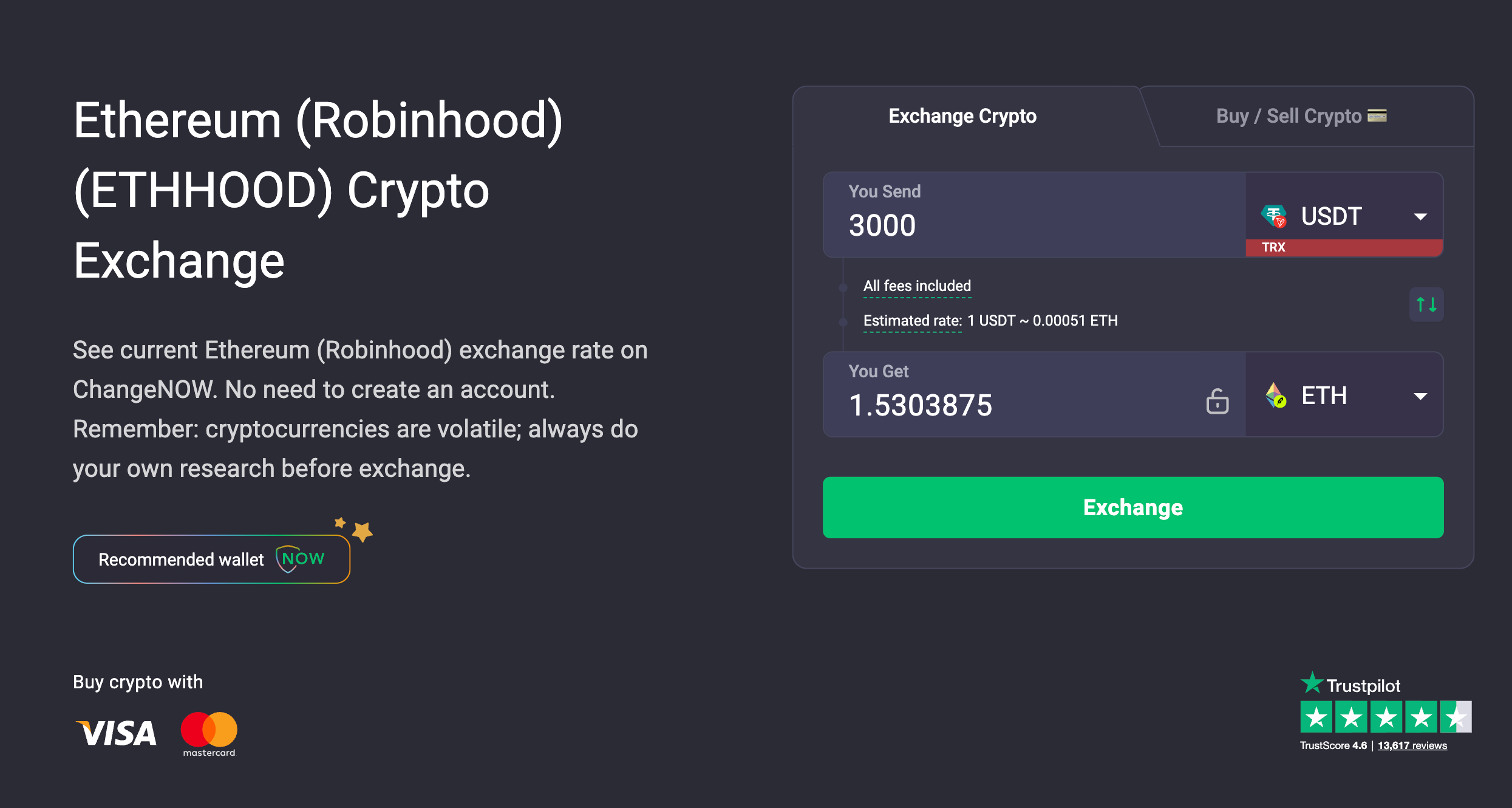
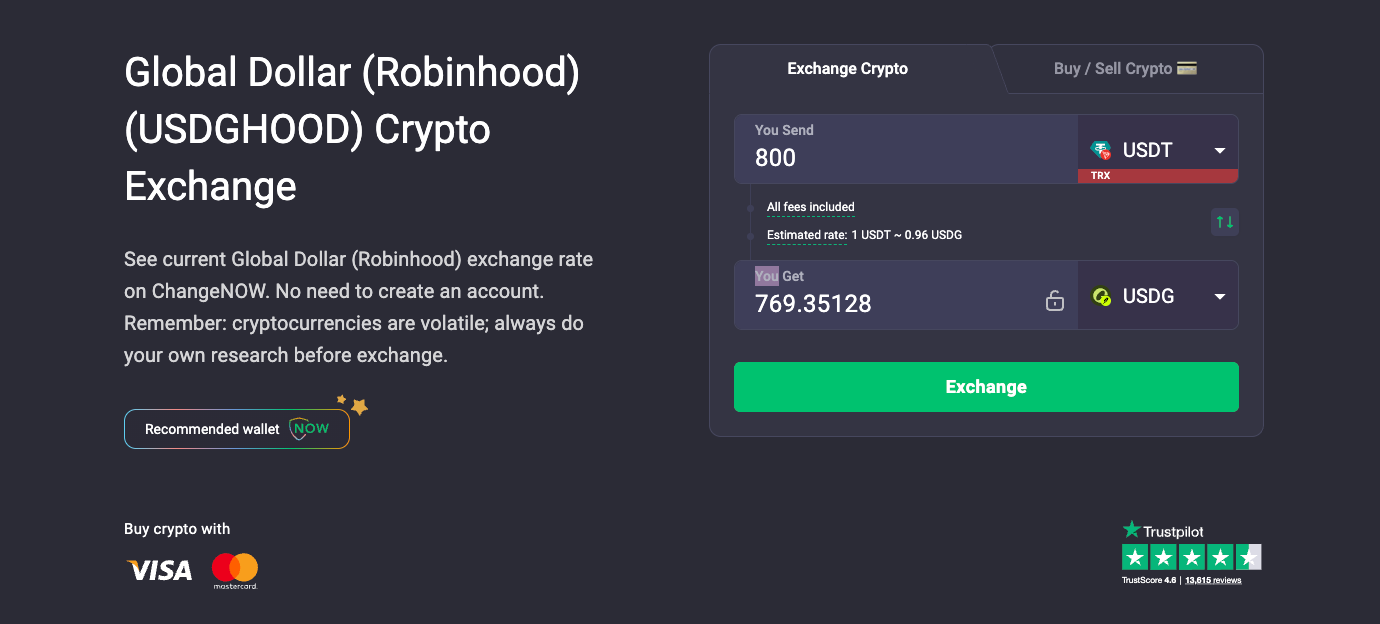
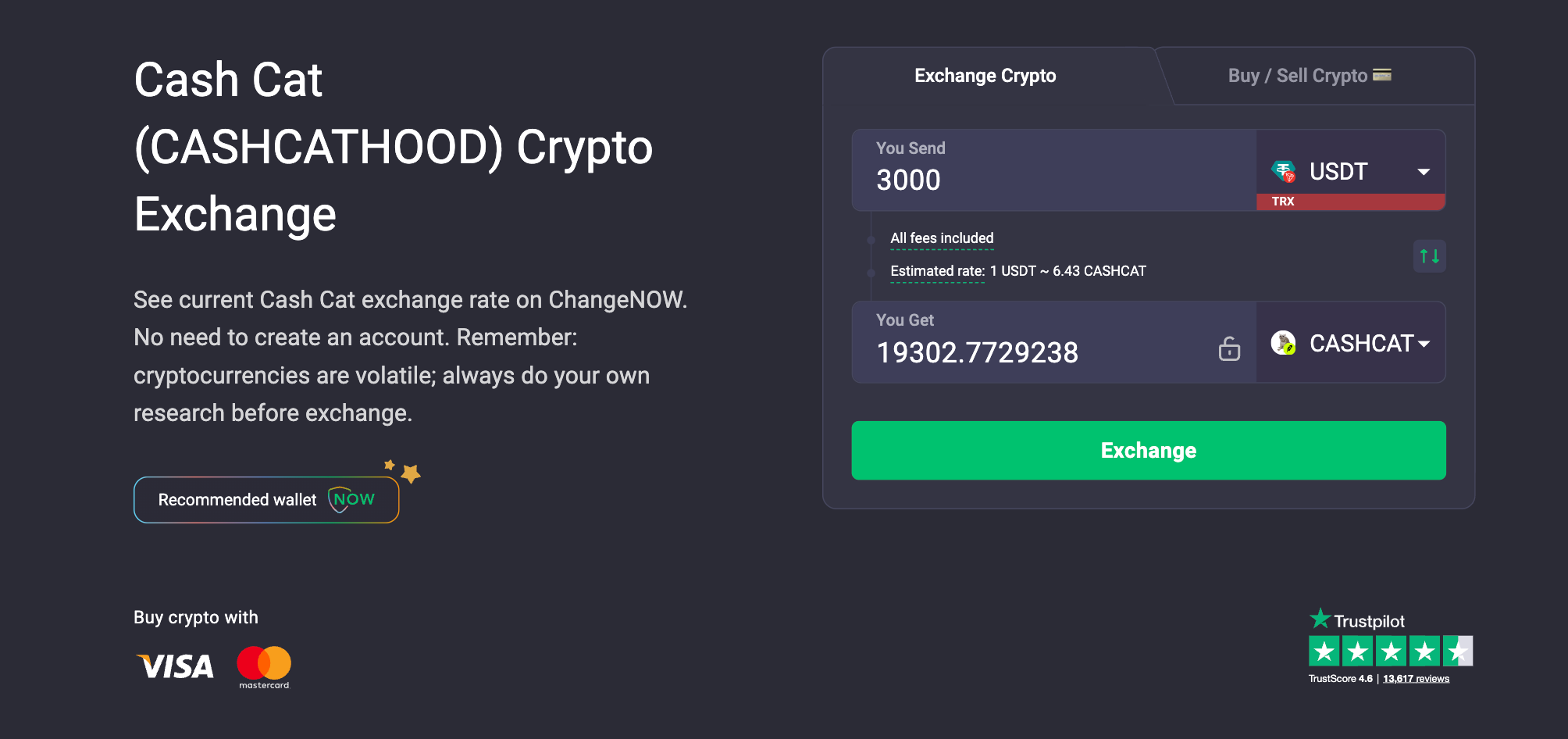
ChangeNOW currently supports ETH, USDG and CASHCAT transfers through Robinhood Chain.
Robinhood Chain also has a testnet with Chain ID 46630. The public RPC can be used to connect wallets and query blockchain data, while production applications can use dedicated infrastructure providers.
Robinhood Chain FAQ
No. Robinhood Chain uses ETH for gas and does not require a separate native token.
Robinhood Chain mainnet uses Chain ID 4663. Its testnet uses Chain ID 46630.
ETH can be bridged from Ethereum or received through a wallet, exchange or service that supports Robinhood Chain transfers. ETH is needed for standard gas fees.
A canonical deposit from Ethereum typically takes around 10 minutes. A canonical withdrawal back to Ethereum includes an approximately seven-day challenge period. Third-party routes can be faster.
Robinhood Chain Stock Tokens can be transferred to supported self-custody wallets by eligible users. Classic Stock Tokens stay inside the Robinhood Europe app.
No. Direct issuance is reserved for authorized participants that meet the issuer's requirements.
No. Availability depends on jurisdiction, issuer terms and the platform providing access.
Transactions first reach a sequencer, which orders them before their data is published to Ethereum. The network follows a first-come, first-served ordering policy: transactions are processed according to when they reach the sequencer rather than how much extra gas a sender is willing to pay.
Stage
What Happens
Sequencer confirmation
The transaction is accepted and ordered
Posted to Ethereum
Transaction data is published to Ethereum
Ethereum finality
Ethereum finalizes the published data
Sequencer confirmation usually takes under one second. Ethereum finality comes later, which matters when a service needs stronger settlement guarantees before crediting a deposit or completing a contract action [4].
NOWNodes uses a threshold of 5,000 blocks before marking transactions as confirmed.
“Robinhood Chain produces blocks roughly every 0.1 seconds on average. On our side, we wait for 5,000 confirmations, which comes to around 500 seconds at that block rate.” – ChangeNOW Listing Team
Robinhood Chain Gas Fees
Robinhood Chain gas fees contain two components:
L2 execution fee: processing the transaction on Robinhood Chain
L1 data fee: publishing transaction data to Ethereum
A wallet normally combines both into one ETH fee. The final amount depends on the transaction itself and Ethereum data costs [5].
ETH is also required to send tokens or interact with smart contracts, so a wallet holding an ERC-20 asset may still need a small ETH balance for gas.
How to Add Robinhood Chain to MetaMask
Robinhood Chain can be added to MetaMask as a custom EVM network.
Open the network menu, choose Add a custom network and enter:
Save the settings and select Robinhood Chain from the network menu [3].
Adding Robinhood Chain to MetaMask does not move assets from Ethereum, another blockchain or the Robinhood app. ETH or tokens must be transferred separately to your Robinhood Chain address.
Robinhood Chain Block Explorer
The official Robinhood Chain block explorer is Blockscout.
Paste a transaction hash into the block explorer to check its status, block number and gas fee. Searching for a wallet address shows balances and previous transfers. Contract pages can be used to inspect token activity and verify which smart contract a wallet is interacting with.
For Robinhood Stock Tokens, the official contract registry is the reference point for canonical addresses. A token can copy the name or ticker of an existing asset while using a different contract [9].
How to Bridge to Robinhood Chain
Assets can move between Ethereum and Robinhood Chain through the canonical Arbitrum bridge. Deposits from Ethereum typically take around 10 minutes. Canonical withdrawals back to Ethereum include an approximately seven-day challenge period [8].
The withdrawal delay comes from the optimistic rollup design. Funds become claimable on Ethereum after the challenge window has passed.
Faster cross-chain routes are also available through third-party infrastructure. These routes depend on separate liquidity, contracts and message-verification systems, so their risk model differs from the canonical bridge.
ETH can be bridged to fund a new wallet for gas. Users can also receive ETH directly through a service that supports Robinhood Chain.
Transfer Checklist by ChangeNOW
How to Fund Your Wallet With ETH
ETH pays gas on Robinhood Chain, so a wallet needs some ETH before it can send ERC-20 tokens or interact with smart contracts.
You can bridge ETH from Ethereum or send it from a wallet, exchange or service that supports Robinhood Chain. Check the selected network before sending: an ETH transfer on Ethereum will stay on Ethereum even if the destination uses the same 0x address.
How Robinhood Stock Tokens Work
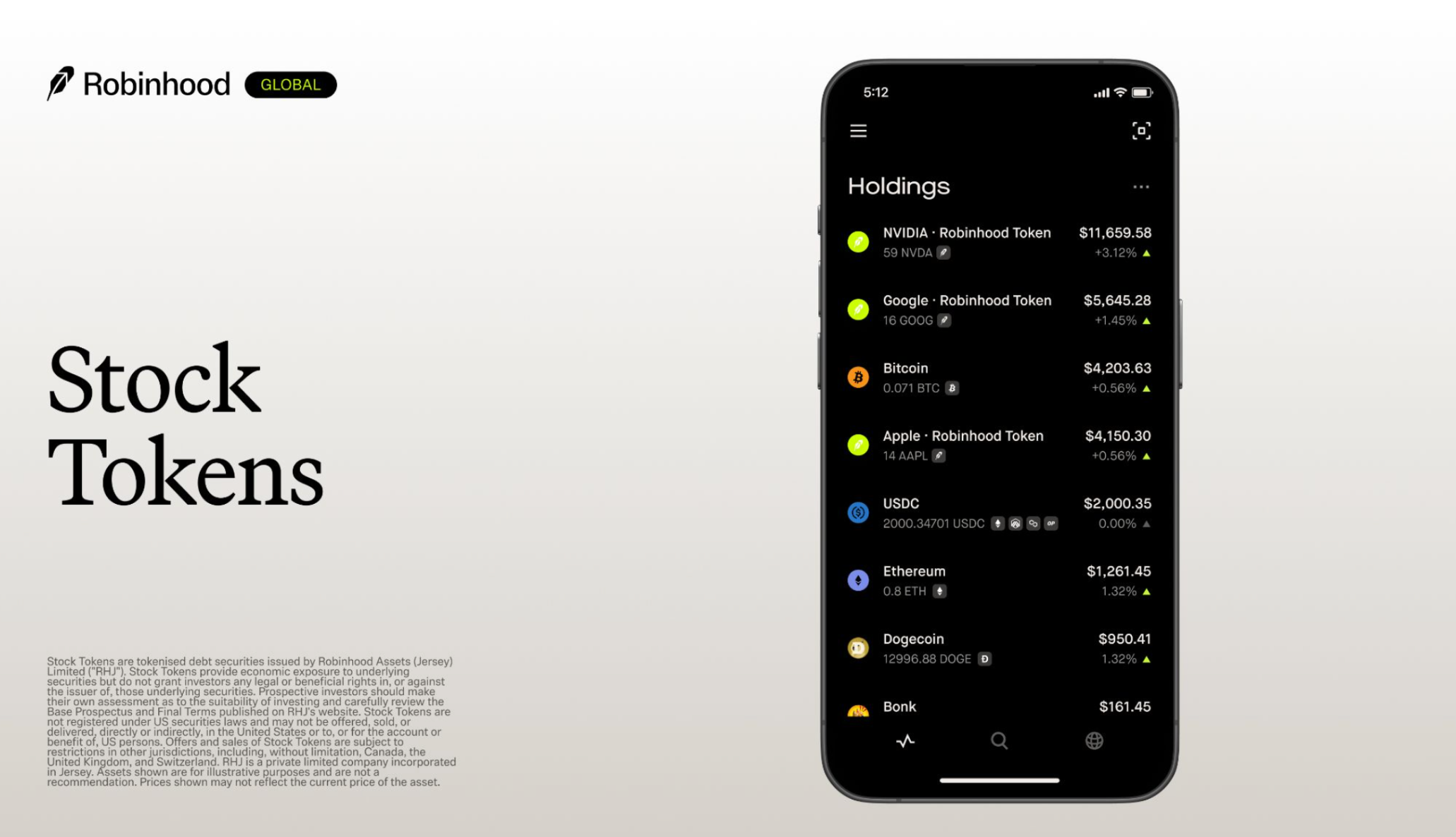
A Robinhood Stock Token provides economic exposure to a selected stock or ETF. Stock Tokens are ERC-20 debt securities issued by Robinhood Assets (Jersey) Limited [6].
If the underlying stock changes in value, the value of the corresponding Stock Token can move with it. Holding the token does not provide direct ownership or voting rights in the underlying company.
Because Stock Tokens use the ERC-20 standard, compatible applications can display them in wallets, enable trading, create lending markets, accept supported assets as collateral or integrate them into other financial products.
Corporate actions need to work onchain as well. Dividends and stock splits are reflected through an onchain multiplier, which adjusts the relationship between the token and the underlying stock without requiring the raw wallet balance to change [6].
Only authorized participants can subscribe for new Stock Tokens directly from the issuer.
Robinhood Chain Stock Tokens vs Classic Stock Tokens
Robinhood uses the Stock Token name for two products with different custody models.
Source: Robinhood Wallet
Feature
Robinhood Chain Stock Tokens
Classic Stock Tokens
Where they are held
Compatible wallets
Robinhood Europe app
External transfers
Available to eligible users
Not supported
Self-custody
Available
Not available
Onchain application use
Possible where supported
Not available
Direct share ownership
No
No
Self-custody is the dividing line between the two products. Robinhood Chain Stock Tokens can leave the app and move to supported wallets. Classic Stock Tokens remain positions inside Robinhood Europe [7].
That changes where the asset can be held and which applications can interact with it. It does not turn either product into direct ownership of the underlying stock.
Where HOODX Fits
HOODX is separate from Robinhood Stock Tokens. It is a tracker certificate issued by Backed Assets (JE) Limited that follows the price of Robinhood Markets shares [10].
ChangeNOW lists HOODX through Solana, so the receiving wallet or platform must support the Solana route [11].
Wallet access and smart contract deployment are permissionless, but transaction ordering, validation and protocol upgrades rely on a smaller group of operators.
The sequencer handles transaction ordering, while validators check the network state. Critical protocol changes are governed through an eight-member Security Council. Robinhood holds two seats, while BitGo, Chainlink Labs, Fireblocks, Offchain Labs, Paxos and Talos hold one each [14].
Routine changes require six of eight signatures and a seven-day timelock. Emergency actions require seven of eight signatures and can bypass that delay.
Robinhood documentation also states that compliance screening can prevent transactions associated with sanctioned addresses from being executed [13].
These controls matter when assessing transaction processing, protocol upgrades and the assumptions behind holding assets or using applications on the network.
Robinhood Chain vs the Robinhood App
The Robinhood app and Robinhood Chain serve different functions.
Feature
Robinhood App
Robinhood Chain
Access
Robinhood account
Compatible wallet
Assets
Brokerage positions and supported crypto
Assets held at an onchain address
Products
Selected by Robinhood
Robinhood and third-party applications
Transfer rules
Robinhood app rules
Blockchain and smart contract rules
Brokerage withdrawals, account security, tax forms and Robinhood Gold concern the Robinhood app. Chain ID, RPC settings, gas fees, bridge delays and contract addresses concern Robinhood Chain.
How Robinhood Chain Fits Into the ChangeNOW Ecosystem
ChangeNOW currently supports ETH, Global Dollar and Cash Cat transfers through Robinhood Chain.
Ethereum on Robinhood Chain
ETH transferred through Robinhood Chain can be held in a compatible wallet and used to pay gas for transfers or smart contract interactions.
Global Dollar (USDG) is a dollar-backed stablecoin issued by Paxos Digital Singapore. ChangeNOW supports USDG transfers through Robinhood Chain.
USDG also exists on other networks. Check that the receiving wallet or platform supports USDG on Robinhood Chain, rather than relying on the ticker alone.
Robinhood Chain uses 0x addresses, but a valid address alone does not confirm that the receiving service supports the selected asset on Robinhood Chain. Check the network shown in the exchange window before sending funds.
Robinhood Chain Infrastructure Through NOWNodes
NOWNodes, a blockchain infrastructure provider within the ChangeNOW ecosystem, added Robinhood Chain in July 2026 [12].
The integration includes EVM JSON-RPC, WebSocket connections, Debug and Trace methods and archive access.
“From the integration side, Robinhood Chain did not require anything different from adding a standard EVM network.” – ChangeNOW Listing Team
JSON-RPC lets applications read blockchain data, interact with contracts and broadcast transactions. WebSocket connections deliver new blocks and contract events in real time. Debug and Trace methods help inspect internal contract calls, while archive access preserves historical blockchain states for analytics and audits.
For wallets, exchanges and analytics platforms, these tools cover transaction tracking, historical balances and contract monitoring.
Robinhood Chain Risks and Limits
Robinhood Chain combines stock-linked market exposure, smart contracts and cross-chain infrastructure. Each comes with a different set of risks.
Issuer and redemption risk: Stock Token terms, redemption and treatment of corporate actions depend on the issuer.
Smart contract risk: Trading, lending and bridge protocols can contain bugs or vulnerabilities.
Liquidity risk: Thin markets can produce wider spreads, slippage and larger price impact.
Bridge risk: Third-party routes rely on additional contracts, liquidity and verification systems.
Network control risk: Sequencing, validation and upgrades involve a limited group of operators and signers [14].
Regional restrictions: Access to Stock Tokens depends on jurisdiction and can change.
Token verification risk: Unrelated contracts can copy the name or ticker of an official asset.
The Robinhood Chain contract registry should be used to verify official Stock Token addresses [9].
Before You Transfer
Before sending an asset, check:
the Robinhood Chain network is selected;
the receiving platform supports the specific token on Robinhood Chain;
the contract address matches the official asset when verification is required.
ETH, USDG and CASHCAT transfers through Robinhood Chain are available on ChangeNOW.


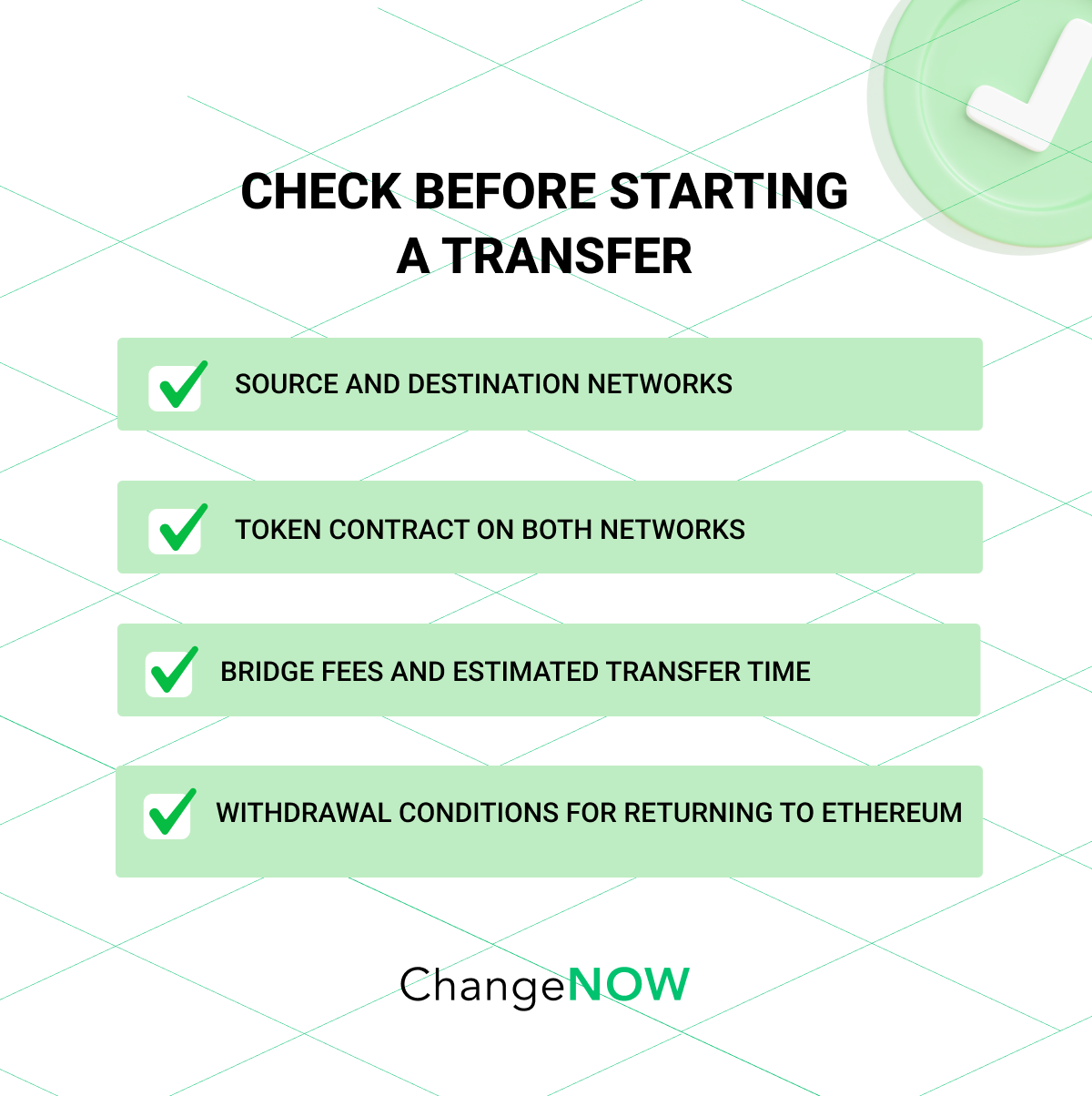 Transfer Checklist by ChangeNOW
 Source: Robinhood Wallet