


DePIN crypto projects pay people in tokens for running real-world infrastructure: GPUs, storage drives, wireless hotspots, spare bandwidth.
Dozens of them exist, but only a handful have a working product and a token that has enough liquidity to be traded or swapped.
We picked 12 by a fixed set of criteria and listed the network each token lives on, since that decides which wallet you need. All 12 tokens are available on ChangeNOW, so you can swap any of them effortlessly.
Disclaimer: The information provided in this article is for educational and informational purposes only and should not be construed as financial or investment advice. The list is based on publicly available data and a fixed set of criteria at the time of writing, not a personal endorsement of any single platform. Platform features and policies are subject to change. Readers should conduct their own research and verify details on the official platforms before making any decisions.
Key Takeaways
- Bittensor, Render and Filecoin lead the DePIN category by market cap.
- Compute and AI networks: Render, Akash, io.net, Aethir, Bittensor, Theta, sell something people already buy: GPU time.
- Render, Helium, io.net and Grass run on Solana. Akash voted to join them on November 2, 2026.
- Match your wallet to the token's network before you send anything. It takes ten seconds and saves a support ticket.
How We Choose DePIN Crypto Projects
Every project on the list passed the same filters:
- The network is live and maintained at the time of writing.
- Operators contribute a real resource like compute, storage, bandwidth, coverage, and get rewarded in tokens.
- The token trades with enough volume to swap without difficulties.
- The project has a documented 2026 update from official channels or reliable media.
- Search demand and presence in the top results for DePIN lists.
The list is not a ranking - the projects are grouped by category.
DePIN Crypto Projects at a Glance
This DePIN crypto projects list shows what each network does and where its token lives.
| Project | Ticker | What It Does | Network |
|---|---|---|---|
| Render | RENDER | GPU rendering and AI compute | Solana |
| Akash | AKT | Open compute marketplace | Cosmos (moving to Solana) |
| Bittensor | TAO | Decentralized AI subnets | Own chain |
| io.net | IO | GPU clusters for AI | Solana |
| Aethir | ATH | GPU cloud for AI and gaming | Ethereum, Arbitrum |
| Theta | THETA | Video delivery and edge compute | Own chain |
| Filecoin | FIL | Decentralized storage | Own chain |
| Arweave | AR | Permanent storage | Own chain |
| Helium | HNT | Wireless networks | Solana |
| Grass | GRASS | Bandwidth and AI data | Solana |
| IoTeX | IOTX | Device networks | Own chain |
| ICP | ICP | Decentralized cloud hosting | Own chain |
What Are DePIN Crypto Projects?
DePIN stands for decentralized physical infrastructure networks.
Put simply, you contribute a piece of something useful like equipment, compute, storage or spare bandwidth, and get paid in the project’s native tokens.
Instead of one company buying every server or building every tower, thousands of independent operators install hardware and earn tokens as the network is used. And customers pay for the service, whether that’s GPU time, storage space or mobile data.
Some networks work like marketplaces, where operators bid for jobs. Others coordinate a fleet of devices so it behaves like one provider.
Either way, a DePIN project turns a physical resource into something you can earn, spend or swap on a blockchain.
How Do DePIN Tokens Work?
A DePIN token usually does three jobs. It pays for the service, rewards the operators and gives holders a vote on network rules. How those rewards are calculated is where projects differ.
- Usage-based rewards pay operators for traffic or jobs that customers actually bought. Helium switched to this model in 2026 and now pays Mobile deployers by data carried.
- Burn-and-mint is the model behind Render and Akash. Customers pay fees, the protocol burns tokens worth that fee and mints new ones for operators. When demand is high, more tokens burn than get minted. When it is low, well, the supply grows anyway.
- Fixed supply with halvings works like Bitcoin. Bittensor caps TAO at 21 million and cuts daily emissions on a schedule.
Before you swap any DePIN token, check its tokenomics: how many new tokens enter circulation, who receives them and whether paying customers cover the bill.
Best DePIN Compute Platforms in 2026
Compute is where DePIN has the clearest customer: anyone training or running an AI model needs GPUs, and GPUs are painfully expensive right now.
These are the best DePIN AI projects and best DePIN compute platforms in 2026 by search demand and live products.
Render
Best for creators and AI teams that need GPU power on demand.
Source: Render Network homepage
Render links people who need GPU power with node operators who rent it out. It started with 3D rendering for studios and artists and later added AI workloads. RENDER moved from Ethereum to Solana.
Key features
- Burn-and-mint model, so job fees burn tokens and operators earn newly minted ones
- Rendering and AI compute in one network
Drawbacks
- Competes on price with big cloud providers and other GPU networks
Akash
Best for developers who want cloud compute from an open marketplace.

Source: Akash.network homepage
Akash runs a reverse auction: providers bid to host your workload, so competition sets the price.
AKT pays for leases and secures the network. On November 2, 2026, stakers approved Proposal 346it moves AKT to Solana as a 1:1 SPL token.
Key Features
- Reverse-auction pricing for GPU and CPU deployments
- Burn-and-mint token model
Drawbacks
- The migration is phased. The token moves first, the marketplace needs a separate vote, and staked AKT has to be unstaked (21-day unbonding) before it crosses the one-way portal
io.net
Best for AI teams that want a GPU cluster built from scattered hardware.
Source: io.net homepage
io.net pools GPUs from data centers, crypto miners and individuals into clusters for machine learning jobs. It runs on Solana, and the IO token rewards suppliers.
Key features
- On-demand clusters assembled from many sources
- Solana-based payouts
Drawbacks
- The IO token launched in 2024, so its track record is shorter than Render's
Aethir
Best for enterprise-grade GPU capacity for AI and cloud gaming.
Source: Aethir.com homepage
Aethir rents GPU capacity, mostly from data center operators, to AI and cloud gaming clients. ATH is an ERC-20 token available on Ethereum and Arbitrum.
Key features
- Data center hardware aimed at business customers
- Token on EVM networks, so a standard Ethereum wallet works
Drawbacks
- Most hardware comes from large operators, so home GPU owners have less room to join
Bittensor
Best for exposure to decentralized AI through a single token.
Source: Bittensor.com homepage
Bittensor is a network of subnets, and each subnet pays contributors for a specific AI task, from inference to model training. TAO is capped at 21 million. The first halving in 2025 cut daily emissions from 7,200 to 3,600 TAO, and in the same year Grayscale filed to convert its Bittensor Trust into a spot ETF.
Key features
- Subnet emissions follow staking flows since the dTAO upgrade
- Fixed supply with a halving schedule
Drawbacks
- Hard to evaluate: subnet quality varies a lot, and the network-wide picture hides it
Theta
Best for video streaming and edge compute.
Source: Theta homepage
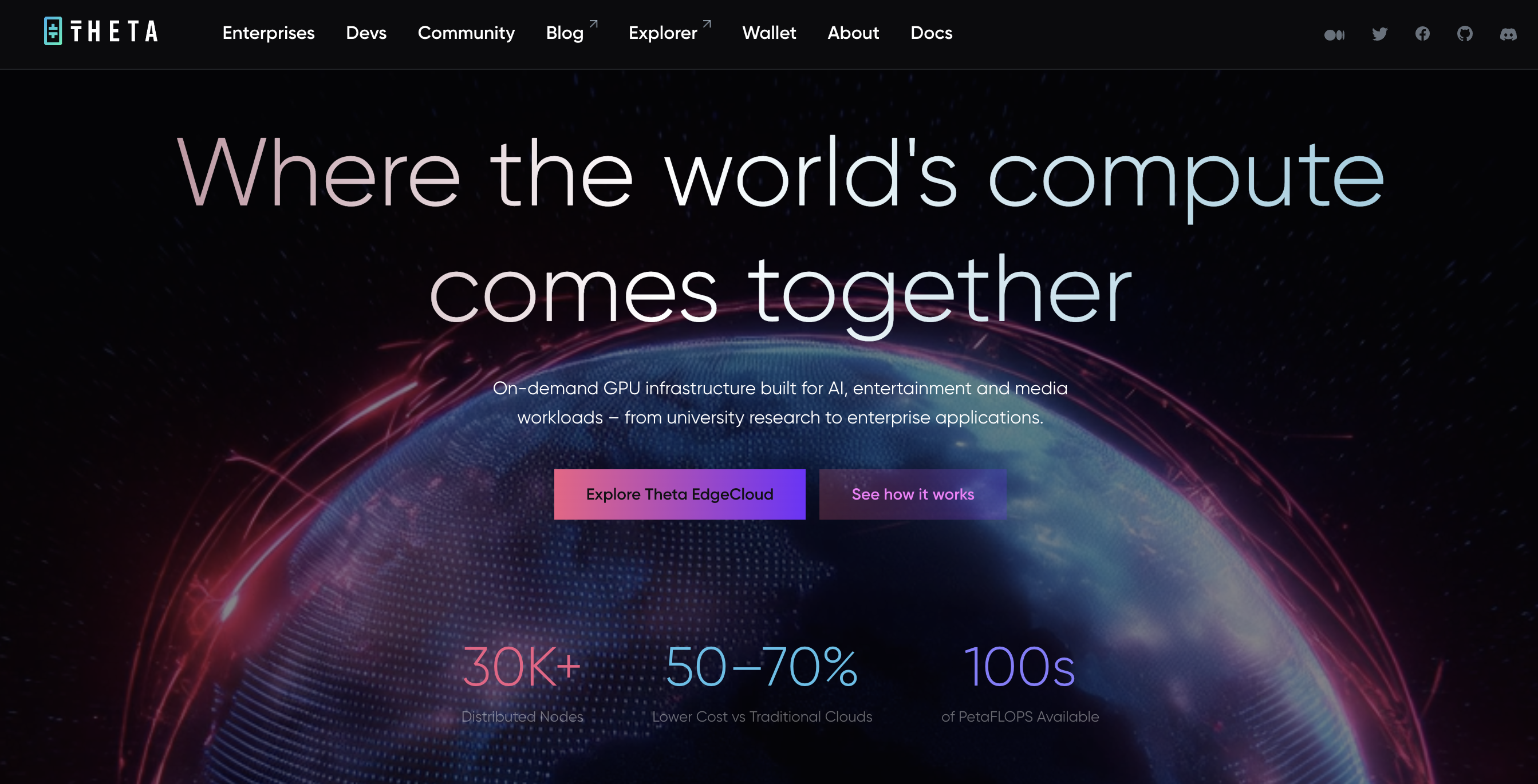
Theta began as decentralized video delivery, where viewers share bandwidth, and later added EdgeCloud for GPU compute. It runs two tokens: THETA for governance and staking, TFUEL for fees and rewards. Both available on ChangeNOW.
Key features
- Video delivery network with GPU compute added on top
- Own blockchain
Drawbacks
- The two-token setup confuses newcomers
DePIN Projects for Storage, Wireless, and Data
DePIN crowdsources physical hardware, with the mechanics depending on the specific sector.
In storage, you rent spare capacity from independent operators. Networks aggregate unused servers to offer prices up to 80% below traditional providers, making platforms like Filecoin roughly 78% cheaper than AWS.
Wireless networks like Helium operate without centralized towers. Businesses host local hotspots and earn tokens based on the data traffic they handle for mobile carriers. Rewards are tied strictly to active usage rather than basic coverage.
Data projects pay contributors directly for consumed inputs like bandwidth and mapping.
The six cards below outline each network's function, blockchain, and token type (native or wrapped).
Filecoin
Best for storing large datasets with on-chain proof.
Source: Filecoin homepage
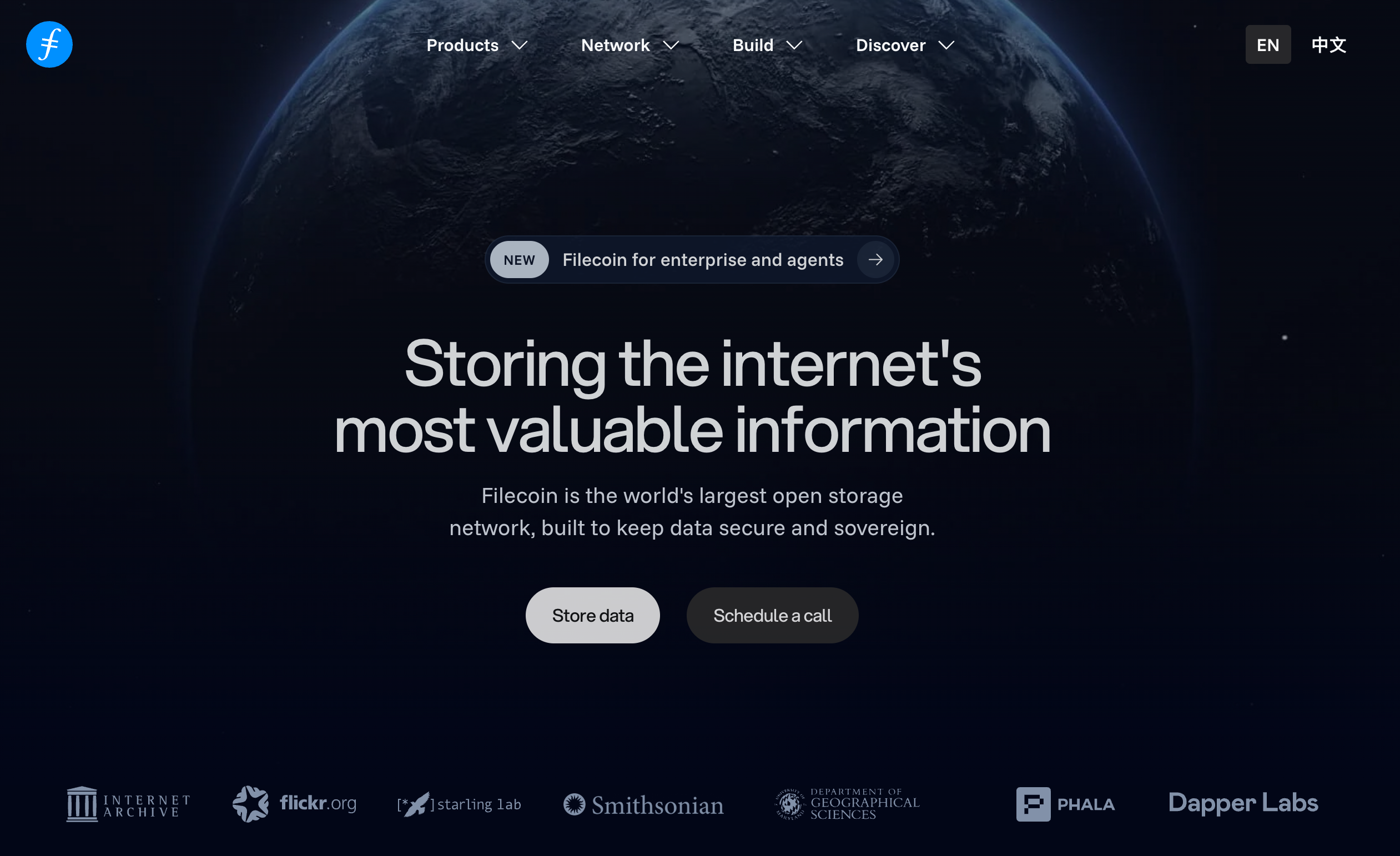
Filecoin pays storage providers in FIL for holding data and proving they still have it.
In March, 2026 it launched Onchain Cloud on mainnet: programmable storage with on-chain payments and two-copy replication.
Key features
- Cryptographic storage proofs
- Smart contracts through the Filecoin Virtual Machine
Drawbacks
- Onchain Cloud held about 49 TiB at launch, tiny next to the network's total capacity
Arweave
Best for data that should stay online permanently.
Source: Arweave homepage
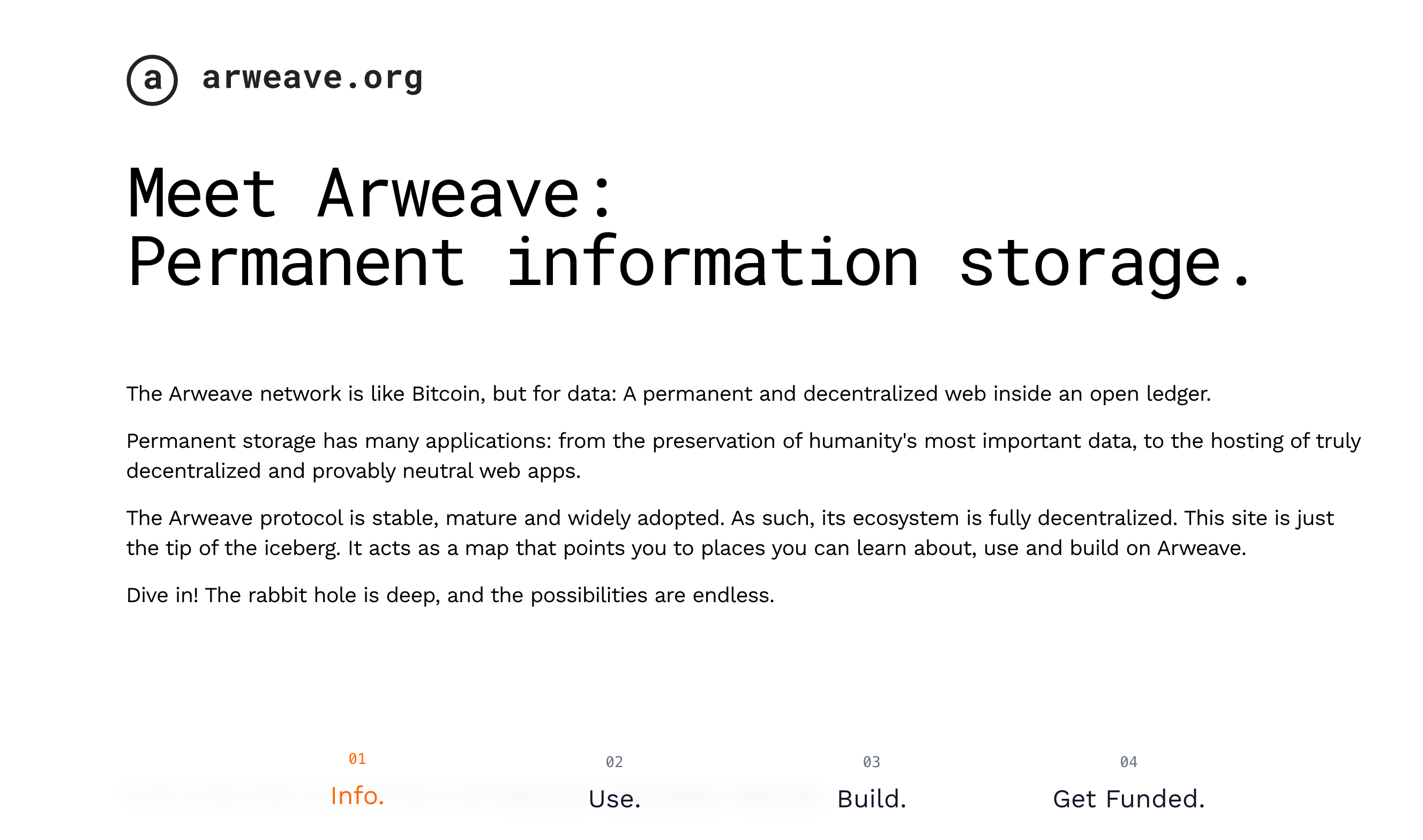
Arweave charges a single upfront fee, and an endowment pays for storage over time. AR is the token behind it. Archives, NFT media and web apps are the usual customers.
Key features
- Pay once, store permanently
- Own chain and native token
Drawbacks
- The model assumes storage costs keep falling
Helium
Best for people interested in wireless networks run by hotspot owners.
Source: Helium homepage
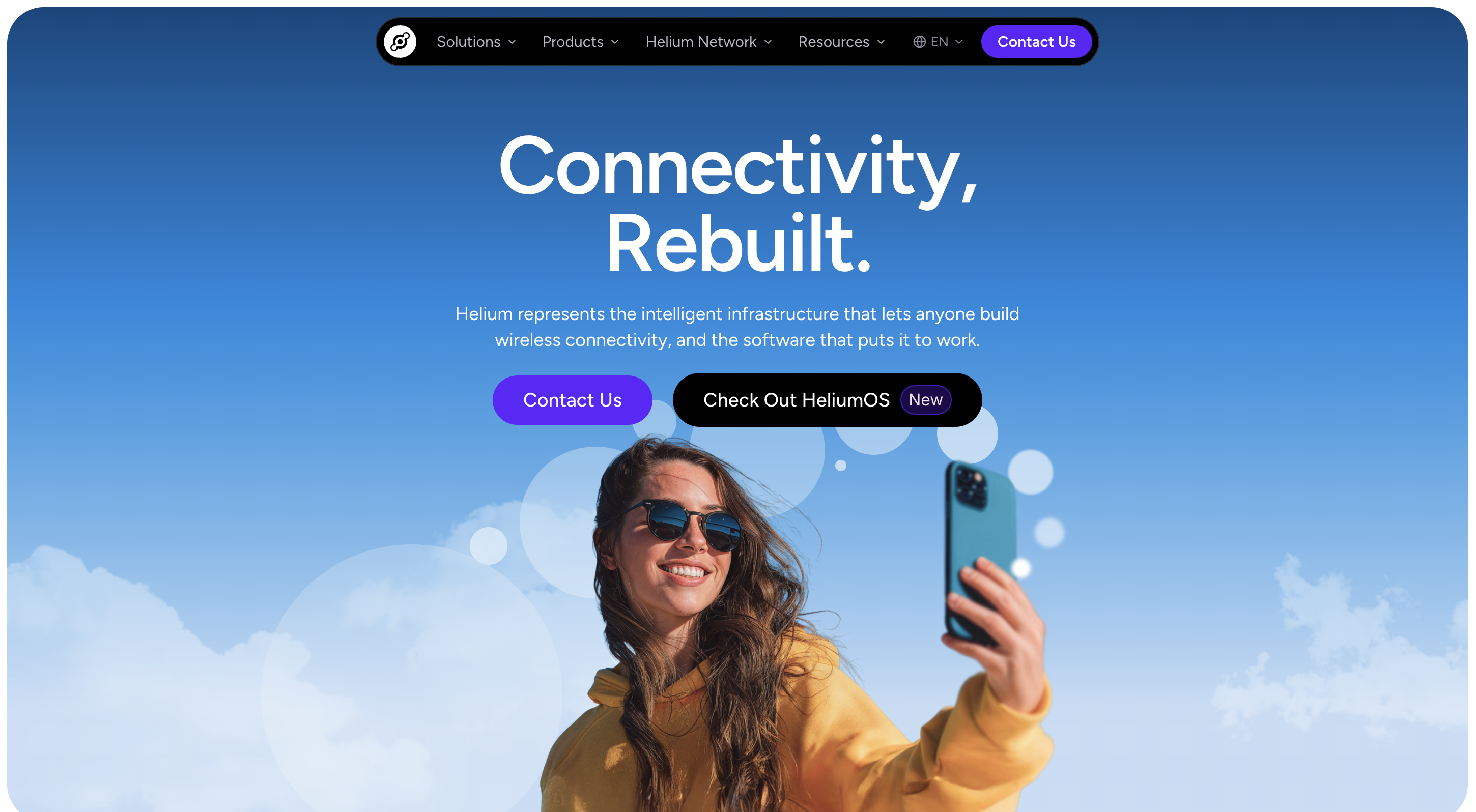
Helium runs IoT and Mobile wireless networks on Solana, with HNT as the main token.
In July 2026 the community passed HIP-149: Proof-of-Coverage was retired on both networks.
Mobile deployers are paid based on data carried, and about 141 million HNT can be minted over 36 months for operations and growth, overseen by a new Advisory Council.
Key features
- Hotspots for IoT and mobile coverage
- Rewards tied to real data use
Drawbacks
- Old hotspot earnings calculators no longer apply
- The supplemental mint adds supply
Grass
Best for earning from unused internet bandwidth without buying hardware.

Source: Grass homepage
Grass users run a node in an app or browser extension and share bandwidth. The network sells it to companies that collect web data for AI training. GRASS runs on Solana. The Stage 2 rewards claim opened on July 22, 2026 and closes on January 22, 2027 for activity between October 14, 2024 and June 8, 2026.
Key features
- No hardware needed
- Points-based contribution tracking
Drawbacks
- Lookalike claim sites exist, so use only official Grass channels
IoTeX
Best for developers connecting physical devices to blockchain apps.
Source: Iotex homepage
IoTeX is its own layer 1 chain built around devices and DePIN projects, with ioID for device identity. IOTX pays fees and secures the network.
Key features
- Device identity and data tooling
- Native chain with EVM support
Drawbacks
- It is a platform for other DePIN projects, so token demand depends on what gets built on top
ICP
Best for hosting full apps on-chain instead of only data.

Source: Internet Computer homepage
The Internet Computer runs apps in smart contracts called canisters, hosted on machines run by independent node providers. ICP is converted into cycles, which pay for compute and get burned.
Key features
- Full-stack hosting, frontend included
- Cycles model burns tokens as apps run
Drawbacks
- Node providers are approved by governance rather than open to anyone, so tracker lists include it while some purists do not
How to Choose a DePIN Project Based on Your Setup and Reward Goals
If you want to take part in a DePIN project and receive token rewards, start with what you already own: a laptop, a GPU, a hotspot or only a wallet.
- No hardware, minimal effort. Grass runs in an app or browser extension and shares your unused bandwidth. If you would rather stake than run anything, Bittensor (TAO) lets you stake into subnets. Akash (AKT) supports staking too, but check its Solana migration steps first.
- You own hardware. A GPU owner can look at Render or io.net, which take individual suppliers. Akash and Aethir lean toward servers and data centers. Helium needs a hotspot and a good location, and its reward rules changed in July 2026, so read the current formula before buying anything. Filecoin providers need serious storage and FIL collateral, which makes it not an ideal weekend project.
- Before you commit. Rewards are not guaranteed and can end up below your costs. Hardware, electricity, token price and reward rules all change the outcome, so run the numbers first and risk only money you can afford to lose.
How to Swap DePIN Tokens on ChangeNOW
You can swap DePIN tokens on ChangeNOW in four steps using the swap form.
- Open the swap form, choose the coin you send in the You Send field and enter the amount.
- Choose the DePIN token in the You Get field and check the network tag under its ticker.
- Enter the payout address for the same network in the Recipient field.
- Check that the Terms box is ticked, click Continue and send the deposit to the address that ChangeNOW shows.


