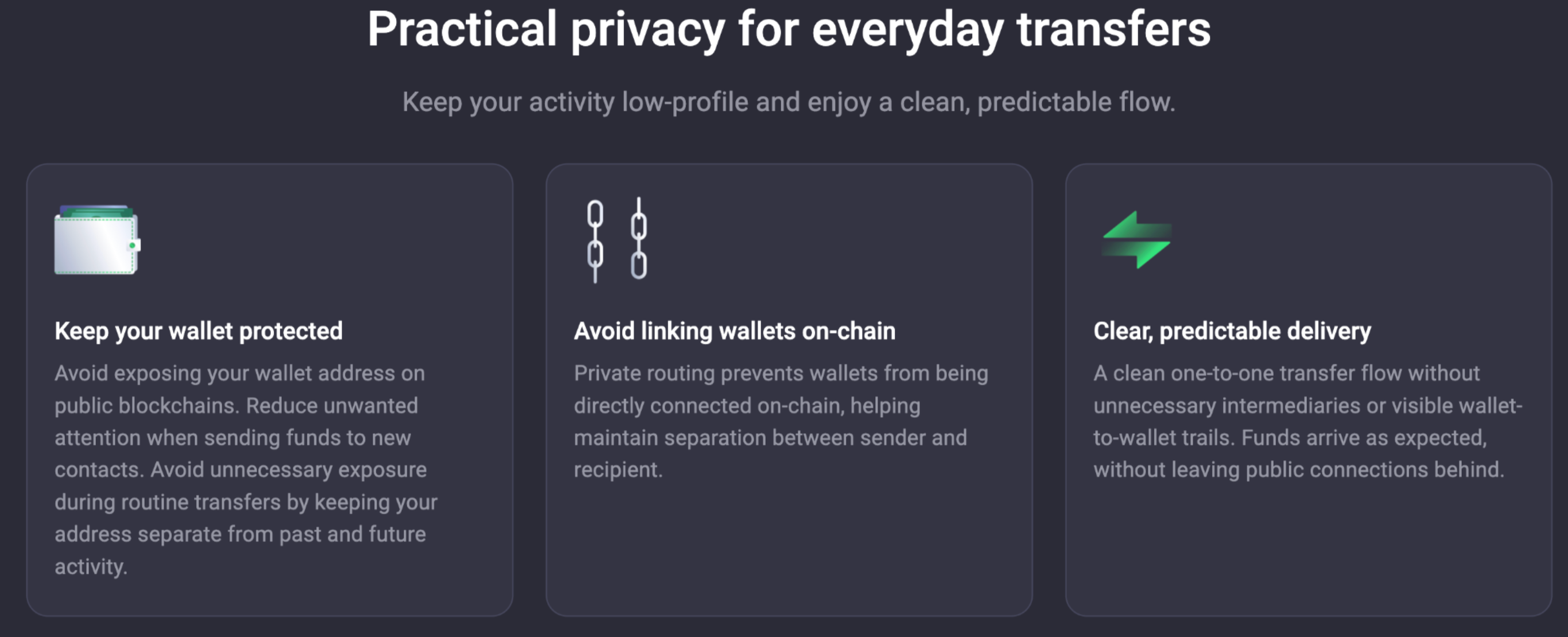
A public wallet can expose more than a balance. Transfers, timestamps, token holdings, NFTs, contract calls, and repeated wallet behavior all leave clues.
How much of your wallet should be readable by someone you will never meet?
Zcash brought privacy coins back onto trader screens in May 2026 after Multicoin Capital disclosed a large position built since February.
The move pulled a colder question back into view: how much of a wallet trail should the market be able to read?
Private crypto splits into several lanes. Monero hides sender, receiver, and amount by default. Zcash gives users transparent and shielded transfers. Dash keeps its privacy angle closer to payments.
This article compares the private crypto coins to watch in 2026 and shows where the trade can break through liquidity, exchange access, wallets, withdrawals, and cash-out routes.
Key Takeaways
ZEC’s May 2026 rally put privacy coins back on trader screens. The trade still depends on liquidity, spreads, deposits, withdrawals, and exits.
Monero, Zcash, and Dash sit in different lanes. XMR gives default privacy, ZEC gives optional shielded transfers, and DASH works closer to payment privacy.
Privacy coins reduce public on-chain visibility. They do not hide users from KYC records, fake wallets, malware, reused addresses, screenshots, invoices, or sloppy custody habits.
A strong privacy model can still come with a weak route. Thin books, strict withdrawals, unsupported wallets, or hard cash-out paths can break the trade.
Disclaimer: This article is for educational purposes only. Privacy coin rules, exchange support, wallet access, and liquidity can change by country, platform, and route. Always check local rules and asset availability before making a transaction.
Privacy Coins Compared By Use Case
Start with the route. Private cash, shielded transfers, payment privacy, encrypted apps, and confidential compute all sit under the “privacy coins” label, but they solve different problems. Traders check liquidity, deposits, withdrawals, spreads, and exits. Builders look at smart contracts, app data, and real user activity.
CoinMarketCap’s privacy category lists Monero, Zcash, Oasis Network, and Secret among top privacy assets by market capitalization and warns that privacy coins use different designs. The category helps users find tickers, but it does not show route quality: venue rules, wallet support, spreads, withdrawals, or cash-out access.
Zcash For Shielded Transfers
Zcash fits users who want privacy controls.
Frequently Asked Questions
No, privacy coins do not always have higher fees. The real cost depends on the coin, network load, wallet, exchange route, spread, and withdrawal rules.
Sometimes. Speed depends on the network, wallet, exchange processing, confirmations, and transaction type. A shielded or privacy-focused transfer may take longer if the platform adds extra checks.
Yes, but wallet choice matters. Use only official or well-known wallets, check asset support, and avoid random wallet apps from ads or search results.
A Monero view key lets someone view incoming transactions without giving them control over the wallet. It can help with audits, accounting, or proof of payment.
A Zcash viewing key lets selected transaction details be shared without exposing full wallet control. It is useful when a user needs privacy but also wants optional disclosure.
Yes. Privacy does not remove tax obligations. Users may still need records for buys, sells, swaps, payments, deposits, withdrawals, and gains.
Usually not as easily as public-chain assets. Many bridges focus on major public networks and stablecoins, so privacy coin routes can be limited or unavailable.
Some wallets support transparent ZEC addresses but not shielded ones. Check wallet documentation before sending funds, especially if privacy is the reason for using ZEC.
ROSE connects to app-level data privacy, private computation, and infrastructure use cases rather than direct private payments.
The tradeoff: it trades more like privacy infrastructure than private cash, so users need to check liquidity, route depth, and whether the market still cares about that narrative.
Beam and Grin still belong to the older Mimblewimble privacy niche.
They matter for users who want to understand privacy coin history, but they no longer sit near the center of the 2026 trade.
The tradeoff: thinner liquidity, weaker attention, fewer exchange routes, and harder exits compared with XMR, ZEC, DASH, SCRT, and ROSE.
Verdict: Pick the privacy asset by route. XMR fits default private cash, ZEC fits shielded transfers, DASH fits payment privacy, and SCRT or ROSE fit privacy infrastructure. Before moving size, check liquidity, wallet support, venue rules, deposits, withdrawals, and the exit path.
What Are Privacy Coins?
Privacy coins hide parts of a transaction that public chains normally show.
On a public chain, one payment may expose the sender address, receiver address, amount, timestamp, wallet history, token flow, contract calls, and later movement.
Privacy-focused coins break parts of that trail. The payment path stops looking like one clean line for a block explorer, analytics tool, exchange desk, or wallet watcher.
A reused wallet leaks more with every transfer. One address may show when funds arrived, where they moved next, which tokens sit nearby, how often the wallet touches exchanges, and when the holder may be preparing an exit.
For traders, the trail can expose positioning before the move is finished. For businesses, it can expose treasury flows. For regular users, one wallet may turn into a public financial profile.
One reused address can leak more than the sender planned to show.
Monero, Zcash, and Dash use different privacy setups.
Practical Takeaway: Monero hides sender, receiver, and amount by default. Zcash gives users transparent and shielded transfers. Dash keeps its privacy angle closer to payments. Secret Network and Oasis Network sit in another lane: private app data, computation, and data access rather than private cash.
Chainalysis describes privacy coins as anonymity-enhanced cryptocurrencies. TRM Labs defines privacy coins through their ability to obscure transaction details.
The route matters more than the label. Before touching size, check wallet support, address type, liquidity, spread, withdrawals, and the exit path. Strong privacy still fails as a trade when the book is thin or the cash-out route disappears.
Why Privacy Coins Are Back On Trader Watchlists
Zcash pushed privacy coins back into active trading in May 2026. Reports around Multicoin Capital changed the tone of the move. The fund had built a large ZEC position since February, and Tushar Jain tied the thesis to Zcash’s cypherpunk roots.
TradingView’s NewsBTC feed reported a new year-to-date high near $549 after a 66% six-day rally. ForkLog noted ZEC moving above $585 for the first time since November 2025.
The price move mattered, but the larger trade was about visibility. Public wallets can show flows, deposits, exits, and repeated behavior before a holder finishes the route. This move put privacy coins back into a trader’s checklist: liquidity, spreads, listings, withdrawals, address type, and cash-out paths.
ZEC also brought the old Monero vs Zcash debate back into the article.
Monero still has the stronger default-privacy case. Zcash had the stronger May 2026 market story because ZEC combined shielded transaction tech, selective disclosure, and renewed fund attention.
Those are different calls. ZEC can lead the market narrative without beating Monero on default privacy. Zcash can work for users who want optional shielded transfers. The route still needs a check before funds move: address type, quote, liquidity, and destination wallet support.
Readers who track market narratives beyond privacy coins can also check ChangeNOW’s Prediction Markets page for live market-based topics and sentiment.
Public Blockchains vs Privacy Coins
Public blockchains make crypto easy to verify and easy to watch.
Bitcoin, Ethereum, Solana, TON, and other public networks let anyone check balances, transfers, timing, contract calls, token holdings, and exchange movements.
That visibility helps markets and traders can watch whale flows, exchange wallets, contract activity, deposits, and settlement.
The same visibility can expose too much when the wallet belongs to a payroll team, merchant, donor, founder, OTC desk, or regular user.
TON works as a useful public-chain example. It supports wallets, jettons, NFTs, smart contracts, and Telegram-linked app flows, but activity still remains readable through explorers.
TON Docs describe explorers as tools that show account balances, recent transactions, jettons, NFTs, contract code, and contract state.
Privacy coins take the other side of that trade. They make it harder to connect sender, receiver, amount, timing, and past wallet activity into one readable trail.
Area
Public Blockchains
Privacy Coins
What outsiders can read
Balances, transfers, timing, token holdings, and address history often stay visible
Transfer data is hidden or harder to connect
Market upside
Easier settlement checks, analytics, exchange tracking, and visible liquidity flows
Stronger wallet privacy and less public traceability
User downside
One wallet can become a public financial profile
Fewer exchange routes, stricter checks, and more deposit friction
More checks before execution: liquidity, wallet support, withdrawals, and venue risk
Best fit
Trading, DeFi, analytics, and payments that need easy confirmation
Private payments, sensitive transfers, donor flows, payroll, and users who do not want public wallet trails
Public-chain assets usually give traders more venues, clearer deposits, tighter spreads, and cleaner exits.
Privacy coins protect more of the wallet trail, but the route can be harder: exchange support, wallet compatibility, liquidity, withdrawals, and local rules all matter.
For traders, privacy can be useful. For execution, it can be annoying. Such tension is the whole story: public chains make funds easier to track; privacy coins make funds harder to stalk.
Crypto Privacy vs Real Anonymity
Crypto privacy often breaks on a simple mistake: no name on-chain does not mean no identity trail.
Bitcoin, Ethereum, Solana, TON, and other public chains usually show addresses, not legal names. The activity around those addresses still stays visible.
A public wallet can show balances, transfers, token holdings, NFTs, DeFi actions, counterparties, timestamps, and repeated behavior.
The link to a real person can appear off-chain. A KYC withdrawal, reused address, invoice, screenshot, public payment request, fake wallet, malware, or leaked database can close the gap.
Large transfers attract tracking too. Once an address becomes interesting, every next move is easier to watch.
Privacy coins make on-chain tracing harder. They cannot erase every off-chain record around the user.
Critical Warning: No crypto should be treated as perfectly untraceable. Privacy coins reduce visible transaction data, but KYC records, reused addresses, wallet mistakes, malware, invoices, screenshots, and withdrawal records can still expose the person behind a wallet.
Risks And Pitfalls After Buying Privacy Coin
Buying is the easiest step.
The route can hurt after the chart already looks good. An exchange may block withdrawals and a receiving wallet may reject the address type.
ZEC has its own trap. A user may send through a transparent route while expecting shielded privacy.
Liquidity can disappear during a sharp move. Spreads widen, depth thins, and the exit can get worse than the entry.
Privacy assets are sensitive to listings. One delisting can drain liquidity, push traders into fewer venues, and widen spreads.
Price can still move while depth disappears from the book. For privacy coins, exchange access belongs in the trade plan: listing status, deposits, withdrawals, and exit venue.
Wallet setup can break the trade too. Privacy coins often need more attention than a simple public-chain transfer. Address type, wallet source, transaction mode, deposit rules, and final quote all matter.
One wrong address type or unsupported wallet can leave funds stuck, rejected, or expensive to exit.
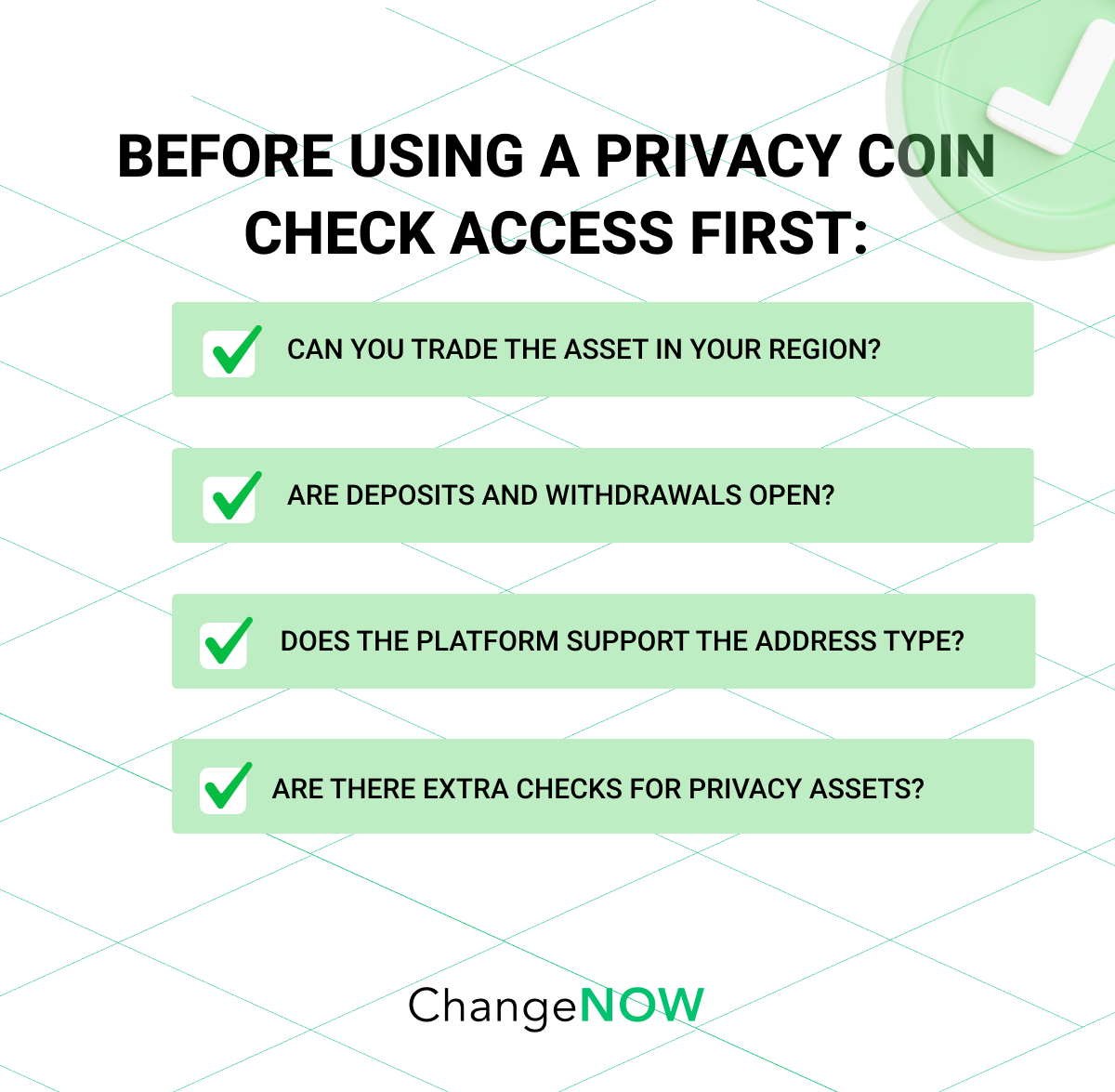
Before sending funds, check the route like an order book:
Confirm asset support on the swap pair.
Match the receiving wallet with the correct address format.
For ZEC, choose the right transaction mode: transparent or shielded.
Review the final quote, spread, network fee, and estimated arrival time.
Check deposit rules on the destination platform.
Map the exit before the entry.
Download wallet software only from official sources.
Send a small test amount when the route, wallet, or address type is new.
How Privacy Coins Cut The Transaction Trail
Public transfers expose several data points: spender, receiver, amount, timing, and later movement. Privacy coins hide or blur different parts of that trail.
Monero hides sender, receiver, and amount by default. Zcash hides those details only in shielded transfers. Dash uses payment mixing.
For traders, the difference affects route choice, wallet setup, and exit risk.
Privacy Method
Main Coin Example
What It Hides Or Blurs
Where The Trail Can Return
Ring signatures
Monero
The spender
Exchange records or off-chain data can still add context
Stealth addresses
Monero
The receiver
Invoices, usernames, or reused identities can create links
RingCT
Monero
The amount
OTC chats, accounting files, exchange deposits, or screenshots can reveal size
Shielded transactions
Zcash
Sender, receiver, and amount
Transparent transfers stay readable
CoinJoin-style privacy
Dash
Input trail
The cover is lighter than Monero’s default privacy model
Monero’s official site says sender, receiver, and amount are hidden in every transaction through Stealth Addresses, Ring Signatures, and RingCT.
XMR gives default privacy. Users do not need to choose a private mode before each transfer.
Zcash documentation says transparent transactions work like Bitcoin, where sender, receiver, and value are public, while shielded z-to-z transactions encrypt those details.
ZEC privacy depends on the address route. Shielded transfers protect more data. Transparent transfers leave the trail readable.
DASH gives payment-level privacy cover. It does not match Monero’s default-hidden transaction model.
Verdict: Check what the network hides before using XMR, ZEC, DASH, or any privacy asset. Exchanges, invoices, reused addresses, transparent transfers, and withdrawal records can rebuild parts of the trail.
For a closer XMR and DASH comparison, read ChangeNOW’s Dash vs Monero breakdown.
Privacy Coin Regulation And Exchange Access
Privacy coins are legal in some markets and restricted in others. The first problem usually appears at the exchange level: listings, deposits, withdrawals, custody, and fiat exits.
Rules differ by country, platform, and asset. In many markets, ownership is not the main friction point. The pressure usually hits access first.
Privacy coins are allowed in some markets and restricted in others.
MiCA Article 76 says trading platform rules must prevent admission of crypto-assets with an inbuilt anonymisation function unless the crypto-asset service provider operating the platform can identify holders and transaction history.
Chainalysis has noted that privacy coins are legal in the U.S., but Japan, South Korea, and Australia have restricted or delisted privacy coins on exchanges.
Legal status and exchange access are not the same thing. A coin can remain usable on-chain while regulated platforms make the route harder.
Swapping Privacy Coins On ChangeNOW
After the coin choice comes the route choice. Privacy coins punish lazy execution: the wrong address type, unsupported deposit, thin route, or bad exit can matter more than the ticker itself.
ChangeNOW works as a non-custodial exchange route for supported assets, with the user choosing the receiving wallet. That can help users avoid parking funds on a centralized venue, but it does not turn the swap into an anonymity tool.
Before sending funds, check:
Confirm asset support on the swap pair.
Match the receiving wallet with the correct address format before copying anything.
For ZEC, choose the right transaction mode: transparent or shielded.
Review the final quote, spread, network fee, and estimated arrival time.
Check deposit rules on the destination platform.
Map the exit before the entry: where can you sell, swap, or withdraw later?
Download wallet software only from official sources.
Send a small test amount when the route, wallet, or address type is new to you.
The privacy level still depends on the asset, address type, wallet setup, and transaction mode. For privacy coin swaps, the route check comes before the transaction.
Ethereum’s network activity is hitting ATHs, yet its token price recently collapsed to a multi-year low. Is this a temporary market shakeout ahead of the next major upgrade, or is ETH's economic model fundamentally broken?
Learn XAUT price prediction for 2026-2035. Find out everything about Tether Gold. Discover its price, market data, how it works, and where to buy it safely.