This content does not promote services for users located in the United Kingdom. Jurisdiction-specific requirements should always be evaluated independently before using any platform.
Quick Verification Checklist Before Using a Crypto Service
Before sending funds, run a quick check. It takes less than a minute and can prevent irreversible loss.
Step
What to check
Where to check
Why it matters
Risk signal
1
Domain name
Browser address bar
Clone sites use similar URLs
Slightly different spelling, extra symbols
2
HTTPS + certificate
Browser (lock icon)
Basic site authenticity
No HTTPS or warnings
3
Reviews pattern
Google, Trustpilot, Reddit
Detect operational issues
Repeated complaints (withdrawals, delays)
4
TXID generation
Platform interface
Proof of execution
No TXID after submission
5
Blockchain verification
Etherscan, BscScan
Independent confirmation
Transaction not found on-chain
6
Fees
Before confirming
Transparency of costs
Extra fees after sending funds
7
Support behavior
Chat or email
Operational maturity
Vague or generic replies
8
Small test transaction
Your wallet
Real execution test
Works once, fails later
9
Token approvals
Wallet (MetaMask, etc.)
Hidden access risk
Unlimited approvals
10
Urgency / pressure
Interface or support
Scam pattern
“Send now or lose funds”
If you cannot verify execution outside the service, you are not using crypto — you are trusting an interface.
OK vs. NOT OK Examples
Domain
FAQ
Search for the platform’s reputation, look for repeated complaints, and check how it explains its transaction process. Then send a small amount, get a TXID, and verify it on a blockchain explorer. If the transaction cannot be found on-chain, you are not verifying anything.
A TXID is a unique identifier of a blockchain transaction. It allows you to confirm that a transfer actually happened, check its status, and verify the destination. Without it, you are relying only on the platform’s interface.
Copy the transaction hash and search for it in a blockchain explorer like Etherscan or BscScan. The explorer shows whether the transaction exists, its status, and the addresses involved. If it does not appear, the transaction was not executed.
Yes. Platforms can display progress and confirmations without broadcasting anything to the blockchain. The only reliable way to detect this is to verify the transaction on-chain.
No. Some platforms process small transactions correctly to build trust and fail on larger ones. A test transaction is only a first check, not proof of reliability.
Verify transactions on-chain, check platform reputation, avoid urgency, and do not approve permissions you do not understand. Most losses happen when verification is skipped.
Custodial platforms hold your funds during processing, while non-custodial platforms execute transactions directly on-chain. Each model has different risks, so understanding how funds are handled is important.
Blockchain data is public and cannot be changed after confirmation. Verifying transactions on-chain allows you to confirm execution independently instead of trusting the platform.
Check the TXID on a blockchain explorer. If the transaction does not exist, it was not broadcast. Be cautious with requests for additional fees, as legitimate platforms do not require extra payments to release funds.
OK: You open a bookmarked site: https://changenow.io NOT OK: You click a link and land on: https://changen0w.io → one character difference = different destination
TXID
OK: You send funds → TXID appears within seconds → visible on explorer NOT OK: Status shows “processing” for minutes → no TXID → transaction was never broadcast
Blockchain verification
OK: TXID is visible on Etherscan or BscScan
Status: confirmed
Addresses match NOT OK: TXID does not exist on any explorer → nothing happened on-chain
Fees
OK: All fees are shown before confirming NOT OK: “Send extra funds to release your transaction” → this is a scam pattern
Support
OK: Support provides TXID, explains delays, gives details NOT OK: “Please wait” without explanation → no real execution behind the interface
Test transaction
OK: Small amount works and is verifiable on-chain NOT OK: Small amount works, larger amount gets stuck → trust was artificially created
Token approvals
OK: Approve only the required amount NOT OK: Approve unlimited access to your tokens → risk of wallet drain later
Urgency
OK: You have time to verify everything NOT OK: “Complete within 5 minutes or funds will be lost” → pressure is used to skip verification
When to Stop
If any of the following happens, stop immediately:
No TXID after submission
Transaction not found on-chain
Request for additional fees
Domain mismatch
Support avoids specifics
Do not send more funds. Do not try to “fix” the transaction.
Critical rule: If a transaction cannot be verified on-chain, it should not be trusted.
Why Verification Matters in Crypto
Most crypto losses don’t start with a hack. They start with a normal-looking interface. The interface looks clean, the rate is attractive, and the first swap often works. That’s what builds trust.
That first success is what makes people skip verification. And that’s the real trap.
In crypto, there’s no rollback button. Once funds leave your wallet and the transaction is confirmed, support can’t reverse it, banks can’t dispute it, and you can’t “cancel” a mistake.
That’s why choosing a platform isn’t a separate decision. It’s part of the transaction.
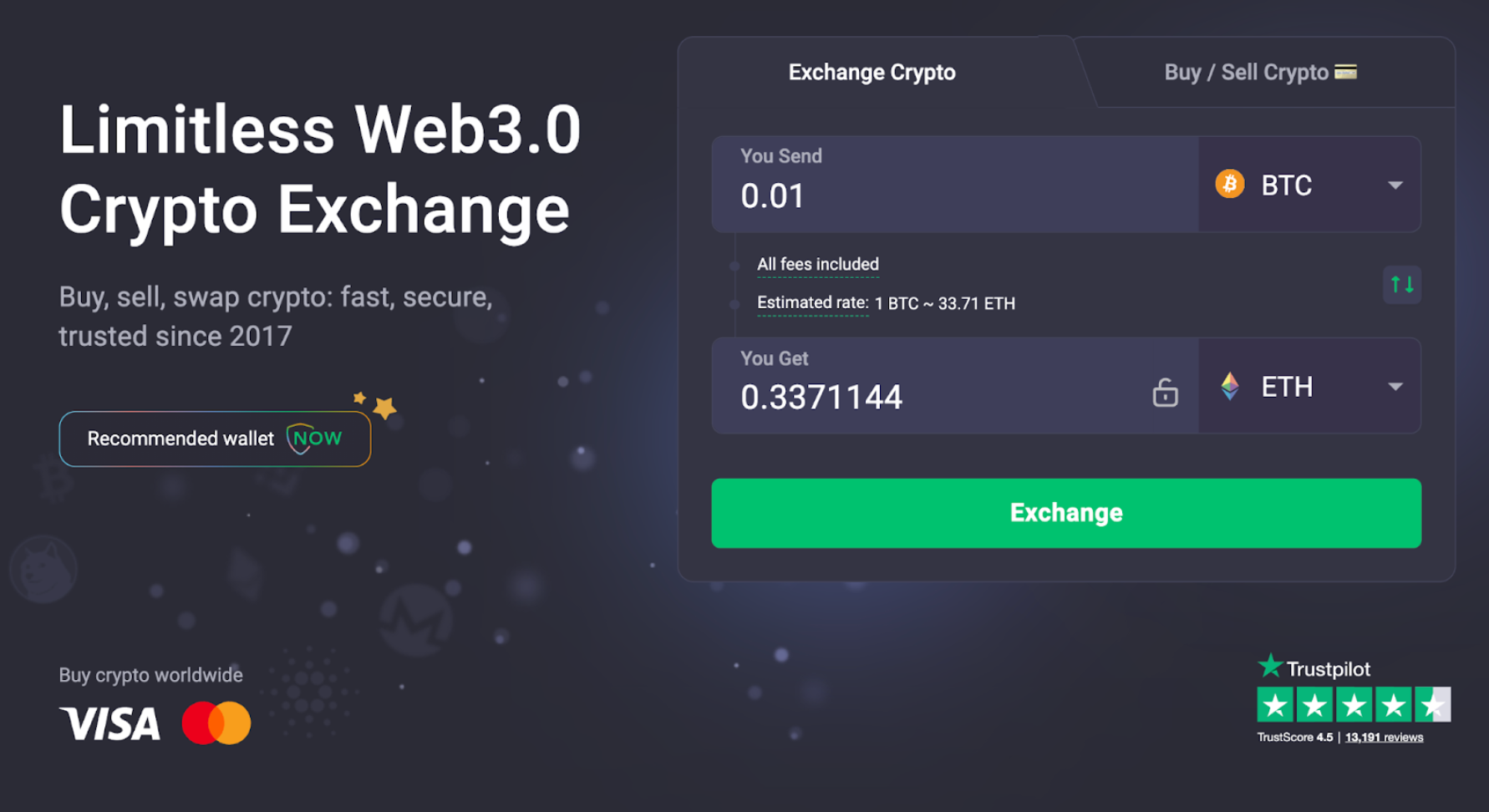
A typical crypto swap interface. The key question is not how it looks, but how it executes.
Some services make this easier by showing how funds move instead of hiding everything behind a “processing” screen.
Crypto scams are not edge cases. They are a core risk of the ecosystem.
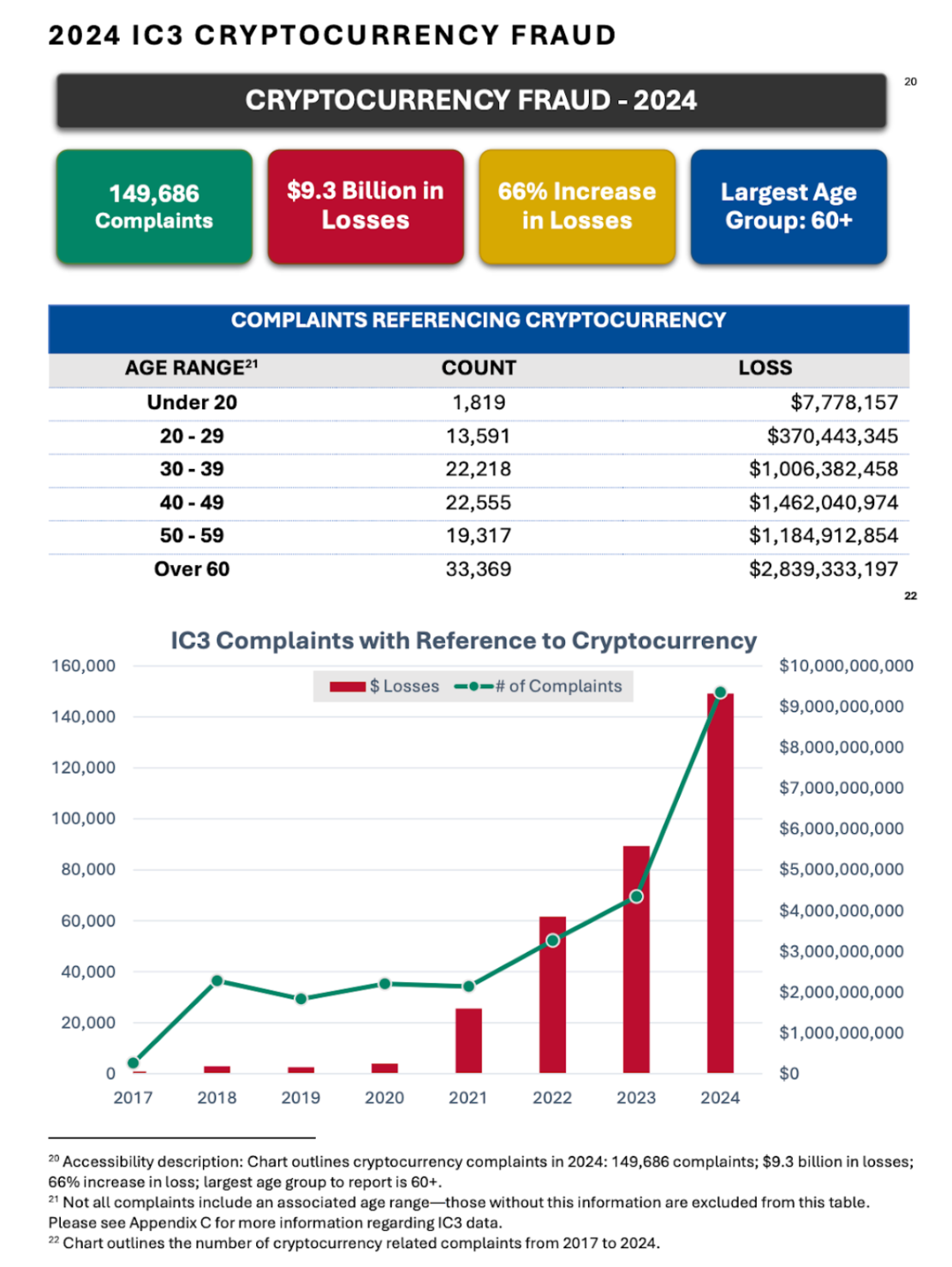
In 2024, crypto-related fraud resulted in $9.3 billion in losses and nearly 150,000 reported cases, according to the FBI IC3 report.
Crypto fraud is usually social engineering, not a “broken blockchain.” In the FBI IC3 2024 report [9], cryptocurrency is referenced in 149,686 complaints, with $9.3B in reported losses. Many of these cases involve phishing and impersonation – users are pushed to a fake domain or a cloned interface that never executes anything on-chain. That’s why verification starts with two checks: the domain in your browser bar and a TXID you can validate on a public explorer [9] [10].
Phishing and spoofing are not edge cases – they are the most reported category in the IC3 data, which directly reflects how clone-site scams operate in practice.
Many scam reports follow the same pattern: users realize the problem only after funds are sent, because the interface looks identical to a legitimate service.
In many reports, the “technical problem” is just the story. The real issue is simple: funds were sent to the wrong place.
One caveat: public reports don’t separate “fake crypto websites” into a clean category. These cases are usually counted under phishing, impersonation, and crypto fraud.
That makes verification not optional.
Reality check: Most crypto losses do not come from hacks. They come from users interacting with systems that never executed anything on-chain.
How to Check If a Crypto Platform Is Legit
Before looking at execution, check the platform’s history.
Search the platform name together with words like “review”, “scam”, or “withdrawal” and look for repeated complaints.
One angry review can be noise. Five people describing the same failure is a signal. If multiple users report the same issues – delays, missing funds, or no response – that is a signal.
When you read reviews, ignore emotional one-offs and look for operational patterns.
The most dangerous reports are boring and repetitive:
“processing” for hours with no transaction hash (TXID)
support answers but avoids specifics
withdrawals work for small amounts, then fail
“extra fee” requests to release funds
In crypto, the scam pattern is rarely technical. It’s procedural.
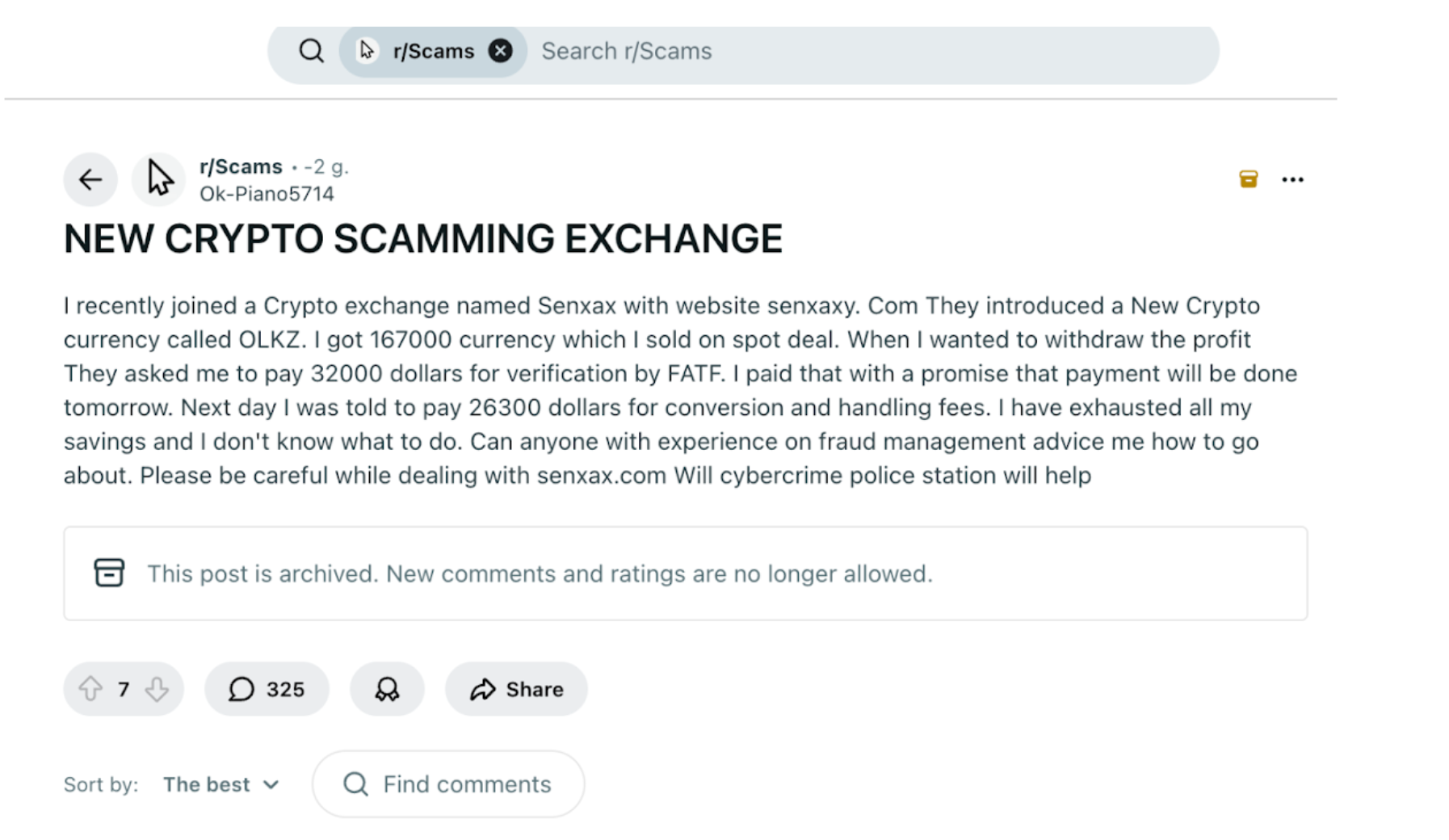
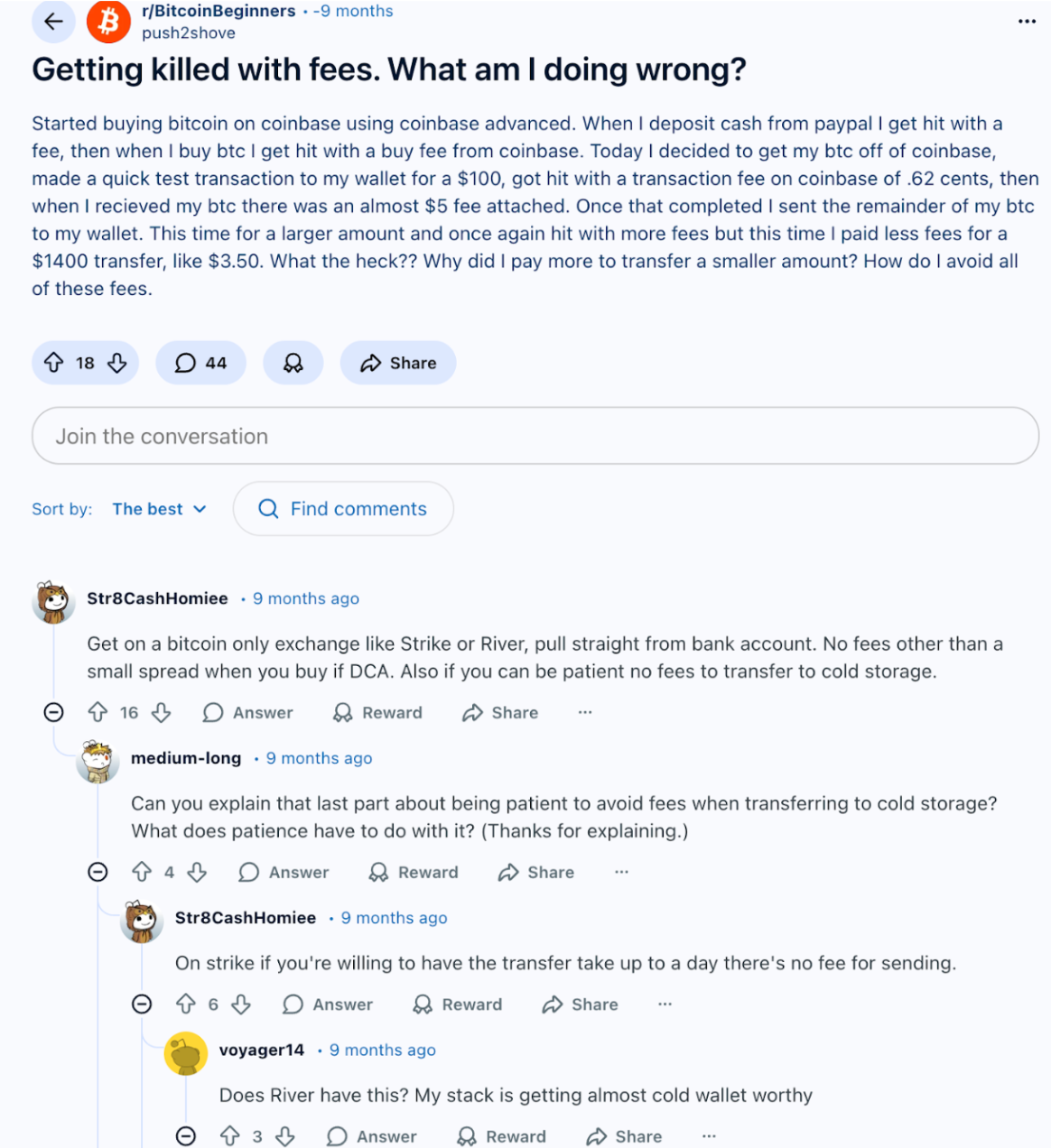
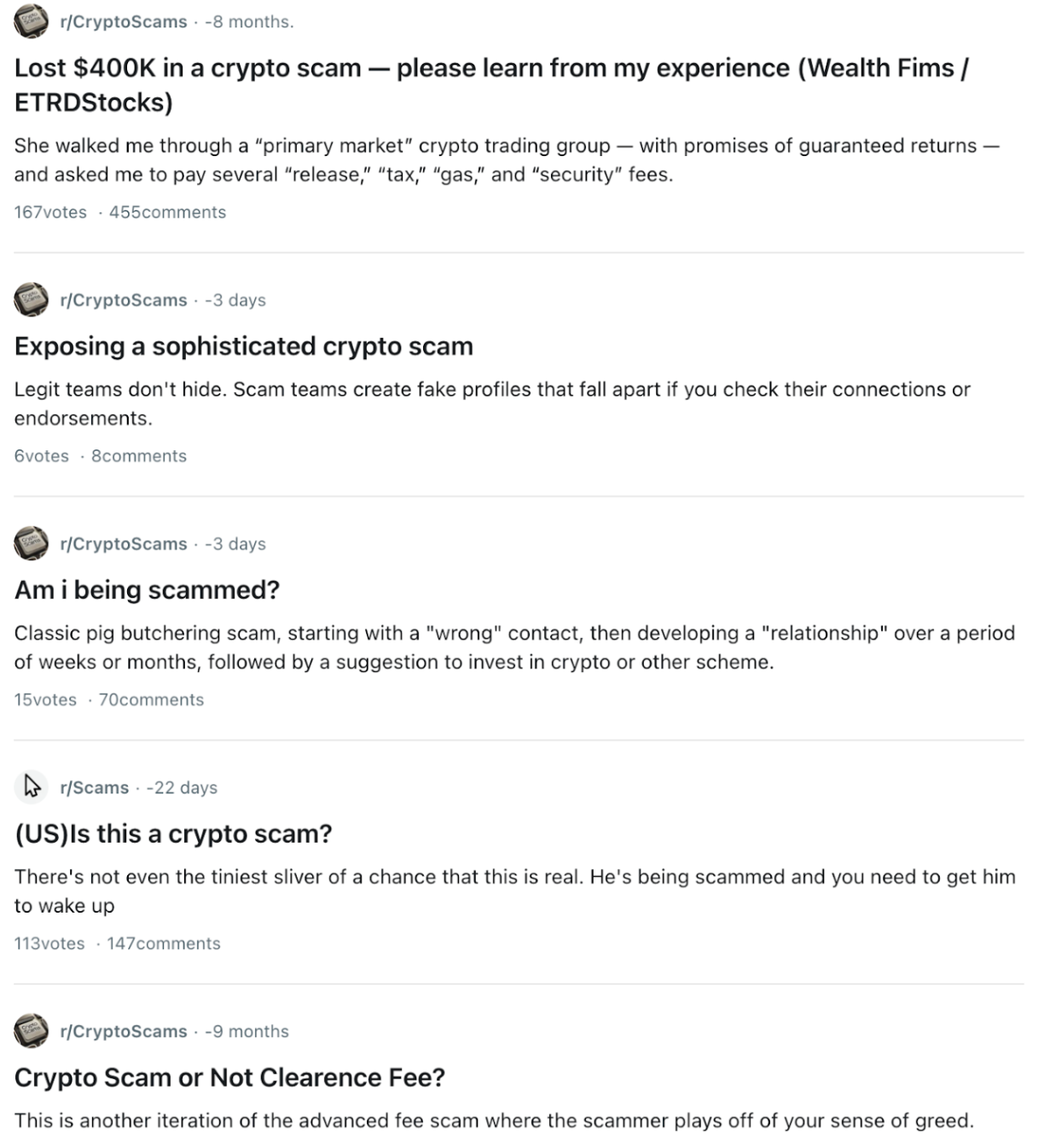
Below is a real example of how these issues appear in user reports. Notice how the service behaves normally at first, and the problem only becomes visible when the user tries to withdraw or process a larger tranaction:
This is the key mistake: users rely on what the platform shows, instead of verifying what actually happens on-chain.
Caption:Users often report the same pattern: the platform works at first, but problems begin when funds are withdrawn or larger amounts are involved. Interface confirmations do not guarantee real execution.
These cases rarely describe technical exploits. Most of them follow the same structure – the system works initially, builds trust, and then introduces friction when larger amounts are involved.
Don’t chase single stories. Look for repeatable failures: missing TXIDs, delayed withdrawals, and support that avoids specifics.
If different users describe the same scenario, the risk is no longer theoretical.
Users often report the same pattern: transactions appear successful in the interface but cannot be completed or withdrawn in practice. Interface confirmation does not guarantee real execution.
Also pay attention to what is missing. A platform with no history or only generic positive feedback is not necessarily safe. In crypto, lack of history often means lack of testing.
User feedback does not replace verification. It should trigger it.
Fake Websites and Domain Clones
Not every crypto scam looks suspicious. Sometimes it looks exactly like the platform you trust.
You open the site and everything feels familiar. There is no reason to doubt what you see. That is where the mistake happens, because the only difference may be the one thing you are not looking at – the domain. Instead of the real platform, you are on a copy – a site that looks identical but runs on a different URL.
Attackers don’t need to break anything. It is enough to recreate the interface and change a few characters in the address. At a glance, everything looks correct, and your attention is on the transaction, not the browser bar.
You enter the amount, receive a deposit address, and send funds. The platform shows “processing”. Time passes, but nothing changes.
You check the transaction on a blockchain explorer.
There is no TXID, no record – nothing was ever sent to the network.
At that point, the funds are already gone. There is no transaction to verify and nothing to recover.
The page says “processing,” but the explorer shows nothing. That’s the moment to stop.
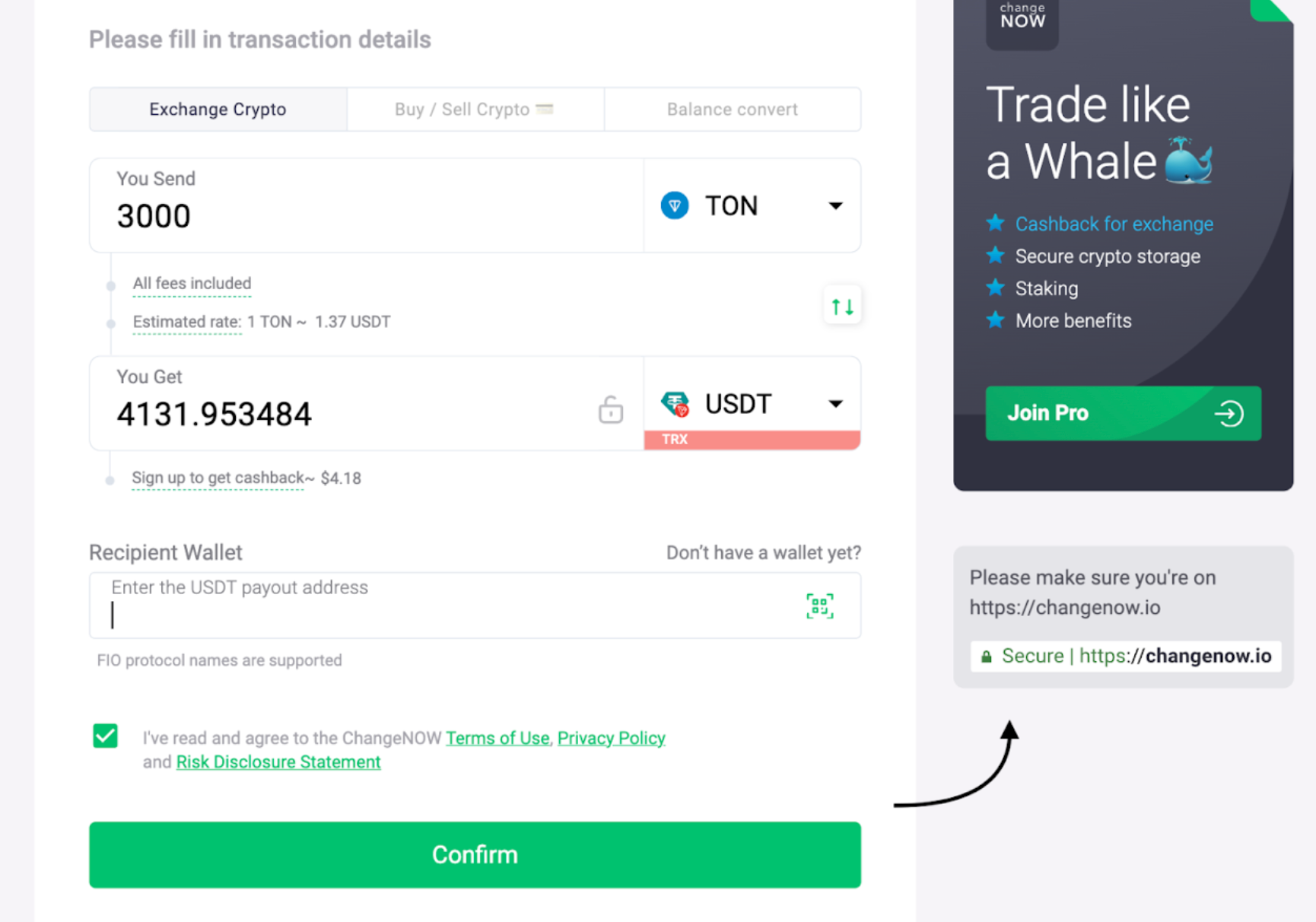
This is why some platforms show a warning before a swap: “Check the domain before you swap.”
It is the last moment where you still have control. Once funds are sent, the process cannot be reversed.
Before confirming a swap, users are explicitly reminded to verify the domain. This helps prevent sending funds through fake websites that imitate real platforms. Once funds are sent, the process is irreversible.
In crypto, the interface can always be copied. Execution cannot.
Before you trust anything on the screen, check where you are. Because in crypto, the difference between a real platform and a fake one can be a single character in the URL.
What to Check Before Using Any Platform
Before sending funds, verify:
The exact domain name (character by character)
Bookmark the official site instead of searching every time
Avoid clicking ads in search results
Double-check the URL before confirming a transaction
Critical risk: A correct interface does not mean a correct platform. In crypto, copying a UI is easy. Executing transactions is not.
A Typical Failure Scenario
Different users describe the same experience
A user finds a better rate. The site looks familiar, and the process takes a few clicks. They send a small amount, and it works. That creates confidence.
The next transaction is larger.
Now the status stops changing. The platform shows “processing”. Minutes turn into hours. There is no transaction on-chain, and support does not respond. Eventually, the platform asks for additional verification or fees.
At that point, the funds are already gone. The first transaction did not prove the system works. It only proved that it worked once.
What Verifying a Crypto Service Actually Means
Verification is not about design, branding, or how professional a site looks. It is about whether the service actually interacts with the blockchain.
A service can display real prices, simulate confirmations, and show progress without executing anything on-chain. The interface can look complete while the underlying system is not.
The only question that matters is simple: can you see the transaction outside the platform?
If you cannot find it on the blockchain, you are not verifying anything. You are trusting what the interface shows.
What Experienced Users Actually Look At
Most users evaluate platforms based on appearance. Experienced users focus on behavior. They also verify the domain before interacting with the platform. Execution checks are useless if you are interacting with a fake website.
They do not start with the interface. They start with execution signals.
First, they check how quickly a TXID appears after submitting a request.
On a real platform, a TXID is generated as soon as the transaction is broadcast to the network, not when it is confirmed.
Typical timing:
Low congestion: 5–30 seconds
Normal conditions: up to 1–2 minutes
High congestion: 2–5 minutes
A delay of several minutes can happen during network load. However, long delays without a TXID are not normal behavior.
If no TXID appears within:
5 minutes → caution
10+ minutes → strong risk signal
At that point, you are no longer observing network conditions. You are observing service behavior.
A real platform may have slow confirmations, but it cannot hide a broadcast transaction. If the transaction was sent to the network, a TXID exists immediately.
Second, they track where funds go. Even without deep technical knowledge, you should be able to see:
which address receives your funds first
whether the transaction appears on a public explorer
whether the amounts match what you sent
Third, they observe how the platform behaves under uncertainty. What happens if something is delayed? Does support explain the issue clearly, or avoid specifics?
Experienced users do not try to understand everything. They look for consistency between what the platform shows and what the blockchain confirms.
If these two views do not match, they stop.
Real Platform vs. Fake Platform
The interface rarely helps you identify risk. Both legitimate and fake platforms can look similar.
The difference appears when you try to verify execution.
Signal
Real platform
Risk signal
TXID timing
Appears shortly after submission
Missing or delayed for a long time
Transaction visibility
Fully visible on a blockchain explorer
Cannot be found on-chain
Status updates
Match blockchain state
Only change inside the interface
Fees
Shown before execution
Additional fees requested later
Support responses
Specific and technical
Generic or avoids details
Fake platforms rely on interface signals, while real platforms rely on verifiable execution. The interface can always be copied, but blockchain activity cannot. This is why validating should always be based on on-chain data, not on what the platform displays.
How to Verify a Crypto Transaction on the Blockchain
Send a small amount and wait for a TXID. This is the only proof that a transaction was actually broadcast to the network.
Then open a blockchain explorer such as Etherscan [4] or BscScan [5] and search for the TXID [5]. This allows you to verify the transaction independently, without relying on the platform interface.
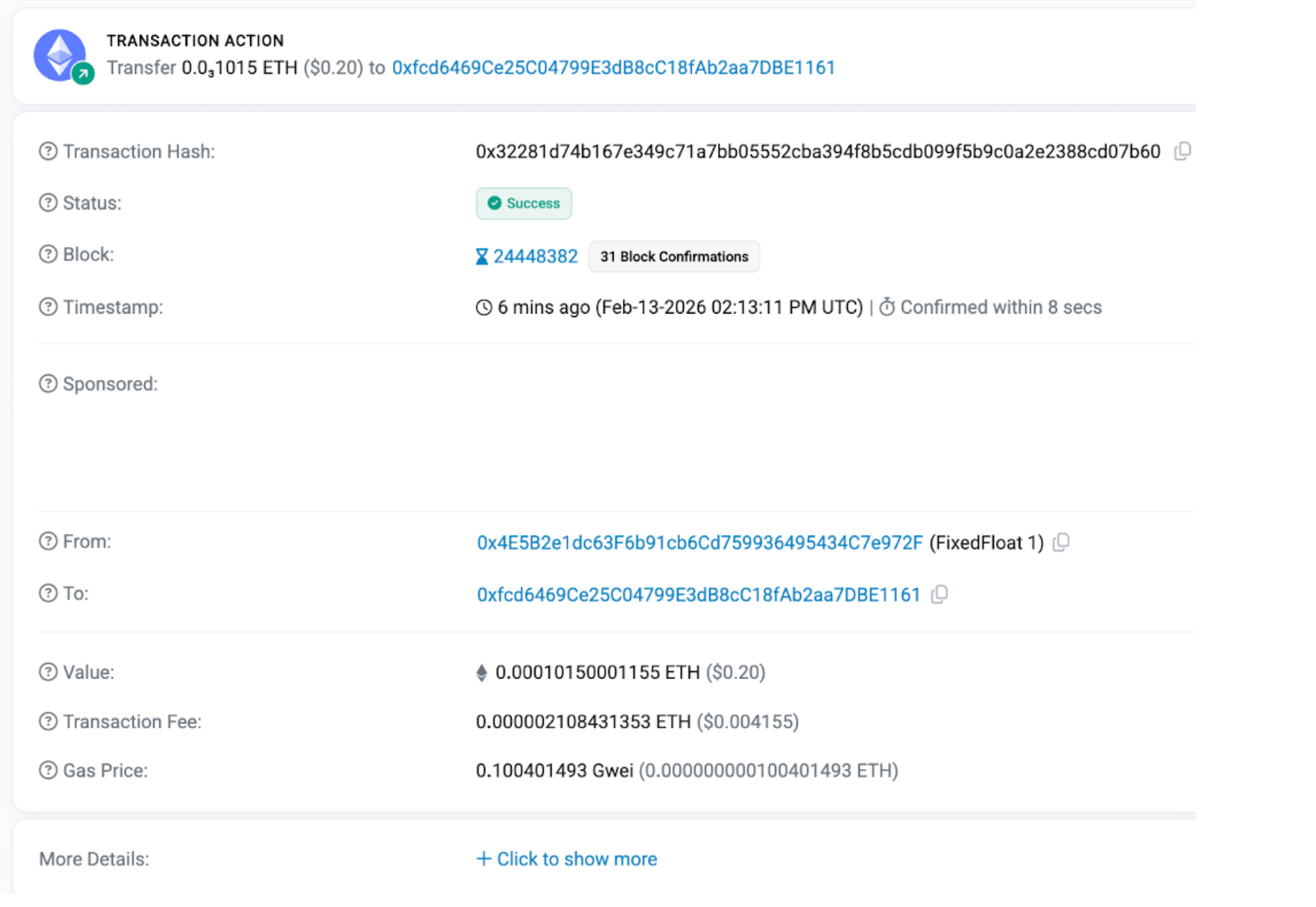
On the transaction page, check three key elements:
Status: must be confirmed
From / To: must match your transaction
Value: must match the expected amount
If the transaction exists on-chain, it means it was executed. If you cannot find it, nothing happened on the network, regardless of what the system shows.
Example of a real transaction on a blockchain explorer. A valid transaction always has a TXID, confirmed status, and visible sender and receiver addresses.
If a platform shows “processing” but no transaction appears on-chain, the system is not executing real transactions. It is simulating them.
Important: No TXID means the transaction was never broadcast.
Critical rule: If a transaction cannot be verified on-chain, it should not be trusted.
If a transaction hash does not appear within a reasonable time, stop.
Do not send additional funds.
Do not pay extra fees to “release” a transaction.
Legitimate platforms do not require additional payments to complete a transfer that has already been submitted.
Some platforms make this process easier by exposing transaction flow and allowing you to track each step.
Why Blockchain Transparency Matters
Blockchain transparency removes the need to trust what a platform claims. Every confirmed transaction is recorded in a public ledger and can be independently verified.
This means that once a transaction is broadcast, it cannot be hidden, delayed, or modified. If a platform shows a transaction as “completed” but there is no record on-chain, nothing actually happened. The interface is only simulating activity.
For a user, this changes the approach entirely. You are not checking whether a platform looks legitimate. You are checking whether its actions can be verified outside of its interface.
A Quick Safety Check Before Using a Platform
Before sending funds, take a minute to observe how the platform behaves.
Open several pages and check for consistency. Read how the process is explained. If the description is vague or incomplete, that is already a signal.
Send a message to support and see how they respond. A real service usually provides clear answers. Delays or generic replies can indicate weak operations.
Then test the system. Send a small amount and verify the transaction on-chain.
If you cannot verify the result independently, do not continue.
When to Stop
You do not need a long checklist to identify risk.
A few signals are enough: no transaction hash, unclear process, missing support response, unexplained delays, or requests for additional fees.
At that point, the issue is no longer theoretical. It means you cannot verify what is happening.
Continuing in that situation increases risk without adding clarity.
What Usually Goes Wrong
Most losses are not caused by technical errors. They happen when users assume that a successful interaction means the system is reliable.
A clean interface, a good rate, and one completed transaction create confidence. From that point, verification starts to feel unnecessary. But in reality, only the interface was tested, not the execution.
Many users focus on visible factors like fees or interface behavior, without understanding how transactions are actually executed. This often creates a false sense of control while the underlying process remains unverified.
When conditions change – larger amounts or different routing – the difference becomes visible. The platform continues to show progress, but there is no confirmation on-chain. What looked like a working system turns out to be something that was never fully verified.
Key takeaway: If you cannot independently verify a transaction on-chain, you should not trust the platform, regardless of how convincing the interface looks.
Common Crypto Scam Patterns
Most scams follow a predictable structure.
At the beginning, everything works. The interface looks normal, rates are competitive, and the first transaction often succeeds. This is not accidental — it is designed to build trust.
The pattern changes after a larger amount is sent.
Instead of a transaction, the platform shows a “processing” status. Time passes, but no transaction appears on-chain. Support responses become slower or less specific.
Then additional requirements appear:
extra fees to “release” the transaction
identity verification after funds are already sent
requests to resend funds due to “network issues”
These steps are not part of the transaction. They are attempts to extend the loss.
Real platforms may have delays, but they do not require additional payments to complete a transaction that has already been submitted.
Why Reviews Still Matter
On-chain checks confirm transactions. Reviews show how a platform behaves when things go wrong. Many problems only appear later – delayed withdrawals, missing funds, or lack of support. These are not visible during the first interaction.
When reading reviews, focus on repeated issues. One complaint does not mean much. A consistent pattern usually indicates a real problem. A lack of history is also a signal. In crypto, an untested platform is not neutral. It is risk.
Reviews provide context that is not visible on-chain. While blockchain data shows whether transactions are executed, user reports reveal how platforms behave under stress – delays, failed withdrawals, or lack of support. Both signals together provide a more complete picture.
Users often report the same issues across different platforms – delayed withdrawals, “processing” statuses, and lack of support. These patterns usually become visible only after funds are sent.
Why People Ignore Red Flags
Most users notice warning signs. They just ignore them at the wrong moment.
When everything works, there is no pressure to verify. The interface looks correct, the process is simple, and the first transaction succeeded.
That creates confidence. Verification becomes something to do later.
By the time a problem appears, the transaction has already been made.
Privacy and Transaction Exposure
Every transaction on a public blockchain is visible. The question is not whether it can be seen, but how easily it can be linked.
If you use the same wallet across multiple platforms, reuse addresses, or follow predictable patterns, your activity becomes easier to trace over time.
This does not affect whether a transaction is valid. It affects how much of your behavior can be reconstructed.
A real transaction on a blockchain explorer shows a TXID, status, sender and receiver addresses, and exact amounts. This information can be verified independently, without relying on the its interface.
Some services try to reduce this exposure by changing routing or separating transactions.
The goal is not to hide activity completely. It is to reduce how easily different transactions can be connected.
Custody and Approval Risk
Risk in crypto does not start only when funds are sent. It can begin earlier, during approvals.
When you approve a token, you grant a contract permission to spend it. This permission can extend beyond a single transaction. If misused, it can allow access to funds without further confirmation.
That is why approvals should be treated as access control. Before signing, check what is being approved – especially the contract address and allowance size.
Unlimited approvals are one of the most common hidden risks.
If a contract has unlimited allowance, it can move your tokens later without asking again. This is how many wallet drains happen – not during the swap, but hours or days after it.
That is why approvals should be reviewed and revoked regularly using tools like Revoke.cash [6], especially for contracts you no longer use.
How People Actually Verify Platforms
Verification does not require complex tools.
Start with basic checks: domain history, site consistency, and support responsiveness. Then review how the service explains its process.
The key step is testing execution. Send a small amount, get a TXID, and verify it on a blockchain explorer. This shows whether the platform interacts with the network or only simulates activity.
Platforms with transparent execution make this easier because each transaction can be checked independently.
Final Decision Framework
Before sending funds, reduce the decision to three checks:
Execution
Can you verify at least one transaction on-chain using a TXID?
Clarity
Do you clearly understand how the platform processes your transaction?
Consistency
Does the service behave predictably across multiple checks?
If you cannot answer one of these, stop.
Crypto transactions are irreversible. Uncertainty is not a minor issue – it is a direct risk.
The check takes minutes. Recovery is rarely possible once funds are sent.