“Bubble” gets thrown around constantly. Media uses it for anything that moves fast. Bitcoin has been called a bubble at $1,000, at $10,000, and again at $60,000.
People call everything a bubble in crypto. Bitcoin alone has been labeled one at every major level.
So what actually is a bubble, and how do you tell it apart from real growth?
What Is a Crypto Bubble
Not every strong move is a bubble, it becomes one when price keeps rising but usage doesn’t keep up, and most people are buying simply because it’s going up.
Early on there’s usually a real reason for the move, users show up, activity grows, money follows, but later that link fades, price keeps climbing on its own, and the whole thing depends on new buyers coming in.
When that flow slows, it doesn’t hold. That’s a bubble.
Verdict: A crypto bubble forms when price growth detaches from real usage and becomes dependent on new inflows rather than actual demand.
What Drives Crypto Market Cycles Into Bubbles
Every cycle tends to follow a similar path, even if the narrative changes.
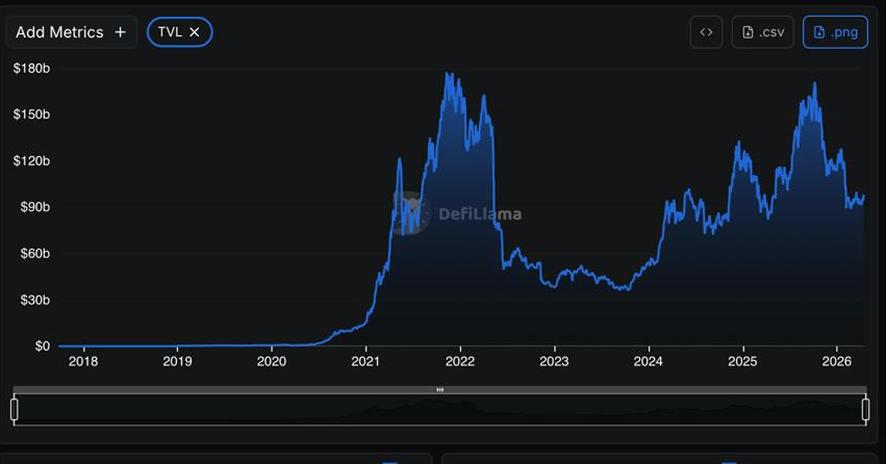
At the beginning, there’s usually something tangible behind the move. During DeFi Summer, for example, total value locked expanded rapidly across protocols, something you can still track via DeFi TVL dashboards. NFT markets showed the same pattern, with volumes climbing sharply before prices peaked – a trend visible across historical NFT market dashboards.
DeFi total value locked growth across market cycles.
At that stage, price and usage are moving together. Then the market starts looking ahead – sometimes too far ahead.
Capital flows in not just because something is working now, but because traders expect it to dominate later. Projects begin to get valued on future potential that hasn’t fully materialized. That’s where things become less stable.
It’s not that the fundamentals disappear. They just stop being enough to support price on their own.
FAQ
You can tell the market is in a bubble when price rises faster than activity, leverage builds, and narratives matter more than fundamentals.
If usage stalls while funding rates stay elevated and traders chase momentum, the market is no longer being driven by real demand.
Yes, crypto bubbles always correct once new inflows stop supporting the price. The timing varies, but the structure is the same – the faster the rise, the sharper the unwind.
Yes, particularly in earlier phases. Late stages require stronger risk management and clear exit strategies.
Crypto bubbles repeat because market behavior doesn’t change.
Each cycle brings in new participants who react to momentum the same way, while liquidity amplifies the same patterns again.
Strategic Insight: The critical shift happens when markets start pricing future dominance instead of current usage. From that point, liquidity becomes more important than fundamentals.
Why Crypto Bubbles Move Faster Than Traditional Markets
One of the defining features of crypto is speed.
Traditional markets have friction built in – limited trading hours, slower settlement, higher barriers to entry. Crypto removes most of that. Markets run around the clock, participation is global, and narratives spread in hours across social platforms.
That combination compresses cycles.
What might take years in equities can play out in months here. Add accessible leverage into the mix, and price movements become even more amplified.
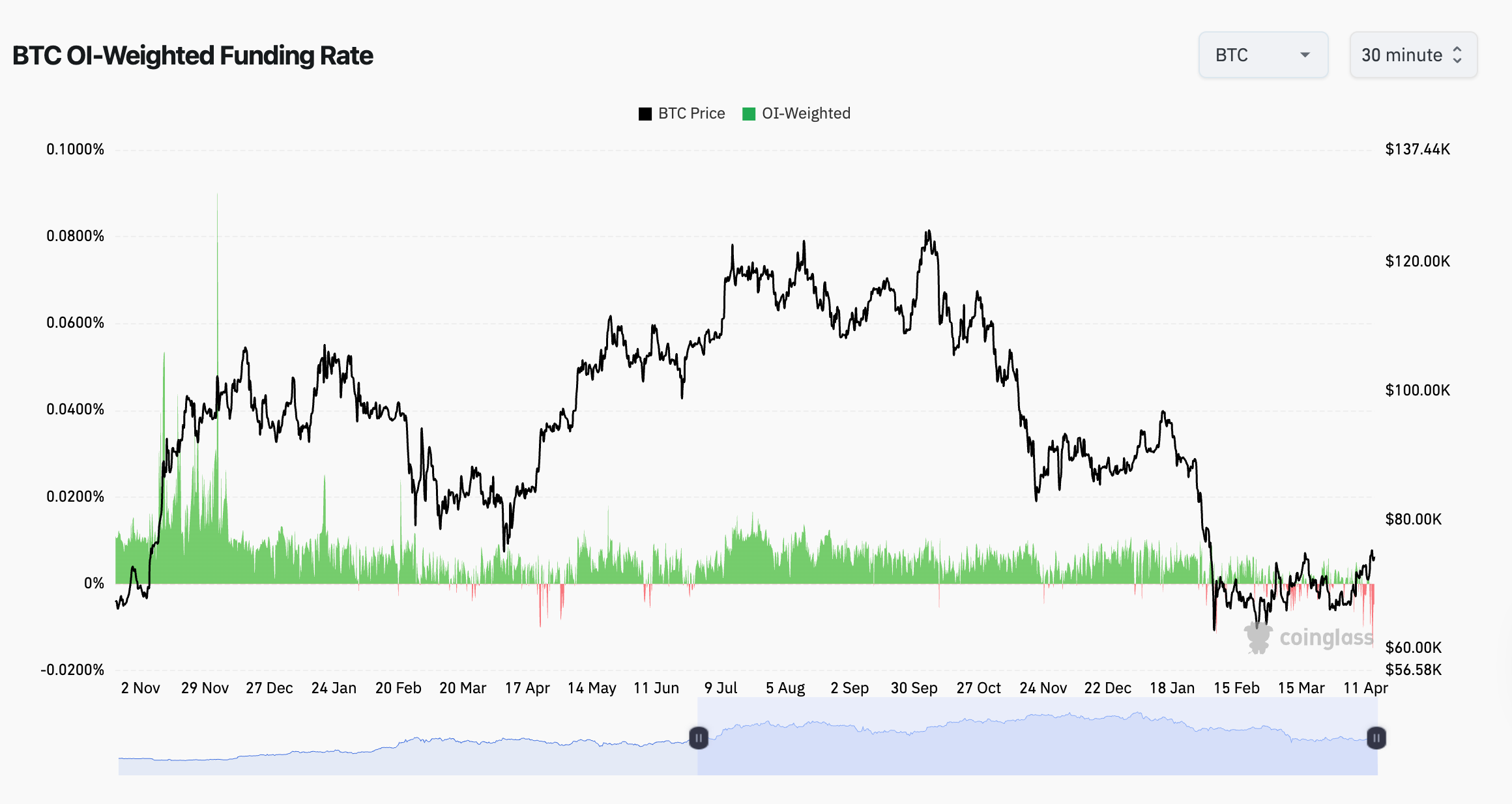
Funding rates and positioning imbalances often build quietly before the market becomes unstable – something you can track through aggregated derivatives market data.
This is why crypto bubbles don’t build slowly, but accelerate. And once they do, they rarely slow down in a controlled way.
How to Spot a Crypto Bubble
You don’t get a single signal. It shows up as a set of changes that start to stack.
Price outpaces usage
Market cap keeps growing while wallet activity or transactions slow down. The move is driven by speculation, not adoption. You can track this through on-chain data.
Narrative takes over
Conversations shift from how the product works to how high it can go. Price becomes the only focus.
Leverage builds in the background
Funding stays elevated, open interest grows faster than spot demand, and positioning gets crowded. This is visible in derivatives data.
Market behavior changes
Moves get sharper, pullbacks get shallow, and reactions to news become less predictable.
On their own, none of this means much. Together, it’s a different setup.
Verdict: A bubble isn’t just price going up. It’s price moving without support, while leverage and narrative take over.
How Market Reacts to a Crypto Bubble
At first, nothing looks broken. Price keeps moving, sentiment stays strong, and most of the market reads it as continuation.
The shift only becomes visible when you step back and compare what’s happening under the surface with how price behaves.
That contrast is easier to see side by side.
Metric
Healthy Market
Bubble Phase
Price vs Usage
Moves together
Price outpaces activity
User Growth
Expanding steadily
Slowing or plateauing
Market Narrative
Product-focused
Price-focused
Leverage
Moderate
Elevated and crowded
Market Behavior
Structured trends
Volatile, emotional moves
When activity stops keeping up, leverage builds, and attention shifts toward price, the structure underneath the market weakens, even if price keeps going.
Nothing breaks right away. The market just starts acting differently.
Moves get less reliable, reactions slow down, and selling into strength becomes more visible. By the time it shows clearly on the chart, the process is already underway.
It usually starts small – failed breakouts, weaker reactions to good news, more coins moving onto exchanges, something you can track through exchange flow data.
Then leverage unwinds. Longs get liquidated, funding flips, and momentum shifts.
That’s why corrections feel so abrupt.
Examples of Crypto Bubbles
Looking back, the pattern is consistent.
ICO Boom (2017)
Money poured into projects that often had little more than a whitepaper. Teams raised capital before building anything, and valuation came from expectations, not usage.
Tokens launched, got listed, and moved purely on demand. There was no real floor underneath most of them. When inflows slowed, liquidity disappeared. Prices didn’t drift down – they collapsed.
DeFi and NFT Cycle (2021)
This cycle had a stronger base. DeFi protocols were actually used – lending, yield farming, liquidity provision. NFTs had real trading activity and attention.
Then the shift happened.
Prices started moving faster than usage. New buyers came in for upside, not for the product. NFT volumes peaked, and from there activity dropped off quickly – something visible in historical NFT data.
The infrastructure stayed. The valuations didn’t.
AI Tokens and Memecoins (Recent Cycles)
The same structure plays out again, just compressed. Narratives spread faster. Capital rotates quicker. Entire sectors move before fundamentals have time to catch up.
In many cases, price leads and usage comes later – if it comes at all. That’s why these cycles feel more chaotic, not because they’re different, but because everything happens faster.
Nothing really changed. The pattern is the same – only the speed increased.
Crypto Bubble Emergency Escape Plan
When things start feeling off, you don’t need a perfect call. You just don’t want to get stuck.
1. Ease off the size
Late in the move, bigger positions don’t give you an edge — they just add pressure.
2. Look at liquidity, not just price
Fast upside can disappear just as quickly if there’s nothing underneath it.
3. Stay flexible
It’s easier to adjust when you’re not all-in on one idea.
4. Don’t lean on a single story
If everything depends on one narrative, you already know where the risk is.
5. Watch how the market reacts
Good news not moving price, failed breakouts – that usually shows up before anything bigger.
6. Act before it feels urgent
Once it gets fast, decisions get worse.
7. Speed matters
You don’t need perfect timing. You need to be able to move when it counts.
Disclaimer: Not financial advice. Just a way to think about risk when the market starts acting differently.
Avoiding bubbles entirely isn’t realistic, especially in crypto. Most of the real upside shows up inside these cycles.
The only question is where you are in the move.
Once the signals start lining up, the game changes. It’s no longer about squeezing more upside, it’s about not giving it back.
Cut position size as volatility expands
Stop adding to trades just because price keeps moving
Keep an eye on funding and open interest, not just price
Watch for coins moving onto exchanges
Stay in liquid assets when rotation speeds up
Shift exposure instead of chasing what already ran
Most of the damage doesn’t come from being early. It comes from reacting too late.
Early on, when adoption and liquidity grow together, taking risk makes sense. By the middle of the cycle, that changes. It’s less about finding entries and more about managing what you already hold.
Late-stage is different. That’s where discipline actually matters.
Execution starts to outweigh ideas. Liquidity thins out, moves get sharper, and hesitation gets expensive. Moving between assets quickly stops being optional – it becomes part of how you manage risk.
That’s also where tools like ChangeNOW start to make more sense. Not as a trading platform, but as a way to move capital quickly between assets without getting stuck in order books or delays.
Verdict: You don’t avoid crypto bubbles – you position within them. Early phases reward risk, while late phases require discipline and fast execution.
Common Mistakes in Late-Stage Bubbles
Traders don’t usually lose at the top. They lose on the way down.
Adding after a move has already gone vertical
Ignoring leverage building in the background
Treating a strong narrative as proof of real demand
Holding assets that can’t handle fast outflows
Waiting for “confirmation” when the shift has already started
By the time the market feels unstable, positioning is usually already too crowded. Most of these mistakes don’t feel like mistakes at the moment, they feel like conviction.
This is where small decisions start to matter more than big calls.
Final Take
Crypto bubbles don’t appear out of nowhere. They grow out of real momentum and gradually detach from it.
That’s what makes them difficult to spot early and easy to recognize later.
You don’t need to predict the exact top to navigate them well. It’s usually enough to notice when price is no longer supported by usage, when leverage starts dominating flows, and when the narrative becomes easier than the reality behind it.
Final Verdict: Every crypto bubble follows the same pattern – real growth, speculative acceleration, and liquidity-driven collapse. The edge comes from recognizing when price stops reflecting reality.
By the time the market looks obvious, most of the move is already behind you.