Ethereum killers are Layer 1 blockchains that compete with Ethereum for developers, applications and users. They gained attention through faster transactions, lower fees and higher throughput.
By 2026, speed alone rarely decides which network grows. Many Layer 1 blockchains already process everyday transactions fast enough. Adoption now depends on useful applications, simple onboarding and access to an existing audience.
Applications create demand for blockspace while wallets, exchanges and payment platforms help people reach those applications. Clear transaction flows give them a reason to complete the first action and return later.
Sonic and Alephium show two approaches to Layer 1 growth. Sonic focuses on high-performance EVM infrastructure, while Alephium is building a Proof-of-Work ecosystem around financial applications. During a recent ChangeNOW X Space, Alephium COO Maud Bannwart and Sonic Labs Head of Marketing Feroz, known on X as Mr. Minter, shared how their teams approach developer adoption, user onboarding and long-term ecosystem growth.
Key Takeaways
High TPS says little about how quickly a transaction settles.
Applications create recurring demand for Layer 1 blockspace.
Wallets, swaps, on-ramps and sponsored gas help users complete their first transaction.
Community keeps users and developers involved when incentives and market attention fade.
What Are Ethereum Killers?
Ethereum killers are Layer 1 blockchains that compete with Ethereum for smart contract applications. They differ in architecture, consensus mechanisms and ecosystem strategy.
The term became popular as new smart contract networks entered the market with different technical priorities. Some focused on higher throughput, others on lower fees, new virtual machines or alternative consensus models.
Solana, Cardano, Avalanche, Sonic and Alephium are examples, although their architectures and ecosystem strategies differ as well.
What Is a Layer 1 Blockchain?
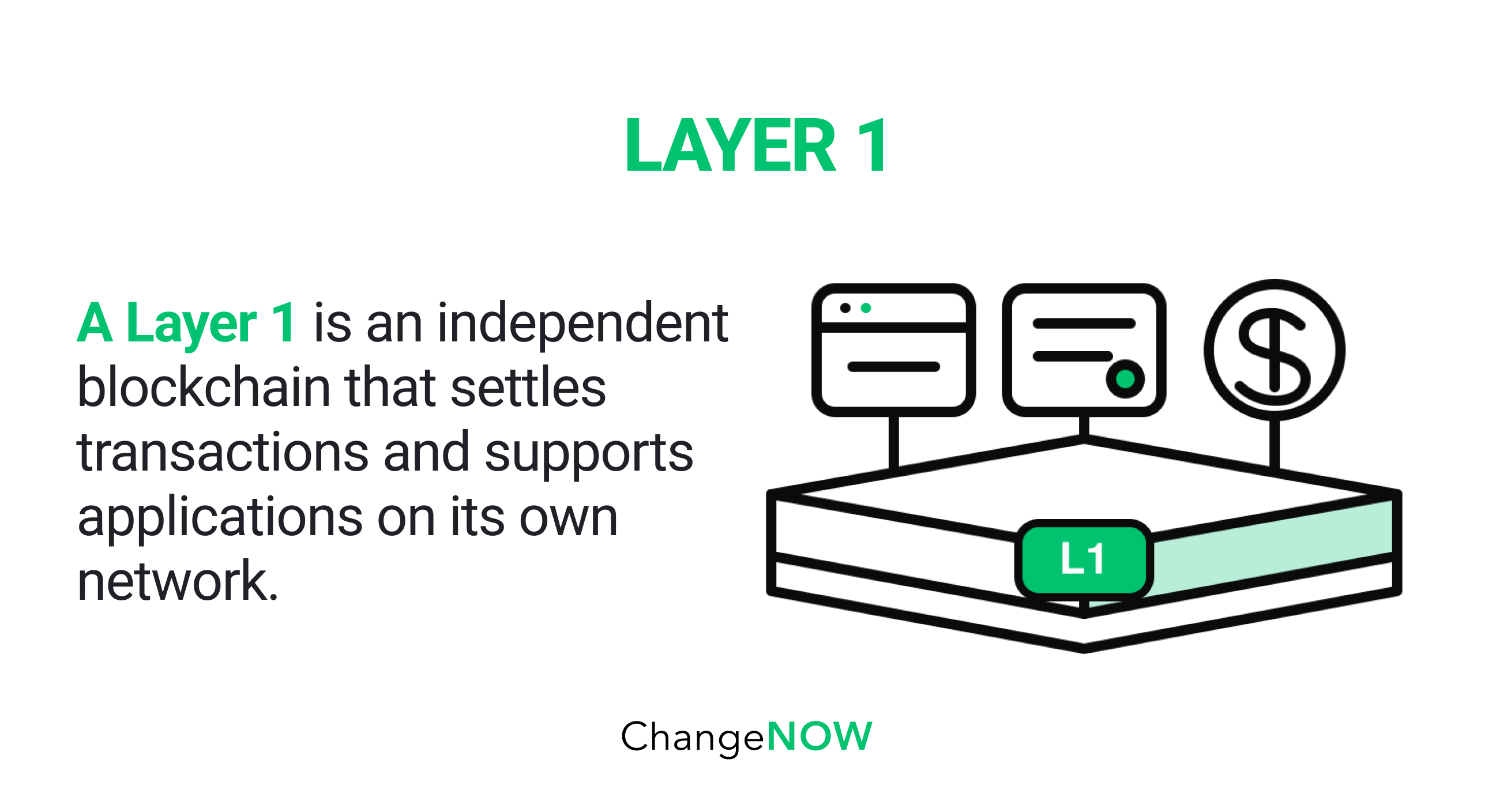
Layer 1 blockchains run and secure their own networks instead of relying on another blockchain. Bitcoin, Ethereum, BNB Chain, Sui, Aptos and NEAR are all Layer 1 blockchains.
Not every Layer 1 is described as an Ethereum killer. The label is usually applied to smart contract platforms competing with Ethereum.
Some Layer 1 blockchains focus on payments, others on DeFi, gaming, tokenized assets or AI infrastructure. Those priorities shape where they compete and which applications they attract.
What Makes a Layer 1 Blockchain Competitive?
No checklist guarantees the success of a Layer 1 blockchain, but competitive networks tend to share several signals:
Transaction speed suited to their applications
A product that solves an existing problem
Onboarding without unnecessary gas and bridging steps
Access through wallets, exchanges or consumer platforms
Real users rather than inflated wallet counts
A community that remains active when incentives decline
A clear reason to build or transact on that network
These signals don't eliminate risk. Smart contract vulnerabilities, bridge failures, network outages and token volatility still affect users.
Why Ethereum Killers Need More Than High TPS
Ethereum killers need fast settlement and applications that generate repeat activity. TPS shows how much traffic a blockchain can process. Block time and finality decide whether a transaction settles in time.
A chain can handle thousands of transactions per second and still miss the window for a trade, prediction or in-game action.
Maud Bannwart, COO at Alephium, separated network capacity from the speed users experience:
“I think there’s a big difference between throughput and TPS and speed. People often confuse both, meaning people will look at TPS as a measure of the speed of the chain somehow, which is wrong. It’s basically just the capacity of the chain. From a user experience, once you reach a certain TPS or throughput, it doesn’t really make a difference. Whether you have 20,000 TPS, 100,000 or a million, from a user experience, you won’t feel the difference. What you’re going to feel much more is the speed, and a better measure of the speed in a lot of cases is block time.” – Maud Bannwart, COO at Alephium
A few extra seconds rarely change a wallet transfer. In a live prediction market, the same delay can leave the user with a new price, a closed market or an unfilled order.
Feroz used a live World Cup match to show what delay means for the user:
“If I’m trying to place a position on a match that’s happening right now, I don’t have 30 seconds, a minute or eight minutes to wait for something to go through. I need it to happen as soon as possible, instantaneously. If I can go on DraftKings and play something instantly, I need to be able to do the same thing on a product that’s being run on a blockchain.” – Feroz, Head of Marketing at Sonic Labs
Settling after the odds move leaves the user with a different trade from the one they intended. Extra capacity does nothing for an order that arrived too late.
Why Are Applications Driving the New L1 Race?
Applications drive Layer 1 adoption by creating demand for blockspace. People open them to send money abroad, borrow against crypto, buy an in-game item or automate a payment. One successful action creates a transaction. Repeat use creates network demand.
Many early Layer 1 teams built the network first, funded outside developers and waited for one app to take off. Coinbase and Binance came with users already there. Base launched inside the Coinbase ecosystem, while BNB Chain grew beside Binance’s exchange. Stablecoin issuers and financial platforms can pursue a parallel strategy because they already handle customers and payment flows.
Maud Bannwart described why the chain-first model has lost ground:
“What value can you bring to your ecosystem, but also to the broader space? It’s often centered around one really nice use case that you do really, really well. Before, in a lot of projects, the core team really focused on the chain and the technology. It was ‘build it and they will come.’ That has completely shifted over the past two years, where now you really see application-driven chains encountering big success and applications really being the driver for success.” – Maud Bannwart
Independent Layer 1 blockchains have no built-in audience, so the product has to bring people in.
Verdict: Alephium is developing Proof-of-Work Finance, or PoFi, for financial applications on a PoW Layer 1, while Sonic focuses on EVM products where delayed execution can change the price, trade or result.
What Is Gas Abstraction in Blockchain?
Gas abstraction is a mechanism that removes the requirement to pay this fee directly in the network’s native token. The fee can be charged in an asset the user already holds or covered by the application.
Users reach their first transaction without leaving the product to buy a separate gas token.
Paying gas in USDC simplifies one step, but the user still has to obtain USDC and understand why the fee exists.
“Gas abstraction is a solution. I don’t think it’s the solution. You can get a stablecoin a little bit easier than you can get a native token for a new chain, so you use USDC to pay for it. But people still have to get USDC. There are ways that we can let protocols themselves sponsor gas so that people never have to touch gas. They don’t have to know that it exists.” – Feroz, Head of Marketing at Sonic Labs, known on X as Mr. Minter
The application handles the fee, wallet creation and other blockchain mechanics before they interrupt the user.
How to Swap USDC on ChangeNOW
Choose USDC on a supported network, select the asset you want to receive and review the estimated rate before confirming the exchange. Base and Optimism may offer lower network costs than Ethereum mainnet, depending on the selected route.
Layer 1 blockchains attract users through applications and platforms that already have an audience. Exchanges, wallets, payment services and stablecoin issuers can all become entry points into an ecosystem.
Finding an application is only the start because a new user may still be blocked by a missing wallet, on-ramp, swap route or gas token.
Maud described how Alephium tries to connect those access points:
“No matter how you arrive in our ecosystem, whether it is through an app, our wallet or an exchange, we are trying to funnel all of those distribution channels into a similar flow. No matter where users are or what they want to do, they should not be blocked because they are missing a chunk of the ecosystem. That can mean having an on-ramp directly in the wallet or having swaps already available in the wallet or the interface of the app.” – Maud Bannwart
Every missing step gives the user a reason to leave. Wallets, on-ramps and swaps need to sit inside the product or close enough for the transaction to continue without rebuilding the route elsewhere.
AI agents create a new pipeline. They compare APIs, costs and transaction paths, then pick the chain. Reliable integrations and predictable execution can determine where that transaction lands, without the user choosing a chain directly.
Why Does Community Matter for Blockchain Adoption?
Community supports blockchain adoption by keeping users and developers involved after incentives and market attention fade. Trust, a sense of ownership and reliable support help projects retain contributors through bear markets and product setbacks.
Feroz connected long-term community strength with those three factors:
“When it comes to general-purpose L1s, it’s really about building that trust, giving people ownership and having support in the community. That is what’s going to keep people around through a bear market and into the next bull market. People believe that you’re going to help fix whatever potentially goes wrong and continue to deliver. But if you don’t give people something to believe in, they’re going to leave. There are many different options for them to go to.”– Feroz
Memes and recurring community rituals give members a shared language during quieter periods. Feroz called memes “an immune system for the worst days in the market,” describing how people remain present when price action gives them little to celebrate.
Memes and community rituals support this bond by giving members a shared language. Feroz called memes “an immune system for the worst days in the market”: a way for people to remain present when the chart gives them little to celebrate.
Verdict: Community strengthens blockchain adoption by keeping users and developers active through weak markets, product delays and lower incentives.
Are Ethereum Killers Still Relevant in 2026?
Ethereum killers remain relevant, but the meaning of the term has changed. Competing with Ethereum now requires more than offering higher TPS and lower transaction fees.
Sonic Labs and Alephium represent different approaches to the Layer 1 market. Their comments point to the same commercial reality: sufficient performance gets a network into the race, but it does not bring users on its own.
The most successful Ethereum killer may never replace Ethereum. It may simply become the best infrastructure for an application people already want to use.
Yes. Solana is commonly grouped with Ethereum killers because it runs its own Layer 1 and competes with Ethereum for applications, developers, liquidity and users. The term remains informal, and Solana’s co-founder has rejected the idea that replacing Ethereum defines the network’s goal.
An Ethereum killer runs its own consensus and settles transactions on an independent Layer 1. An Ethereum Layer 2 processes transactions away from mainnet and uses Ethereum for settlement or security.
EVM-compatible blockchains can execute code written for the Ethereum Virtual Machine and support familiar tools such as Solidity. Developers can often reuse contracts and tooling, though fees and network rules still vary.
Yes. Bridges and cross-chain protocols transfer assets or messages between Ethereum and other Layer 1 networks. Bridge design matters because smart-contract, counterparty and systemic risks vary across services.
Security varies across networks and applications. Consensus design, smart-contract code, bridge exposure and control over upgrades can all affect risk. The “Ethereum killer” label does not indicate how secure a blockchain is.
Crypto Mass Payouts: How Platforms Can Pay Thousands of Users
Paying one person in crypto is easy. Paying thousands is an infrastructure problem. Here’s how mass crypto payouts work with CSV, APIs, wallets, and email-based payments.