DeFi yield comes from activities that generate income, such as lending, trading and staking. With Cap, the yield comes from lending dollar-based capital to institutional borrowers, who pay interest for access to it.
Independent underwriters back individual loans with their own capital and earn a premium for taking the credit risk. Their collateral supports those loans if a borrower defaults.
Cap runs this model through an onchain credit marketplace, with smart contracts enforcing financial guarantees and liquidation rules. ChangeNOW provides a non-custodial way to exchange CAP.
Key Takeaways
Cap has independent underwriters who decide which loans to support and put their own money behind them. They earn a fee for taking that risk.
Financial guarantees combine escrowed onchain collateral with legal agreements, giving lenders a defined protection mechanism.
Smart contracts enforce key parts of the credit system, while borrower assessment still requires financial due diligence.
ChangeNOW provides a non-custodial way to exchange CAP on Ethereum.
DeFi yield comes from lending, trading, staking and other ways of earning income from crypto assets. Lending can generate interest, liquidity providers can earn trading fees, staking can distribute network rewards, and DeFi yield farming can combine several strategies and token incentives.
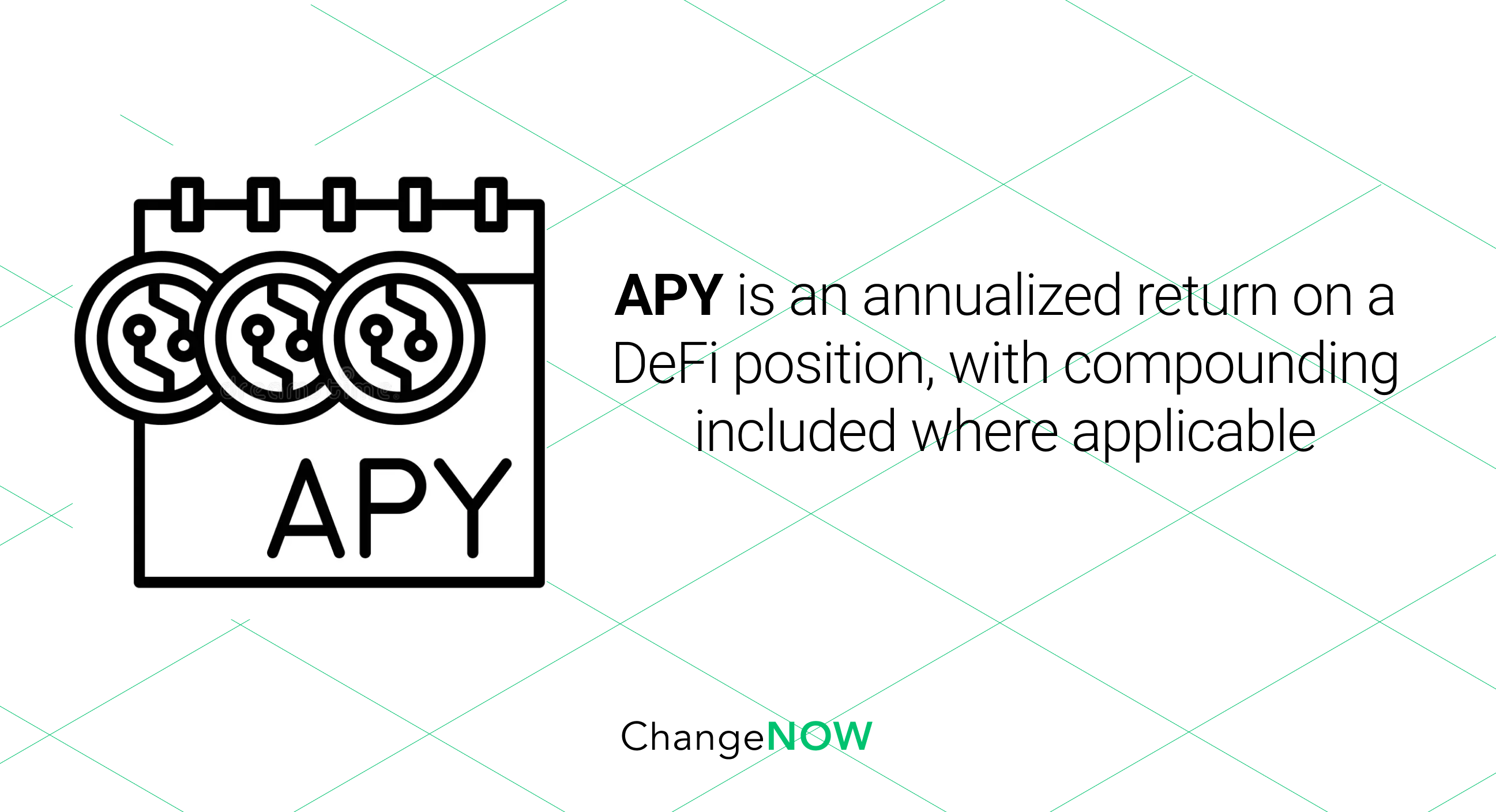
These returns are often expressed as APY, which accounts for compounding where applicable.
Cap’s yield comes from lending. Depositors provide dollar-based capital, which goes to institutional borrowers. Those borrowers pay interest, and part of that income flows back to depositors.
“The yield on Cap comes from real credit activity. Dollar deposits provide capital that is ultimately lent to institutional borrowers, and those borrowers pay interest for access to that capital. A portion of that credit spread flows back to depositors as yield, while underwriters earn a premium for putting their own capital behind the loans they approve. That distinction matters because sustainable yield needs an identifiable economic source. We are not trying to manufacture a number through token emissions. There is a borrower on the other side paying for capital and an underwriter taking financial risk to guarantee that credit.”
FAQ
The hurdle rate combines the borrowing cost and the underwriting premium. Borrowers need to cover both before retaining surplus income.
cUSD is Cap’s digital dollar minted against approved reserve assets. Users can stake cUSD to receive stcUSD, the yield-bearing version.
The underwriter’s escrowed collateral can be liquidated through a permissionless auction under Cap’s guarantee rules. Liquidators can receive a liquidation bonus.
Yes. Cap’s whitepaper names BTC, ETH and tokenized real-world assets as examples of alternative assets that can serve as underwriting capital.
The financial guarantee gives lenders a contractual claim backed by escrowed underwriter collateral. Cap combines the onchain collateral mechanism with an offchain legal agreement.
Cap names firms such as Susquehanna Crypto and Flow Traders among its borrowers. Its Q1 2026 investor update also reported a $100 million revolving credit facility for Susquehanna Crypto.
Who Takes the Risk on Cap?
Cap uses a separate party to assess and back each loan. The structure gives that party a financial reason to make careful credit decisions.
“Cap separates the borrower from the party guaranteeing the loan. Independent funded underwriters source and evaluate borrowers, then escrow their own capital behind the loans they approve. If the borrower performs, the underwriter earns a credit premium. If the borrower defaults, the underwriter’s collateral can be liquidated to protect lenders.” – Benjamin Sarquis Peillard, Founder & CEO of Cap
If the loan performs, the underwriter earns a premium. If the borrower defaults, the committed capital is exposed to the loss.
How Cap’s Credit Marketplace Works
Cap’s credit market has four participants: lenders, borrowers, underwriters and liquidators. The diagram below shows how they interact and where the money moves.
Cap's onchain credit model.
cUSD is Cap’s digital dollar. Users can stake cUSD to receive stcUSD, the yield-bearing version.
Participant
Function
Economic position
Lender
Deposits approved dollar-based assets and receives cUSD. cUSD can be staked for stcUSD, which earns yield.
Receives yield
Borrower
Borrows capital backed by the underwriter’s collateral
Pays borrowing and underwriting costs
Underwriter
Puts collateral behind a specific loan
Earns a premium and takes the credit risk
Liquidator
Acts when a borrower no longer meets Cap’s required health level
Earns a liquidation reward
A few terms help explain what happens when a loan becomes more expensive, loses sufficient backing or needs to be closed.
Hurdle Rate Explained.
Health Factor Explained.
Cap also defines who absorbs losses and why liquidators are paid to step in.
First-Loss Risk Explained.
Liquidation Bonus Explained.
Lenders provide the capital, institutional borrowers use it, and borrower interest generates yield for depositors. Each loan has its own underwriter and separate collateral, so a default on one position does not automatically affect the others.
What Blockchain Adds to the Credit Market
Credit analysis still depends on the borrower’s business, cash flows, liabilities, collateral and ability to repay. Those decisions require financial due diligence before capital is deployed.
Blockchain handles the rules around the decision.
Cap makes the collateral backing each credit position visible onchain and uses smart contracts to enforce the financial guarantee and liquidation process.
“Permissionless infrastructure does not mean permissionless underwriting. Real-world credit still requires fundamental analysis of the borrower, its business, cash flows, collateral and ability to repay. Blockchain cannot tell you whether someone deserves a loan. Where it helps is everything around that decision. Once an underwriter has done the diligence and made a credit decision, we can make the capital backing that decision transparent and enforce the financial guarantee programmatically.” – Benjamin Sarquis Peillard, Founder & CEO of Cap
The credit decision stays with the underwriter; the rules governing the position can be enforced by code.
How Financial Guarantees Work
A financial guarantee links the lender, borrower and underwriter through an offchain legal agreement and collateral escrowed onchain. The underwriter guarantees repayment to the lender, while the borrower remains responsible for its obligations to both parties.
The legal agreement gives the lender recourse beyond the onchain enforcement layer.
For Benjamin Sarquis Peillard, Founder & CEO of Cap, trust depends on transparency:
“Trust comes from making the risk understandable and making the protections verifiable. Users should be able to understand where their yield comes from, who borrowed the capital, who underwrote the loan, what stands behind it and what happens if the borrower defaults.”
Cap’s Q2 2026 investor update reported $41.9 million in loans outstanding, $205 million in guarantee collateral, 16 active borrowers and 16 active underwriters as of June 30. The company reported a 4.40x coverage ratio and zero cumulative losses to lenders at that date.
Cap platform metrics showing current deposits, guarantees issued and USD APY. Figures may change over time. Data shown as of September 28, 2026.
Cap also reported continued redemptions during the October 10 liquidation cascade and the Stream Finance contagion, without gating redemptions or breaking its peg.
Does Tokenizing an Asset Change Its Risk?
Tokenizing an asset does not change the underlying credit risk. It changes how the asset is represented, recorded and handled onchain, while the risk still depends on the borrower and the terms of the loan.
“The market often assumes that putting a real-world asset onchain somehow makes the underlying risk better. It does not. A bad loan does not become a good loan because it has been tokenized, and an illiquid asset does not suddenly become economically liquid because a token can trade 24/7.” – Benjamin Sarquis Peillard, Founder & CEO of Cap
Tokenization can make ownership, collateral and exposure easier to record and transfer. The quality of the underlying credit remains tied to the borrower and the loan itself.
How Stablecoin Yield Fits Into Cap
Cap uses dollar-denominated reserve assets within its credit system. Depositors mint cUSD and can stake it for stcUSD, the yield-bearing version.
Cap dashboard showing underwriting capital by asset and network, alongside stcUSD yield sources. Dashboard figures are dynamic.
Cap’s Q2 2026 investor update reported a quarter-median stcUSD net APY of 5.52%. The company said Q2 yield came from guaranteed loan origination and reserve yield strategies.
How the ChangeNOW x Cap Partnership Works
The partnership gives users a non-custodial way to exchange CAP on Ethereum through ChangeNOW.
Benjamin Sarquis Peillard, Founder & CEO of Cap, also spoke about how platforms like ChangeNOW could simplify access to onchain credit products:
“At a high level, the opportunity would be to remove steps between a user holding an asset and that user accessing dollar-denominated onchain yield. Rather than requiring someone to understand the underlying credit protocol, move assets across multiple applications and manually navigate each part of the process, a platform like ChangeNOW could potentially provide a simpler access point. For Cap, the important thing would be preserving what sits underneath that experience: transparent backing, secured yield and the financial guarantees protecting the credit.”




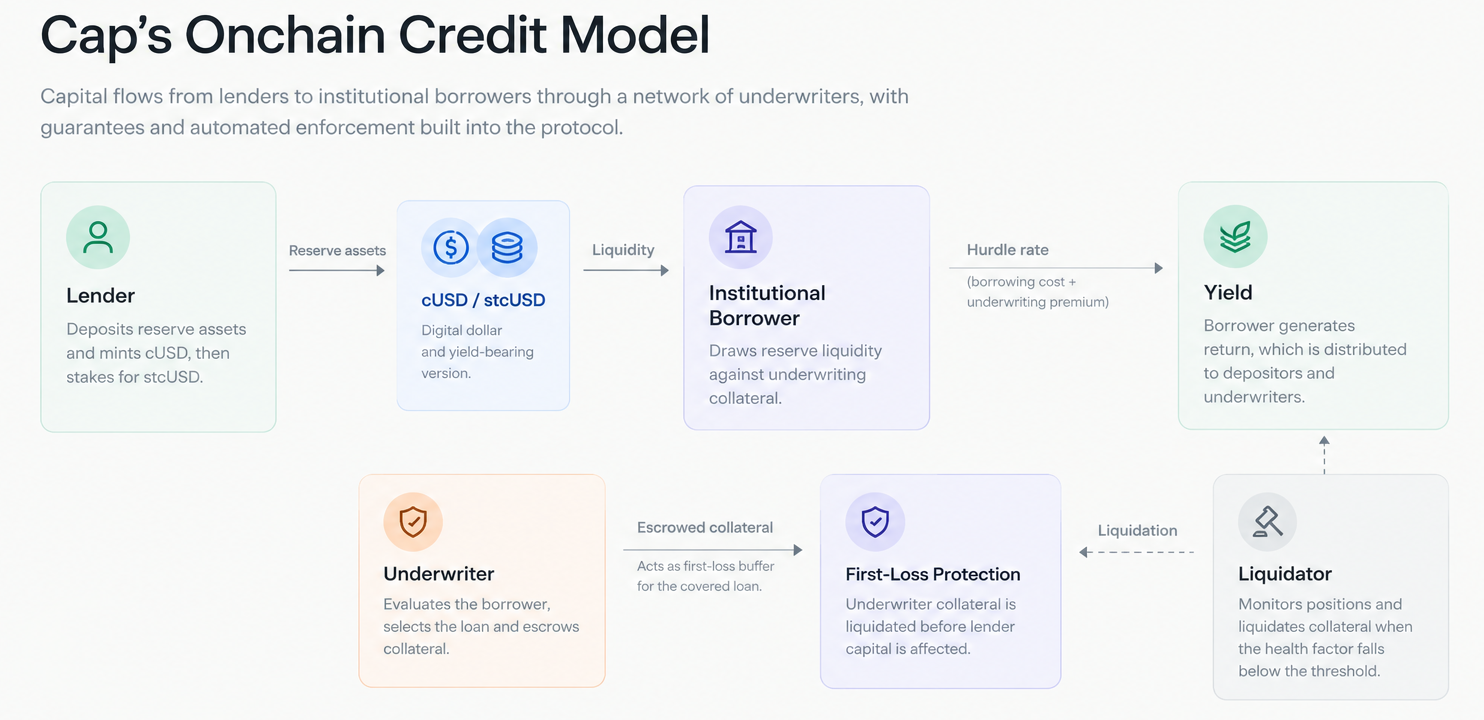 Cap's onchain credit model.
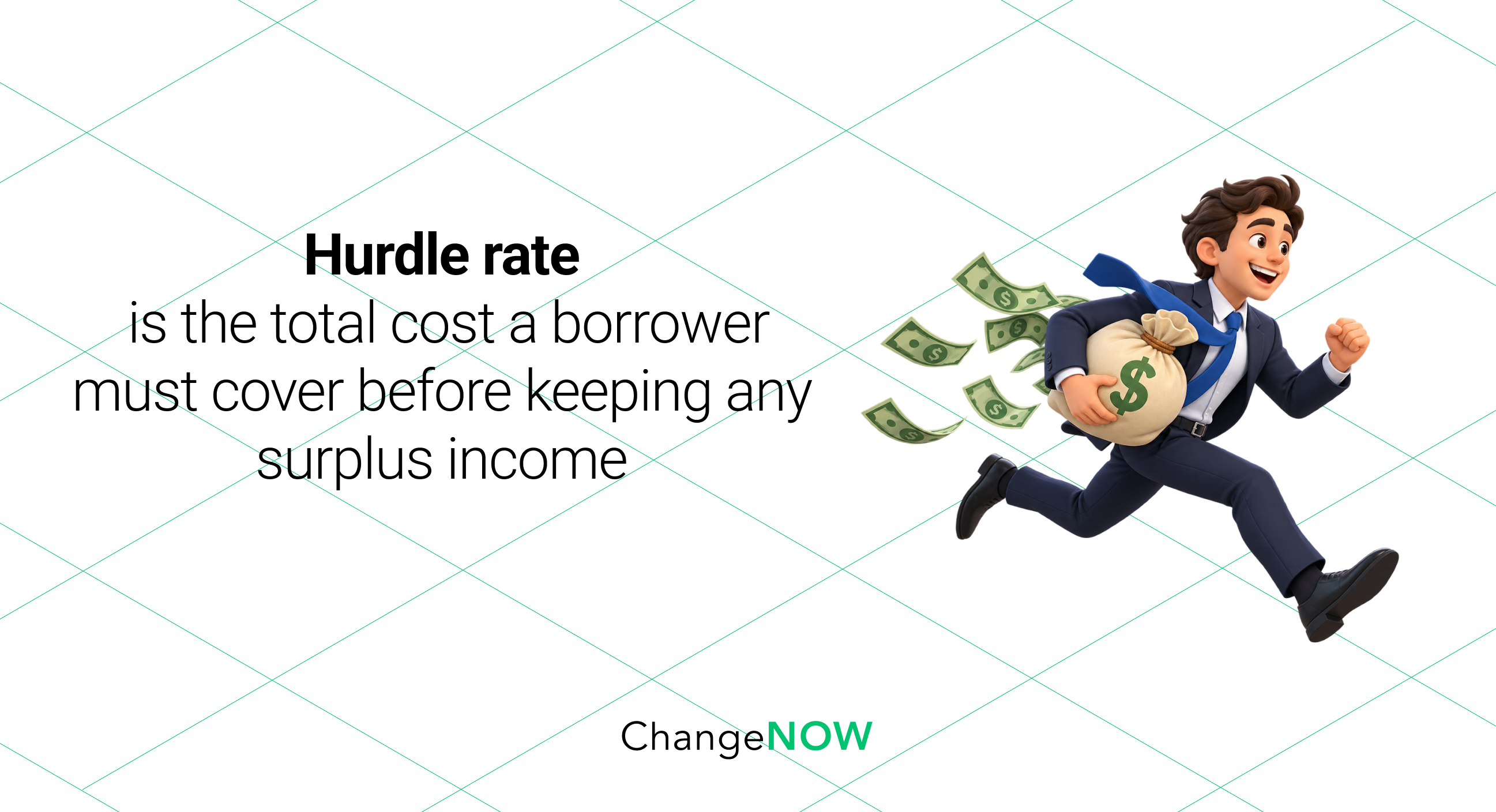 Hurdle Rate Explained.
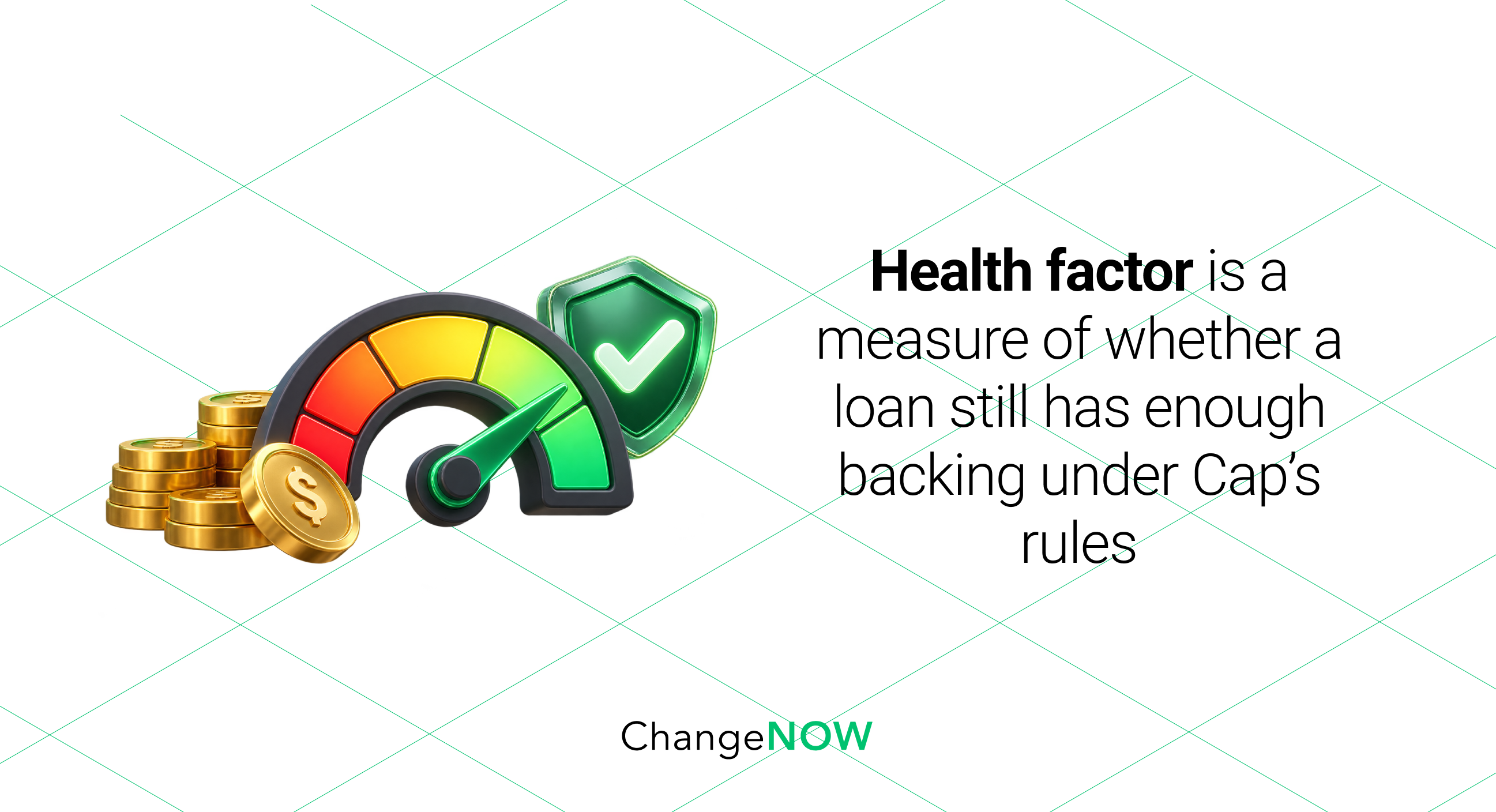 Health Factor Explained.
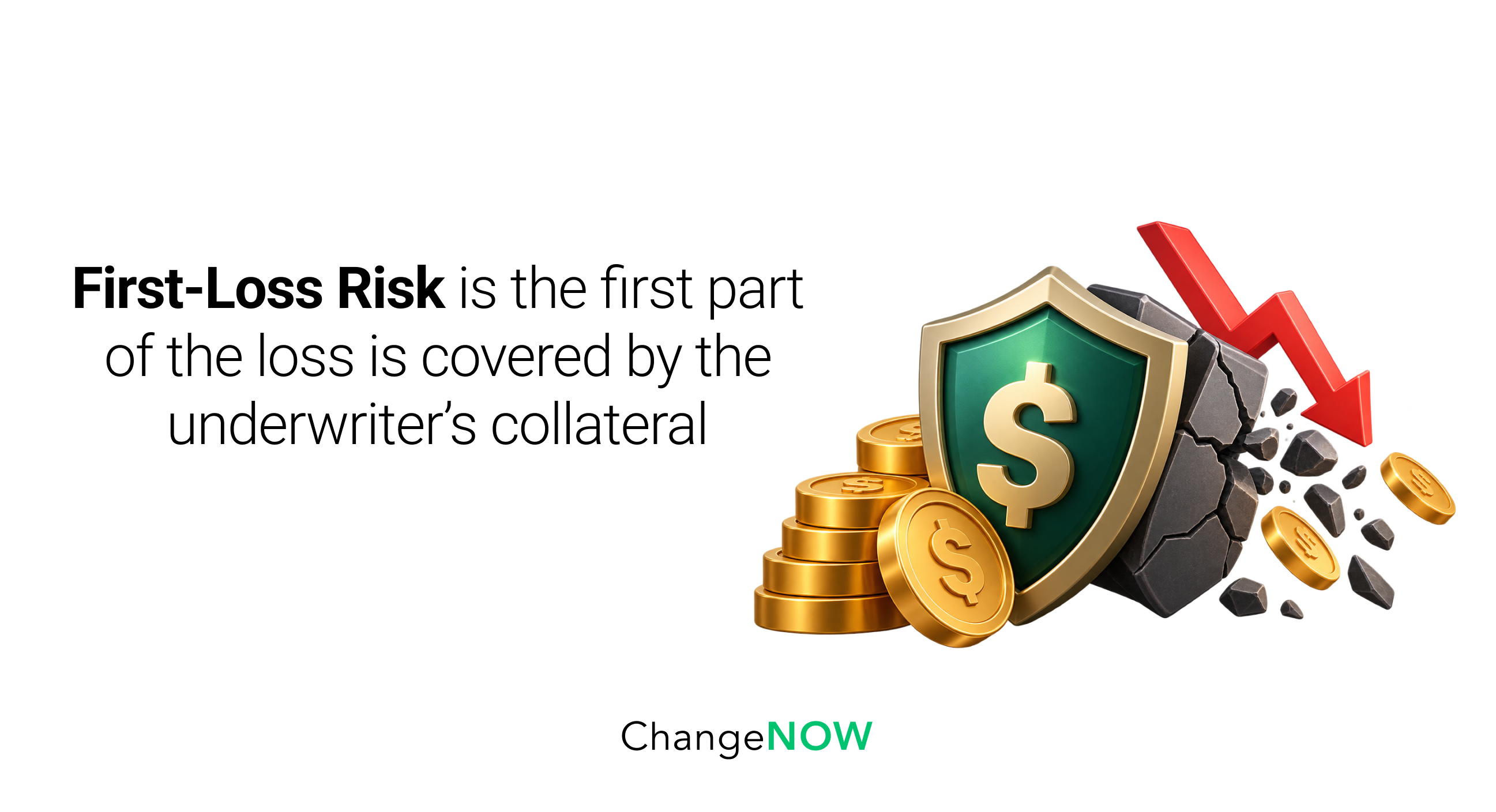 First-Loss Risk Explained.
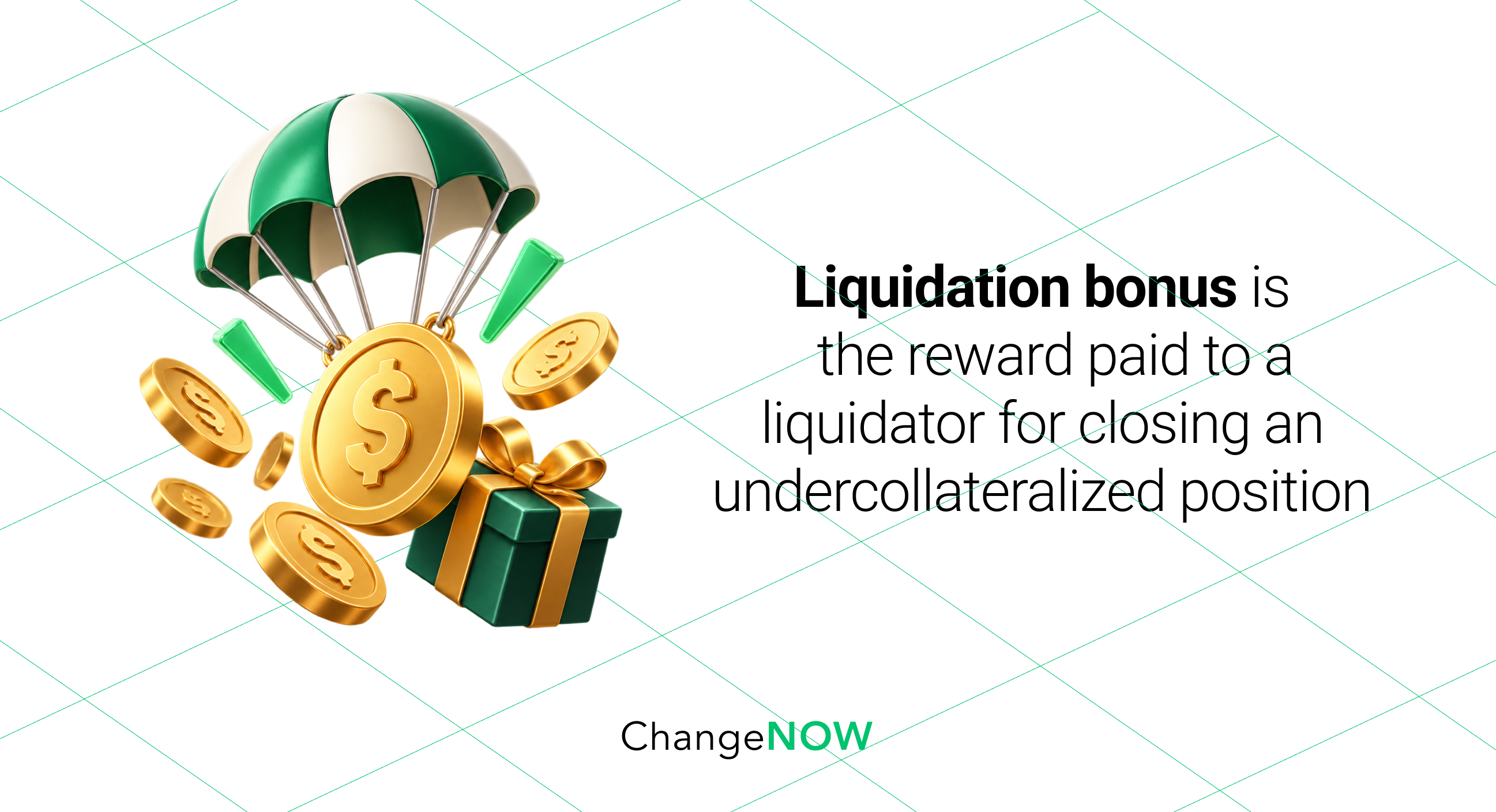 Liquidation Bonus Explained.
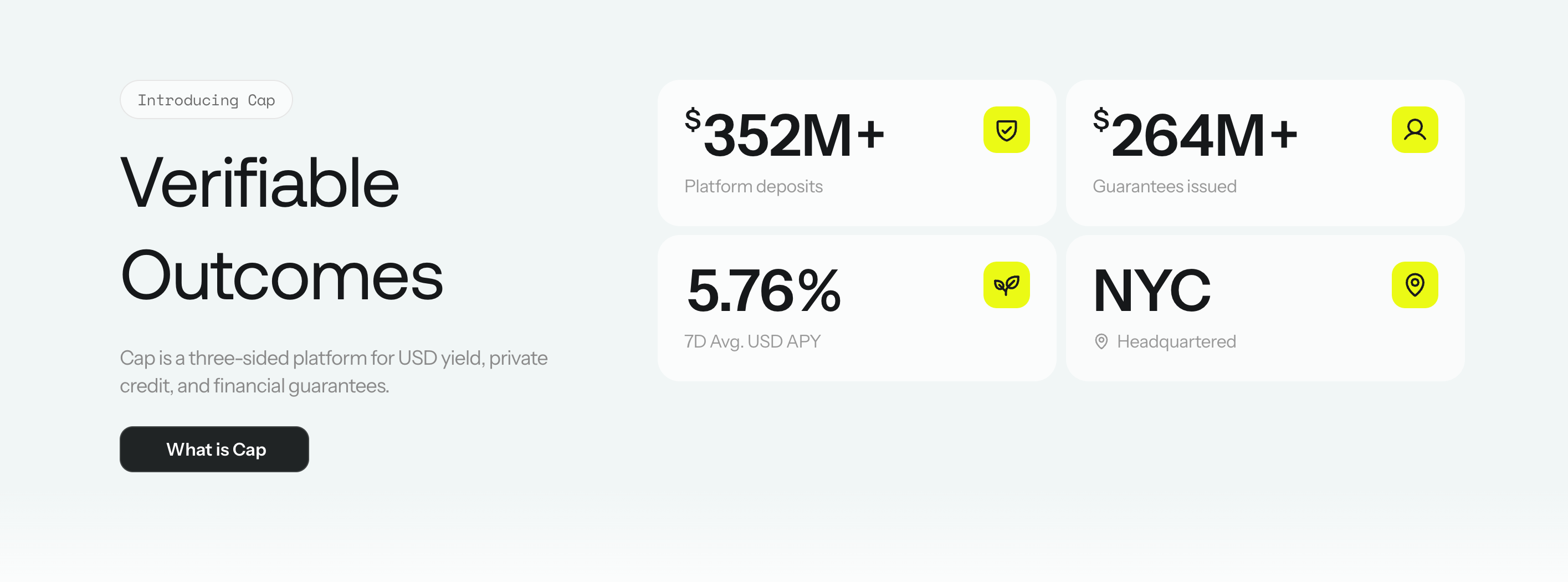 Cap platform metrics showing current deposits, guarantees issued and USD APY. Figures may change over time. Data shown as of September 28, 2026.
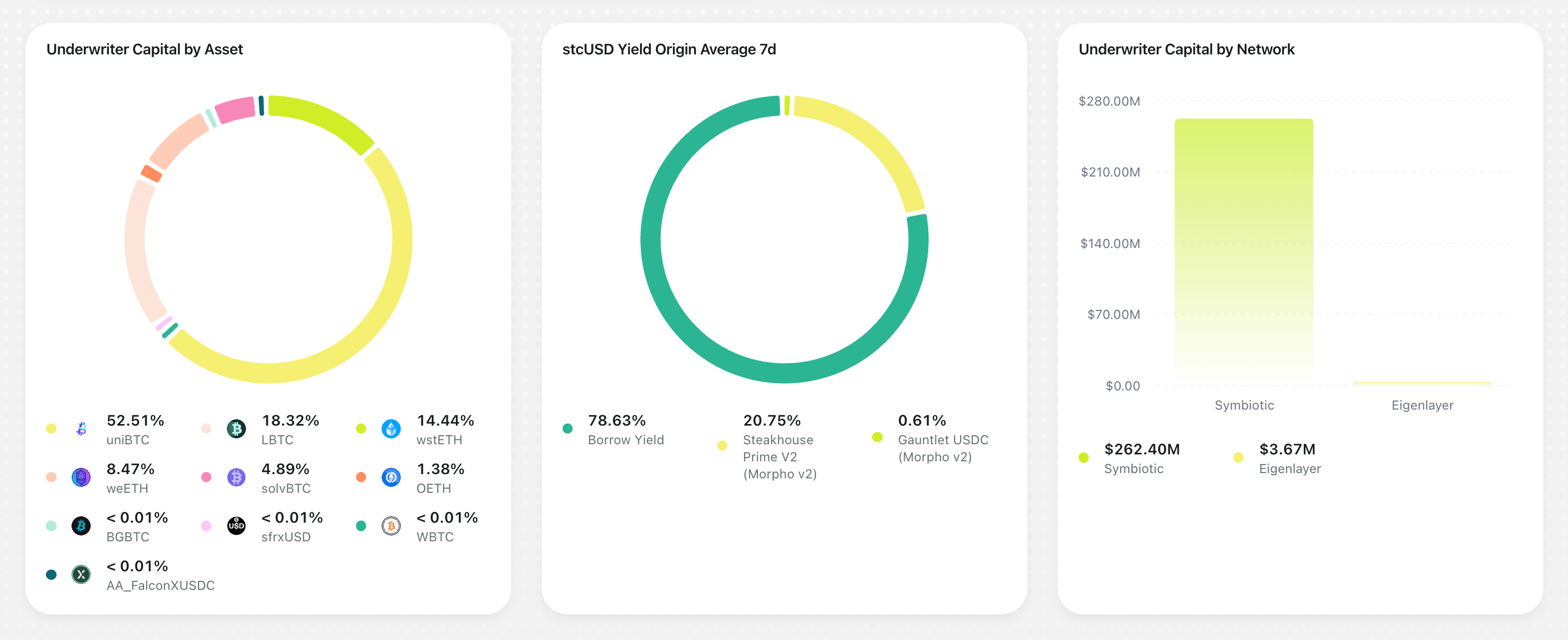 Cap dashboard showing underwriting capital by asset and network, alongside stcUSD yield sources. Dashboard figures are dynamic.
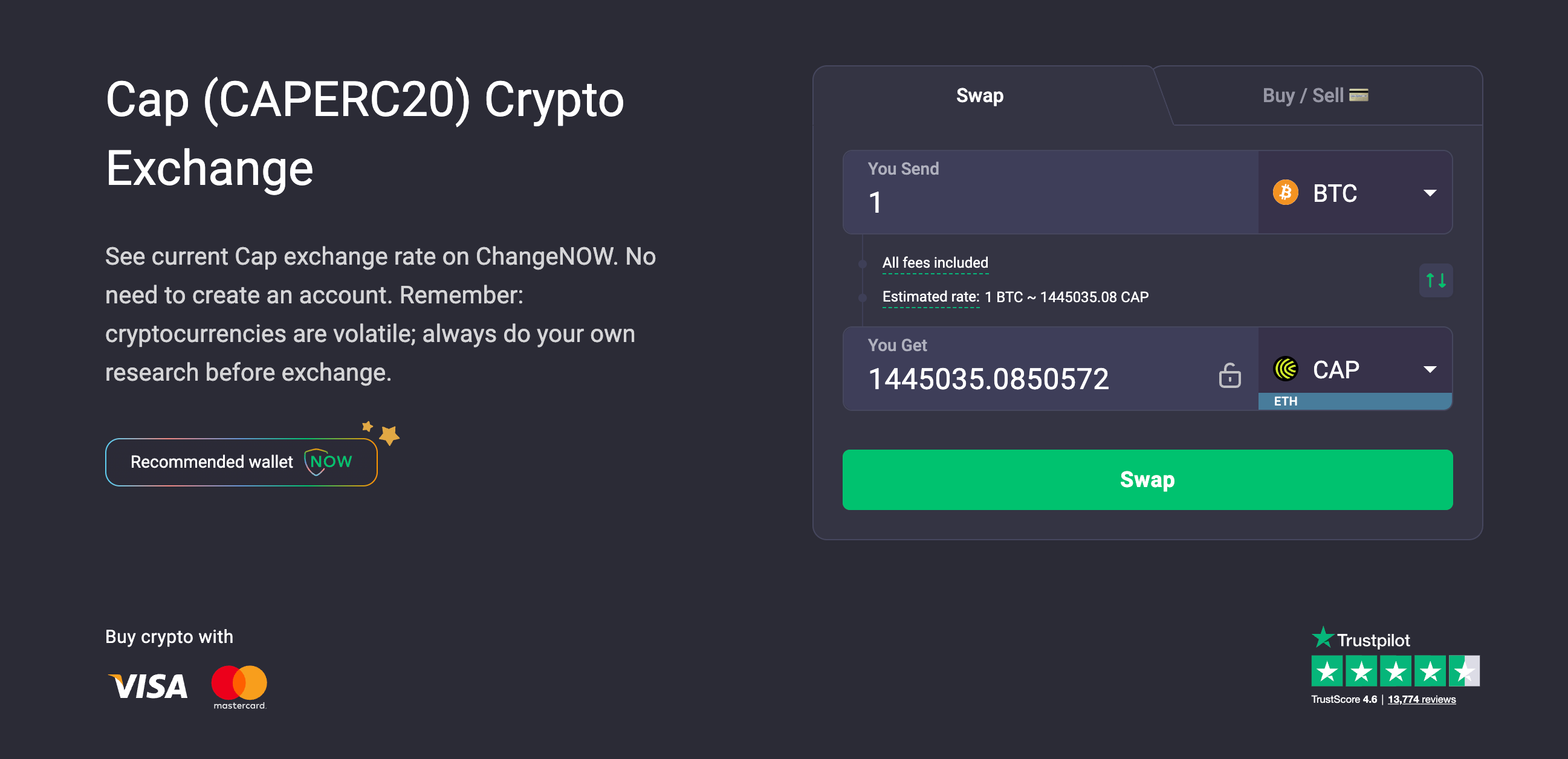 CAP exchange on Ethereum through ChangeNOW.


