Gold has been a symbol of wealth and status for centuries. However, owning gold these days is kind of a hassle: it’s heavy, hard to move around and overall, too… analog.
Dubai is leading the charge in this shift, with tokens like PAXG and Tether Gold, anyone can access gold without the vaults or high entry costs.
In this article, we’ll break down what tokenized gold is, why it’s changing how we think about gold investment, UAE’s role in tokenization of gold and what you can do to own a piece of a gold bar.
Disclaimer:This article is for informational purposes only and does not constitute investment advice or a recommendation to buy or sell crypto assets. Any views, opinions, or forward-looking statements reflect current market sentiment and publicly available information and should not be relied upon as a basis for investment decisions.
What Is Tokenized Gold and How Does It Work
Tokenized gold is a digital version of traditional gold, but instead of a physical bar, it's represented by tokens on the blockchain. These tokens are backed by real gold held in secure vaults, so each token has a specific amount of gold attached to it.
The key here is blockchain technology. Just like cryptocurrencies, tokenized gold uses blockchain to track ownership and transactions.
This means that instead of having to buy and store a physical bar, you can own and trade gold with your smartphone.
Here's how it works:
Gold is stored in a secure vault. The physical gold remains in a vault (often with a trusted custodian), where it’s insured and monitored.
Tokens are issued on the blockchain. For every ounce or gram of gold, a corresponding token is created on the blockchain. This token is like a certificate proving you own a certain amount of gold.
Ownership is tracked on the blockchain. The blockchain ledger records every transaction, ensuring the token’s ownership is transparent and secure.
As a result, you can buy, sell, or trade gold without worrying about storage, transportation, or the hefty price tag of a full gold bar.
Plus, tokenized gold can be traded 24/7, unlike physical gold that requires you to go through brokers or dealers.
Tokenized Gold Market Insights 2026
Q1 2026 alone generated more tokenized gold trading volume than all of 2025 combined. In their report on RWA 2026, CoinGecko puts the numbers at $90.7B versus $84.6B.
Trading activity accelerated even faster: tokenized gold recorded about $178 billion in volume, which would rank it as the second-largest gold investment vehicle in the world by trading volume, behind only SPDR Gold Shares.
That momentum didn't slow down. As of March 2026, tokenized commodities hit a record $7.32 billion, with monthly transfer volume surging 62.96% to $17.11 billion.
This isn't a niche crypto story anymore. It's a macro story playing out on-chain.
Gold Is at $5,400. Tokenization Makes It Affordable.
Gold shattered the psychological $5,000 barrier in early 2026, trading as high as $5,312 per ounce - a 22% gain in January alone.
At that price, a standard one-ounce bar costs more than most people's monthly salary. A 400-ounce Good Delivery bar, the standard institutional unit, runs north of $2 million.
Tokenization solves the two biggest pain points of the 2026 surge: affordability and velocity.
With gold at $5,300, fractional on-chain ownership means you can buy $50 worth of gold-backed tokens in the same amount of time it takes to open a trading app.
When US and Israeli strikes on Iran sparked safe-haven flows in March 2026, daily trading volumes for XAUT and PAXG surpassed $1 billion in a single day.
That's institutional capital moving fast, through the only infrastructure fast enough to handle it.
What Dubai and the UAE Have to Do With It
The UAE is the world's second-largest gold marketplace.
On February 28 and March 1, as US-Iran military escalation intensified, Tether Gold volume on Solana hit a 7-day all-time high of $78 million.
A significant portion of the physical gold backing those tokens sits in GCC-secured vaults. The region isn't just observing the tokenized gold boom - it's part of the infrastructure running it.
For MENA investors specifically, this collapses the distance between the region's most historically trusted asset and the most liquid format it has ever existed in.
Why Tokenization Is the Easiest Way to Invest in Gold
Investing in gold traditionally means shelling out a significant amount of cash for physical gold bars or coins, which isn’t an option for many investors.
But with gold tokens like PAXG and Tether Gold, you can access tokenized gold crypto without needing to buy a full bar or deal with storage fees.
These tokens make it possible to own fractional amounts of gold, bringing gold’s value within reach of smaller investors, even those in MENA who want a piece of the gold rush without breaking the bank.
Want a step-by-step breakdown on how to buy gold online? Click the link and read our full guide.
Examples of Gold Backed Crypto
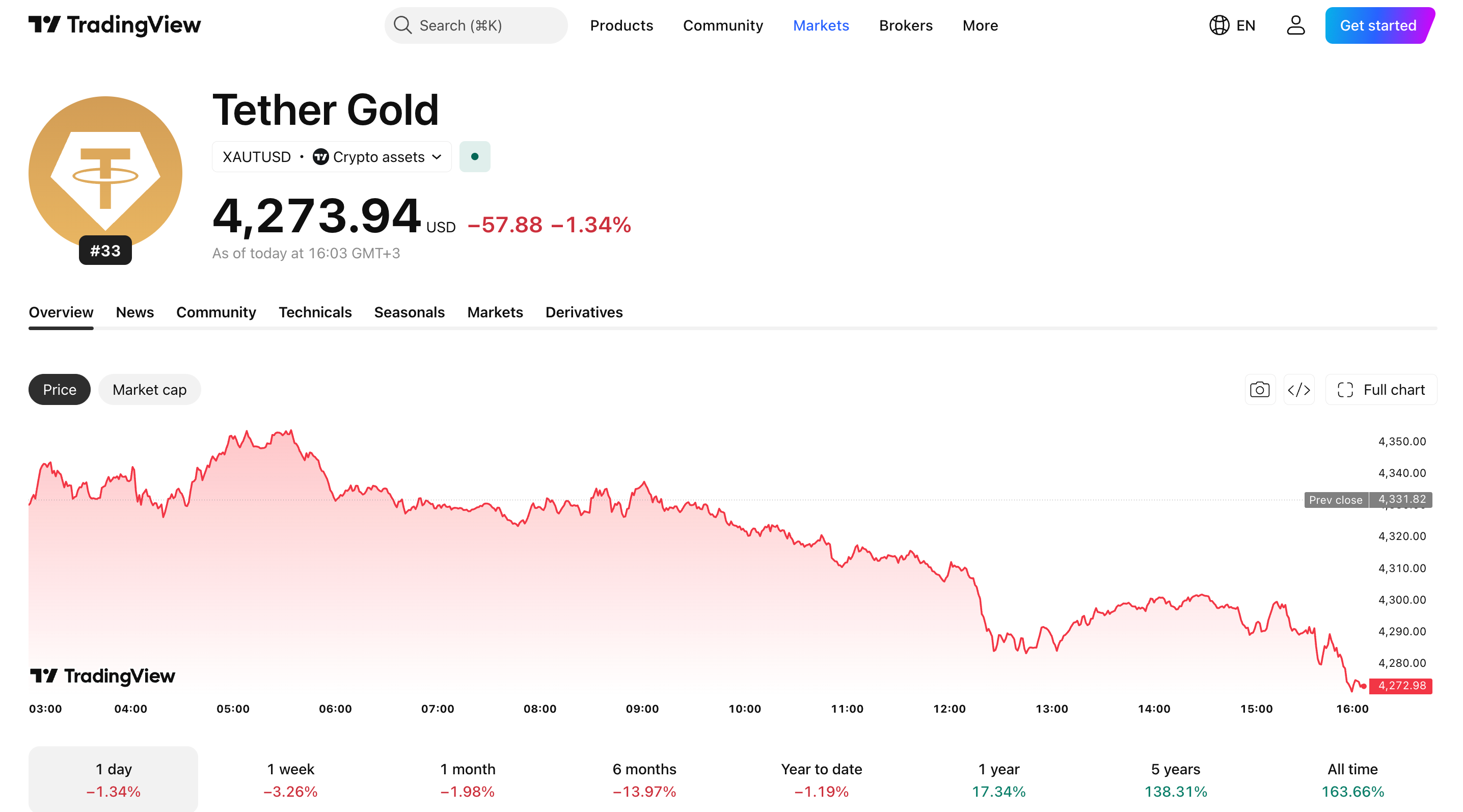
The space of gold backed crypto isn’t huge yet, but two tokens dominate and deserve attention: PAX Gold (PAXG) and Tether Gold (XAUt). Both aim to give you blockchain exposure to real gold, with each token backed 1:1 by physical bullion stored in secure vaults.
PAX Gold (PAXG)
What it is: A token issued by Paxos Trust Company. Each PAXG represents one troy ounce of LBMA‑approved gold held in vaults
Market data: As of 2026 prices, PAXG roughly tracks the spot gold price around ~$5,000 per token, and it has billions in market cap and high liquidity on major exchanges. (via CoinMarketCap)
Bonus: Some issuers allow redemption of tokens for actual physical gold bars, though minimums and fees often apply.
What it is: A gold token from Tether (the company behind USDT). Like PAXG, each XAUt equals one ounce of physical gold, stored in Swiss vaults.
Market data: XAUt also trades close to spot gold, often just a few percent off, with a multi‑billion market cap and strong trading volume.
Scale: Tether reportedly holds tens of tons of physical gold to back XAUt, making it one of the largest private holders tied to tokenized gold.
Both tokens are part of a broader trend where RWAs like gold get digitized on-chain - a shift that’s spreading to other commodities, real estate, and even equities.
From gold to real estate, assets are being digitized at an unprecedented rate, making them more liquid, more accessible, and more profitable.
The tokenized RWA market is projected to grow from $0.6 trillion today to $18.9 trillion by 2033.
MENA, with its gold reserves, real estate boom, sovereign wealth capital, and regulatory infrastructure, is positioned closer to the center of that shift than most regions realize.
What's Actually Moving
Gold is the obvious frontrunner, and it's not close. Two tokens, Tether's XAUT and Paxos' PAXG, together control 73% of the tokenized commodity market. That's a clear duopoly with a good PR strategy.
Beyond gold, real estate tokenization is gaining ground in Dubai, and stablecoins are quietly becoming the infrastructure layer everything else runs on.
Energy and agriculture tokens exist, but they're mostly white papers and pilot announcements as real liquidity isn't there yet.
How Institutions Are Actually Allocating
It's less "buy tokens on an app" and more "build a compliant structure, then move capital into it." In the UAE, that structure is getting clearer.
Dubai's VARA updated its framework in May 2025 to classify tokenized assets as regulated financial instruments, mandating audited reserves and segregated custody. That's the legal container institutions were waiting for before committing real money.
The other underrated factor is Shariah compliance. Tokens structured with a proper fatwa are unlocking Gulf institutional and family office capital that had no compliant on-ramp before. In this region, that's a significant pool of sidelined money finally finding a vehicle.
The Risks Nobody Headlines
The infrastructure sounds robust until you try to exit. If an asset manager buys a large block of tokens and needs to rebalance, returning them in exchange for bullion quickly becomes a lengthy, cumbersome process. Tokenized gold that can't be liquidated efficiently is just a digital receipt.
There's also the regulatory overhang. Most retail-accessible tokens are operating under a framework that's still being written in real time, which is manageable with a legal team tracking it, but a problem if you're assuming the rules are already settled.
And with two issuers dominating the entire category, a single operational or reputational stumble doesn't just hurt a product - it sets back tokenized gold as a concept. The category is only as credible as its biggest players.
Where the MENA Region Is Headed
The regulatory picture in MENA right is not quite a unified strategy. It's more like a series of individual bets on the same direction.
The UAE moved first and clearest. Three frameworks now run in parallel:
VARA — covers retail exchanges, consumer platforms, and tokenized assets
DIFC — institutional trading, custody, and digital asset property law
ADGM — asset managers, custody providers, tokenized equity and debt
As of September 2025, operating without a license means fines up to AED 1 billion. The grace period ends in September 2026. The window for gray-zone operations is closing.
The rest of the Gulf is catching up, at its own pace.
Qatar launched a structured digital asset framework through the QFC in 2025
Saudi Arabia is running tokenization and CBDC pilots, with a full regulatory framework expected for public consultation in H2 2026
Kuwait and Oman remain on the sidelines: in practice, capital just routes around them
Worth noting:Saudi Arabia entering with a formal framework would be a significant unlock. It's the largest economy in the region, with institutional capital and a Shariah-compliant investor base that dwarfs most of its neighbors.
What makes MENA genuinely compelling is the combination: deep gold infrastructure, sovereign wealth at scale, a large pool of Shariah-compliant capital, and regulators actively competing for institutional business.
What's still being built: secondary market liquidity, cross-border legal interoperability, and consistent treatment of digital ownership across jurisdictions. However, none of these are dealbreakers, because they are already on the roadmap.
FAQ
It's a digital token that represents physical gold stored in a vault. One token typically equals one troy ounce of gold. You don't hold the metal - you hold a blockchain-based claim to it. The gold is real, audited, and allocated to your token specifically.
A few key differences. ETFs:
trade only during market hours. Tokenized gold trades 24/7
give you exposure to the gold price. Some tokenized products give you direct legal ownership of a specific bar
settle in T+2. Token transactions settle near-instantly on-chain
are heavily regulated at the retail level. Tokenized gold in the UAE is still catching up to that standard
Worth noting: ETFs are currently more liquid and better regulated for retail investors. Tokenized gold has structural advantages, but they come with structural trade-offs.
Some products are, some aren't. Shariah-compliant tokens require a fatwa from a qualified scholar and must be backed 1:1 by allocated physical gold, with no interest-bearing elements. Comtech Gold (CGO), based in the UAE, is structured specifically for this. Always verify before investing - "gold-backed" doesn't automatically mean compliant.
Depends on the product. PAXG allows redemption for LBMA-accredited gold bars. XAUT allows redemption through Tether Gold. In both cases, minimums apply and the process isn't instant. Most retail holders sell tokens for cash rather than requesting physical delivery.
Issuer risk. If the company behind the token mismanages reserves or becomes insolvent, your claim gets complicated fast.
Liquidity risk. Selling a large position quickly isn't always straightforward, especially outside of the two dominant tokens.
Regulatory risk. The frameworks in the UAE and across MENA are still evolving. Rules that apply today may look different in 12 months.
Smart contract risk. The token is only as secure as the code governing it. Always check for independent audits.
The two most accessible options are PAXG and XAUT, both available on ChangeNOW. For Shariah-compliant products, Comtech Gold (CGO) is the most prominent local option. Entry points are low: you can buy fractions of a token, starting from well under $100.
Partially. VARA's 2025 framework classifies tokenized assets as regulated financial instruments, which is a meaningful step. But there's still no retail gold token product that's fully equivalent to a regulated gold ETF under SCA or DFSA rules. The regulatory infrastructure is still being built.


 Source: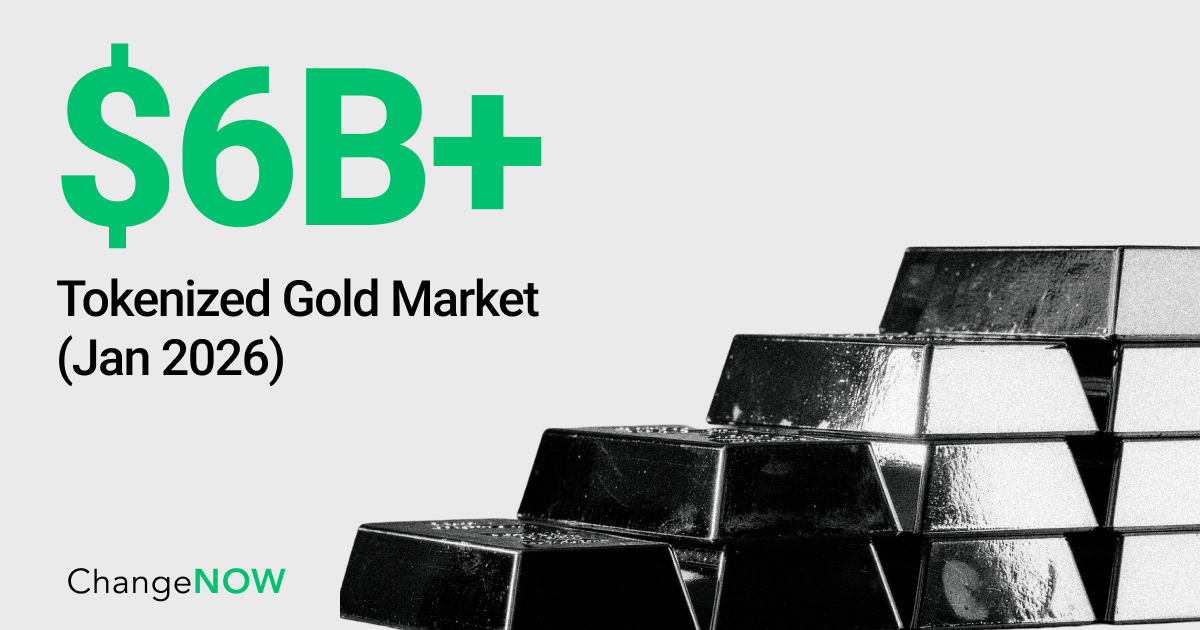
 Source:


