


Answer block: A mobile crypto app turns tasks that once required several separate tools into actions you can complete directly from your phone. The main benefits include easier crypto storage, faster sending and payments, real-time price alerts, and portfolio tracking. Instead of switching between desktop wallets, exchanges, and browser tabs, users can manage everyday crypto activity from a single app.
For many users, the biggest advantage of a crypto app is not that it introduces completely new functions. It makes existing crypto tasks easier to access. A mobile crypto app keeps wallets, market data, payments, portfolio tools, and security features close at hand, while hardware wallets and desktop tools can still play an important role for long-term storage or more advanced workflows.
Key Takeaways
- A mobile wallet can keep private keys on the device and protect access with biometric security such as Face ID or a fingerprint.
- Sending crypto can be faster with QR codes, saved addresses, and built-in network checks instead of repeated manual copy-paste.
- Some mobile crypto apps support crypto payments through linked cards or QR-based checkout.
- Price alerts notify users when coins reach a selected price without requiring constant market monitoring.
- Portfolio tracking gives users a quick view of several crypto assets and wallets from their phone.
- Hardware wallets still provide stronger security for large amounts intended for long-term storing.
1. Storing Crypto Becomes Easier
A mobile wallet can store your private keys on your phone and let you unlock the wallet with Face ID or a fingerprint instead of entering a password for every transaction. For everyday use, that makes accessing crypto assets faster while adding another security layer to the app.
Mobile wallets also benefit from security features already built into modern phones, such as device encryption, biometric authentication, PIN protection, and automatic screen locking. These features do not make a phone impossible to compromise, but they can reduce the risk of someone accessing a wallet simply by obtaining the device.
Setting up crypto storage on a desktop may involve installing a browser extension or desktop wallet, creating a seed phrase, configuring security settings, and making sure the computer itself is protected from malware. A mobile wallet follows a similar setup process but keeps future access available directly from the phone.
The seed phrase still needs to be written down and stored securely offline. Biometric security does not replace seed phrase protection, and the seed should never be saved in screenshots, cloud notes, or unencrypted files. Read our guide on secure storing of seed phrase.
For larger amounts or long-term storage, hardware wallets generally offer stronger security because private keys remain isolated from an internet-connected phone or computer. Mobile wallets, by contrast, are often more practical for assets that users expect to send, exchange, or access regularly. Our recent article on cold storage explains how to store larger amounts of crypto more securely.
Read the article on storing large amounts of BTC
In practice, many users may benefit from using both: a hardware wallet for long-term holdings and a mobile wallet for everyday crypto activity.
2. Sending Crypto More Safely
Instead of typing or copy-pasting a long wallet address, a mobile crypto app can let you scan the recipient's QR code with the phone's camera and confirm the amount before sending.
That removes one manual step from the transaction process. Blockchain transactions are generally irreversible, so checking the destination address and selected network before sending remains essential even when a QR code is used.
Most mobile wallets display the recipient address, asset, amount, and network before final confirmation. These checks can help users catch problems such as choosing an unsupported network or sending an asset to the wrong destination.
Security is especially important when addresses are copied from other apps or websites. Clipboard malware and phishing pages may attempt to replace or imitate wallet addresses, which is why users should always compare the destination shown in the crypto app before approving a transaction.
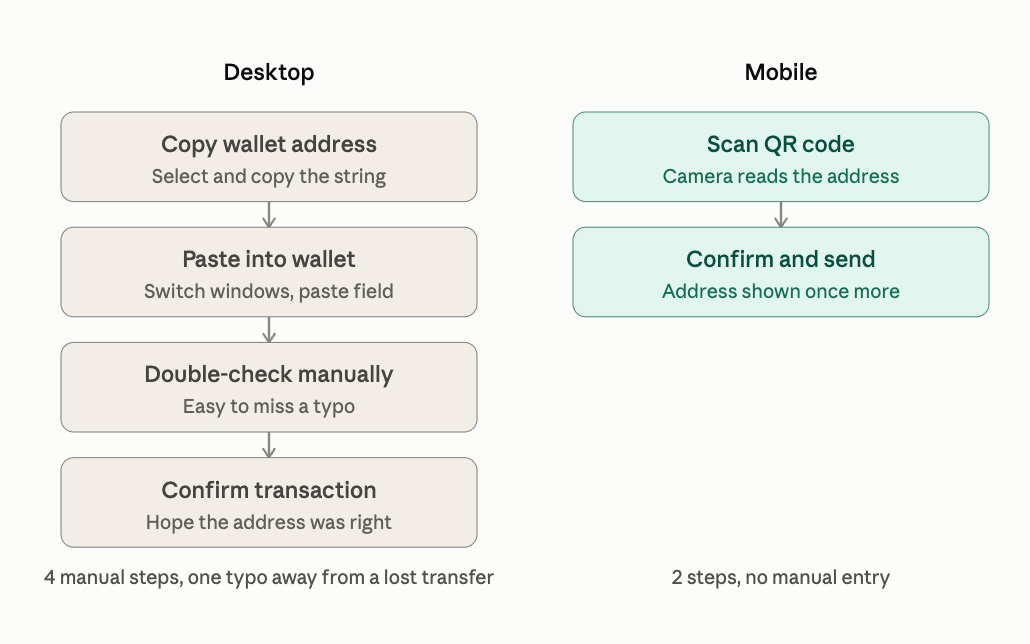
In some apps, like ChangeNOW mobile, you may use an address book – it lets you save and manage frequently used recipient addresses.
“Save an address once, and every future transfer to it is a tap away – no retyping, no re-scanning, no copy-paste,” – shares Elias Vilochkin, Chief Product Officer at ChangeNOW.
Saved addresses can make repeated sending easier, particularly for users who regularly move crypto between their own wallets or send payments to the same recipient. The address should still be checked periodically to make sure it remains correct and relevant.
3. Paying for Goods and Services
One of the most practical benefits of a mobile crypto app is the ability to bring crypto payments into situations where using a desktop wallet would be inconvenient.
Some mobile crypto apps connect a wallet balance to a crypto card or QR-based payment system. Depending on the service, crypto may be converted into local currency during the payment process, allowing users to pay at compatible stores without manually exchanging assets beforehand.
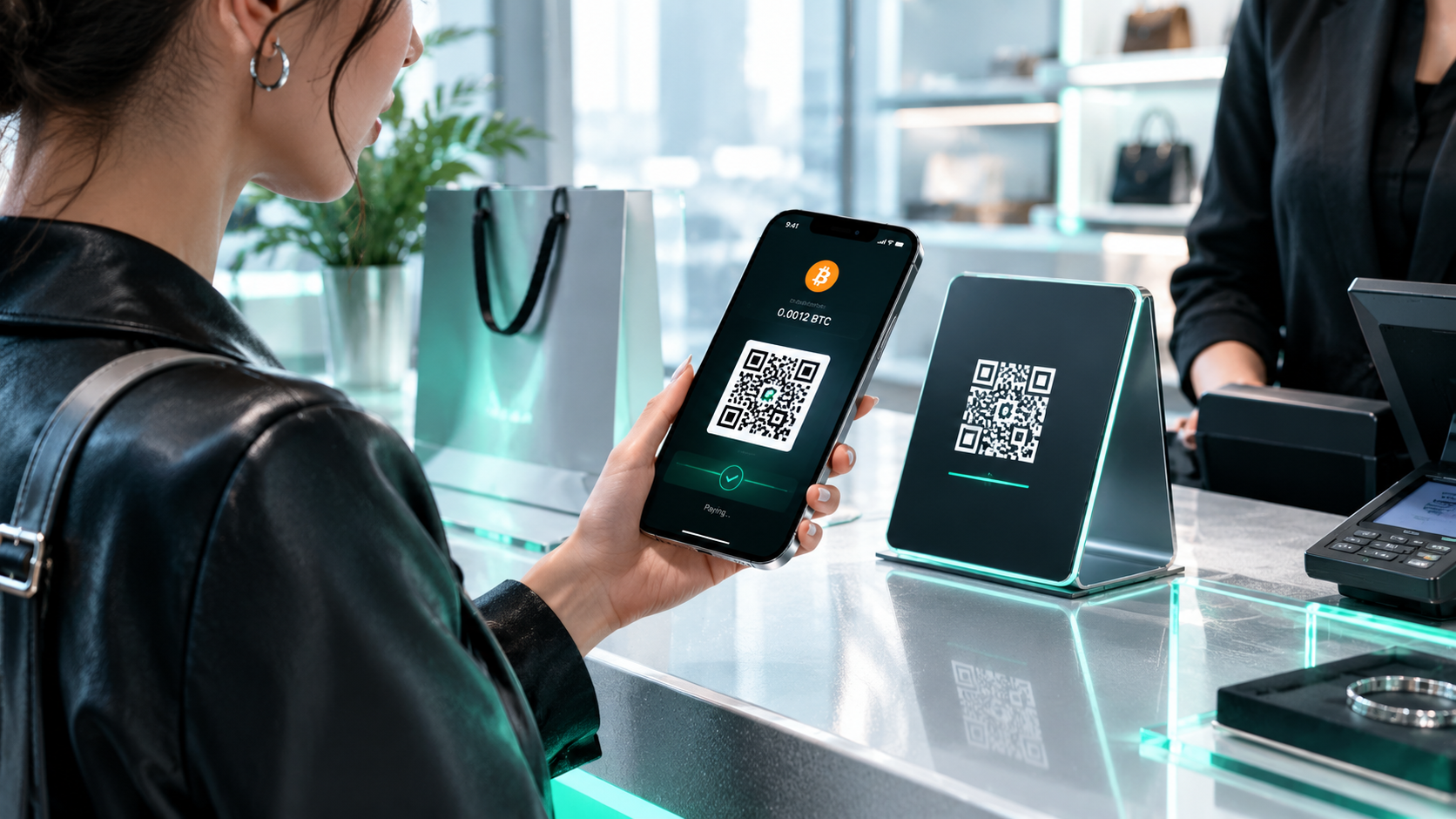
A phone is naturally better suited to in-person payments than a desktop computer. The wallet is already with the user at checkout, while QR scanning, biometric confirmation, and transaction approval can all happen through the same device.
Mobile payments can also be useful outside physical stores. A QR code displayed on another device can be scanned from the wallet app, reducing the need to manually copy payment addresses or switch repeatedly between apps.
However, crypto card payments and conversion-based payment services may involve several types of costs, including conversion spreads, network fees, or card-related charges. The final price can therefore differ from the visible market price of the asset.
Crypto-to-fiat card payments usually apply a conversion spread or fee at the moment of purchase – check the app's fee schedule before relying on it for daily spending.
Users should also consider payment security. Biometric authentication, transaction confirmation screens, device encryption, and notification alerts can help protect everyday mobile payments, but they do not replace checking the merchant, amount, asset, and network before approving a transaction.
4. Tracking Price Swings in Real Time
A mobile crypto app can show a coin's price history as a live chart and let you create price alerts for specific levels. Instead of repeatedly opening exchanges or refreshing a desktop page, users can receive a notification when the selected price is reached.
This is one of the clearest benefits of having market information on a phone. A user can check whether a coin moved over the last hour, day, week, or month, set a price alert, and then close the app.
Price alerts are particularly useful for users who hold several coins. Manually checking every asset several times a day quickly becomes impractical, while alerts make it possible to focus only on price movements that actually matter.
The feature can also reduce unnecessary trading behavior. Instead of watching charts continuously, users can decide in advance which price level deserves attention and let the mobile app handle the monitoring.
"The price alert runs as a background check against live market data – once the coin crosses your target price, it triggers a push notification, no need to keep the app open or the chart on screen," – says Elias.
5. Watching a Multi-Coin Portfolio at a Glance
Portfolio tracking is another area where mobile crypto apps can replace several small manual tasks with one screen.
A mobile portfolio view can show balances, individual coins, current prices, and daily changes without requiring users to open every wallet or exchange separately. For someone holding assets across multiple wallets, this gives a faster overview of the portfolio from a phone.
If holdings are split between two or three wallets or exchanges, checking them on a desktop may require several logins, browser tabs, or spreadsheet updates. Some portfolio apps and wallets instead allow users to add public wallet addresses and automatically track the assets associated with them.
This type of portfolio tracking does not necessarily give the app control over those wallets. A watch-only portfolio can use public blockchain data to display balances without importing private keys or a seed phrase, which can improve security when users only need to monitor assets.
| Method | Setup time | Ongoing effort |
|---|---|---|
| Separate wallet logins | None | Manual, repeated per wallet |
| Spreadsheet with manual balances | 10–15 min | Manual updates |
| Mobile app combined portfolio view | Under 5 min | Automatic refresh |
The broader benefit is accessibility. Users can check their portfolio, price alerts, wallets, and transactions from the same phone instead of waiting until they return to a desktop computer.


