Two years ago, real-world assets on Injective were barely part of the conversation. Today Injective has processed more than $6.5 billion in RWA derivatives volume, signaling that liquidity around tokenized markets is beginning to form.
While many blockchains promised to bring traditional assets on-chain, few built the infrastructure required to actually trade them. Injective approached the problem differently, designing the network from the start as financial infrastructure with on-chain order books, shared liquidity, and oracle connectivity embedded at the protocol level.
For most users, accessing these markets begins with a simple step: obtaining INJ. Increasingly, that entry point comes through instant swaps via ChangeNOW, allowing users to move assets such as ETH or USDT directly into the Injective ecosystem.
Key Takeaways
Injective has processed more than $6.5B in RWA derivatives volume, showing that liquidity around tokenized markets is starting to build.
Injective embeds trading infrastructure such as order books, shared liquidity, and MultiVM directly at the protocol level.
ChangeNOW enables instant swaps into INJ, simplifying access to the Injective ecosystem.
To better understand the ecosystem, we spoke with the Injective core team about their infrastructure, upcoming priorities, and how ChangeNOW helps users move into the ecosystem.
Built for Financial Markets
Across the industry, many projects experimented with tokenizing traditional assets. Few managed to build trading environments where those assets could move with real liquidity.
Injective took a different path. Instead of treating finance as an application layer, the network built trading infrastructure directly into the protocol itself.
We asked the Injective team what makes their architecture fundamentally different from other DeFi ecosystems.
What makes Injective fundamentally different from other DeFi ecosystems?
Injective Team:
"Injective was built from scratch as financial infrastructure. Most chains ship a general-purpose execution environment and let developers figure out the finance layer themselves.
We did the opposite. Injective has a native on-chain order book, oracle connectivity, and shared liquidity baked directly in at the chain level.
Any application launching on Injective can access this infrastructure from day one. Solana is fast but isolated. Arbitrum inherits Ethereum’s liquidity but also its constraints. Injective brings speed, interoperability, and financial primitives together in one stack.”
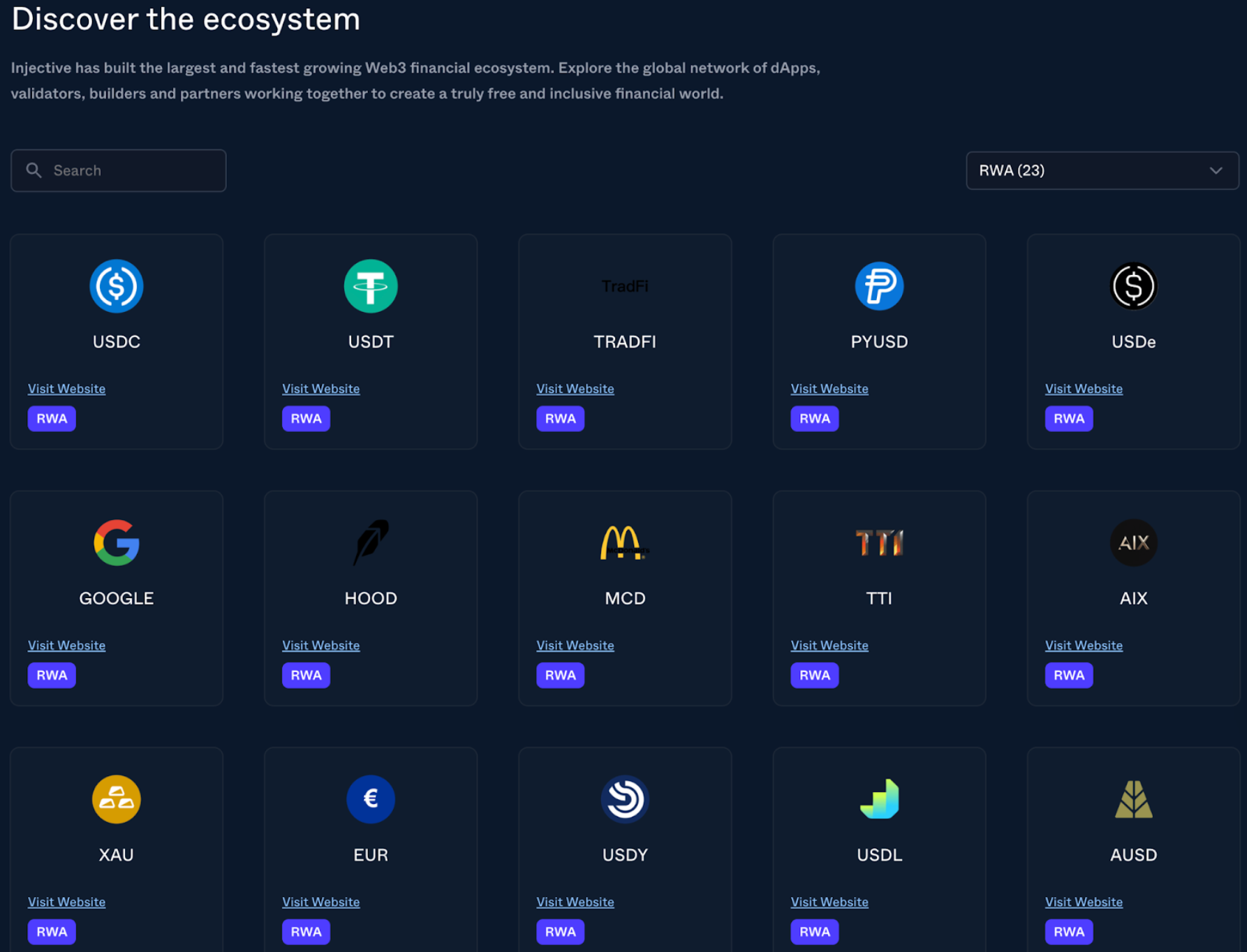
The result is a trading environment where tokenized assets can move with real liquidity rather than remaining experimental listings. These markets now appear across applications built on Injective.
Injective ecosystem interface displaying tokenized assets and RWA projects available across the network.
Accessing these markets, however, still requires entering the ecosystem first. For many users, that entry point begins with a simple swap into INJ.
Increasingly, instant exchange services like ChangeNOW allow users to move assets such as ETH or USDT directly into the Injective ecosystem.
For developers launching on Injective, this means immediate access to infrastructure that most ecosystems take years to assemble.
Core Infrastructure on Injective
Feature
Why It Matters
Native on-chain Order Book
Enables professional trading infrastructure rather than relying solely on AMMs
Shared Liquidity Layer
Applications access the same liquidity pool instead of fragmenting markets
Oracle Price Feeds
Markets receive real-time pricing data for derivatives and RWAs
MEV-Resistant Execution
Reduces frontrunning and protects traders from execution manipulation
Sub-Second Finality
Fast confirmation makes derivatives trading viable on-chain
Injective embeds trading primitives such as on-chain order books and shared liquidity directly into the protocol layer.
Together, these elements create an environment where financial applications do not need to rebuild core trading infrastructure.
Instead of each project assembling its own trading stack, developers can focus on building markets and financial products on top of the shared protocol layer.
MultiVM Without Bridges
Infrastructure alone does not explain the full architecture. Injective also introduces a design choice that attempts to reduce fragmentation across execution environments.
We also asked the Injective team how MultiVM changes the way developers build across the network.
How does Injective’s MultiVM architecture reduce fragmentation across execution environments?
Injective Team:
“Developers can build in both Wasm and Solidity within the same execution layer, and assets move between virtual machines through Injective’s MultiVM Token Standard (MTS). No bridging. No wrapping. Assets just move without limits.”
Bridges have historically been one of the most fragile parts of DeFi infrastructure. Each additional layer introduces operational and security risks. Keeping liquidity inside the same network simplifies both development and trading.
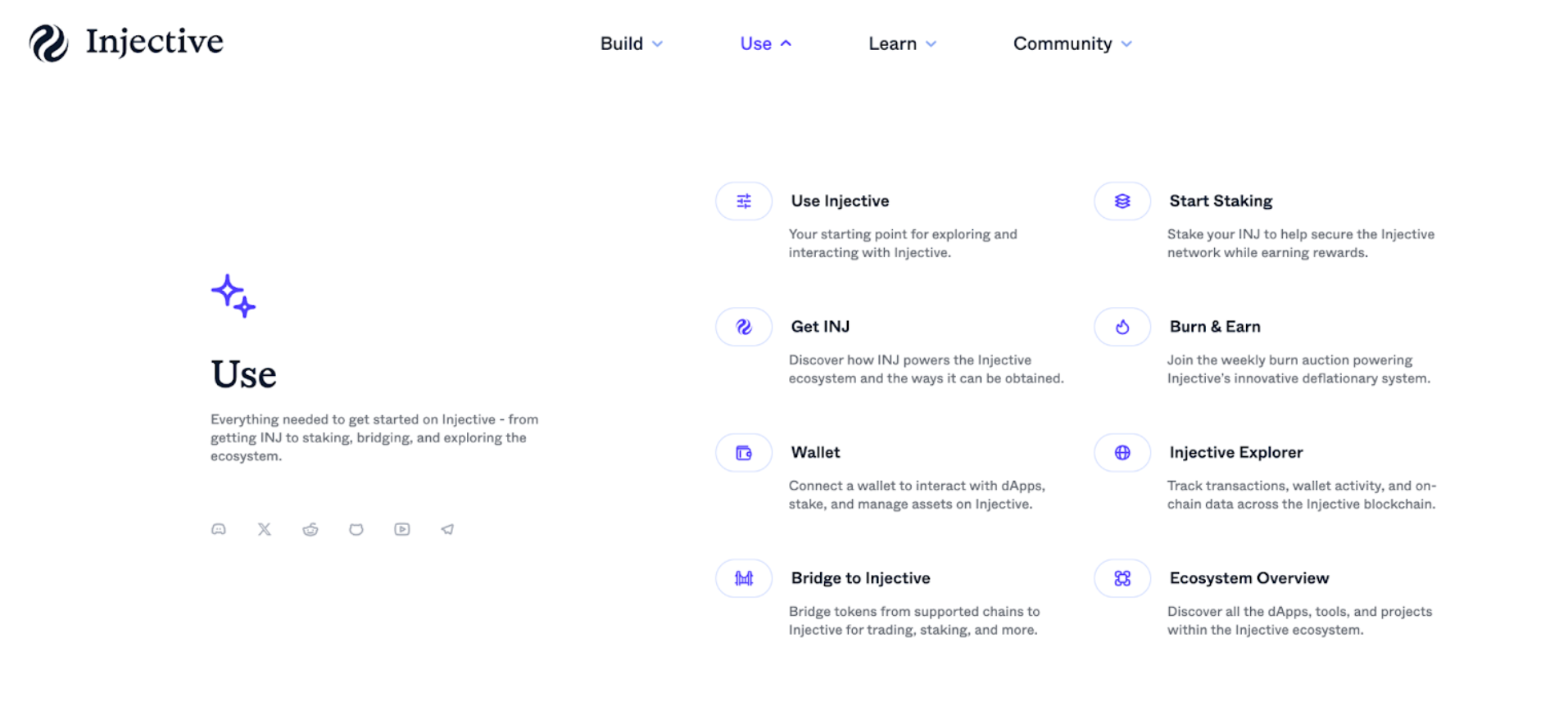
Injective’s MultiVM architecture allows assets to move across execution environments without bridges.
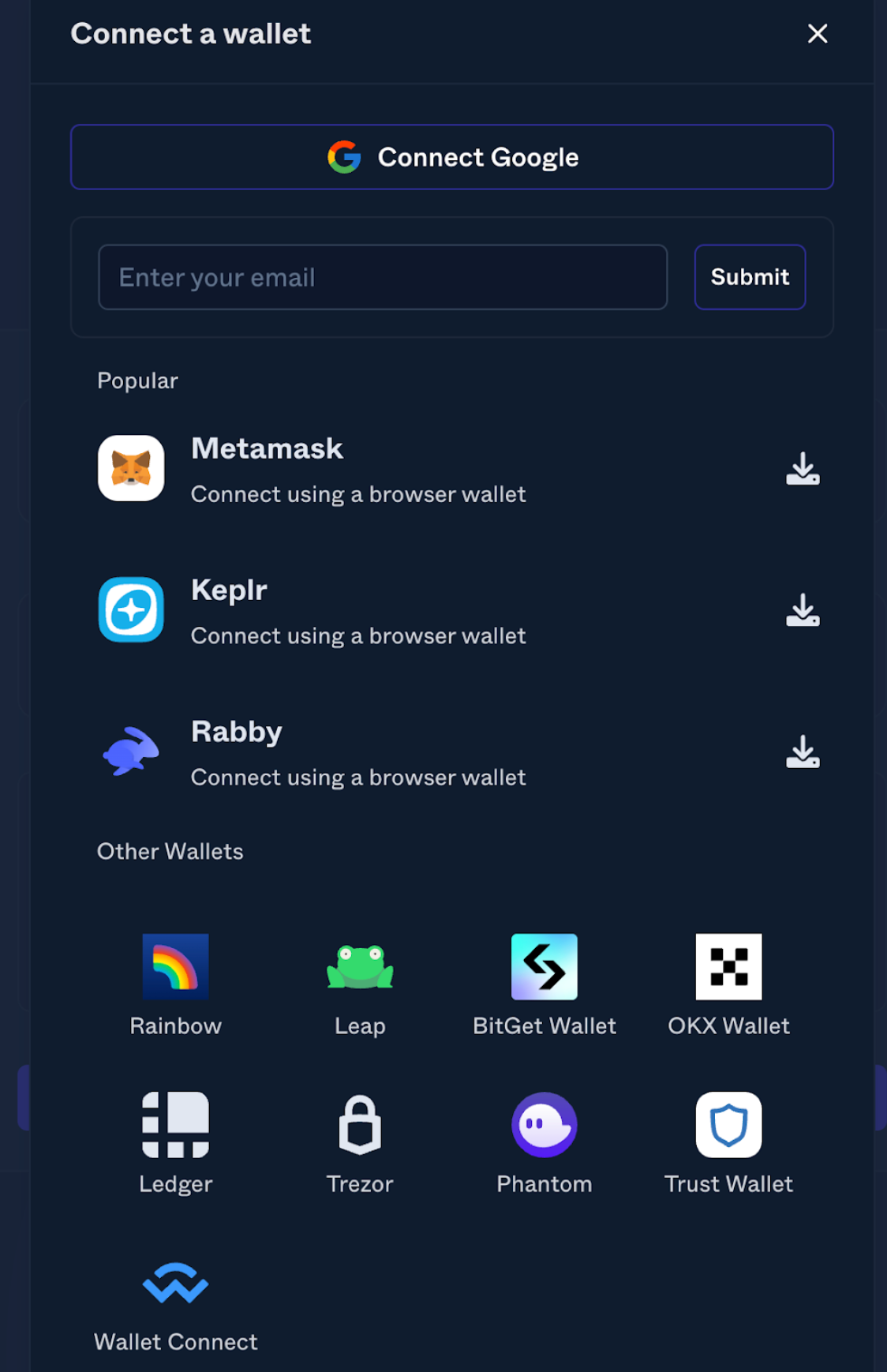
Accessing these applications typically begins with connecting a wallet.
Connecting a wallet allows users to interact with Injective applications and on-chain financial markets.
Injective supports several popular options, including MetaMask, Keplr, and Rabby, allowing users to interact with trading platforms and DeFi tools across the ecosystem.
Because assets remain within the same network, users can move between applications without relying on external bridges. This reduces operational friction for both traders and developers while keeping liquidity inside the Injective environment.
The Institutional Pivot
As infrastructure matures, Injective’s roadmap increasingly leans toward institutional markets.
According to the team, three priorities will define the next phase of Injective’s development.
Injective Team:
“Institutional-grade digital securities infrastructure, on-chain yield products, and broader access to RWAs.”
Interest from traditional finance is already starting to appear. The Canary Capital filing for a staked INJ ETF in late 2025 hinted at growing institutional curiosity around the ecosystem.
At the same time, Injective continues expanding the set of tradable assets available on-chain.
We asked the Injective team where these markets are actually traded within the ecosystem.
Where do users interact with these tokenized markets inside Injective?
Injective Team:
“Most activity around these markets happens on Helix, which serves as Injective’s primary trading venue. Helix supports spot trading, perpetual futures, and a growing set of RWA markets.”
Such markets include a growing range of tokenized assets.
These instruments allow traders to gain exposure to real-world markets without leaving the on-chain trading environment.
Examples include:
tokenized commodities such as gold and oil
synthetic equity exposure like Nvidia, Tesla, and Coinbase
pre-IPO perpetual markets tied to private companies like SpaceX and Anthropic
Traders see these markets directly in the Helix interface. Spot pairs, perpetual contracts, and tokenized assets appear in the same trading environment.
Source: Helix
This is how the Injective ecosystem looks from a trader’s perspective.
Where ChangeNOW Fits In
Infrastructure alone does not build ecosystems. Access does.
This is where the Injective & ChangeNOW integration becomes relevant.
Where do you see the strongest synergies between Injective's infrastructure and ChangeNOW's instant exchange capabilities?
Injective Team:
“ChangeNOW removes the friction of getting into crypto. Injective removes the friction of doing something meaningful once you're in. That's a natural fit. A user can go from holding ETH or USDT to holding INJ in minutes through ChangeNOW, with no account required, no KYC, no custodian sitting between them and their assets. From there, Injective's infrastructure opens up an entire financial ecosystem. On-chain derivatives, RWA exposure, yield vaults, all of it becomes accessible.
The interoperability angle is where it gets interesting. Injective's MultiVM design means assets and liquidity flow natively across execution environments. ChangeNOW's ability to facilitate instant cross-chain swaps into INJ pairs well with an ecosystem designed to accept liquidity from everywhere and deploy it across a full suite of financial products. ChangeNOW handles the on-ramp. Injective handles everything after.”
Instead of navigating exchange accounts, custody transfers, and cross-chain bridges, users can swap directly into INJ.
Once INJ arrives in the wallet, the entire Injective ecosystem becomes accessible.
Users can explore tokenized assets, trade on Helix, stake INJ, or interact with applications built across the network.
Technology is rarely the real barrier in crypto. Access usually is.
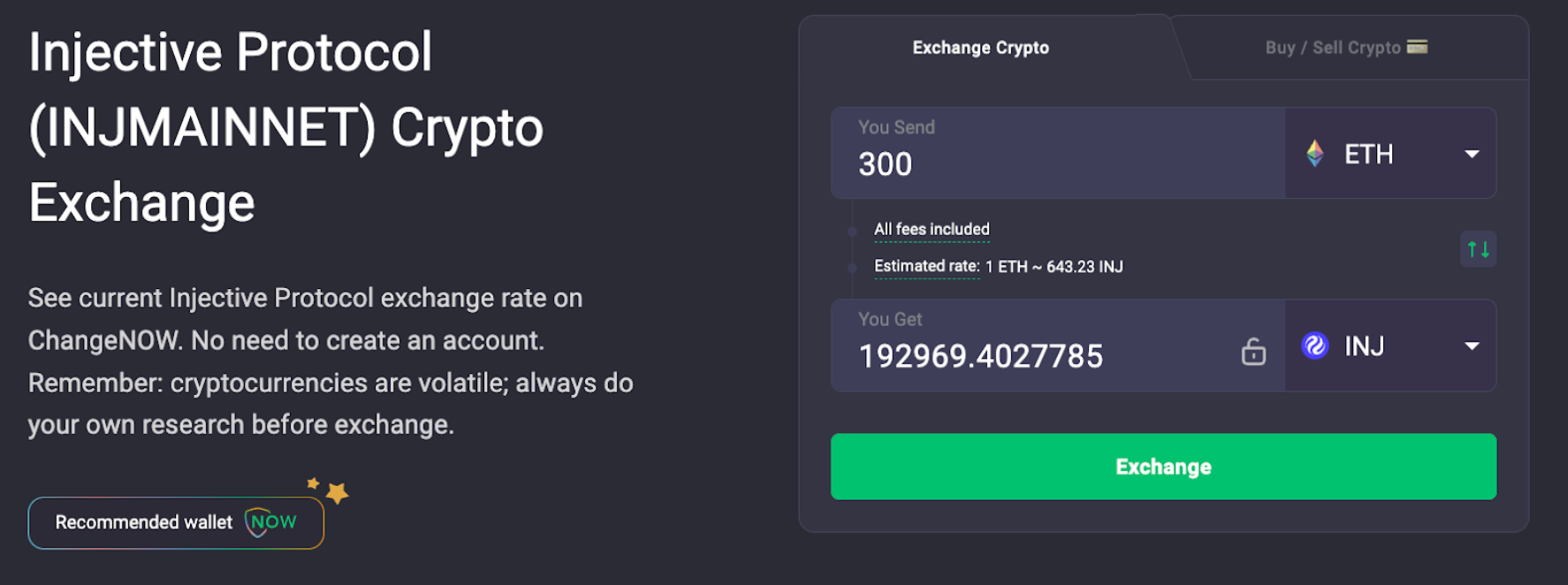
ChangeNOW interface showing an instant swap into INJ.
Users can swap assets such as ETH or USDT into INJ without creating an exchange account.
Reducing that process to a single swap shortens the distance between curiosity and participation.
A Real User Path
To understand how the integration works in practice, consider a typical user journey.
A typical path from the first swap to active participation might look like this.
Step
What Happens
Swap assets to INJ
The user exchanges crypto such as SOL, ETH, or USDT for INJ through ChangeNOW in a few minutes
Receive tokens
INJ is delivered directly to the user’s non-custodial wallet
Connect to Helix
The wallet connects to Helix, Injective’s flagship trading interface
Access on-chain markets
The user explores spot trading, perpetual futures, and tokenized RWA markets
Deploy capital
Assets can be used for trading, liquidity strategies, or DeFi vaults across the Injective ecosystem
A typical journey begins with a simple swap through ChangeNOW. Within minutes, that swap becomes a gateway into the broader Injective ecosystem.
As the Injective team puts it:
“ChangeNOW gets them from zero to INJ holder in seconds. Injective gets them from INJ holder to active participant in an entire on-chain financial system.”
For many users, the process begins with a single swap.
After receiving INJ in their wallet, users can move straight into trading on Helix, exploring RWA markets, or depositing assets into yield strategies across the Injective ecosystem.
How Injective Makes DeFi Easier to Use
Advanced DeFi tools can be intimidating for newcomers. Order books, perpetual contracts, and structured products often come with a steep learning curve.
We asked the Injective team how they approach this challenge.
Injective Team:
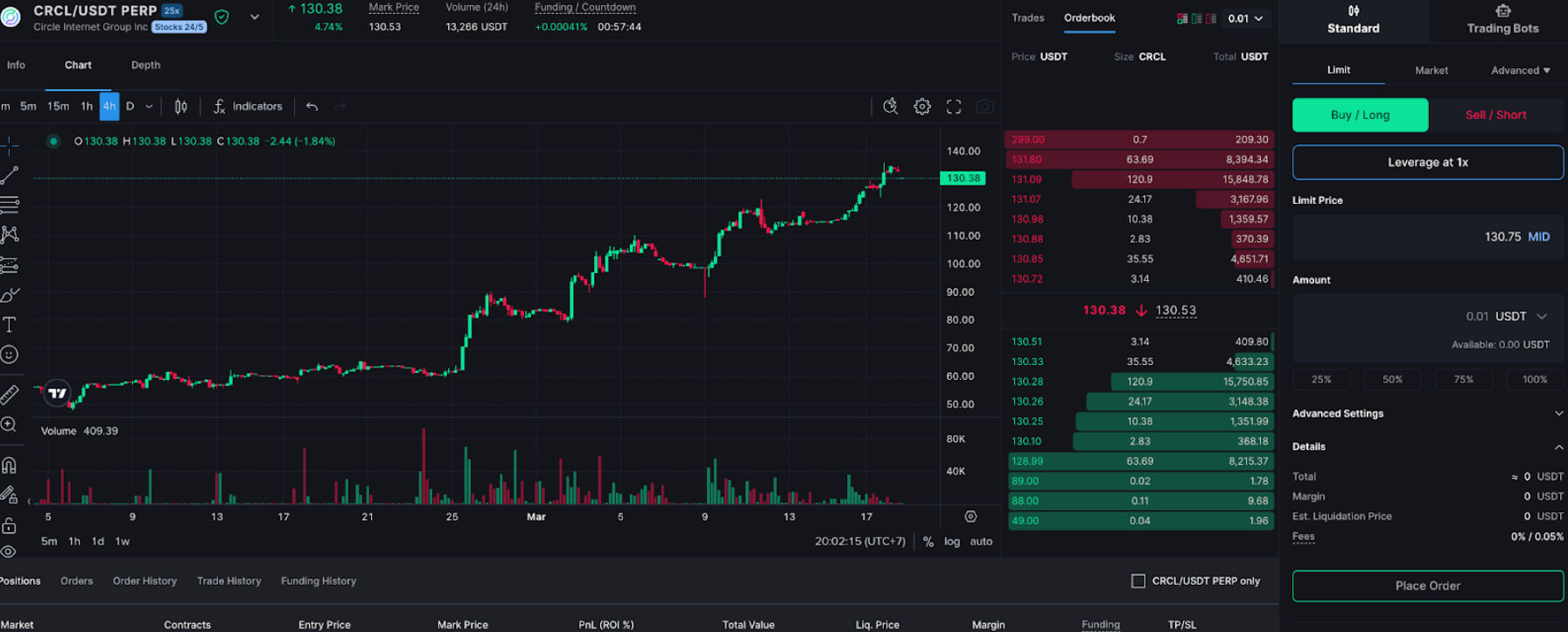
“The complexity lives at the protocol level so users don't have to deal with it. When someone trades on Helix, they get a CEX-grade interface with an on-chain order book running underneath. Zero gas fees on trades. Sub-second execution. The experience feels familiar, but everything settles transparently on-chain. The infrastructure is sophisticated. The user experience is simple.”
Helix sits at the center of this design.
Helix trading terminal with Injective’s on-chain order book and perpetual markets.
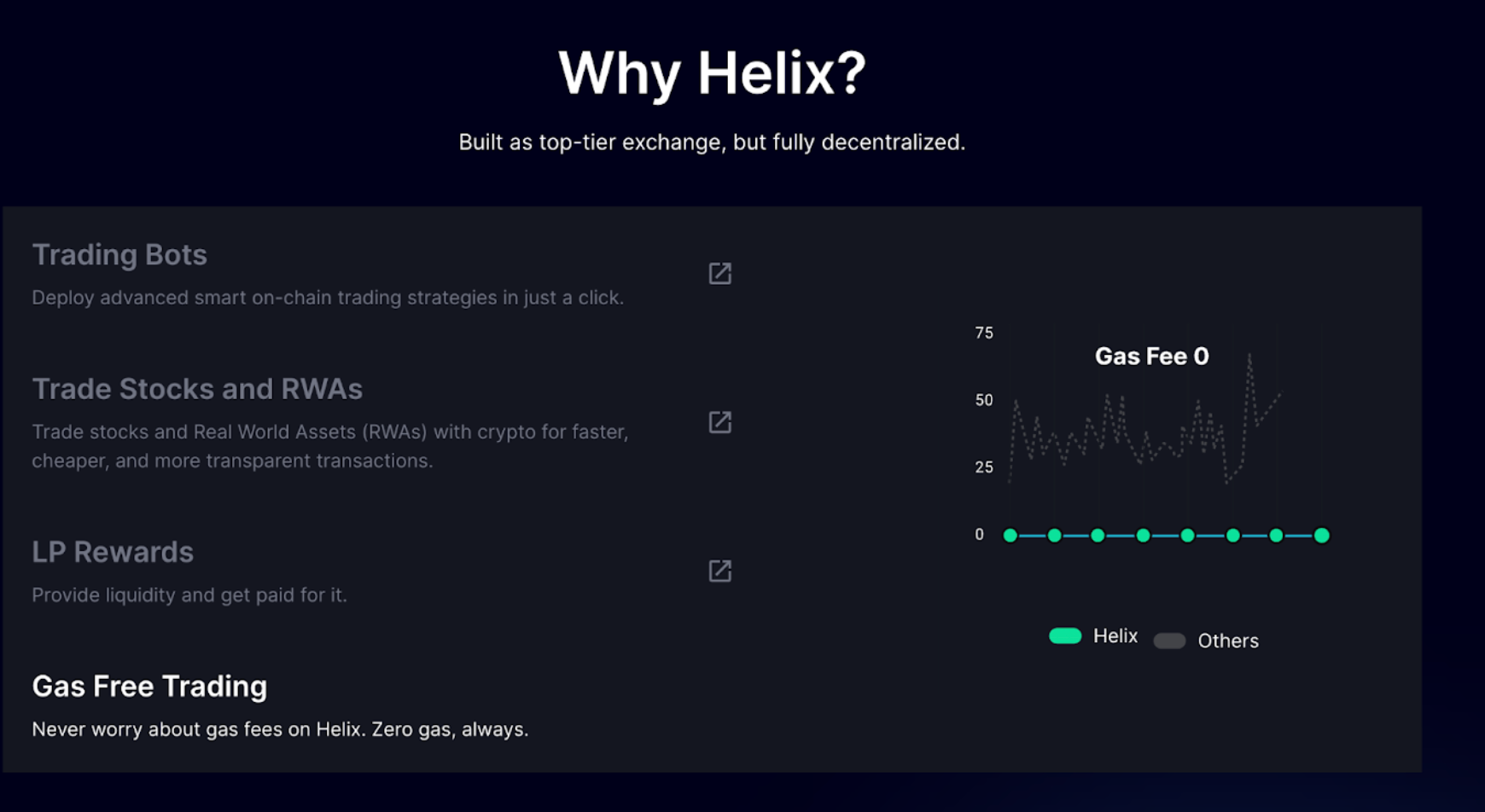
Beyond the trading interface, Helix also highlights several design choices that simplify the user experience across the platform.
Key features of Helix including gas-free trading and integrated RWA markets.
These features reflect Injective’s broader design approach. Complex infrastructure stays behind the scenes, while users interact with a familiar trading environment.
With order books, derivatives, and tokenized assets already live on Helix, the conversation naturally shifts to one of the most debated areas in on-chain finance: real-world assets.
The RWA Debate
Tokenized real-world assets remain one of the most debated areas of on-chain finance.
Critics point out that many RWA products still depend on traditional financial infrastructure. Settlement can happen off-chain. Price feeds rely on external data sources. In some cases, synthetic derivatives act more like prediction markets than direct ownership of the underlying asset.
Injective does not ignore these limitations. The protocol focuses on transparency.
Collateral requirements, price feeds, and liquidation mechanics remain visible on-chain. Traders can see how positions are structured and how markets operate.
Retail traders have already started providing liquidity to these markets. Institutional participation is still developing.
The Bottom Line
Injective focuses on building markets, not just infrastructure.
The ecosystem already supports trading in tokenized commodities, synthetic equities, and derivatives linked to private companies. These markets run through platforms like Helix, where trades settle on-chain.
ChangeNOW provides a direct path into that environment. Users swap assets such as ETH or USDT into INJ, receive the tokens in a non-custodial wallet, and enter the Injective ecosystem.
For many participants, the process begins with a single swap.
Dogwifhat (WIF): Inside the Community Behind the Meme Coin
What keeps a meme coin alive after the first viral moment? WIF contributors explain how creators, culture, participation, and a dog in a pink hat built a brand without a traditional crypto company.


 Injective ecosystem interface displaying tokenized assets and RWA projects available across the network.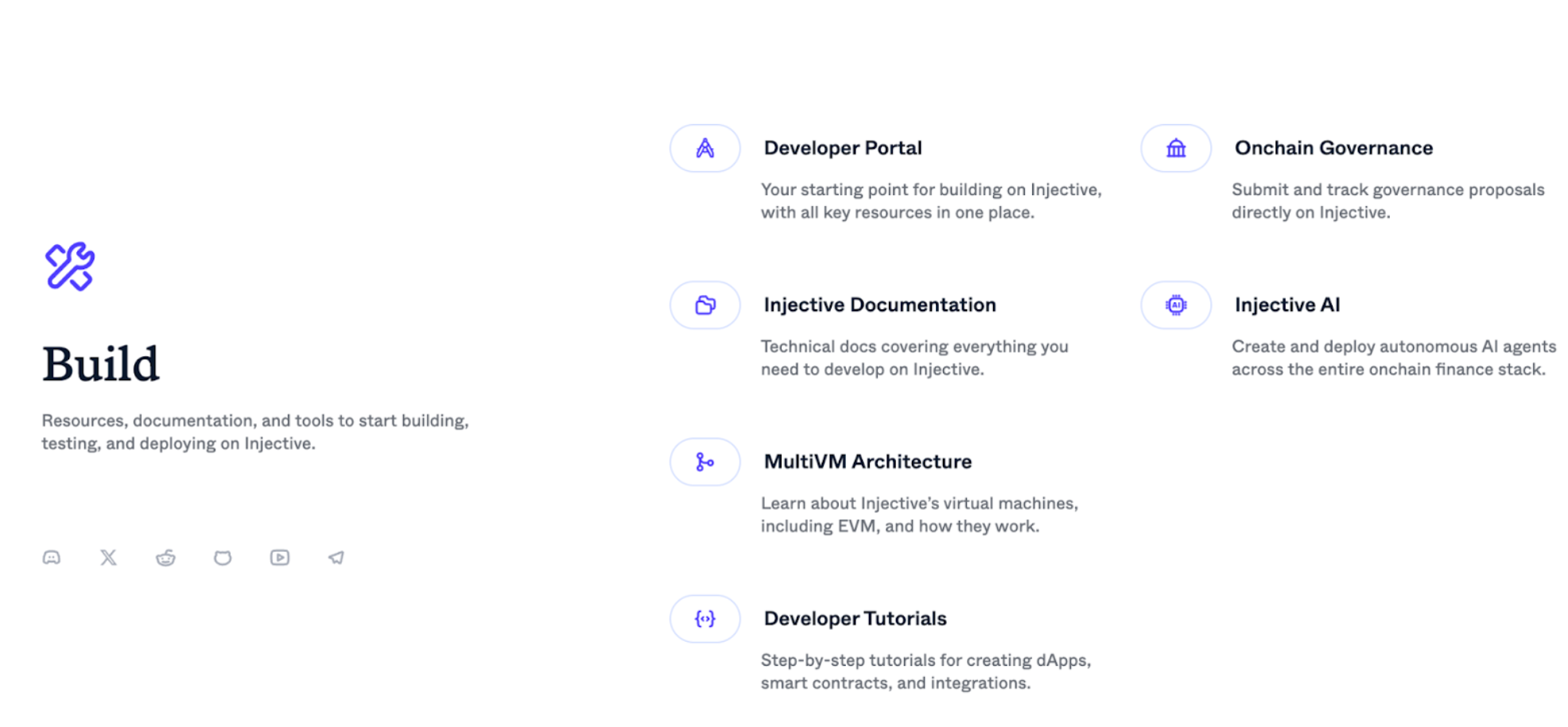
 Injective’s MultiVM architecture allows assets to move across execution environments without bridges.
 Connecting a wallet allows users to interact with Injective applications and on-chain financial markets.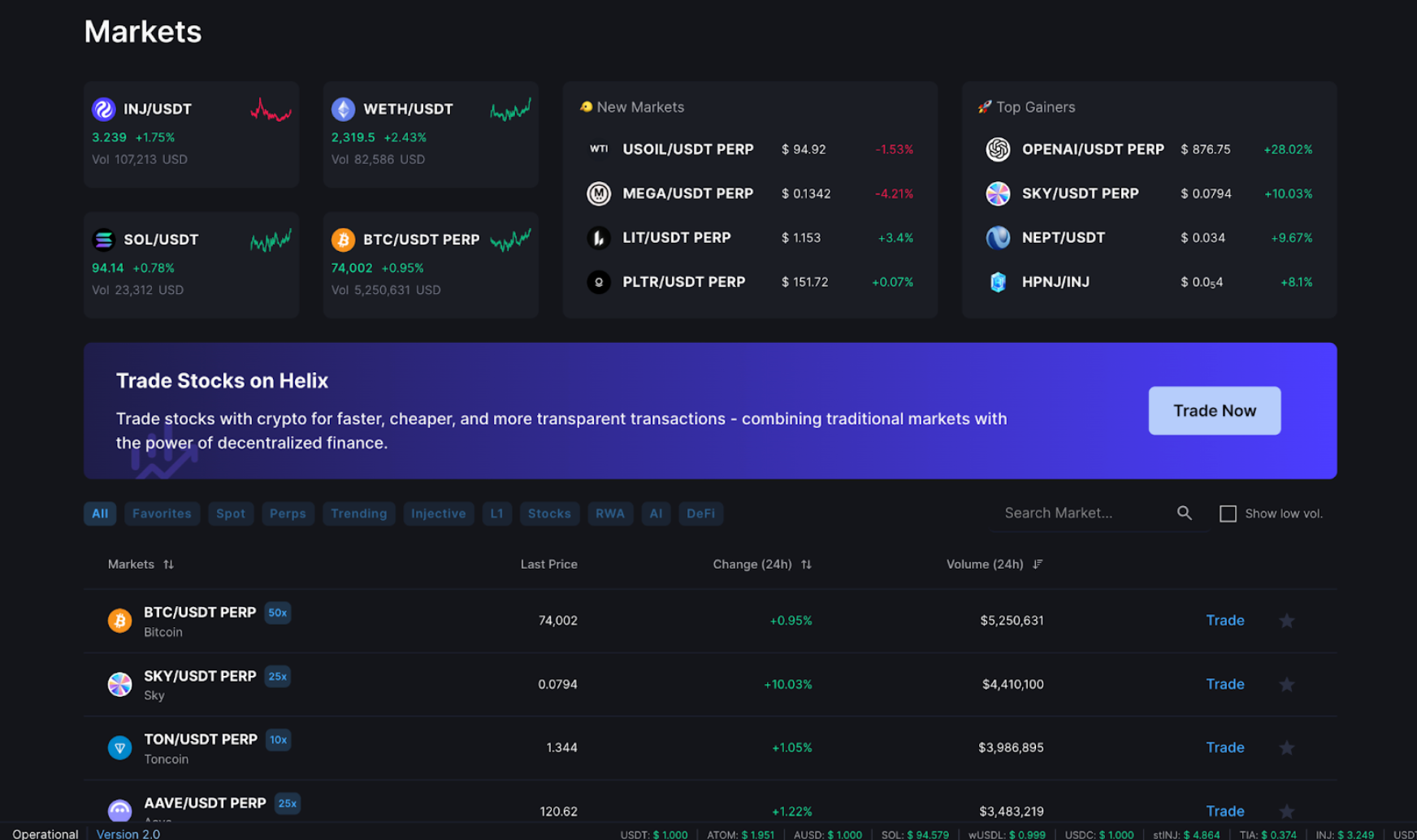
 ChangeNOW interface showing an instant swap into INJ.
 Helix trading terminal with Injective’s on-chain order book and perpetual markets.
 Key features of Helix including gas-free trading and integrated RWA markets.

