Cryptocurrency transactions are strictly one-way. When a system is compromised, stolen assets are permanently lost without the possibility of reversal. Over 30% of consumers inherently doubt the honesty of financial institutions. They bring a massive trust deficit straight into your product. This extreme skepticism is exactly why user onboarding is the largest drop-off point in fintech application lifecycles. New users immediately hit a wall of friction and fear. You cannot fix this hesitation with legal text. Studies show three-quarters of users skip reading terms and conditions entirely. Formal disclosures are a failed strategy. Security communication has to be an intuitive, native component of the primary user interface.
Welcome to the ChangeNOW Blog. Here we focus on research, real use cases, and practical insights — not hype. While we double-check our facts, nothing here should be taken as financial advice; crypto is a high-risk space, and your own research always matters.
Key Takeaways
MPC and strong encryption at the API level are a way to remove single points of failure. Fewer failure points are fewer breach scenarios, which is critical for protecting user funds and the brand.
A ready-to-use custodial API is a way to avoid building a security team from scratch or investing heavily in infrastructure. The result is more focus on the product instead of backend risks.
Fast, standardized authentication at the API level is a key factor in reducing friction during onboarding. A smoother setup is directly tied to better retention.
A modular API setup is a direct connection to multiple liquidity sources. This is what makes faster asset support and earlier volume capture possible compared to manual integrations.
Crypto AML compliance inside the API flow is continuous monitoring in practice. This is a safeguard against regulatory issues that can disrupt operations or lead to penalties.
Real-time transaction tracking through the API is a clear operational visibility. Transparent processing is what builds long-term user trust.
Why Infrastructure Matters
Modern crypto platforms have strict dependencies on third-party APIs. These external connections are the primary engines for token swaps, liquidity sourcing, fiat payments, and blockchain data retrieval. This interconnected architecture is a direct operational liability. If the underlying infrastructure is insecure, the entire consumer product is instantly compromised. Your baseline system integrity is strictly equal to your weakest external endpoint.
Attackers drained $125M from Multichain in July 2023 by taking control of its MPC keys. The failure wasn’t in the code or the API—the UI performed as designed. The risk sat at the execution layer, where key control equals fund control. For any integrated platform, the outcome was identical: a functional bridge routing directly into a drained pool.
What Problems Arise With Unreliable API Provider
An intuitive interface is useless if the underlying infrastructure is unstable. Here are the core operational risks and their solutions.
Frozen funds
Users’ transactions can get stuck or delayed due to poor routing, liquidity issues, or weak transaction monitoring. Fragmented blockchain data and complex RPC node management are the direct causes of slow transaction execution, ultimately resulting in locked capital.
The Solution: Pre-execution simulation is mandatory to catch bad formatting and insufficient gas limits early. Track transaction status in real-time using properly configured webhooks or polling systems.
Regulatory issues
Weak compliance causes service disruptions and strict geo-restrictions. Compliance in cryptocurrency is a rigid requirement. You must satisfy multiple complex frameworks simultaneously to remain operational.
The 3Commas leak is the clinical proof. In this case, leaked API keys were the direct entry point for attackers to execute unauthorized trades and drain assets. Tens of millions are gone. But the provider’s response was the real terminal event. The initial denial and the attempt to blame users for phishing are what finalized the destruction of brand trust. Secure key management is the mechanical baseline for survival. Without it, your product is an active liability.
The Solution: Platforms must adopt global standards like PCI DSS, PSD2, and GDPR. Regional regulators like MAS and RBI add another layer of complexity, demanding strict KYC enforcement that must be met head-on.
Fraud exposure
Weak infrastructure invites hacks. The 3Commas leak proves once again that compromised API keys can lead to the loss of tens of millions. The provider’s initial denial and attempts to blame users for phishing finalized the destruction of their brand trust. Without secure key management, your product is an active liability.
The Solution: Active threat detection is required to isolate sanctioned wallets and flag suspicious behavior. Use transaction simulators as the first line of defense to block phishing attempts before network broadcast.
Downtime
Downtime kills user retention. Operational reliability means aggressive stress testing against extreme gas spikes, high traffic, and contract failures. High-performance servers and load balancers are just the baseline. You need real-time alerts to catch system anomalies and dropped transactions the second they happen.
The Solution: Guarantee uptime through aggressive stress testing against extreme gas spikes, high traffic, and contract failures. Build resilient architecture using high-performance servers, automated load balancers, and real-time alerts to flag anomalies instantly.
The Key Trust Signals of a Secure Crypto API Provider
WEB3 Compliance Tools
Cryptocurrency compliance mandates strict identity verification and secure financial data handling. Adaptive MFA triggers additional verification solely during high-risk events, including new device logins, large fiat transfers, cross-border payments, and anomalous routing requests. Real-time monitoring systems dynamically detect risk conditions and initiate immediate security checks.
What does it mean for the end user?
Biometric authentication and eKYC reduce friction while maintaining strict compliance.
Smart defaults and autofill forms cut down manual input.
Risk-based security eliminates unnecessary hurdles while keeping asset protection high.
Proven Security Architecture
Access security relies on password protection, database encryption, biometric barriers, and two-factor authentication. Sensitive wallet data is generated securely and encrypted both at rest and in transit. End-to-end encryption protects critical user data across the system architecture. Continuous monitoring spots abnormal activity and suspicious transaction patterns. Effective blockchain security measures are embedded across the full system lifecycle.
What does it mean for the end user?
Multi-signature wallets mandate multiple approvals to eliminate single points of failure.
Configurable alert systems notify users about emergent risks, transaction confirmations, network delays, and protocol failures.
Private keys define the ultimate ownership of funds and are isolated in cold storage to protect large asset holdings from online threats.
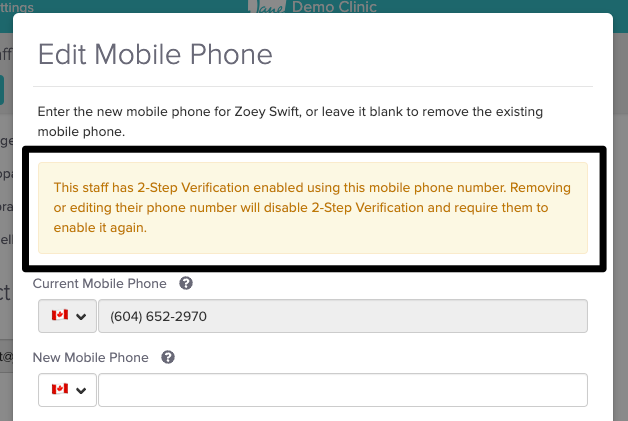
Mandatory two-factor authentication provides an extra security barrier against unauthorized access attempts at the account level.
Source: jane.app
Track Record and Incident Handling
Secure systems demand continuous vulnerability detection, code audits, penetration testing, and pre-deployment evaluation. System reliability is validated through stress testing under extreme network conditions and continuous performance monitoring. Open-source architectures invite external audits and the technical validation of security mechanisms. Because blockchain state changes are permanent, reliable infrastructure and active incident prevention are mandatory requirements.
What does it mean for the end user?
Consumer applications feature digital switches to freeze accounts instantly and halt further losses.
In-app fraud reporting tools trigger the immediate escalation of suspicious transactions.
User control tools increase confidence in fund management and active threat response.
How the Right API Provider Accelerates Product Growth
Fast launch of products: A unified API infrastructure is the ultimate growth accelerator for fintech deployments. A single API integration is the direct connection to over 60 blockchain networks. Engineering teams bypass months of custom routing development and complex node maintenance. This pre-configured architecture is a heavy driver for rapid cross-border expansion.
Easier compliance handling: Built-in compliance in blockchain frameworks is mapped straight to global regulatory standards. Automated security checks are the default filter for every incoming request.
Lower operational risks: Operational risks are neutralized through a stack of active defenses. Pre-execution validation, transaction simulation, active network monitoring, and automated threat detection are the mechanisms that trap errors before network broadcast.
Improve user trust: Visible security cues and real-time transaction messaging are the foundation of user trust. Live status updates reinforce confidence and drive immediate transaction completion.
Case Study: How a reliable crypto API provider can detect and stop fraud activity
ChangeNOW’s collaboration with the U.S. Department of the Treasury is clear proof that reliable providers can handle complex security challenges.
In 2025, ChangeNOW received a confidential tip about a targeted multi-million theft and tightened AML rules for specific assets and flows. When attackers attempted to route the funds through the platform, multiple exchange attempts were flagged and paused for manual review.
This series of transactions, linked to a $5,000,000 theft, was stopped before funds could disperse across multiple chains. In most cases, stolen assets are fragmented across wallets and networks within hours. Here, detection happened before that fragmentation.
The incident was transferred for investigation with all transaction data fully traceable, and the assets were ultimately recovered. This level of integrated monitoring is a direct barrier preventing illicit funds from entering your product.
Checklist: How to choose a secure crypto API provider
Selecting an API vendor is a strict technical audit. These are the hard operational facts for your vendor evaluation.
Regulatory Coverage: Native support for PCI DSS (payments), PSD2 (authentication), GDPR (privacy), and regional standards like MAS or RBI.
Security Architecture: Multi-signature wallet configurations, end-to-end encryption at rest and in transit, and hardware-level key management.
Risk Management: Built-in transaction simulation to block phishing, automated flagging of sanctioned addresses, and instant account-freezing capabilities.
Operational Transparency: Availability of external code audits, open-source validation components, and real-time system status transparency.
Infrastructure Stress-Testing: Proven reliability under extreme network conditions, including high traffic and gas price spikes.
Integration Readiness: Standardized REST APIs, comprehensive documentation, and secure API key authentication.
ChangeNOW's API is the best secure crypto API that comes with built-in compliance features and a proven track record of safeguarding users. This infrastructure has built-in cryptocurrency compliance tools, automated threat detection, transparent operations, and a proven history of safeguarding users. You can launch secure crypto products faster with ChangeNOW.
Security is a strict architectural foundation. A separate application layer for protection is a critical vulnerability. True defense is an embedded reality across the entire system codebase. This deep integration is present in every network node, API endpoint, server configuration, and data pipeline. User confidence is the direct result of execution reliability and infrastructure quality. Active security mechanisms and transparent operations are the main drivers for capital commitment.