


Quick answer:
Below are 10 tools that do this without an API or an enterprise-level contract.
Chainalysis, TRM Labs and Elliptic are built and priced for institutions. If you run a small exchange, work in support, report for a newsroom or are documenting a lost transfer, you need lighter crypto investigation tools.
Every transfer on a public blockchain is on the record and tracing tools can tell you where the funds went and map out the route. They can't bring them back but nobody can ask for help without knowing where the funds went.
Here are the best crypto tracing tools for multi-chain work. We sorted them by the problem each one solves.
Each has a free way in and a number of paid plans or features.
| # | Tool | Use it when | Free access | Watch out for |
|---|---|---|---|---|
| 1 | Blockchair | You want to check transactions across many blockchains in one tab. | Free explorer. | Reads chains separately, no bridge tracing. |
| 2 | Etherscan | Transaction status says “Success” but nothing arrived | Full web interface | Ethereum only; sister explorers cover other EVM chains |
| 3 | mempool.space | A Bitcoin transaction is stuck | Explorer | Accelerator is a paid service |
| 4 | Phalcon Explorer | A transaction failed or funds moved in a way your wallet doesn't show | Basic trace | Built for researchers; the output is dense |
| 5 | Bridge explorers: LayerZero Scan, Wormholescan, Axelarscan, CCTP Scan | Funds left the source chain and haven't arrived | Public lookup by hash | One explorer per protocol; intent-based transfers won't appear |
| 6 | LI. FI Explorer | You swapped or bridged through a LI.FI-powered app | Free to look up | Follows LI.FI routes only |
| 7 | Arkham Intel | You need to know who owns an address | Core features | Labels can be incomplete |
| 8 | MetaSleuth | You want to follow funds hop by hop | Free plan, 11 blockchains | Solana starts at the $180/month Pro plan |
| 9 | AMLBot AI Tracer | You have a hash and want an automatic trace to the endpoint | One free check | Paid plans for more checks; can’t see internal exchange transfers |
| 10 | Bitquery | You need money flow and DEX data across complex routes. | Free developer plan | Built for devs, DEX data needs GraphQL |
Most problems start here. Before you open any explorer, do two things:
Then check transactions in the explorer of the network you used. Three tools cover nearly every case.
Use it when: you want to check transactions across multiple blockchains in one tab.
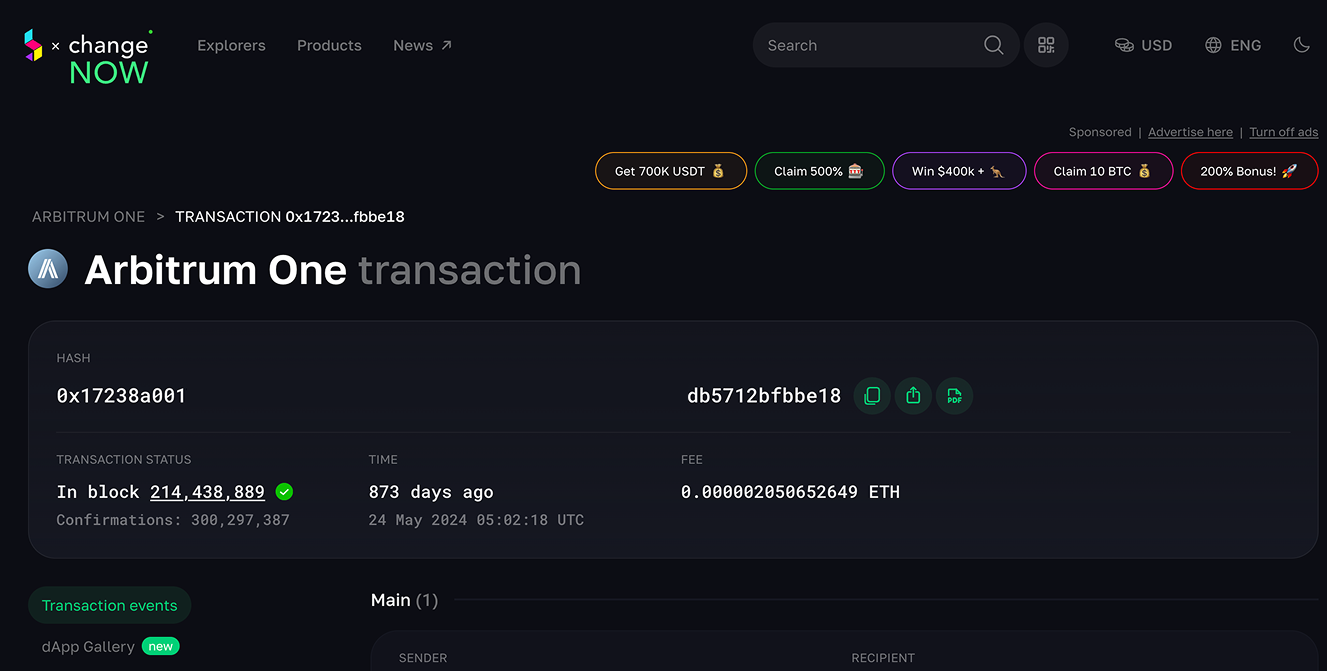
Blockchair is a multichain explorer: one search bar for transactions, addresses and blocks across 43 blockchains. It doesn’t collect personal data, and it doesn’t process transactions or hold funds.
Blockchair is a trusted ChangeNOW partner. When you click a transaction hash on our exchange screen, this is exactly where we take you to track your funds in real-time.
Source: Blockchair
Price: free to use.
What Blockchair can’t do: it reads each chain separately, so a cross-chain transfer still needs a bridge explorer (tool 5 below). It can’t speed up or fix a delayed transaction.
Use it when: you’ve sent ETH or ETH-based tokens and the money hasn't arrived.
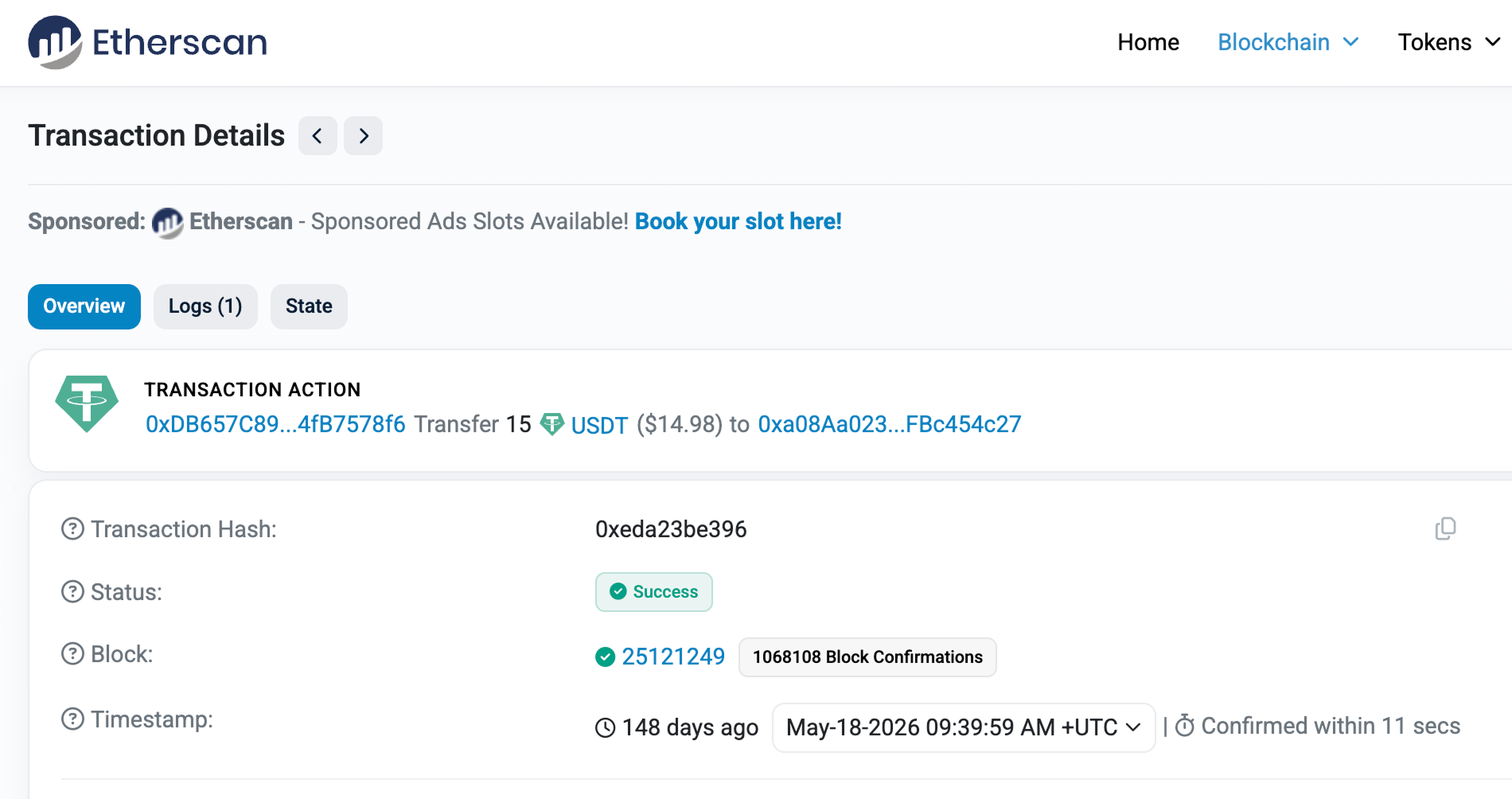
After you paste the hash into Etherscan, the transaction page shows a Status field.
Source: Etherscan
What that field says decides your next step.
Price: the web interface is free.
What Etherscan do: it covers Ethereum only (BscScan and the other sister explorers cover their own chains), and it can't follow a transfer across a bridge.
Use it when: you’ve sent Bitcoin and the transaction has been staying unconfirmed for hours.
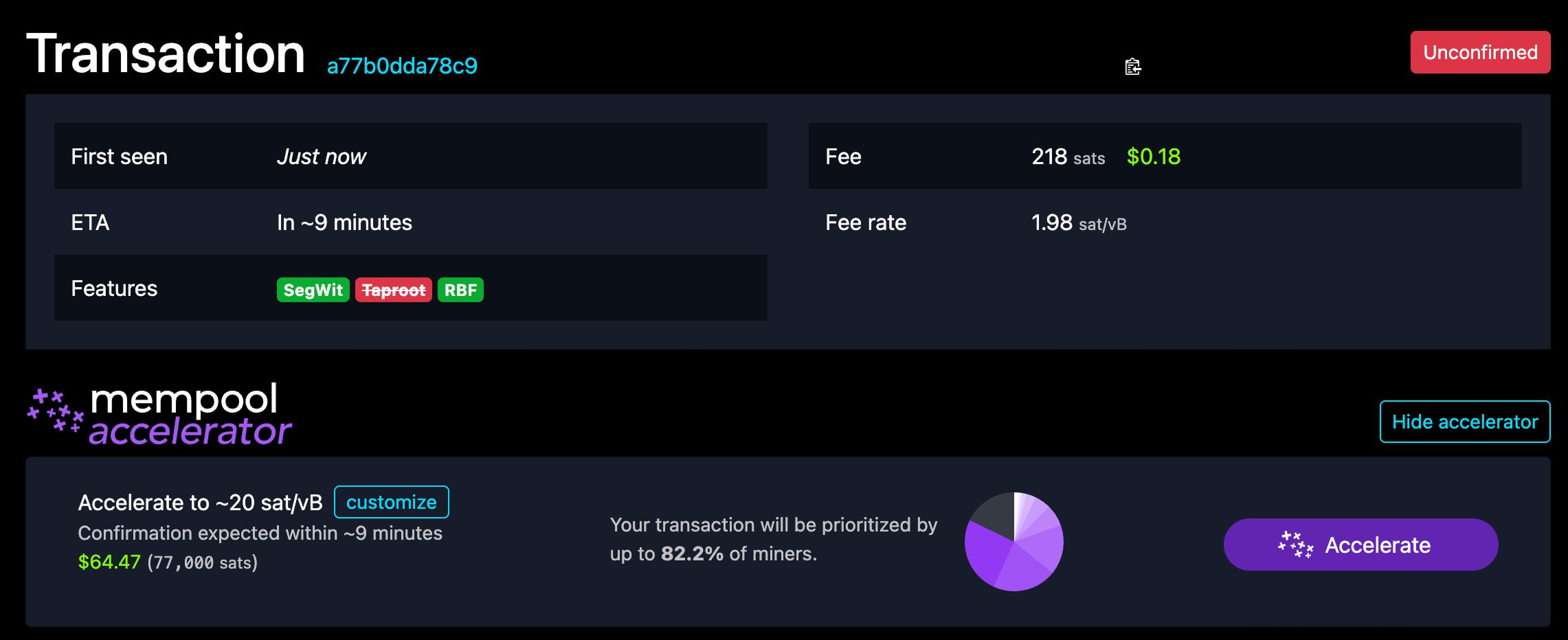
Bitcoin fees work like auction bets. A transaction with a low bid waits until demand drops or someone raises the bid, which is how most stuck funds end up stuck.
mempool.space shows your transaction’s position in this queue and a rough estimate when it should confirm.
Source: mempool.space
If you want to speed up the process, you should raise the bid using Accelerator.
Price: The explorer is free. The Accelerator charges a fee.
What mempool.space can't do: it covers Bitcoin only, and the Accelerator depends on partner mining pools accepting the request.
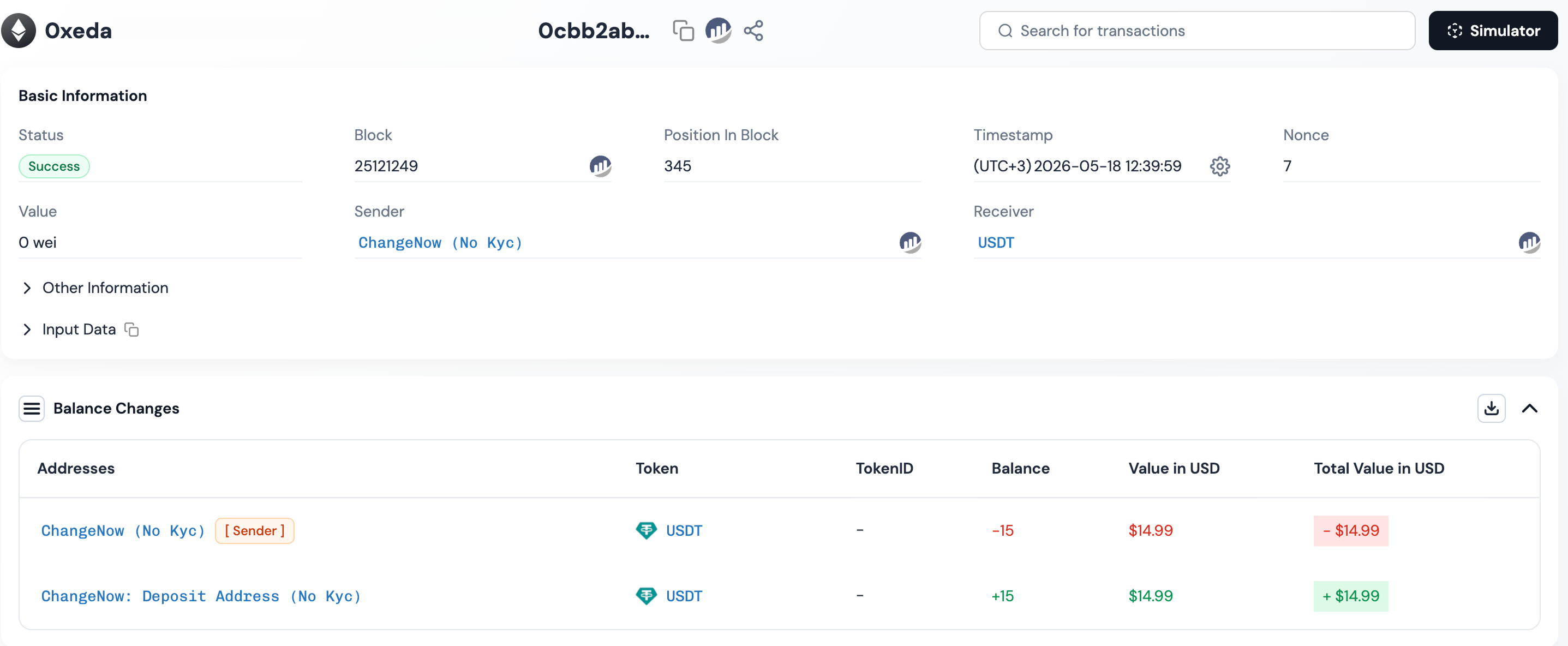
Use it when: a transaction failed and you want to know why, or a swap moved funds through several contracts and your wallet shows only the first one.
Source: Phalcon Explorer
Phalcon Explorer is a tool for analyzing past blockchain transactions and testing fixes. It has two core modes:
Use Case: Debugging a Failed Swap
Price: basic trace is free.
What Phalcon Explorer can't do: it was built for security researchers and developers, so expect dense output, and it works one transaction at a time.
More from BlockSec: Free USDT Freeze Checker shows whether a USDT address on Ethereum or Tron is on Tether’s blacklist.
More on blockchain explorers: What Is a Blockchain Explorer and How to Use It: Complete Guide 2026
Cross-chain transfers have three stages:
The source-chain explorer covers only the first part. The following tools can reveal more.
Use it when: funds left the source chain and haven't arrived.
Each bridge protocol runs its own explorer, reading messages the others can't.
Check which protocol the app you used routed through and search your sending hash there.
Where to click:
Price: free for public lookup by transaction hash.
What they can't do: each explorer reads only its own protocol. Transfers completed through intent-based protocols never appear in LayerZero Scan or Wormholescan, so for those you look for the fill on the destination chain's explorer.
Use it when: you swapped or bridged through an app powered by LI. FI.
LI. FI is a cross-chain swap aggregator.
Its Explorer follows a transfer across both the sending and the receiving transaction. Its status tracking separates waiting for confirmations on the source chain from waiting for the transaction on the destination chain, and that tells you whether the delay is happening on your side or theirs.
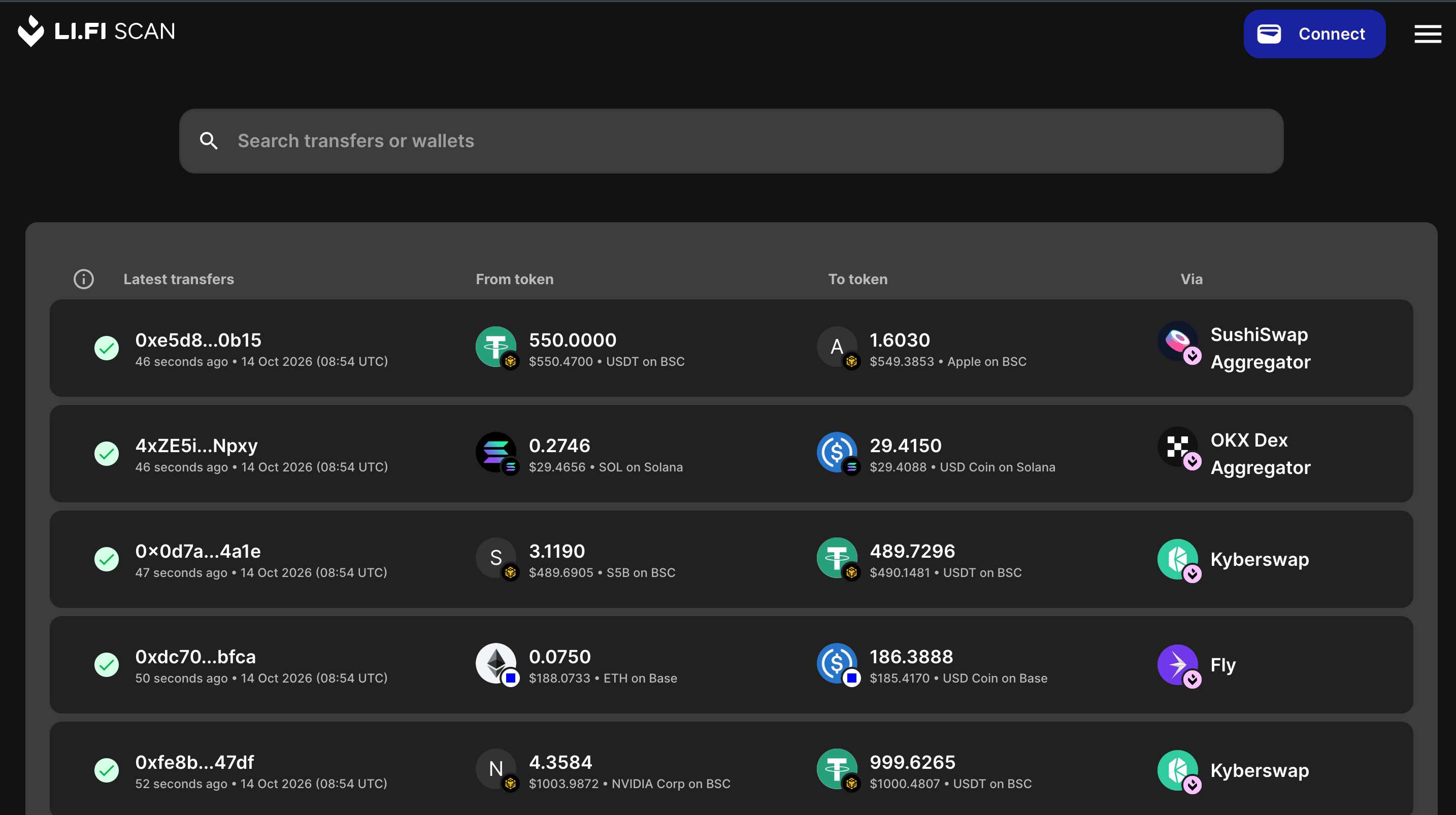
Source: LI. FI Explorer
Price: free to look up.
What LI. FI can't do: it follows LI. FI routes. A transfer made through a different router needs that router's own explorer or the bridge explorers from tool 4.
More on cross-chain bridges: Cross Chain Crypto Bridges: Everything You Need to Know
You have the transaction and the destination address. Now for the most interesting part: who owns that address, and where did the money go next?
That is wallet tracking - the job of crypto investigation tools. And those tools are one level above explorers in the hierarchy of capabilities.
Use it when: you need to look up a wallet address and want a name next to it: an exchange, a fund, a protocol or an unlabeled wallet.
Arkham attaches labels to addresses, groups related wallets under one entity and shows balances, counterparties and history.
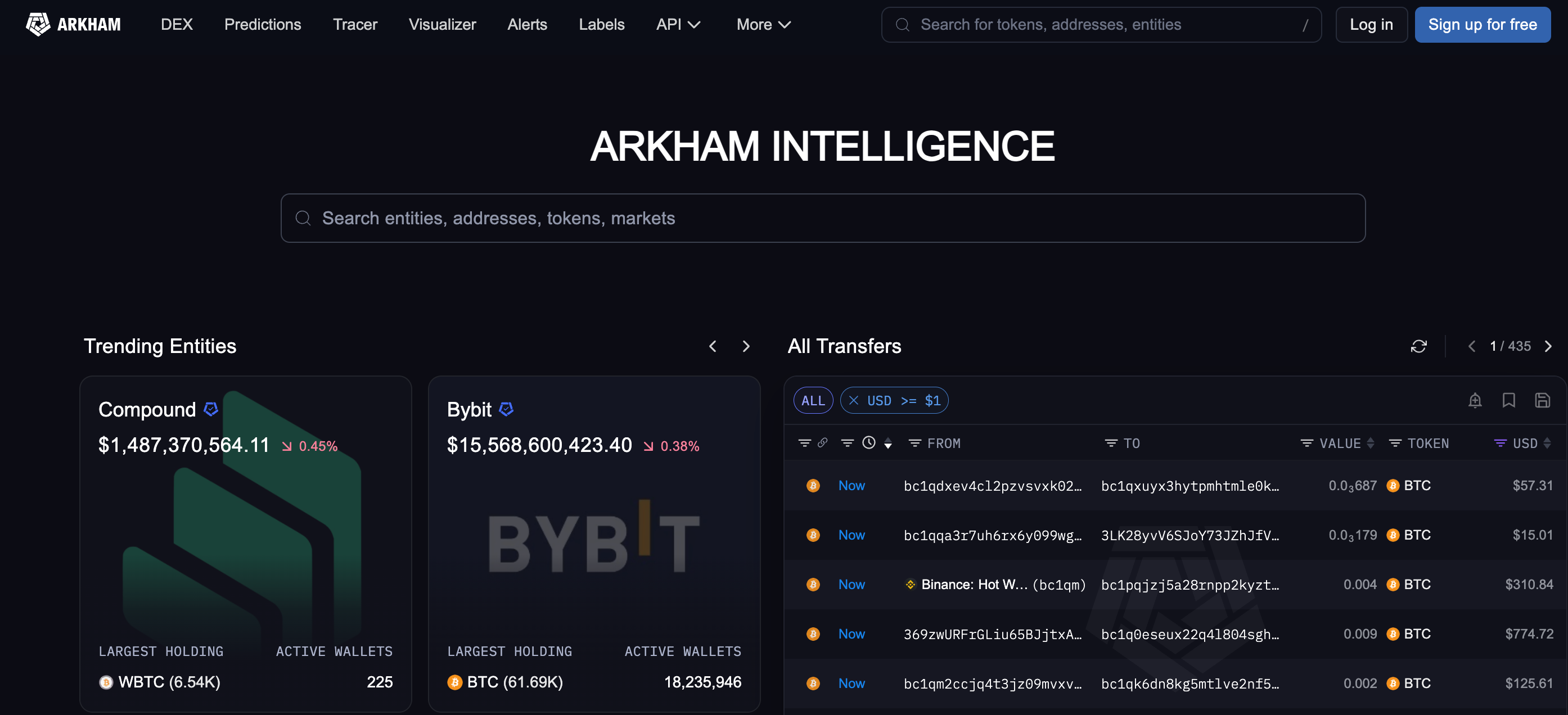
Source: Arkham Intelligence
Its Tracer builds multistage graphs across wallets and chains - it helps a lot when funds moved through several points.
Labels come from a mix of data and AI predictions, so treat each one as a lead to verify against the on-chain trail.
Where to click:
Price: Core features, including transaction tracing and basic alerts, are free.
What Arkham can't do: unlabeled addresses stay unlabeled, and some labels are uncertain.
Use it when: you want to follow funds step by step and see the whole path drawn out.
MetaSleuth is a really great crypto tracking tool by BlockSec. It gives you a full fund-flow graph with labels and details.
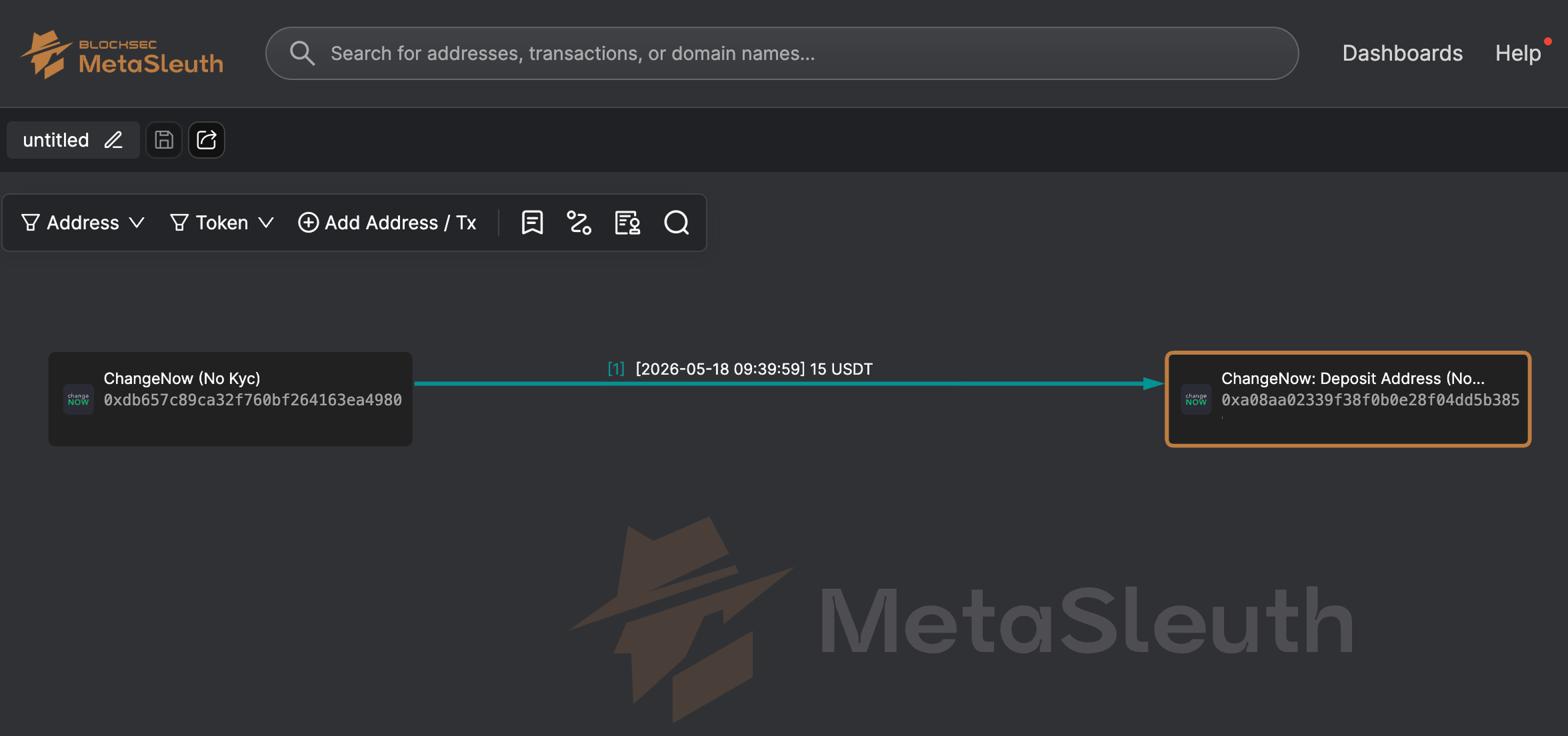
Source: Metasleuth
You can click on each transition point to see detailed info about balance, counterparty, and risk level of the transaction.
Price: It has a free plan that covers 11 blockchains with essential investigation features.
What MetaSleuth can't do: Solana needs Pro and memos need Basic, so check that the free chain list covers your network before you build a case around it.
Alternative: Breadcrumbs offers a very similar graph-based investigation tool with a risk score feature. It’s widely used by compliance teams and is a great backup if you hit MetaSleuth's limits on a free plan.
Use it when: you have a transaction hash and want to know where the funds went without reading a graph.
Paste a hash and AMLBot AI Tracer follows the funds through intermediate wallets, including cross-chain hops, and labels the exchanges and flagged addresses it meets on the way. The result is a path you can attach to a report or send to an exchange.
Price: one free check; paid plans raise the limit.
What it can’t do: it can’t see transfers inside an exchange, explain why a payment was made, or freeze and return funds.
Use it when: you need deep on-chain data and money flow visualization across DEXs and complex smart contract routes. It’s not as simple as other tools but it’s really powerful.
Bitquery indexes 40+ blockchains. Its Coinpath tool follows funds from a wallet hop by hop across chains, no code.
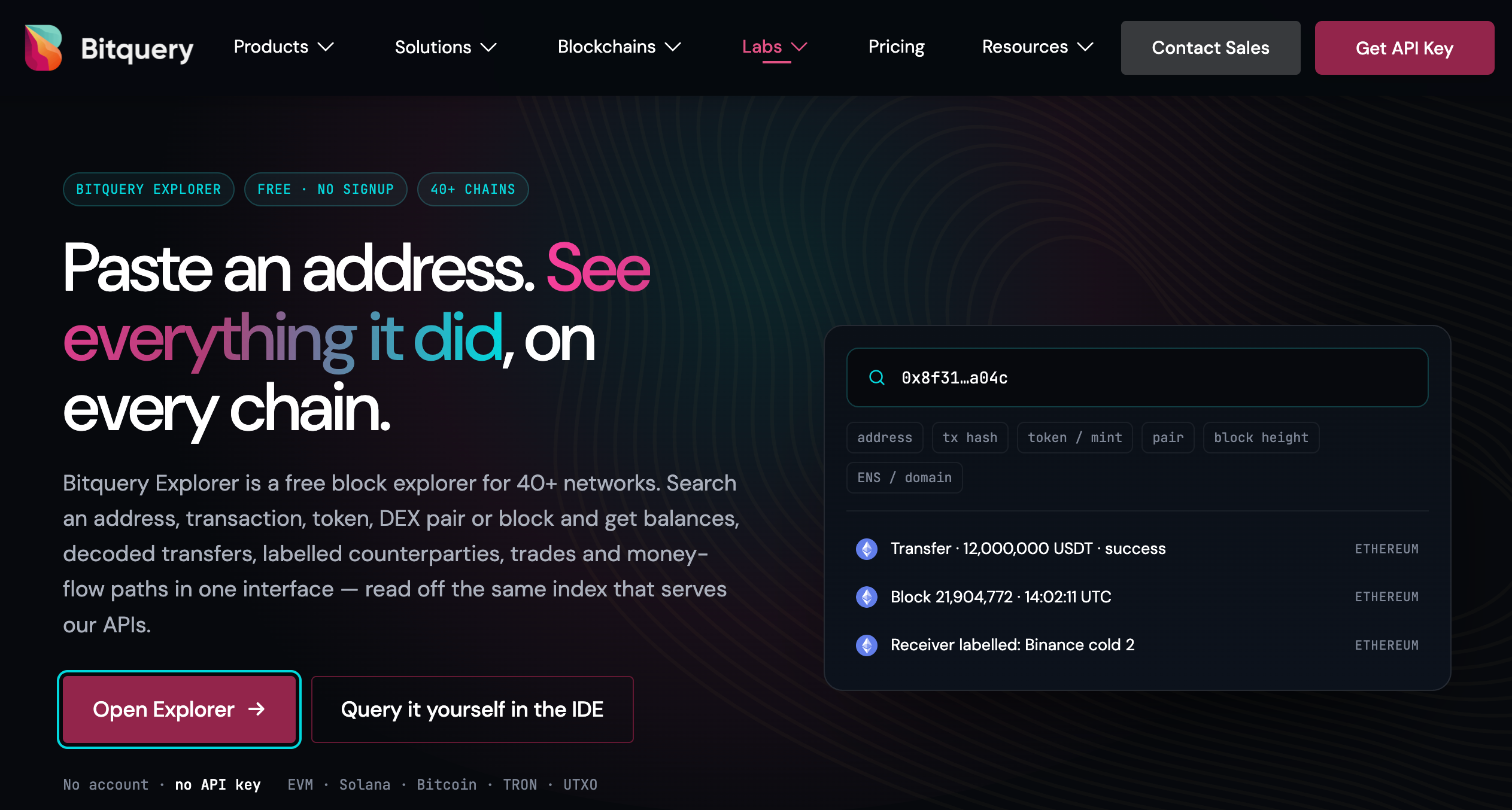
Source: Bitquery Explorer
The same data covers DEX trades across 300+ DEXs, token transfers, holders and smart contract events, so you see what happened to the tokens along the way.
That is a wider picture than a basic transfer graph, and it helps when funds pass through swaps and contract calls.
Price: a free plan for developers and small projects, no card needed. Larger use goes through sales.
What Bitquery can’t do: it’s built for developers. The money-flow explorer needs no code, but DEX and contract data is queried in GraphQL.
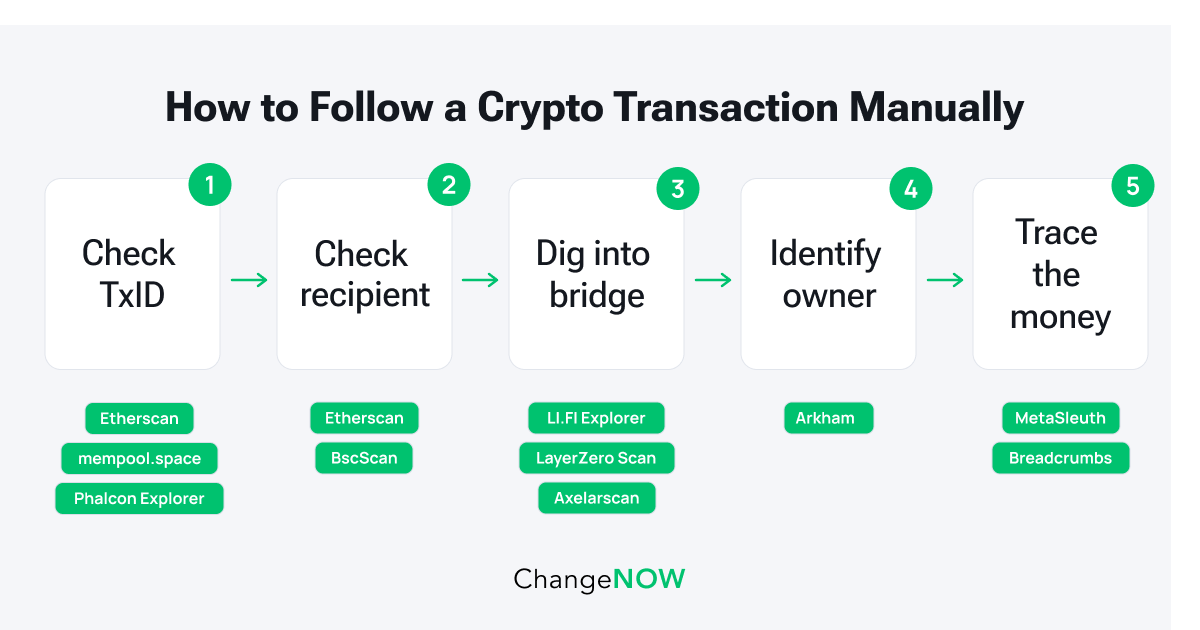
All these tools can be of great help if you use them in the right order.
These five steps cover manual crypto tracing in most cases. They work on any crypto tracking sites, and by the end you can track crypto assets all the way to the wallet that holds them.
Crucial data to save before contacting support or law enforcement:
Use it when: you’re about to send funds to an unfamiliar address, or you received a transfer and want to check real quick if the sender’s wallet is clean.
ChangeNOW’s AML check screens a wallet address for links to illicit activity before you interact with it. You need to complete verification to get access since this feature is part of ChangeNOW Account.
Where to click:
Price: Included in ChangeNOW Account subscription tiers.
Asset recovery starts with a location, and tracing gives you one: an address, a service or a stage in a bridge. Moving the funds takes whoever controls that address. Where the trail ends decides who you write to: an exchange's support team with your hashes and addresses, a bridge team with the message ID, or, for a private wallet, no one who can move the funds, which leaves you with documentation for a report or a legal process.
Be wary of anyone who asks for an upfront fee to recover crypto. The tracing they'd do uses the same free tools from this list, and the recovery itself still depends on whoever holds the funds.


