More than $2.5 million in stolen cryptocurrency was recovered with ChangeNOW's assistance in three fraud cases involving U.S. federal agencies.
The victims had fallen for social engineering scams. By identifying suspicious transactions and cooperating with Homeland Security Investigations (HSI) and the FBI, ChangeNOW helped intercept and return the stolen funds.
These cases show how social engineering works, why early detection matters, and what crypto users can do to protect themselves.
Three Crypto Recovery Cases Involving U.S. Federal Agencies
Case 1: Nearly $295,000 recovered with HSI
ChangeNOW worked with Homeland Security Investigations (HSI) after its AML systems flagged suspicious activity. The funds were linked to a social engineering scam involving nearly $295,000 in stolen cryptocurrency.
Case 2: Almost $2 million recovered with the FBI
In another investigation, ChangeNOW collaborated with the FBI to help intercept almost $2 million before the stolen assets could be moved through additional wallets.
Case 3: Nearly $260,000 returned with FBI assistance
A third case involved the recovery of approximately $260,000 stolen through similar social engineering tactics. ChangeNOW helped freeze and return the funds in cooperation with the FBI.
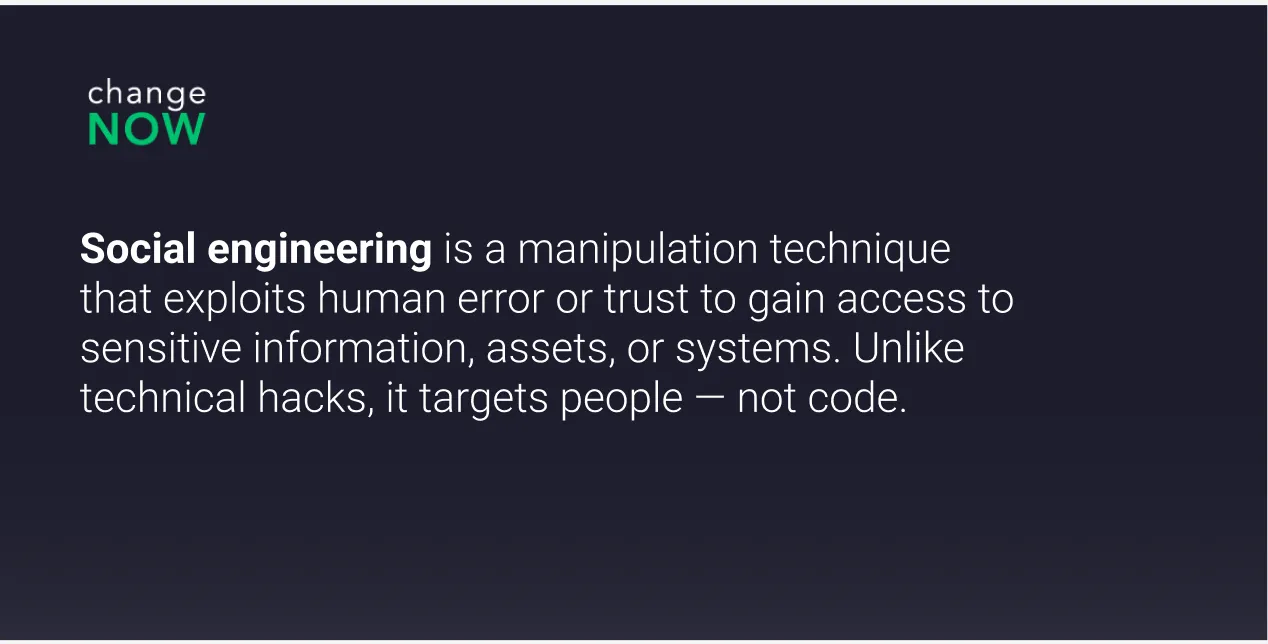
How Social Engineering Exploits Trust
Social engineering attacks don't necessarily rely on sophisticated technical exploits. Instead, scammers manipulate people into trusting them, sharing sensitive information, or taking harmful actions.
Sometimes, attackers even impersonate people their victims already know. A recent FBI investigation shows just how convincing these schemes can become.
FaceStealer: How Fake Video Calls Enabled $400M in Crypto Theft
In November 2026, the FBI reported disrupting a North Korean hacking operation known as FaceStealer, linked to over $400 million in cryptocurrency theft over 18 months.
The attackers used compromised messaging accounts and secretly recorded webcam videos to impersonate trusted contacts. They then invited new victims to fake video calls, where they tricked them into installing malware. The FBI seized over 900 webcam recordings used in the scheme.
Even a video call with a familiar face isn't necessarily proof of someone's identity.
How to Protect Yourself from Social Engineering Attacks
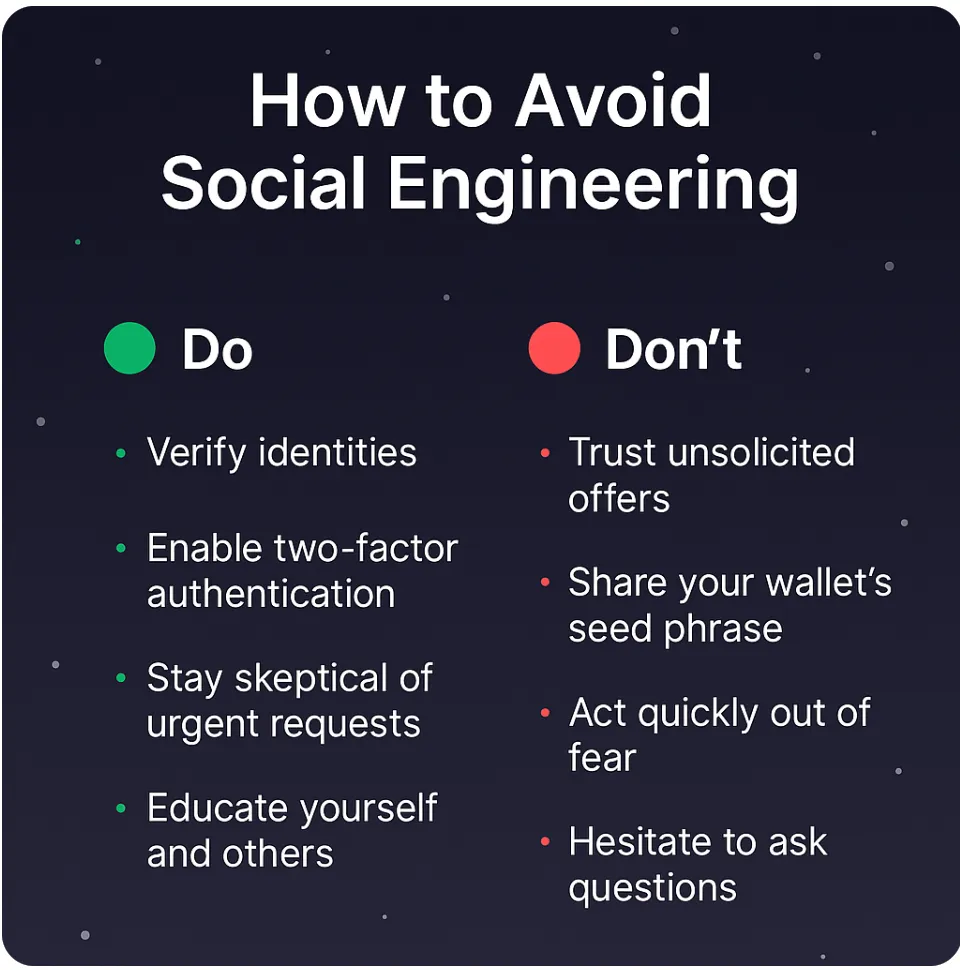
To prevent yourself from becoming the next victim of a crypto scam, here are a few critical tips:
- Never trust unsolicited offers involving crypto investments, giveaways, or support services — especially if they contact you first.
- Double-check identities. Scammers often pose as company representatives, friends, or authority figures. When in doubt, verify via official websites or known contacts.
- Watch out for fake websites and emails. Scammers can create convincing copies of legitimate crypto platforms, sometimes using lookalike domains. Learn how to recognize crypto phishing emails before clicking links or sharing sensitive information.
- Never share your wallet seed phrase or private keys — with anyone. No legitimate platform will ever ask for it.
- Enable two-factor authentication (2FA) on all your accounts.
- Stay skeptical of urgency. Phrases like “you must act now” or “you’ll lose your funds if you don’t comply” are red flags.
- Verify unexpected video calls. Scammers can use stolen webcam recordings to impersonate people you know. Confirm unusual meeting requests through another communication channel, and avoid installing unfamiliar video conferencing software.
- Educate yourself and others. Talk about crypto scams openly. The more we share, the less power fraudsters have.
If something feels off, pause, research, and ask questions. Trust is earned, not rushed.
What to Do If You've Fallen for a Crypto Scam
If you've lost cryptocurrency to scammers, act quickly. Secure your remaining funds, save transaction details and screenshots, and report the incident to the relevant platforms and law enforcement.
Crypto recovery isn't guaranteed, but timely reporting may help investigators trace and intercept stolen funds.
For detailed instructions, read our guide on what to do if your crypto is stolen.
Our Commitment to Victims and Law Enforcement
These cases show what crypto platforms and law enforcement can achieve by working together.
We want to emphasize the following:
-
ChangeNOW does not profit from frozen or returned funds;
-
We are committed to resolving legitimate cases as quickly and transparently as possible;
-
We welcome cooperation with law enforcement agencies globally to assist victims of cybercrime and protect the ecosystem as a whole.
Why Our AML Systems Matter
As a non-custodial platform, we value user privacy — but we also recognize the responsibility we hold to protect the broader ecosystem. Our platform integrates advanced risk monitoring tools designed to flag unusual or high-risk activity in real time. This process may lead to temporary transaction delays for a small percentage of users, but it’s an essential safeguard to protect the integrity of our services.
In addition to our internal processes, our team continuously engages in ongoing training, partnerships, and tooling improvements to stay ahead of evolving threat vectors.